
Why You Should Use the Recommended Thermostat for Mini-Split Systems
(And Why Converting to a Nest Thermostat Is Not Recommended)
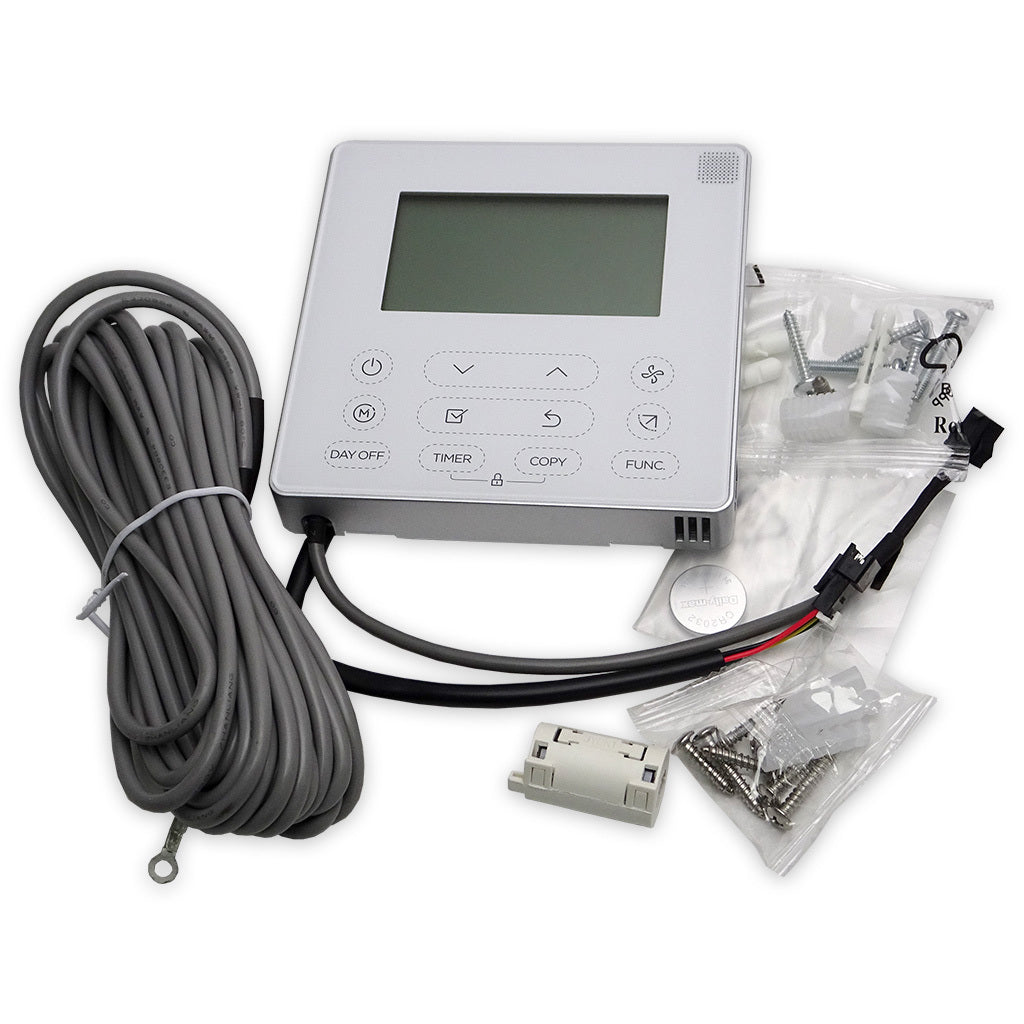
Smart thermostats like Nest are popular—and for traditional ducted systems, they can work very well. But mini-split systems are different.
When it comes to ductless and VRF/VRV mini-split systems, using the manufacturer-recommended controller is critical for performance, efficiency, and system protection.
Mini-Split Systems Are Not Simple ON/OFF Equipment
Mini-splits use inverter-driven technology, meaning they constantly adjust:
- Compressor speed
- Fan speed
- Refrigerant flow
- Capacity output
They are designed to modulate continuously, not simply turn on and off like older HVAC systems.
Most third-party thermostats (including Nest) are designed for single-stage or multi-stage ducted systems, not inverter-driven mini-splits.

What Happens When a Mini-Split Is Converted to a Nest?
When a Nest or similar thermostat is connected through an adapter, the system often loses its advanced logic.
This can cause:
- Loss of inverter modulation
- Forced on/off cycling
- Reduced efficiency
- Temperature swings
- Increased wear on components
- Shortened equipment lifespan
In many cases, the system no longer operates as it was engineered to.
You Lose Built-In Comfort Features
Manufacturer-recommended mini-split controllers manage:
- Precise temperature control
- Dehumidification logic
- Fan speed optimization
- Load matching per zone
- Quiet operation modes
Third-party thermostats cannot communicate these commands correctly because mini-splits do not use standard thermostat signals.
Energy Efficiency Takes a Hit
Mini-splits achieve high efficiency by:
- Running longer at lower speeds
- Avoiding frequent starts and stops
- Adjusting output in real time
A Nest thermostat may cause the system to:
- Run harder than needed
- Cycle unnecessarily
- Consume more electricity
The result? Higher energy bills and lower real-world efficiency, even though the equipment itself is high-efficiency.

Manufacturer Warranties May Be Affected
Many mini-split manufacturers require:
- Approved controls
- Proper communication between indoor and outdoor units
Using non-approved thermostats or adapters can:
- Void or limit warranty coverage
- Complicate diagnostics
- Delay service support
This puts your investment at risk.
Smart Control Is Still Possible—The Right Way
The good news is that most mini-split manufacturers already offer:
- Wi-Fi-enabled controllers
- App-based remote access
- Scheduling and energy monitoring
- Zone-by-zone control
These options are designed specifically for the system, so you get smart features without sacrificing performance.
Our Recommendation
At Nice and Cool Inc., our rule is simple:
Mini-split systems should always use the thermostat or controller designed for that system.
This ensures:
- ✔ Maximum efficiency
- ✔ Proper system operation
- ✔ Longer equipment life
- ✔ Warranty protection
- ✔ Better comfort and humidity control
The Bottom Line
Nest thermostats are great—for the right systems. Mini-splits are not one of them.
If you invested in a high-efficiency mini-split system, let it operate the way it was engineered to work.