What is HVAC? A Homeowner’s Guide to Comfort and Efficiency in 2026
May 22, 2026 18 min read
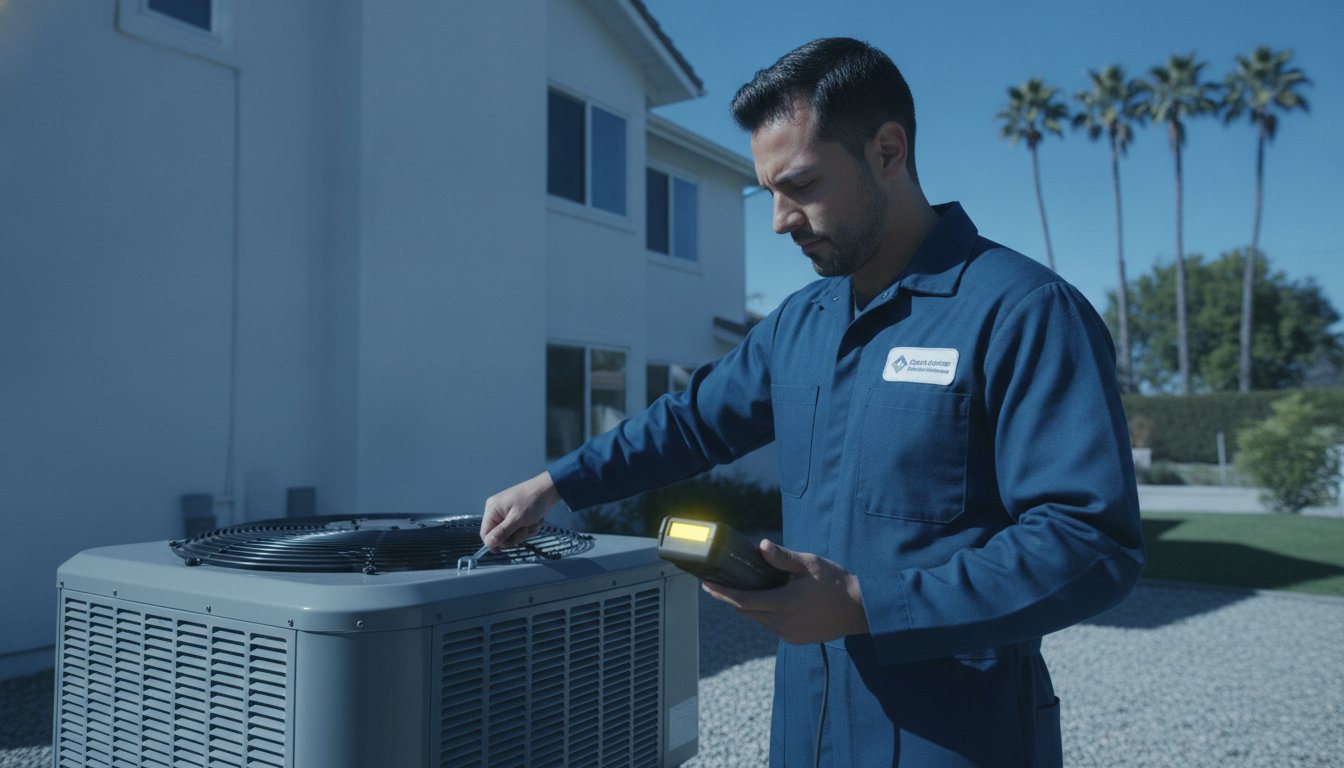
What if the most important part of your home's comfort isn't the furniture or the layout, but the invisible system humming behind your walls? Most homeowners only ask what is hvac when the air conditioning fails on a record-breaking July afternoon or when the winter furnace starts making an expensive-sounding rattle. It's easy to view these systems as just a collection of metal boxes, but they are actually a carefully balanced ecosystem designed to manage your air quality, humidity, and temperature. Whether you're dealing with uneven heat between rooms or dust that never seems to go away, your system's performance directly impacts your daily peace of mind.
We understand that choosing a new system feels like a daunting investment, especially with the 2026 transition to eco-friendly refrigerants like R-32 and R-454B. If you want to lower your monthly utility bills while maintaining a healthy home environment, then staying informed is your best tool. This guide covers exactly how modern components work together and how you can claim a 30% federal tax credit for high-efficiency upgrades. We will preview the latest SEER2 standards and explain how tailoring a heat pump or indoor air quality solution can transform your home into a reliable sanctuary.
Key Takeaways
- Understanding what is hvac involves viewing your home as a single, integrated ecosystem instead of just a collection of separate machines.
- See how the refrigeration cycle and air distribution work in tandem to pull out unwanted heat and keep fresh air moving through every room.
- Learn to decode the latest SEER2 and HSPF2 efficiency ratings so you can choose equipment that meets the high standards required in 2026.
- Compare the long-term value of traditional central systems against the zoned comfort of modern ductless mini-splits.
- Discover why a professional "Manual J" load calculation is the only reliable way to ensure your new system is tailored to your home's unique needs.
Demystifying HVAC: What It Stands For and Why It Matters
Many people assume HVAC is just a fancy way of saying "the air conditioner," but that's only one piece of the puzzle. If you've spent time wondering what is hvac, it's helpful to think of it as a life-support system for your home. It isn't just a single unit sitting in the backyard or attic; it's an integrated network designed to regulate your indoor environment. In modern home design, we've moved away from thinking about isolated units and toward holistic systems. This shift is vital because when components work together, they last longer and perform better.
Understanding the synergy between these parts can help you make smarter decisions when you're ready for ac installation los angeles ca. Whether you're looking for a heat pump or a traditional split system, knowing the basics prevents you from overpaying for capacity you don't need or under-investing in air quality. A system that is properly tailored to your square footage and local climate ensures you aren't wasting money on energy that literally disappears through the cracks.
Breaking Down the Acronym
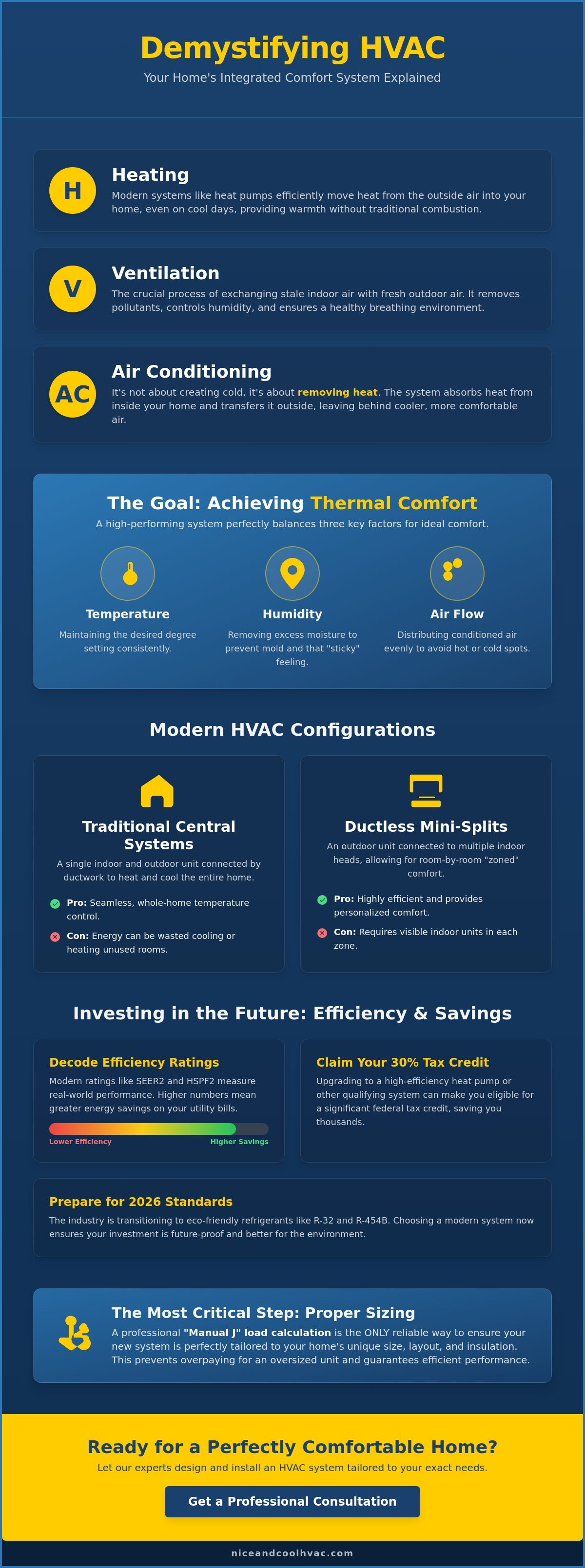
The technical term Heating, ventilation, and air conditioning (HVAC) covers three distinct but inseparable functions:
- Heating: Modern solutions often move away from traditional gas furnaces. In our region, heat pump technology is becoming the standard because it's incredibly efficient at extracting warmth from outside air, even on chilly nights.
- Ventilation: This is the "V" that homeowners often ignore. It involves the constant exchange of indoor and outdoor air to remove pollutants and ensure you aren't breathing the same stagnant air all day.
- Air Conditioning: Most people think this adds cold air to a room. In reality, it's the science of heat removal. Your system absorbs the heat inside your home and moves it outside.
The Goal of a Modern HVAC System
A high-performing system does more than just hit a number on a dial. It aims for "Thermal Comfort," which is the sweet spot where temperature, humidity, and airflow are perfectly balanced. If the air is 72 degrees but the humidity is 70%, you won't feel comfortable. A well-designed system manages that moisture to prevent mold growth and protect your home's structural health. As we move through 2026, these systems are also focusing on reducing your carbon footprint through electrification and higher SEER2 standards.
Finally, don't forget the "brain" of the operation. The thermostat is the hidden fourth element of what is hvac. Without a precise control system, even the most expensive hardware will cycle inefficiently, leading to higher bills and uneven temperatures between rooms. Choosing the right controller is just as important as choosing the right compressor for your long-term peace of mind.
The Three Pillars of Comfort: How Heating, Ventilation, and AC Interact
To understand what is hvac, you have to look past the individual components and see how they work as a team. True comfort relies on three pillars: temperature control, air distribution, and air quality. If one pillar fails, the entire system struggles to keep your home feeling right. Most homeowners think of cooling as adding cold air, but the science is actually about heat transfer. Your system uses a refrigeration cycle to grab heat from inside your home and dump it outside. This happens through a partnership between the evaporator coil, which absorbs heat, and the condenser coil, which releases it.
Once the air is treated, the blower motor acts as the heart of the system. It pushes that conditioned air through your ductwork or directly into rooms via ductless mini-split heads. However, temperature is only half the battle. Modern homes are built to be airtight for energy efficiency, but this often traps stale air inside. This is where ventilation comes in. Systems like Energy Recovery Ventilators (ERVs) refresh your indoor air by swapping out stale air for fresh outdoor air without losing the energy you spent heating or cooling it. If you're concerned about the freshness of your home, our Indoor Air Quality Solutions can help you find the right balance.
The Cooling and Heating Cycle
Heat pumps are the champions of this cycle because they can reverse the flow of refrigerant. Whether it's the peak of summer or a chilly winter night, the same system provides year-round comfort by simply changing the direction of the heat transfer. This process relies on phase change, where refrigerant transitions from a liquid to a gas to absorb massive amounts of heat. It's a delicate balance, which is why proper sizing is critical. If your system is too large, it will suffer from short-cycling. This means it turns on and off too frequently, which wears out parts and leaves your home feeling humid. Following the minimum energy efficiency standards ensures your equipment is designed for modern performance levels.
Ventilation and Indoor Air Quality (IAQ)
Mechanical ventilation is no longer a luxury; it's a necessity for modern health. While natural ventilation like opening a window helps, it isn't consistent. A dedicated mechanical system filters out allergens, dust, and volatile organic compounds (VOCs) before they reach your lungs. Indoor Air Quality (IAQ) is the measure of air purity within a building. By managing these three pillars together, you ensure that your investment in what is hvac technology provides more than just a number on a thermostat; it provides a healthier, more reliable living space.
Decoding HVAC Efficiency: SEER2, HSPF2, and the LA Climate
When homeowners ask what is hvac, they are usually looking for a way to stay comfortable without breaking the bank. In 2026, understanding efficiency ratings is the best way to protect your wallet. SEER2, or Seasonal Energy Efficiency Ratio 2, is the industry standard for measuring cooling efficiency. The "2" matters because it uses a more rigorous testing protocol that better reflects the actual duct pressure found in modern homes. If you are considering a transition to electric heating, you should also look for the HSPF2 (Heating Seasonal Performance Factor) rating. This number tells you how much heat the system can provide for every watt of electricity it consumes.
In our region, these numbers aren't just suggestions. California's Title 24 requirements set strict benchmarks for residential HVAC installations to ensure energy conservation across the state. While meeting these codes is mandatory, many Los Angeles residents choose to go beyond the minimums. High-efficiency units often pay for themselves over time because they consume significantly less power during our long, intense cooling seasons. Investing in a high-performing system is a practical way to manage long-term household expenses.
Why Ratings Matter in Los Angeles
Los Angeles homes face environmental factors that big national brands often overlook. If you live in a coastal neighborhood, salt air can corrode outdoor condenser coils, which forces the system to work harder and lowers its effective lifespan. If you live further inland, the extreme dry heat requires a system that can run for long periods without losing efficiency. Selecting a unit with high SEER2 ratings helps mitigate these local challenges. Additionally, many local utility providers offer lucrative rebates for homeowners who install equipment that exceeds standard efficiency tiers, making the upgrade more affordable from day one.
Comparing Efficiency Standards
The difference between standard and high-efficiency equipment often comes down to the compressor technology. Standard units operate like a light switch; they are either 100% on or 100% off. High-efficiency models often utilize variable-speed compressors that act more like a dimmer switch, ramping up or down to provide the exact amount of cooling needed. This prevents the massive energy spikes that occur every time a traditional unit kicks on. A higher SEER2 rating acts like higher MPG for your car. By choosing a system tailored to your specific usage patterns, you ensure long-term dependability and lower monthly overhead.
Modern HVAC Configurations: Ductless Mini-Splits vs. Central Systems
If you're planning a major renovation or building a new home, understanding what is hvac in terms of physical layout is your next step. The configuration you choose determines how air moves through your home and how much control you have over individual rooms. In the past, homeowners were limited to one or two options, but today's technology allows for a much more tailored approach. Whether you have a sprawling ranch-style house or a compact apartment, there's a system designed to fit your specific footprint.
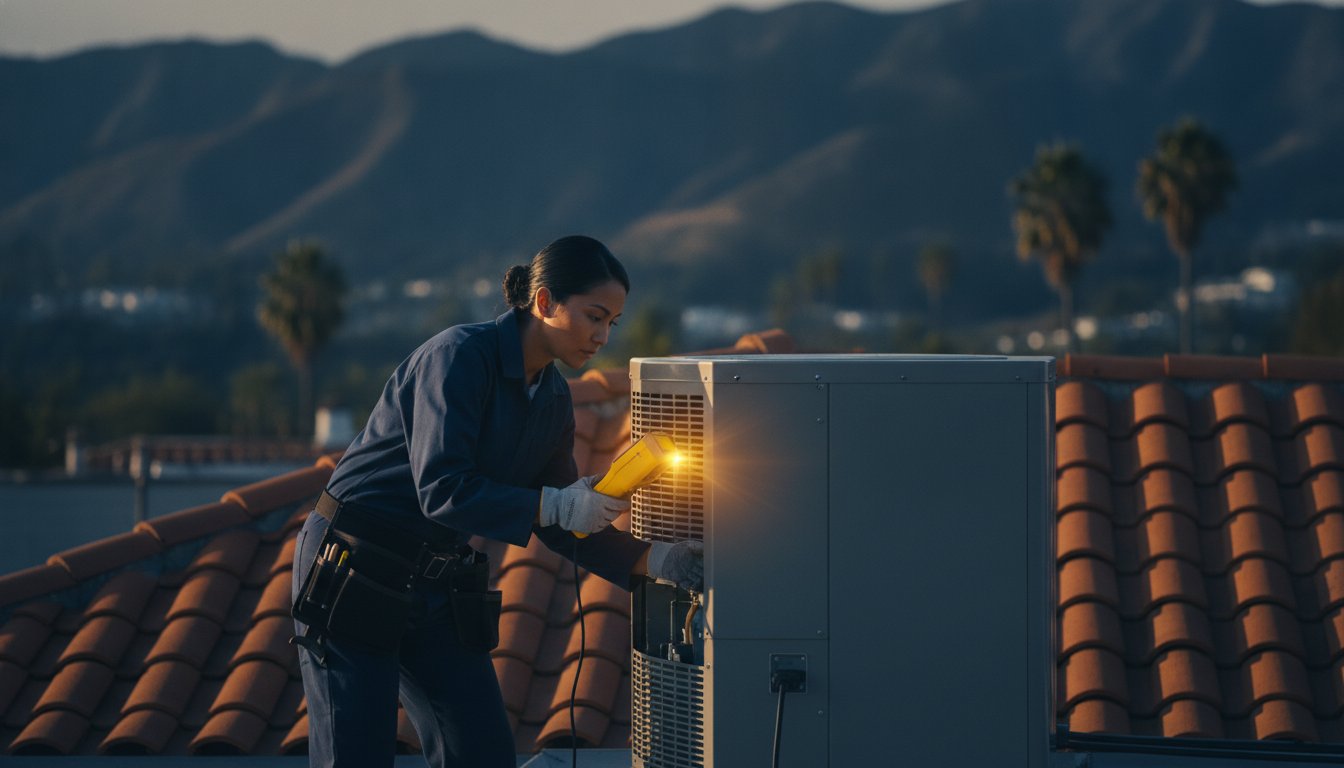
Central systems remain the traditional choice for many. These setups use a network of ducts to move air from a single, powerful unit to every corner of the house. However, if your home has a flat roof or limited attic space, a packaged unit might be a better fit. These all-in-one systems house every component in a single cabinet, usually installed on the roof to save space. For those looking to maximize efficiency, hybrid systems are gaining popularity. These combine the reliability of a traditional furnace with the modern efficiency of an electric heat pump, allowing the system to switch between fuel sources based on the outdoor temperature.
Is Central Air Right for You?
Central HVAC is ideal for homes that already have a healthy network of ducts. It provides even distribution and keeps the mechanical components hidden away in a garage or attic. However, you should be aware of duct loss. Industry data suggests that leaky or poorly insulated ducts can result in up to 30% energy waste before the air even reaches your living space. If your ducts are in good shape, this remains a dependable way to integrate whole-home air purification and maintain a consistent aesthetic.
The Rise of Ductless Mini-Splits
If you live in an older Los Angeles home or have a recent room addition, ductless mini-splits offer an incredibly flexible alternative. These systems use small indoor heads mounted on the wall to provide room-by-room temperature control. Because they don't rely on ducts, they eliminate the energy loss associated with traditional central air. While the upfront cost for a multi-zone setup can be higher, the ability to turn off cooling in rooms you aren't using leads to significant monthly savings. If you're tired of cooling an empty guest room just to keep your bedroom comfortable, you can explore our Ductless Mini-Split Systems to find a more customized solution for your home.
Understanding what is hvac configuration is best for your lifestyle requires looking at your home's unique layout. If you prioritize a hidden system, central air is the standard. If you want precision control and maximum efficiency, ductless technology is the future. Both options provide the reliability you need, provided they're sized and installed by a specialist who understands our local environment.
Investing in the Future: Selecting and Caring for Your HVAC System
Choosing the right hardware for your home is only half the battle. If you want to protect your investment, you need a partner who understands that what is hvac performance today might not be the same five years from now without proper care. Selecting a contractor is the most critical step in this journey. You should look for NATE certification and a team with deep experience in the Los Angeles area. Our local microclimates, from the humid coast to the scorching valleys, require a specialist who knows how to calibrate a system for specific neighborhood conditions.
Before any equipment is installed, insist on a "Manual J" load calculation. Many contractors simply look at the size of your old unit and suggest a replacement of the same capacity. This is a mistake. If you've upgraded your windows or added insulation since your last system was installed, your home's needs have changed. A proper calculation ensures your system is tailored to your home's current envelope, preventing the efficiency losses associated with an oversized or undersized unit. When your current system starts to struggle, remember the 50% rule. If the cost of a single repair is 50% or more of the price of a new system, it's usually wiser to invest in a modern, high-efficiency replacement.
The Importance of Routine Maintenance
The simplest way to protect your blower motor and maintain air quality is to stay on top of filter changes. If your filters are clogged, your system has to work twice as hard to move air, which leads to premature part failure. Beyond the basics, annual tune-ups are essential for cleaning coils and checking refrigerant levels. This proactive care is the foundation of our Nice and Cool Club Maintenance Plan. By catching small issues before they turn into emergency repairs, you can often extend the life of your system from 10 years to 15 years or more. Regular maintenance ensures your equipment continues to hit its rated SEER2 performance year after year.
Finding Your Local HVAC Partner
There is immense value in working with a neighborly service provider who has community roots. Local accountability means we take pride in every installation and repair because we live in the same neighborhoods we serve. When you receive a professional estimate, look for transparency. It should include clear sizing details and a breakdown of the components being used. If you're ready to move toward a more comfortable and efficient home, we are here to act as your guide. Schedule a professional consultation with Nice and Cool Inc. today!
Taking Control of Your Home Comfort
Navigating the technical details of what is hvac technology helps you move from being a reactive homeowner to a proactive one. You now understand that true comfort depends on the delicate balance of three pillars: heating, ventilation, and cooling. By prioritizing modern SEER2 standards and choosing a configuration tailored to your layout, you can lower your monthly bills while significantly improving your indoor air quality. Whether you opt for a central system or a versatile ductless mini-split, the right choice today builds a foundation for long-term reliability.
Nice and Cool Inc. has been serving the Los Angeles community since 2005. We specialize in high-efficiency heat pumps and mini-splits designed for our unique climate. If you're ready to ensure your system is prepared for the years ahead, our Nice and Cool Club Maintenance Plan offers the consistent care needed for total peace of mind. It's about more than just temperature; it's about your quality of life. We take pride in being a dependable partner for your family's year-round comfort.
Book Your Los Angeles HVAC Inspection with Nice and Cool Inc.
Frequently Asked Questions
What is the difference between AC and HVAC?
Air conditioning is actually just one component of a complete what is hvac system. While AC specifically refers to the equipment that cools and dehumidifies your indoor air, HVAC is an all-encompassing term that includes heating and ventilation as well. If you have a system that manages a furnace, an outdoor condenser, and a network of ducts to refresh your air, you own a full HVAC system rather than just a cooling unit.
How much does a new HVAC system cost in Los Angeles?
The investment for a new system varies based on your home's square footage, the efficiency ratings you choose, and the complexity of the installation. In Los Angeles, local factors like Title 24 energy compliance and specific permitting requirements also play a role in the total project scope. Whether you opt for a traditional central system or a modern heat pump will influence the final requirements. We recommend a professional load calculation to ensure your system is perfectly sized for your specific needs.
How long does a typical HVAC system last?
A typical system usually lasts between 10 and 15 years, though consistent maintenance can extend that lifespan significantly. In our local environment, factors like coastal salt air or intense valley heat can put extra stress on outdoor components. If you stay on top of annual tune-ups and regular filter changes, you can often push your system's reliable performance toward the 20-year mark. Proper care is the best way to protect your long-term investment.
What is a heat pump and is it better than a furnace?
A heat pump is an all-in-one system that provides both heating and cooling by moving heat from one place to another. Unlike a furnace, which burns fuel to create heat, a heat pump uses electricity to extract warmth from the outside air and move it indoors. Because our Los Angeles winters are relatively mild, a heat pump is often a more efficient and eco-friendly alternative to a traditional gas furnace.
What does SEER2 stand for and why should I care?
SEER2 stands for Seasonal Energy Efficiency Ratio 2, and it measures how much cooling a system provides per watt of electricity used. You should care because a higher SEER2 rating leads directly to lower monthly utility bills. New regulations introduced in 2023 require more rigorous testing to ensure these ratings reflect real-world operating conditions. If you choose a high-efficiency unit, you are investing in a system that runs more effectively during our hottest summer afternoons.
How often should I have my HVAC system serviced?
You should have your system professionally serviced twice a year to ensure peak performance. It is best to schedule one visit before the summer cooling season and another before the winter heating season. Regular inspections allow a technician to clean coils, check refrigerant levels, and tighten electrical connections. This proactive approach is the most reliable way to avoid mid-season breakdowns and keep your what is hvac equipment running safely.
Can I install my own HVAC system to save money?
Installing your own system is not recommended because it involves high-voltage electricity, pressurized refrigerants, and complex airflow calculations. Professional installation is necessary to ensure the system meets local building codes and operates at its rated efficiency. Most manufacturers also require proof of professional installation to honor their equipment warranties. If the system is installed incorrectly, you could face poor performance, higher energy bills, or even safety hazards in your home.
Why is my electric bill so high even when the AC is off?
If your bill remains high while the AC is off, your system's blower motor might be set to run constantly or you may have significant leaks in your ductwork. Sometimes, poor attic insulation or "phantom loads" from other large appliances are the true culprits. It is also possible that an older water heater or inefficient lighting is driving up your costs. A professional inspection can help identify if your ventilation settings or duct integrity are contributing to the unexpected energy drain.
Frequently Asked Questions
The technical term Heating, ventilation, and air conditioning (HVAC) covers three distinct but inseparable functions: