Heat Pump vs. Air Conditioner in California: The 2026 Homeowner’s Guide
July 29, 2026 19 min read
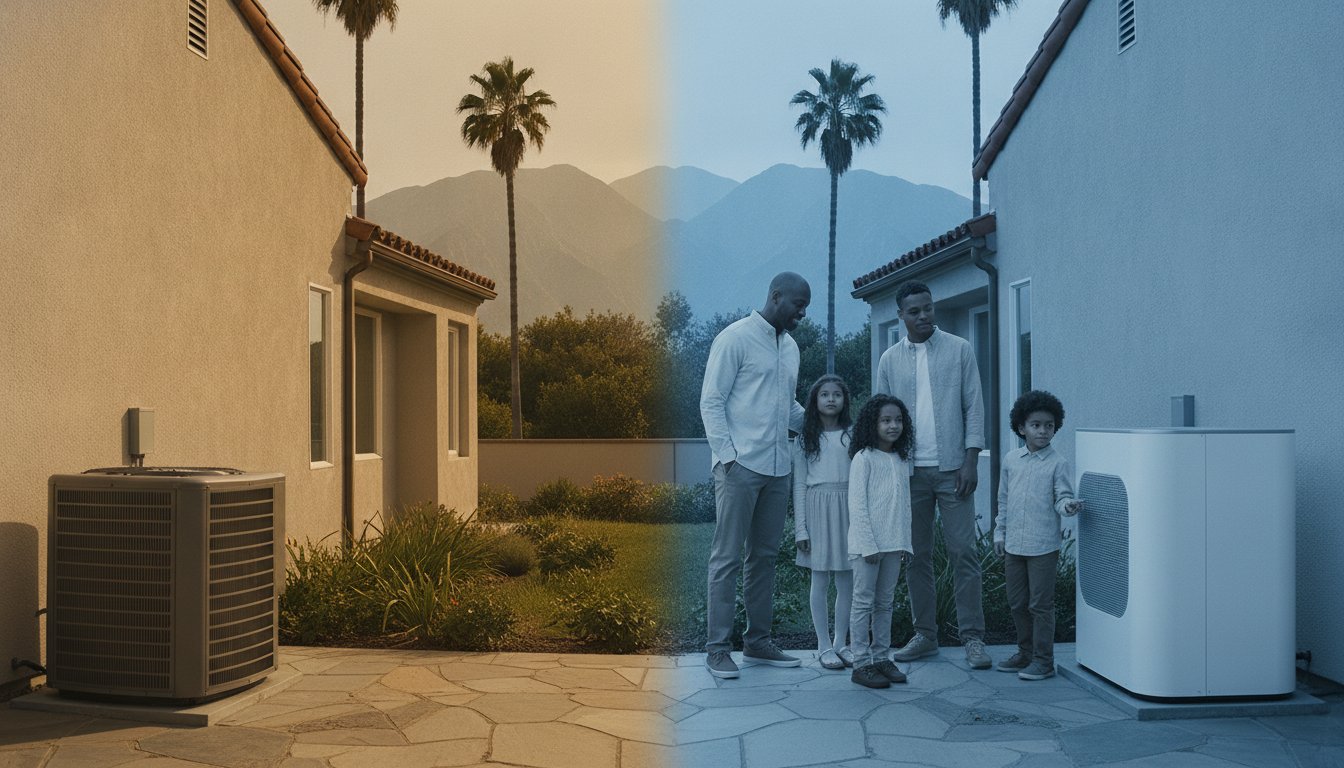
You might assume a traditional central AC is the only way to survive a 105°F Valley heatwave, but the reality of the 2026 energy landscape suggests the opposite might be true. When weighing a heat pump vs air conditioner california families often discover that what worked a decade ago isn't the best fit for today's utility rates. We understand the frustration of seeing your SCE or LADWP bill spike every July while your upstairs rooms still feel like a sauna. Whether you are looking to replace an aging unit or you're building a new home under the 2025 Energy Code, making the right choice is the difference between a summer of stress and a season of total peace of mind.
This guide helps you find the perfect balance of cooling power and cost efficiency for our unique Southern California climate. You will learn how to navigate the latest 2026 rebate structures, including LADWP's current $2,500 per ton incentive, and why modern systems are more than capable of handling triple-digit days. We will compare installation realities, explain the new low-GWP refrigerant standards, and show you exactly how to maximize your federal tax credits to keep more money in your pocket. By the end, you'll know which system offers the most reliable comfort for your specific neighborhood.
Key Takeaways
- Learn how to secure up to $2,000 in federal tax credits and tap into local LADWP rebates that provide as much as $2,500 per ton for high-efficiency upgrades.
- Understand how modern inverter technology ensures your home stays reliably cool even during extreme 105°F+ Southern California heatwaves.
- Decide between a heat pump vs air conditioner california by evaluating the long-term savings and compliance requirements of the latest 2025 Energy Code.
- Translate complex SEER2 and HSPF2 efficiency ratings into real-world energy savings to help lower your monthly SCE or LADWP utility bills.
- Follow our expert checklist to choose a tailored system that fits your home's unique layout, whether you need a central ducted unit or a ductless mini-split.
The Core Difference: Comparing Heat Pumps and Air Conditioners
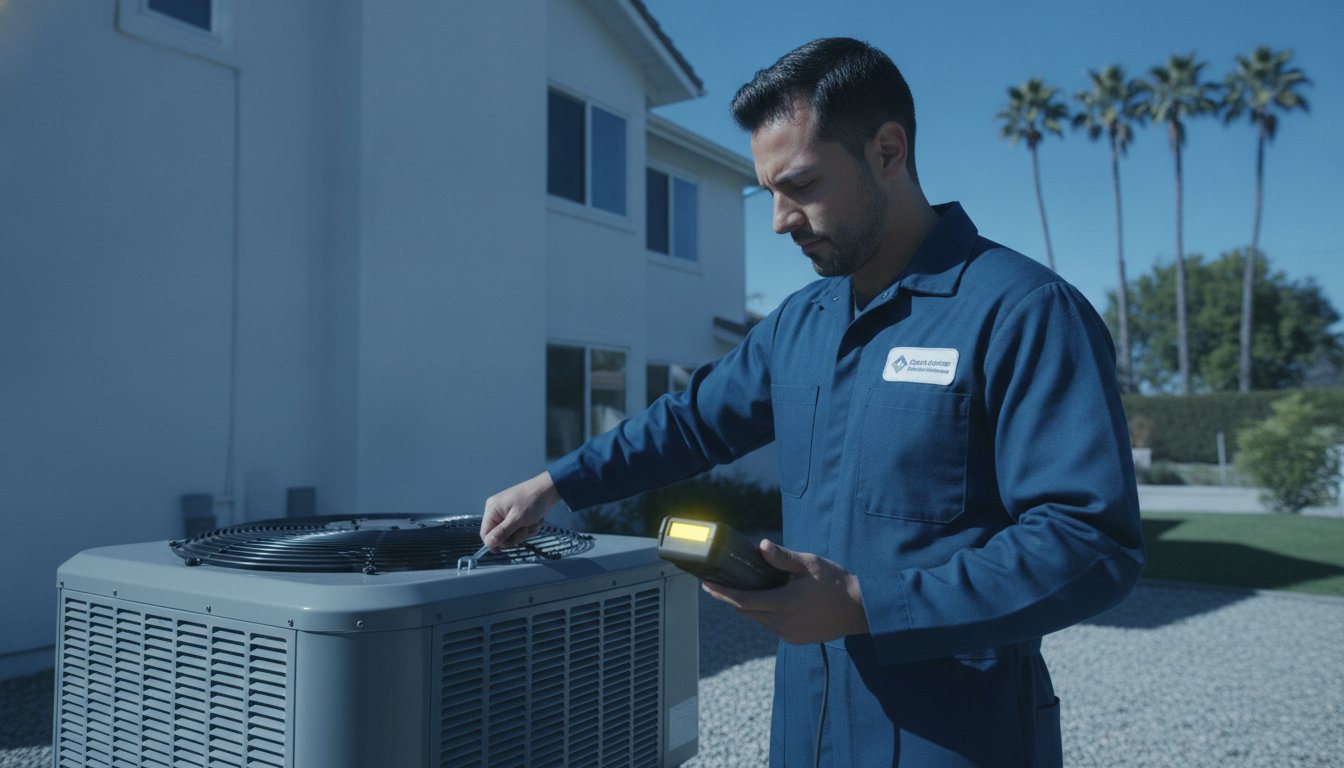
When you're comparing a heat pump vs air conditioner california homeowners often find the two systems look nearly identical from the outside. That's because every heat pump is an air conditioner at its core. Both systems use a compressor and refrigerant to move heat from one place to another. The defining difference is a small but powerful component called a reversing valve. This valve allows the system to change the direction of refrigerant flow, meaning it can pull heat out of your house in July and harvest heat from the outdoor air to warm your home in January. In our mild Southern California climate, this versatility makes the heat pump a primary contender for year-round comfort.
There is a common concern regarding equipment lifespan. A dedicated air conditioner only runs during the warmer months, while a heat pump works throughout the year. While a traditional AC might last slightly longer because it "rests" in the winter, modern heat pumps are engineered for this continuous duty. If you prioritize regular maintenance, a heat pump remains a remarkably dependable choice. Because California winters rarely see the sustained freezing temperatures found in the Midwest, these systems don't have to work nearly as hard to keep you warm, which helps preserve the unit's longevity.
How a Heat Pump Cools and Heats Your Home
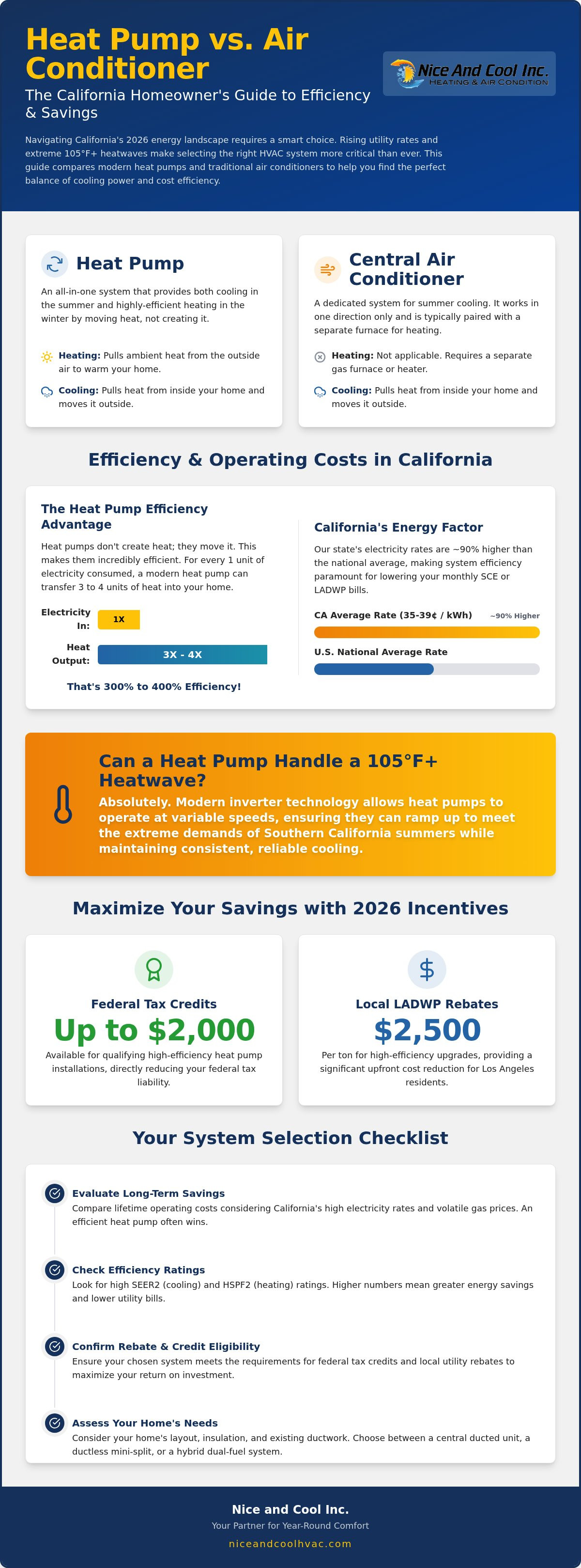
To understand How Heat Pumps Work, think of them as heat transporters rather than heat creators. During a cooling cycle, the system absorbs indoor heat and dumps it outside, exactly like a standard AC. When you switch to heating mode, the process simply flips. Even when it feels cool outside, there is still thermal energy in the air. The heat pump extracts this energy and brings it indoors. This method is incredibly efficient; for every unit of electricity used, a heat pump can move three to four units of heat into your home. This 300% to 400% efficiency rate is why many families are moving away from traditional combustion-based heating.
The Traditional Setup: Central AC + Gas Furnace
Most older Los Angeles homes utilize a "split system" where a central AC handles the cooling and a gas furnace handles the heating. If your current furnace is still in good condition, you might consider a dual-fuel or hybrid setup. This approach combines an electric heat pump with your existing gas furnace. The heat pump handles the mild winter days with high efficiency, while the furnace only kicks in during rare, extreme cold snaps. However, whether you choose a hybrid model or go all-electric, the goal is to reduce your reliance on fluctuating natural gas prices. A tailored solution ensures your system fits your home's specific layout and your family's budget.
Efficiency and Operating Costs: The California Energy Factor
When you evaluate a heat pump vs air conditioner california homeowner priorities usually start and end with the monthly utility bill. To understand your potential savings, you have to look at two specific metrics: SEER2 for cooling and HSPF2 for heating. These 2026 standards represent a system's efficiency under real-world conditions. A higher SEER2 rating means your unit uses less electricity to fight off a July afternoon. While a standard AC only uses its SEER2 rating for a few months, a heat pump works for you all year. This constant operation makes choosing a high-efficiency unit even more critical for your long-term budget.
California presents a unique challenge because our electricity rates are among the highest in the nation, often ranging from 35.25 to 39 cents per kilowatt-hour. This is roughly 90% higher than the national average. Despite these rates, a Sierra Club analysis highlights how heat pumps remain the superior choice due to their incredible efficiency. Traditional gas furnaces are subject to the volatility of natural gas prices, which can swing wildly. By switching to a heat pump, you lock into a system that is 300% to 400% efficient, meaning it moves far more energy than it consumes. If you are concerned about these high power costs, we can help you evaluate a professional heat pump installation tailored to your home's specific energy needs.
Modern heat pumps also feature variable-speed compressors. Unlike older units that are either "all on" or "all off," variable-speed technology acts like a dimmer switch. It adjusts its output in tiny increments to maintain a steady temperature. This prevents the massive "energy spikes" that happen when a traditional AC kicks on. However, even the most efficient unit will struggle if your ductwork is failing. In many older Los Angeles homes, leaky ducts act as a "silent killer" of efficiency, sometimes wasting up to 30% of your conditioned air before it ever reaches your living room.
Utility Rates: SCE, LADWP, and Time-of-Use
If you are on a Time-of-Use (TOU) plan with SCE or LADWP, your electricity is much cheaper in the morning and late at night. Heat pump owners can use this to their advantage by "pre-cooling" their homes. By running your system early in the day when rates are low, you can build up a "reservoir of cold" that carries you through the expensive 4 PM to 9 PM peak hours. This strategy is a cornerstone of the state's push toward total home electrification.
Maintenance and Long-Term Reliability
Because a heat pump handles both heating and cooling, it doesn't get a "season off" like a dedicated AC. This year-round workload means preventative care is non-negotiable. Joining the Nice and Cool Club Maintenance Plan ensures that your system is cleaned and calibrated twice a year. This regular attention prevents small issues from turning into expensive mid-summer repairs and helps maintain the high efficiency you paid for. While a heat pump has more components than a simple AC, it replaces two separate systems (AC and furnace) with one, simplifying your long-term maintenance needs.
Can a Heat Pump Handle a 105°F Los Angeles Heatwave?
If you live in the San Fernando Valley or the Santa Clarita Valley, you know that a 105°F afternoon is the ultimate test for your home's cooling system. A common myth persists that heat pumps are only for mild, coastal neighborhoods and will struggle when the desert-like heat rolls in from the north. This simply isn't true for modern equipment. When you look at a heat pump vs air conditioner california comparison in 2026, the cooling technology is fundamentally identical. In fact, many high-performance heat pumps outperform entry-level AC units because they use advanced inverter technology to modulate their power. This ensures a steady stream of cold air rather than the jarring on-and-off cycles that leave your home feeling unevenly cooled.
Reliability during a heatwave also involves breathing clean air. During our increasingly common wildfire seasons in Los Angeles County, your HVAC system acts as your first line of defense. Because Nice and Cool Inc. specializes in integrated Indoor Air Quality Solutions, we ensure your heat pump does more than just move air; it cleans it. High-efficiency filtration paired with a consistently running variable-speed fan helps remove smoke and allergens. This keeps your home a literal sanctuary of fresh air even when the sky outside is hazy. This level of dependability gives local families the peace of mind they need during the most stressful weather events of the year.
Cooling Capacity vs. Traditional AC
Technically, cooling is measured in BTUs (British Thermal Units). A 3-ton heat pump provides the same 36,000 BTUs of cooling as a 3-ton air conditioner. The real advantage of a heat pump is its ability to provide superior dehumidification. Latent heat is the thermal energy related to the moisture content in the air rather than just the temperature you see on the thermometer. By running at lower speeds for longer periods, a heat pump removes more of this "sticky" latent heat. This makes 78°F feel much crisper and cooler than it would with a standard system that cycles off too quickly. This results in a comfortable indoor environment without the damp feeling often found in older homes.
The Importance of Precision Installation
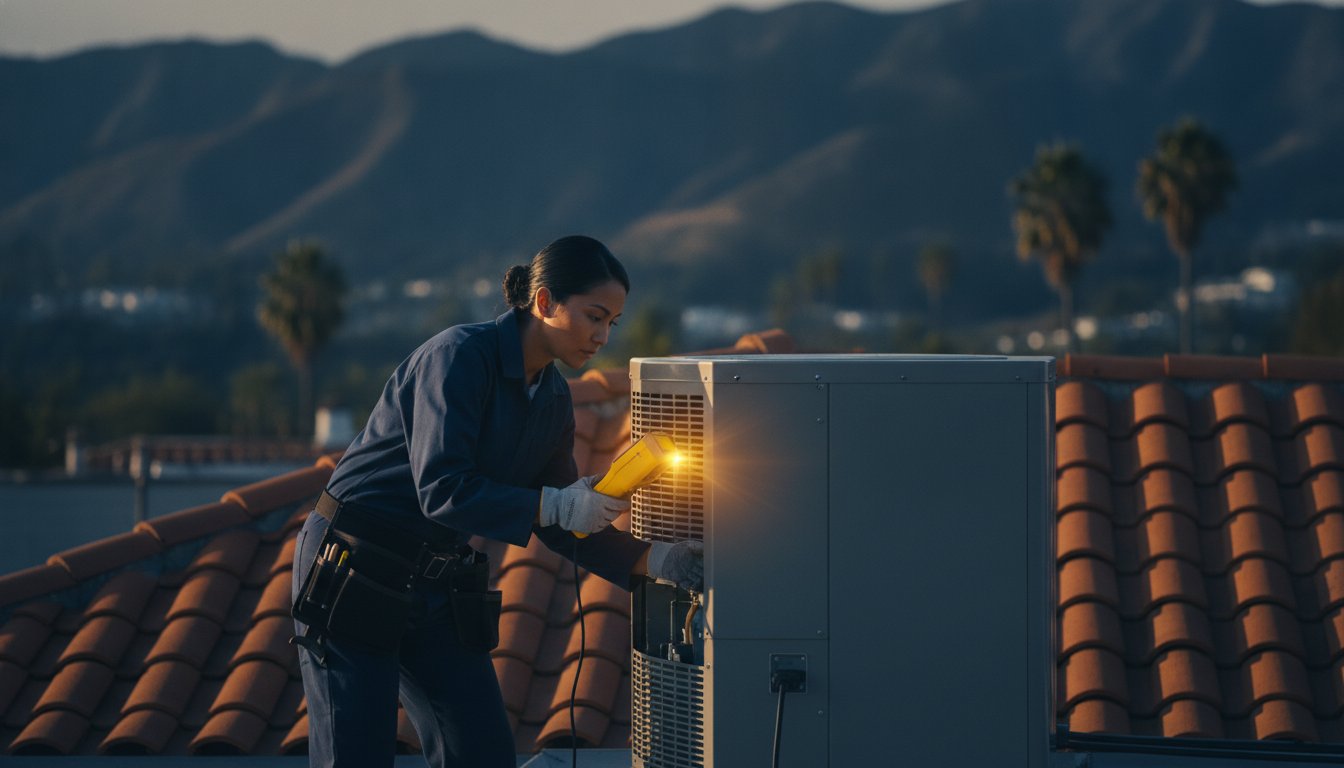
A system is only as good as the technician who sizes it. If a contractor uses a "rule of thumb" based solely on square footage, they're setting you up for failure. At Nice and Cool Inc., we perform a detailed heat load calculation for every residence. We look at your attic insulation, window sealing, and even the direction your house faces. If your home has poor insulation or leaky windows, even the best heat pump will struggle to maintain comfort. By tailoring the installation to these specific factors, we ensure your system handles the peak heat without short-cycling or driving your utility bills into the stratosphere.
2026 Financial Incentives: Rebates and ROI in California
Investing in a new HVAC system is a significant decision for any Los Angeles family, but the 2026 financial climate has tilted the scales heavily in one direction. When you analyze the heat pump vs air conditioner california price gap, the upfront cost of a heat pump is often offset by aggressive government incentives that simply aren't available for traditional AC units. The federal 25C Energy Efficient Home Improvement Credit allows you to claim 30% of your project cost, capped at $2,000 annually for heat pumps. In contrast, a traditional central air conditioner only qualifies for a $600 credit. This $1,400 difference is just the starting point for your potential savings.
Local utility programs in Southern California offer even more substantial support. If you're an LADWP customer, you may be eligible for rebates as high as $2,500 per ton for qualifying high-efficiency heat pumps installed after November 1, 2025. For a standard three-ton home system, that could mean $7,500 back in your pocket. While statewide programs like TECH Clean California are currently seeing high demand with waitlists for single-family homes, the combination of federal and local utility credits remains a powerful tool for reducing your initial investment. We can help you navigate these requirements with a professional rebate consultation to ensure you don't leave money on the table.
Stacking Incentives for Maximum Savings
The secret to the best ROI is "stacking" your incentives. By layering the $2,000 federal tax credit on top of local utility rebates, the net cost of a high-efficiency heat pump installation often drops below the price of a standard air conditioner and furnace combo. To qualify, your contractor must provide specific documentation, including AHRI certificates that prove your system meets SEER2 and HSPF2 efficiency standards. We handle this paperwork for our neighbors to ensure the filing process is as smooth as possible. When you factor in the 10-year energy savings from avoiding volatile natural gas prices, the system practically pays for itself.
Financing Your Comfort Upgrade
We believe that every family deserves a cool, healthy home regardless of their immediate cash flow. Many California homeowners now use low-interest financing specifically designed for energy-efficient upgrades. In many cases, the monthly reduction in your SCE or LADWP bill can significantly offset the monthly payment for the new system. Our approach is to provide transparent, no-pressure project estimates that show you the "real" cost after all rebates and tax credits are applied. This gives you a clear picture of your long-term savings and helps you make a choice that fits your family's budget and comfort goals.
Next Steps: Choosing the Right System for Your LA Home
Deciding between a heat pump vs air conditioner california depends on your long-term goals for your Los Angeles residence. As we move through 2026, the transition toward high-efficiency electric systems is no longer just a trend; it's a practical way to manage rising utility costs. If you want a single, solution-oriented system that handles both July heatwaves and January chills with a 300% efficiency rating, a heat pump is the clear choice. If you already have a relatively new, high-efficiency gas furnace and only need to replace the cooling component, a traditional central AC might still be a viable path. Use this quick checklist to help identify your needs:
- Choose a Heat Pump if: You want to maximize the $2,000 federal tax credit, access LADWP's $2,500 per ton rebate, or if your home falls under the 2025 Energy Code requirements.
- Choose a Traditional AC if: Your current gas furnace is less than five years old and you prefer a lower upfront equipment cost while accepting higher long-term gas and electricity volatility.
- Choose a Ductless Mini-Split if: You are cooling a specific addition, a converted garage, or a home without existing ductwork that needs precise, room-by-room control.
As a family-oriented business with deep roots in the local community, we understand that this is a major investment in your family's peace of mind. We don't use high-pressure sales tactics. Instead, we provide the professional confidence that comes from years of specialization in LA-specific climate demands. Every project we handle is backed by the Nice and Cool guarantee, ensuring that your installation is performed with the highest level of craftsmanship and technical precision.
The Nice and Cool Club Advantage
A high-efficiency system is only as good as the care it receives. Because heat pumps work year-round, they require a more methodical approach to preventative maintenance than a standard AC. Joining the Nice and Cool Club Maintenance Plan provides you with priority service and customized care. Whether we are servicing a complex ductless mini-split or a traditional ducted system, our goal is to ensure your unit maintains its SEER2 efficiency for its entire lifespan. This proactive approach prevents small issues from becoming expensive repairs during a 100°F heatwave.
Ready for a Cooler Home?
When you are ready to move forward, the first step is a professional load calculation. We don't guess based on square footage; we analyze your home's unique layout, insulation, and window orientation to fit the system to your specific needs. Before our technician arrives, have your recent SCE or LADWP bills ready so we can accurately project your potential savings. A quality 2026 HVAC quote should clearly state the SEER2 and HSPF2 ratings, the specific equipment models, and a comprehensive labor warranty. We are here to act as your helpful guide through every step of the process. Schedule your Los Angeles HVAC consultation today.
Securing Your Family's Year-Round Comfort
Deciding on a heat pump vs air conditioner california is ultimately a choice about your home's long-term financial and physical comfort. We've explored how modern heat pumps handle triple-digit Los Angeles heat with ease while unlocking thousands in 2026 rebates and tax credits. By choosing a system tailored to your specific residence, you can finally put an end to uneven cooling and those dreaded summer utility spikes. Whether you opt for an all-electric upgrade or a high-efficiency AC replacement, the goal is a home that feels exactly how you want it to, no matter what the weather does outside.
Since 2005, we've helped our neighbors across LA navigate these technical transitions with professional confidence. Our team specializes in the latest SEER2 requirements to ensure your investment meets the highest standards of craftsmanship. With the dedicated Nice and Cool Club maintenance program, we stay by your side to keep your system running reliably for years to come. Upgrade to a high-efficiency heat pump with Nice and Cool Inc. today! We look forward to helping you find the perfect fit for your home and your budget.
Frequently Asked Questions
Is a heat pump more expensive to install than a standard AC in California?
If you look only at the sticker price, a heat pump is generally more expensive to purchase than a standard air conditioner. However, whether you choose a central or ductless system, 2026 incentives like the $2,000 federal tax credit and local utility rebates often bridge that financial gap. You're also consolidating your heating and cooling into one high-efficiency unit, which simplifies your home's mechanical needs and long-term maintenance costs.
Will a heat pump work if it gets below freezing in Los Angeles?
Modern heat pumps are engineered to work efficiently even in temperatures well below freezing, so they are more than capable of handling a chilly Los Angeles morning. While older technology struggled in the cold, 2026 models can extract heat from outdoor air even when it's 30°F or lower. Since our region rarely sees sustained freezing weather, a heat pump will operate at its maximum efficiency throughout our mild Southern California winters.
How much can I actually save on my SCE bill by switching to a heat pump?
Real-world savings depend on your home's insulation and current equipment, but many families see lower total energy costs after making the switch. Because these systems are 300% to 400% efficient, they use far less energy than traditional gas furnaces or older electric heaters. When weighing a heat pump vs air conditioner california families often find that using Time-of-Use rates to pre-cool their homes leads to the most significant monthly bill reductions.
Do I need to replace my existing ductwork to install a heat pump?
Whether you need new ductwork depends entirely on the condition and size of your current vents. We perform a thorough pressure test to ensure your existing setup can handle the precise airflow requirements of a modern, high-efficiency system. If your ducts are in good shape, we can usually integrate the new unit without major structural changes, though we may suggest sealing leaks to prevent energy waste.
Are there still rebates available for heat pumps in California for 2026?
Yes, several significant incentives are active for 2026 to help offset your upgrade costs. The federal 25C tax credit provides up to $2,000 annually, and local programs like LADWP offer rebates as high as $2,500 per ton for qualifying systems. While some statewide funds like TECH Clean California are currently waitlisted for single-family homes, we can help you identify the most reliable local utility credits available for your specific neighborhood.
How long does a typical heat pump installation take compared to an AC?
A typical installation usually takes between one and two days, which is roughly the same amount of time as a standard air conditioner replacement. If your project includes removing an old gas furnace and decommissioning gas lines, the process might require a bit more coordination and time. Our goal is always to minimize disruption to your daily routine and get your new, reliable comfort system running as quickly as possible.
Can I keep my gas furnace as a backup with a new heat pump?
You can definitely keep your gas furnace as part of a hybrid or "dual-fuel" system. If your furnace is still in good working order, the heat pump will handle your cooling and the majority of your heating, while the furnace stays on standby for the rare, extreme cold night. This approach offers a great middle ground for homeowners who want to transition toward electrification without completely removing their existing backup heat source.
What is the difference between a heat pump and a ductless mini-split?
A ductless mini-split is a specific type of heat pump that doesn't rely on central ductwork to distribute air throughout your home. While a central heat pump uses your home's existing vents, a mini-split uses small, individual units mounted on the walls of specific rooms. If your home has "dead zones" that never stay cool or if you have a converted space without ductwork, a mini-split offers a very flexible and efficient solution.
Frequently Asked Questions
When you are ready to move forward, the first step is a professional load calculation. We don't guess based on square footage; we analyze your home's unique layout, insulation, and window orientation to fit the system to your specific needs. Before our technician arrives, have your recent SCE or LADWP bills ready so we can accurately project your potential savings. A quality 2026 HVAC quote should clearly state the SEER2 and HSPF2 ratings, the specific equipment models, and a comprehensive labor warranty. We are here to act as your helpful guide through every step of the process. Schedule your Los Angeles HVAC consultation today. Deciding on a heat pump vs air conditioner california is ultimately a choice about your home's long-term financial and physical comfort. We've explored how modern heat pumps handle triple-digit Los Angeles heat with ease while unlocking thousands in 2026 rebates and tax credits. By choosing a system tailored to your specific residence, you can finally put an end to uneven cooling and those dreaded summer utility spikes. Whether you opt for an all-electric upgrade or a high-efficiency AC replacement, the goal is a home that feels exactly how you want it to, no matter what the weather does outside. Since 2005, we've helped our neighbors across LA navigate these technical transitions with professional confidence. Our team specializes in the latest SEER2 requirements to ensure your investment meets the highest standards of craftsmanship. With the dedicated Nice and Cool Club maintenance program, we stay by your side to keep your system running reliably for years to come. Upgrade to a high-efficiency heat pump with Nice and Cool Inc. today! We look forward to helping you find the perfect fit for your home and your budget.