Heating Repair in Los Angeles: 2026 Trends and Homeowner Guide
May 27, 2026 18 min read
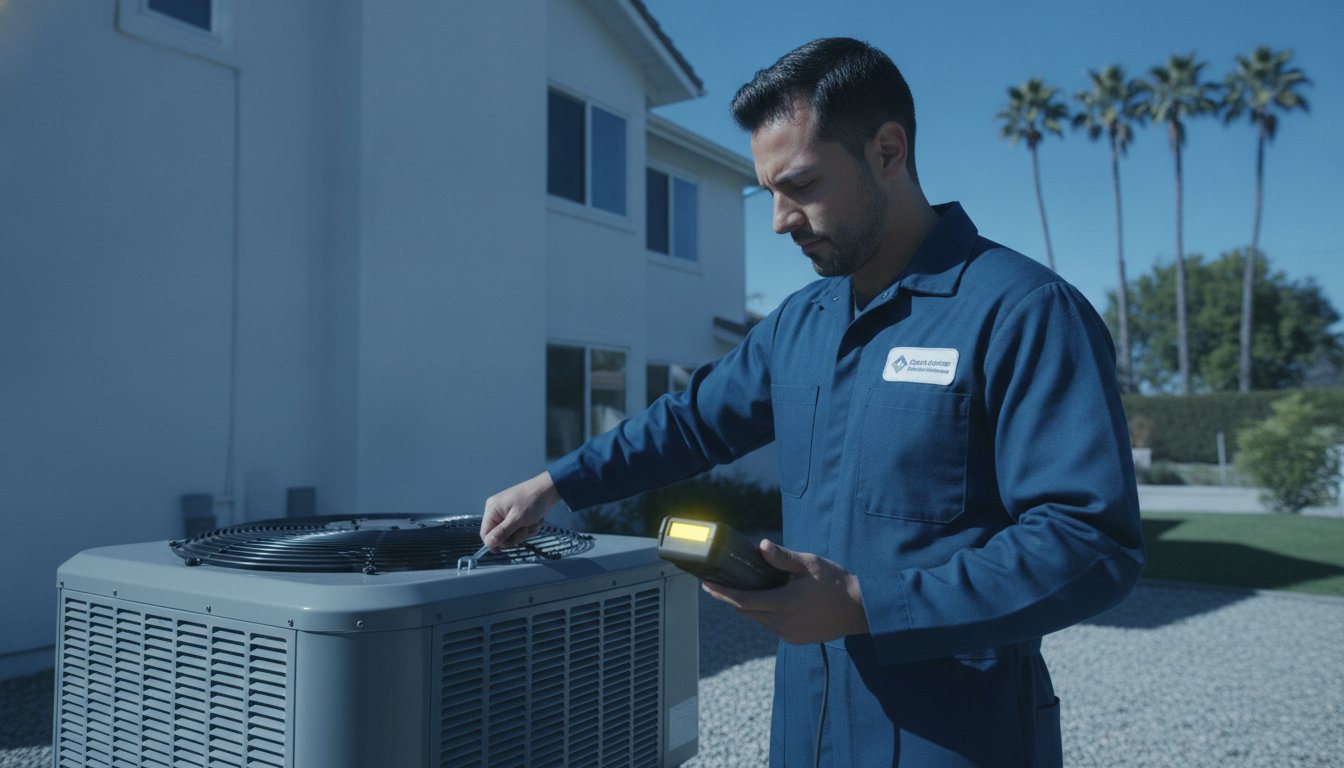
Is a quick heating repair really just about surviving a few chilly nights, or is it the secret to slashing your year-round Los Angeles energy bills? If you have noticed strange smells when your heater finally turns on or your utility bills spike during a sudden cold snap, you aren't alone. Whether you are managing an older gas furnace or one of the newer heat pumps required by the 2026 Title 24 standards, keeping your system efficient is now a vital part of a high-performance home.
It is easy to feel overwhelmed by the transition to new refrigerants and the fact that the federal 25C tax credit is no longer available for 2026 installations. You deserve a home that stays comfortable without the stress of unexpected breakdowns or confusing technical jargon. This guide explores why heating repair in LA is evolving, how to diagnose common system failures, and the smartest ways to maintain a safe, reliable system in our changing climate. We will also help you navigate the repair versus replace debate, including how local LADWP rebates can help you secure long-term comfort while lowering your monthly costs.
Key Takeaways
- Understand how 2026 energy mandates and the shift toward electrification are redefining home comfort standards in Southern California.
- Identify the primary causes of system failure and learn why seasonal neglect is the biggest threat to timely heating repair.
- Apply the 10-15 year rule to decide whether a quick fix or an upgrade to a high-efficiency system is the best path for your home.
- Master a simple diagnostic checklist to troubleshoot minor thermostat or airflow issues before you need professional assistance.
- Explore how the Nice and Cool Club Maintenance Plan provides the proactive care needed to ensure your system runs reliably all year long.
The State of Home Heating in Los Angeles: 2026 Trends
The Los Angeles heating market has reached a major turning point in 2026. As of January 1, the updated California Title 24 standards have made heat pumps the prescriptive default for residential space heating. This means that while gas furnaces aren't banned, the path to installing a new one has become significantly more complex for homeowners. This regulatory shift changes how we look at heating repair. If your older furnace starts to struggle, you aren't just choosing between a fix and a replacement; you are deciding between maintaining an aging technology or moving toward a fully electric future.
Homeowners around the world face similar decisions when their heating infrastructure ages. For instance, specialized services like WellPlumbed's boiler installation bognor regis help residents transition to new, high-efficiency systems that ensure year-round comfort and lower energy costs.
The Move Toward All-Electric Heating in SoCal
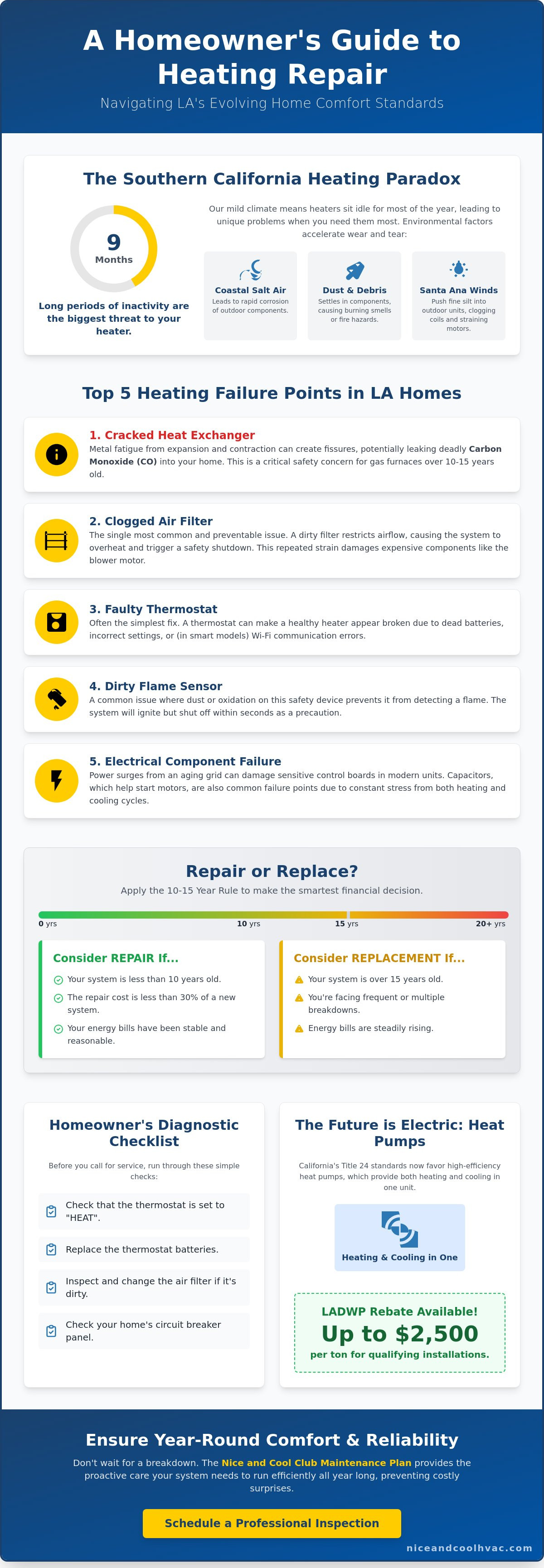
The trend toward electrification is driven by both state regulation and significant local incentives. Many LA residents are opting for professional Heat Pump Services because these systems provide both heating and cooling in a single unit. To understand the mechanics of this technology, you can explore how heat pumps work by transferring heat rather than generating it through combustion. Because the federal 25C tax credit expired at the end of 2025, the financial focus has shifted to local utility programs. For instance, the LADWP currently offers rebates of up to $2,500 per ton for qualifying heat pump installations. This makes the transition more affordable and helps homeowners avoid the rising costs associated with new refrigerant regulations and the phase-out of R-410A.
Why LA Climate Factors Matter for Your Heater
Our local weather creates unique challenges that many generic guides overlook. Even though our winters are mild, they are often damp. If you live in coastal areas like Santa Monica or the South Bay, the salt-heavy air can lead to rapid corrosion of outdoor components. This hidden damage often goes unnoticed until you try to turn the system on during a rare cold snap. A system that sits idle for nine months is often more at risk than one that runs consistently.
Other factors that strain local systems include:
- Dust and Infrequent Use: Because we go months without needing heat, dust settles deep within the internal components. This buildup can cause a burning smell or even pose a fire hazard when the system finally cycles on.
- Santa Ana Winds: These dry, high-pressure winds push fine silt and debris into outdoor units. This debris clogs coils and forces the motor to work much harder to maintain temperatures.
- Smart Diagnostics: Modern systems now use integrated sensors to alert you to these issues before they lead to a total breakdown. This makes professional heating repair more precise and less invasive than in years past.
Whether you are managing an older furnace or a new high-efficiency heat pump, these environmental factors demand a tailored approach. Protecting your investment requires understanding how the local climate interacts with your specific equipment.
Common Heating Failure Points in Southern California Homes
In Los Angeles, the biggest threat to your comfort isn't the cold; it's the long periods of inactivity. Most systems sit idle for nine months out of the year. When you finally flip the switch during a January cold snap, that neglect often manifests as a sudden need for heating repair. Dust that has settled on internal components can cause short-cycling or even safety shutdowns. For those with older gas furnaces, a cracked heat exchanger is a primary concern. Over time, the metal expands and contracts, leading to microscopic fissures that can leak carbon monoxide into your living space. This is why a professional inspection is vital for any system over a decade old.
Your thermostat is another hidden culprit. Whether it's a dead battery or a communication error with your Wi-Fi, a faulty signal can make a perfectly healthy heater seem broken. Clogged air filters also play a major role in system failure. When airflow is restricted, the heat exchanger or coils can overheat, triggering an automatic safety shutdown to prevent a fire. This cycle of overheating and restarting puts immense strain on the blower motor and other expensive parts.
Sensors and Electrical Components
Electronic failures are increasingly common in modern units. Flame sensors often become oxidized, which prevents the system from recognizing that a flame has ignited. If this happens, the heater will shut off almost immediately after starting. Additionally, Southern California's aging power grid can lead to surges that fry sensitive control boards in newer, high-efficiency units. If you have a system that handles both heating and cooling, your capacitors are under double the stress. These small components act like batteries to start the motors; if they fail, your entire system stays silent. Following a consistent schedule for maintaining your heat pump or furnace can help catch these electrical weak points before they leave you in the cold.
Airflow and Ductwork Complications
Leaky ductwork is a rampant issue in older Los Angeles homes. It's common for poorly sealed ducts to waste up to 30% of your heated air before it ever reaches your rooms. This forces your system to run longer, leading to premature wear on every component. Static pressure is the amount of resistance your blower motor must overcome to move air through the ducts; if this pressure is too high, the motor will eventually burn out. To ensure your system is operating within safe limits, you might consider the Nice and Cool Club Maintenance Plan, which includes a comprehensive check of these vital airflow metrics. Proper heating repair often starts with fixing the environment the system lives in, not just the machine itself.
Repair vs. Replace: Navigating the Heat Pump Revolution
Every homeowner eventually faces the same dilemma when their system falters: is it better to invest in another heating repair or start fresh with a new unit? In the Los Angeles climate, we generally follow the 10-15 year rule. If your furnace or older heat pump has crossed the decade mark and requires a fix that costs more than half its value, replacement is usually the wiser financial move. Southern California systems don't work as hard in the winter as those in the Midwest, but the salt air and long periods of sitting idle can lead to internal rot that a simple part replacement won't solve.
You should also consider the "Three Strikes" rule. If you have called for a professional heating repair three times in the last two seasons, your system is likely signaling a terminal failure. Chronic breakdowns aren't just an inconvenience; they are a sign that the components are no longer working in harmony. Continuing to patch a failing system is often like throwing good money after bad, especially when modern technology offers such significant improvements in comfort and efficiency.
Cost-Benefit Analysis for LA Homeowners
Whether you are looking to lower your monthly bills or reduce your carbon footprint, the ROI of a new heat pump installation has never been clearer. Modern SEER2 rated units are significantly more efficient than the equipment installed just a decade ago. While the federal 25C tax credit expired at the end of 2025, you can still find substantial savings through California heat pump rebates and local utility incentives. These programs are designed to help you transition to all-electric heating, which often results in a lower total annual energy spend. For larger, multi-story Los Angeles residences, these systems also allow for "zoned" heating, ensuring you only pay to warm the rooms you are actually using.
The Longevity Factor
If your system is relatively young, a professional repair can often extend its life by another 3-5 years. The key is ensuring your technician uses Original Equipment Manufacturer (OEM) parts. While generic components might be cheaper upfront, they rarely meet the exact specifications of your unit and can lead to premature wear on the blower motor or compressor. A "cheap fix" using sub-par parts often leads to a much more expensive breakdown during a July heatwave when your system is under maximum stress. By choosing high-quality craftsmanship and dependable parts today, you protect your home’s comfort for the long term. This commitment to quality is shared by reputable specialists globally, such as NBS Plumbing & Heating, who emphasize reliable local service for complex heating systems.
The Homeowner’s Diagnostic Checklist: When to Call a Pro
You don't always need a technician to solve a minor system hiccup. Before you schedule a professional heating repair, performing a few simple checks can save you time and provide peace of mind. Many calls we receive in Los Angeles end up being small issues that a homeowner can address in minutes. This structured approach helps you identify whether your system needs a quick adjustment or a seasoned expert's touch.
Begin with your thermostat. If the screen is blank, then your first step is a fresh set of batteries. Ensure the settings are switched to "Heat" rather than "Cool" or "Auto," and verify that the target temperature is set at least five degrees above the current room temperature. Next, inspect your air filter. As we discussed earlier, a clogged filter is a leading cause of system overheating. If the filter is caked in dust, replace it immediately to restore proper airflow and prevent a safety shutdown.
Check your electrical panel for a tripped circuit breaker. If the switch has moved to the middle position, you may flip it back to "On" once. However, you should never reset a breaker more than once because a repeated trip indicates a serious electrical fault or a failing motor that requires professional attention. While the system is running, listen for unusual sounds. Whistling often points to duct leaks or a dirty filter, while banging or grinding usually signals a mechanical failure in the blower motor or inducer fan.
Safety First: When to Exit the Home
Your safety is the absolute priority. If you smell the distinct "rotten eggs" scent of mercaptan, you likely have a gas leak. In this situation, you must exit the home immediately, leave the door open, and call your gas utility from a safe distance. While a faint "singed" smell is common during the first run of the year as dust burns off the heat exchanger, any visible smoke or a persistent electrical burning smell requires an immediate system shutdown. For homes with gas furnaces, functional carbon monoxide detectors on every floor are non-negotiable tools for long-term safety.
Interpreting Error Codes
Modern heaters are designed to tell you what is wrong. Most units feature a small sight glass where you can see a blinking LED on the control board. These "flash codes" correspond to specific issues, such as a pressure switch lockout or an ignition failure. If you can see the light, count the sequence of blinks. Recording a short video of the blinking light and the specific sound your unit is making helps your hvac service los angeles technician arrive with a better understanding of the problem. If these basic steps don't restore your comfort, it's time for a professional diagnostic. Contact the team at Nice and Cool Inc. to ensure your system is handled with the care and precision your home deserves.
Ensuring Year-Round Comfort with Nice and Cool Inc.
Choosing a partner for your home comfort involves more than just finding a technician; it's about building a relationship with a local specialist who understands the specific needs of Los Angeles architecture. Whether you live in a historic bungalow with original ductwork or a modern condo utilizing the latest Heat Pump Services, your system requires a bespoke approach. At Nice and Cool Inc., we prioritize precision and craftsmanship over high-pressure sales. Our goal is to ensure your equipment runs at peak efficiency, helping you handle the 2026 regulatory changes with confidence.
If you are tired of worrying about your system during the first cold snap of the year, then our proactive approach is designed for you. We focus on identifying small wear-and-tear issues before they escalate into a costly heating repair. This methodical attention to detail is what sets us apart as a family-oriented business. We treat every home with the same care we would give our own families, positioning ourselves as your long-term partner in comfort rather than a one-time service provider.
The Nice and Cool Club Advantage
Joining the Nice and Cool Club Maintenance Plan is the most effective way to protect your investment. Members receive priority scheduling during the peak winter and summer months, ensuring you are never left waiting when the weather turns extreme. You also gain access to exclusive discounts on necessary repairs and future system upgrades. Most importantly, regular maintenance through the club significantly reduces the likelihood of a sudden heating repair by keeping your sensors clean and your electrical components within safe operating limits. This preventive care is tailored to extend the life of your unit, whether it's a traditional furnace or a high-efficiency heat pump.
Craftsmanship Meets Community
Since 2005, our family-owned business has been a staple of the Los Angeles community. We take immense pride in our reputation for honesty and a strong work ethic. Beyond simple fixes, we are committed to providing Indoor Air Quality Solutions and high-efficiency options that align with California's latest energy mandates. We don't just sell services; we provide the peace of mind that comes from knowing your home is safe and reliable for the entire year. Our technicians are trained to treat your property with respect, focusing on dependability and high standards in every project we undertake.
You deserve a climate control partner that values quality as much as you do. Whether you need a routine check-up or a complex diagnostic, our team is ready to provide the professional confidence and neighborly warmth you expect. Schedule your expert heating diagnostic with Nice and Cool Inc. today!
Secure Your Home's Year-Round Comfort
Navigating the 2026 energy mandates and the shift toward electrification doesn't have to be a source of stress. Whether you are troubleshooting a minor thermostat glitch or deciding if it's time to retire a decade-old furnace, understanding the local Los Angeles climate is the key to making an informed choice. By staying proactive with your diagnostic checklist and recognizing the signs of system wear, you can avoid the high costs of an emergency heating repair. At Nice and Cool Inc., we have been serving the Los Angeles community since 2005 with a focus on precision and craftsmanship. We specialize in High-Efficiency Heat Pumps—and stay informed about global innovations like HeatXL infrarood verwarming—to ensure we help you find the right fit for your home's unique architecture.
If you want peace of mind throughout the year, joining the Nice and Cool Club Maintenance Plan is the smartest way to ensure your system stays dependable. Our technicians act as your helpful guide, ensuring your long-term comfort is always the priority. Don't wait for the next cold snap to realize your system needs attention. Book Your Expert Heating Repair Diagnostic in Los Angeles today and let our family take care of yours.
Frequently Asked Questions
Why is my heater blowing cold air when I first turn it on?
It is normal for your system to blow cool air for the first few minutes as it clears the unheated air from your ductwork. If the air doesn't warm up after several minutes, it usually indicates a failed ignitor in a furnace or a malfunctioning reversing valve in a heat pump. You should also verify that your thermostat is set to "Heat" and not just "Fan," which circulates room-temperature air without activating the heating elements.
How much does the average heating repair cost in Los Angeles?
Market data from May 2026 shows that most homeowners pay between $100 and $150 per hour for HVAC labor in the Los Angeles area. While small part replacements like a flame sensor are on the lower end of the scale, major components like a blower motor or a compressor can be significantly more expensive. The total cost depends on the specific part needed and the complexity of the installation required for your specific system model.
Is it normal for my heater to smell like something is burning?
A faint "dusty" burning smell is common during the first use of the season as settled particles burn off the heat exchanger. If the smell persists for more than twenty minutes or smells like burning plastic or ozone, you should shut the system down immediately. This often signals an electrical fault or a motor that is beginning to seize, which requires a professional heating repair to prevent a potential fire hazard in your home.
Can a dirty air filter really cause my heater to stop working?
Yes, a clogged air filter is the most common reason for a system to shut down unexpectedly. When the filter is dirty, it restricts the airflow your system needs to stay cool while it generates heat. This causes the internal temperature to rise too high, which trips the high-limit safety switch and forces the system to turn off. Replacing your filter every 60 to 90 days is the easiest way to avoid this type of failure.
How often should I have my heating system serviced in Southern California?
You should have your system professionally serviced at least once per year to maintain its efficiency and safety. Even if you don't use your heater frequently, the long periods of inactivity in LA can lead to oxidized sensors or pest debris inside the unit. Regular checkups through a plan like the Nice and Cool Club Maintenance Plan help identify these small issues before they turn into major breakdowns during a cold snap.
Should I repair or replace my 15-year-old furnace?
If your furnace is 15 years old, then replacement is usually the more cost-effective choice in the long run. Modern systems are much more efficient, and the 2026 California Title 24 standards make high-efficiency heat pumps the preferred option for local homes. While a heating repair might get an old unit running again, you'll likely face higher utility bills and more frequent breakdowns than if you upgraded to a newer, SEER2 rated system.
What are the signs that my heat pump needs repair instead of just a defrost cycle?
A normal defrost cycle lasts about 10 to 15 minutes and may produce a clicking sound or a small puff of steam. If your outdoor unit remains encased in ice for several hours or makes a loud, metallic grinding noise, it is not functioning correctly. These symptoms often point to a refrigerant leak or a failed defrost control board, both of which require an expert technician to diagnose and fix properly.
Does Nice and Cool Inc. offer emergency heating repairs in LA?
We provide comprehensive heating repair services during our standard operating hours to restore comfort to your Los Angeles home. If your system has failed completely during a cold spell, then you should contact our office to check our current schedule and availability. We prioritize our maintenance club members for service calls, ensuring that those who invest in proactive care receive the prompt attention they need when their system falters.
Frequently Asked Questions
The trend toward electrification is driven by both state regulation and significant local incentives. Many LA residents are opting for professional Heat Pump Services because these systems provide both heating and cooling in a single unit. To understand the mechanics of this technology, you can explore how heat pumps work by transferring heat rather than generating it through combustion. Because the federal 25C tax credit expired at the end of 2025, the financial focus has shifted to local utility programs. For instance, the LADWP currently offers rebates of up to $2,500 per ton for qualifying heat pump installations. This makes the transition more affordable and helps homeowners avoid the rising costs associated with new refrigerant regulations and the phase-out of R-410A.