How Much to Install a New AC in Los Angeles: 2026 Cost & Buying Guide
June 14, 2026 17 min read
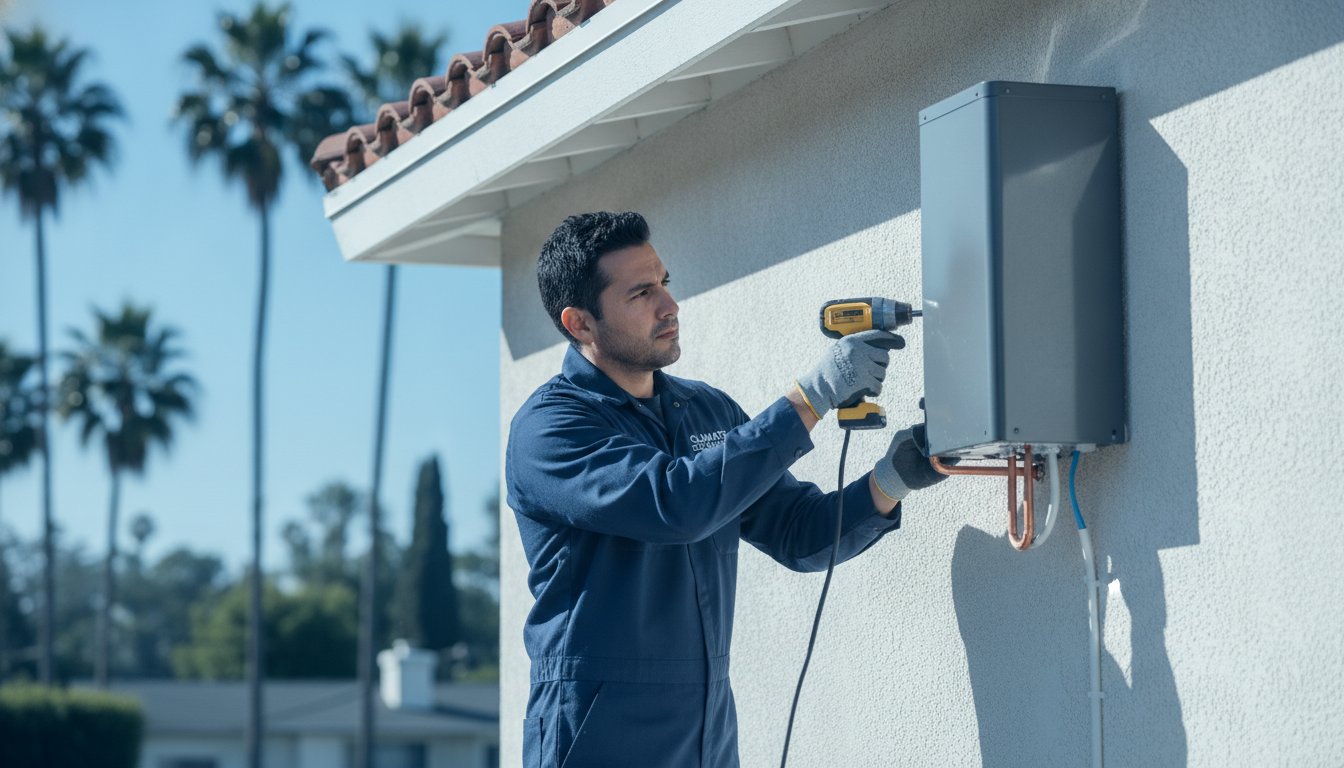
In Los Angeles, the true cost of a cooling system is no longer just about the price tag on the unit; it's a three-part investment in hardware, local compliance, and long-term efficiency. If you're wondering exactly how much to install new AC in Los Angeles this year, you've likely noticed that the landscape has shifted. With the 2026 California Title 24 standards in full effect and the mandatory transition to R-454B refrigerants, a standard installation now requires a much higher level of technical precision and regulatory knowledge than it did just a few years ago.
We understand that watching your utility bills climb while trying to decode new SEER2 regulations can feel overwhelming. Whether you're worried about finding a contractor who follows strict LADBS codes or you're simply trying to find the most efficient path to a cool home, you deserve clear answers. This guide provides a transparent breakdown of current installation factors, from equipment and labor to the latest LADWP rebates. You'll learn how to navigate the new 2026 requirements so you can secure a reliable, high-efficiency system that keeps your family comfortable without the stress of hidden fees or failed inspections.
Key Takeaways
- Understand how much to install new AC in Los Angeles by reviewing the current market ranges for hardware, labor, and mandatory local compliance.
- Learn how the latest 2026 SEER2 efficiency standards and new refrigerant mandates affect both your upfront quote and future utility savings.
- Navigate the "Los Angeles Factor" by identifying the specific Title 24 permits and HERS testing requirements needed for a code-compliant installation.
- Maximize your return on investment by exploring available 2026 local utility rebates from LADWP that can help offset the cost of high-efficiency cooling systems.
- Discover the value of a tailored installation approach that ensures your new system is perfectly fitted to your home’s unique layout and cooling demands.
The Real Cost of New AC Installation in Los Angeles (2026)
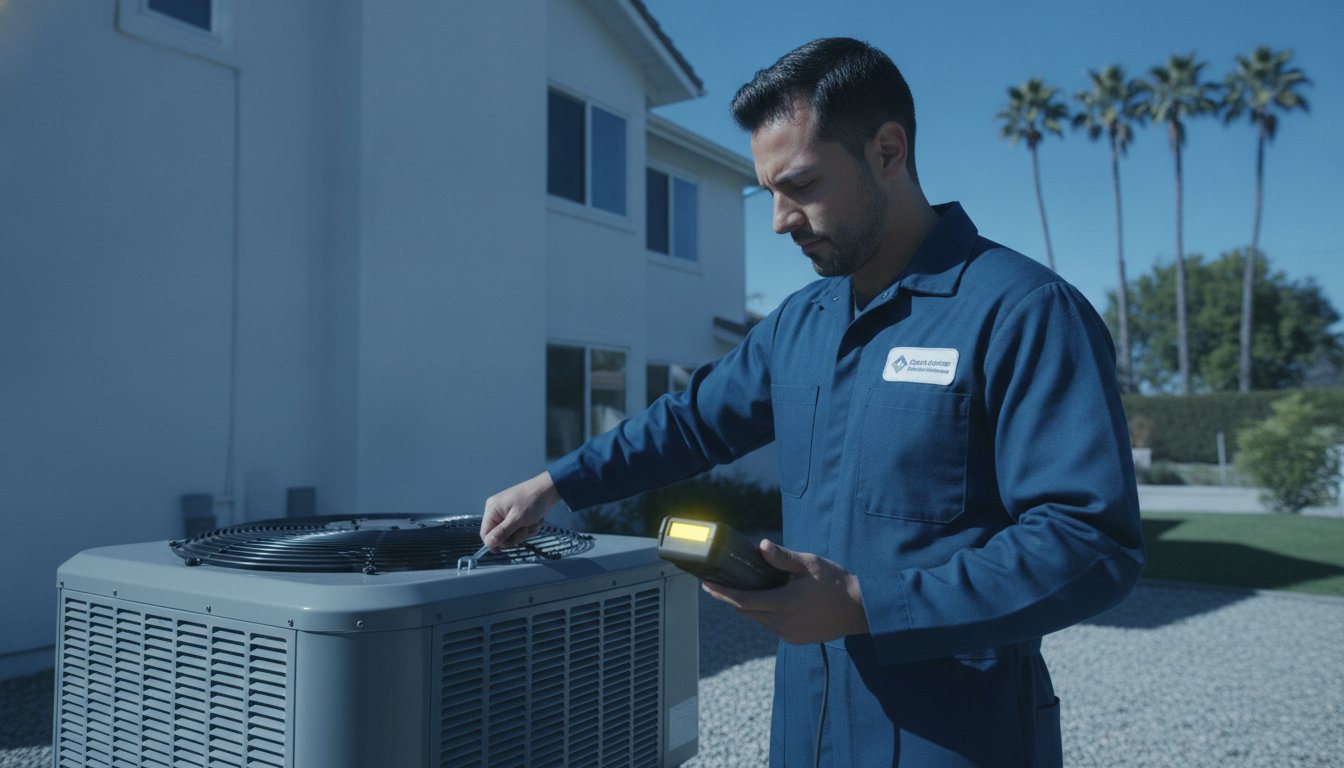
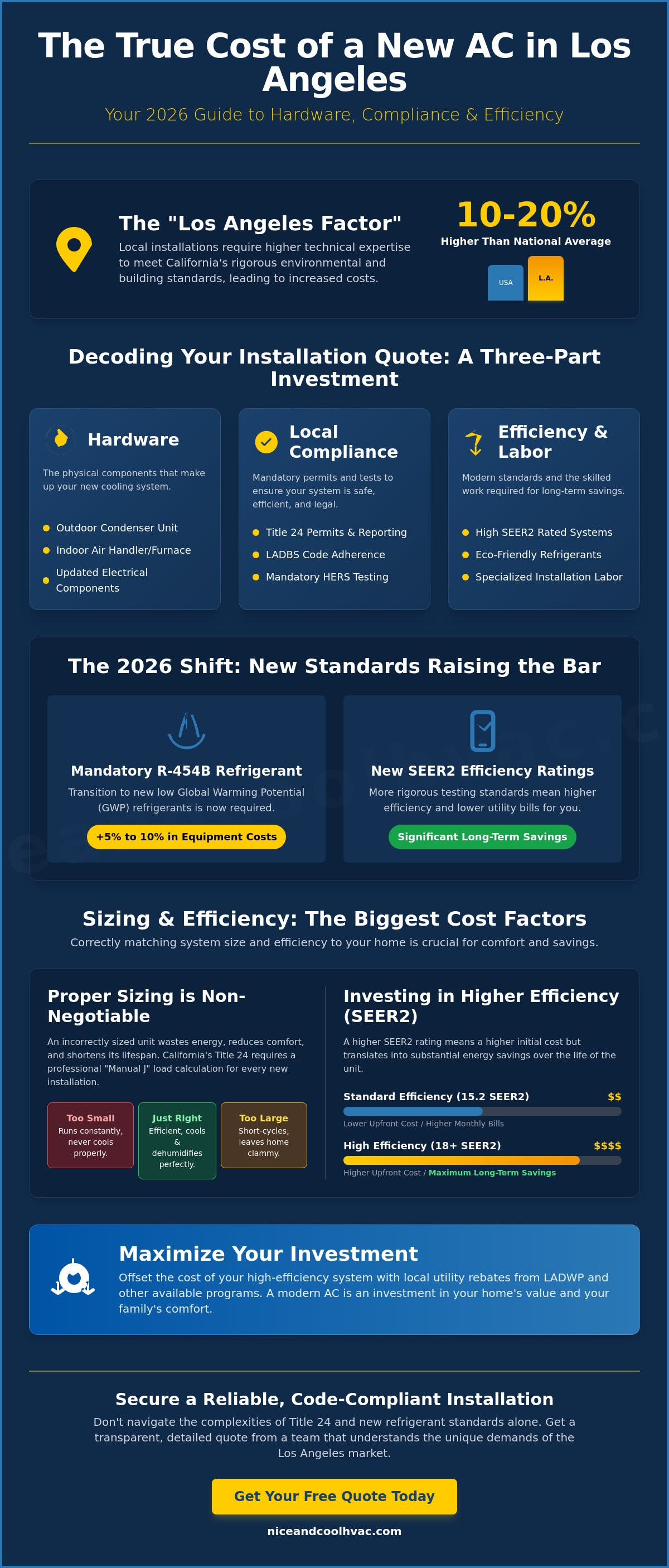
Calculating how much to install new AC in Los Angeles in 2026 requires looking beyond the national averages often found on generic home improvement sites. In our local market, homeowners typically face a total investment that sits 10% to 20% higher than the rest of the country. This "Los Angeles premium" isn't just a matter of geography; it's a reflection of the high level of technical expertise required to meet California’s rigorous environmental and building standards. When you request a quote, you're investing in more than just a piece of hardware. You're paying for a complex project that includes the outdoor condenser, an indoor air handler, updated electrical components, and the specialized labor required to ensure every connection is airtight.
Whether you need a simple equipment replacement or a full system installation determines a large portion of your project's scope. A replacement typically involves swapping out an old unit while utilizing your home’s existing, functional ductwork. If your home has never had central air, or if your current ducts are leaky and undersized, a full system installation becomes necessary. Providers like Advantage Cooling & Heating can design and fit a new distribution network, ensuring that your high-efficiency unit isn't hindered by poor airflow or outdated infrastructure.
Typical Price Ranges by System Type
The type of technology you choose will be the primary driver of your total project price. Standard central air conditioning units remain a common choice, but they must now meet much higher efficiency thresholds than in previous years. Many Los Angeles residents are now opting for high-efficiency heat pumps, which provide both cooling and heating in a single electric system. If your home has unique architectural challenges or lacks space for traditional ductwork, ductless mini-split systems offer a tailored solution for zoned cooling, allowing you to manage the temperature of each room independently.
Why 2026 Prices Reflect New Industry Standards
If you've noticed that quotes are higher than they were a few years ago, it's largely due to the 2026 transition to eco-friendly refrigerants. As of January 1, 2026, the industry has fully moved away from older refrigerants in favor of low-GWP (Global Warming Potential) options like R-454B. This mandate has led to a 5% to 10% increase in equipment costs across the board. Additionally, modern systems are now rated using the Seasonal Energy Efficiency Ratio (SEER) 2 standards. These units are more complex to manufacture but offer significantly lower monthly utility bills. When you add in smart-home integration features that allow for remote monitoring and precision control, the initial investment reflects a much more sophisticated and dependable piece of technology than the units of a decade ago.
Size and Efficiency: How Tonnage and SEER2 Ratings Impact Your Quote
When you begin researching how much to install new AC in Los Angeles, the two most influential factors on your final quote are the unit's cooling capacity and its efficiency rating. Cooling capacity is measured in "tons." This term doesn't refer to the weight of the machine, but rather its ability to remove heat from your home. If a system is too small, it will run constantly without ever reaching your desired temperature. If it's too large, it will "short-cycle," turning on and off so rapidly that it fails to remove humidity, leaving your home feeling clammy and uncomfortable.
Sizing Your AC for the Los Angeles Climate
Your specific neighborhood plays a massive role in determining the right tonnage. A 1,500-square-foot home in breezy Santa Monica has vastly different cooling needs than the same sized house in the sweltering heat of the San Fernando Valley. To get an accurate price, a professional must perform a Manual J load calculation. This process accounts for your home’s square footage, insulation quality, window orientation, and even the local microclimate. This level of precision is a core part of California's Title 24 Building Energy Efficiency Standards, which ensure that every new installation is optimized for performance rather than just "guessed" based on old equipment sizes.
Choosing Your Efficiency Level
Efficiency is now measured by the SEER2 (Seasonal Energy Efficiency Ratio 2) standard. As of 2026, the baseline for new installations in the Southwest region has increased, meaning even an entry-level unit today is more efficient than a premium model from a decade ago. If you opt for a basic SEER2 model, your upfront hardware cost will be lower. However, many Los Angeles homeowners find the "sweet spot" in premium variable-speed systems. Unlike standard units that are either 100% on or 100% off, variable-speed technology adjusts its output in tiny increments. This allows the system to maintain a perfectly steady temperature while using a fraction of the electricity required by older models.
While the initial investment for a high-efficiency unit is higher, the long-term ROI is found in your monthly utility bills. With LADWP and Southern California Edison rates continuing to rise, a system that sips power can pay for its price difference in just a few years. If you aren't sure which efficiency level fits your budget and lifestyle, a professional Air Conditioning Installation specialist can provide a side-by-side comparison of your projected energy savings. Choosing the right balance ensures you aren't just buying a box, but investing in a decade of dependable, low-cost comfort.
The "Los Angeles Factor": Permits, Title 24, and Labor Complexity
When you ask how much to install new AC in Los Angeles, you're often looking for a single price tag. However, the "Los Angeles Factor" involves several mandatory layers of compliance that aren't optional for a professional installation. In 2026, every residential system replacement must adhere to California’s Title 24 energy standards. This isn't just bureaucratic red tape; it’s a set of rules designed to ensure your new system actually delivers the efficiency you paid for. If your contractor suggests skipping the permit process, it's a major red flag that could lead to failed property inspections or legal issues when you eventually try to sell your home.
Compliance and Legal Requirements
A legal installation in the Los Angeles area requires a mechanical permit from the LADBS or your local building department. In 2026, permit fees typically range between $200 and $600 depending on your specific municipality. Beyond the permit, a third-party HERS (Home Energy Rating System) rater must visit your home to test for duct leakage and verify the refrigerant charge. These independent tests usually cost between $400 and $800. While these fees add to the total, they protect you by ensuring your ducts aren't leaking expensive, conditioned air into your attic. While federal incentives like the Energy Efficient Home Improvement Credit have seen shifts in availability recently, staying compliant ensures you remain eligible for any active local utility rebates.
Installation Challenges in LA Homes
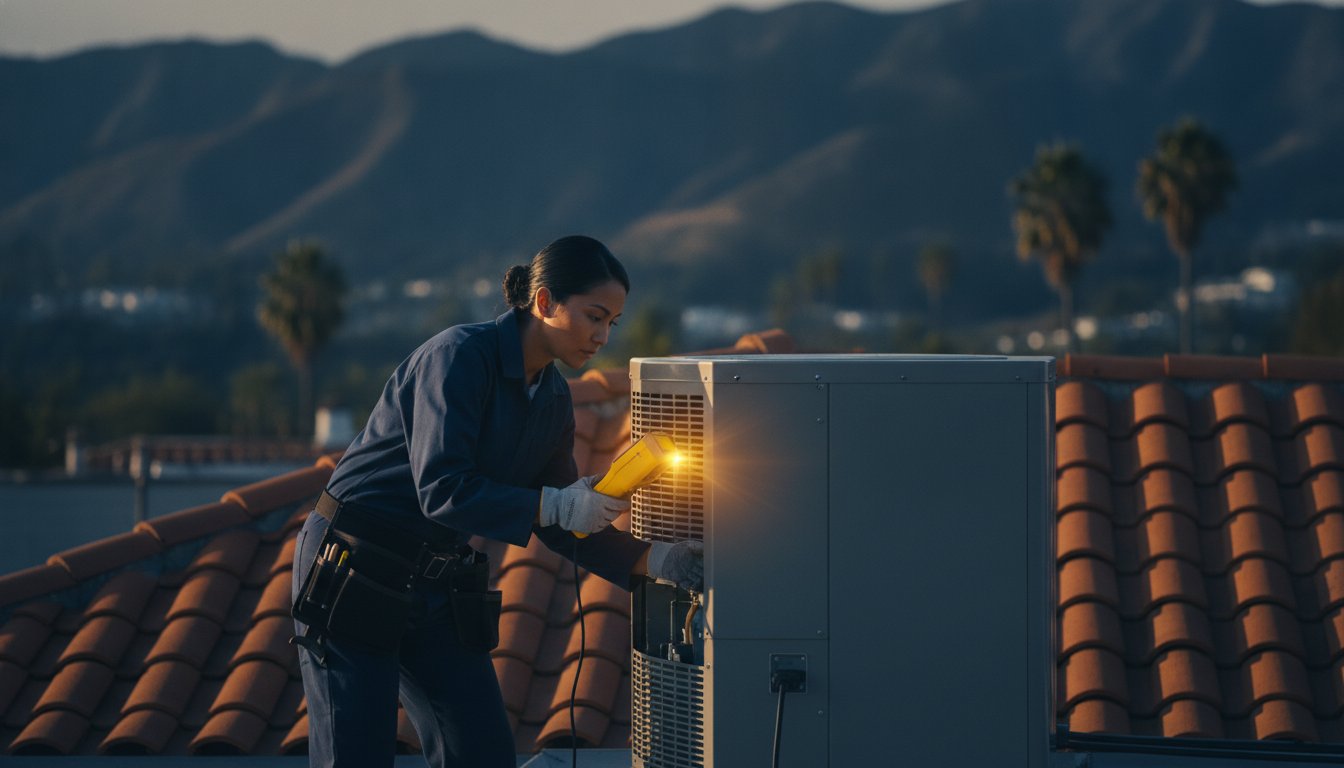
The architecture of your home often dictates the labor complexity of the project. If you live in a historic neighborhood like Hancock Park or Pasadena, you might have tight attic access or narrow crawl spaces that require additional time and specialized equipment. Whether your home has an aging electrical panel or requires a dedicated 240-volt circuit, these upgrades are necessary to support modern high-draw units. If your existing ductwork is undersized or damaged, refining or replacing it becomes a critical part of the quote. These "invisible" costs are essential for comfort, as even the best AC unit can't perform well if the distribution system is failing. A reliable specialist will tailor the installation plan to your home’s specific layout, ensuring a seamless fit that respects the integrity of your property.
Maximizing Your Investment: Rebates, Tax Credits, and ROI
While the initial quote for how much to install new AC in Los Angeles can be significant, the net cost often looks much different once you apply current incentives. In 2026, the financial strategy for a new system has shifted. While some previous federal tax credits under the Inflation Reduction Act expired at the end of 2025, the focus has moved toward aggressive local utility support. By choosing high-efficiency equipment, you aren't just buying a cooler home; you're positioning yourself to recoup a large portion of your investment through utility programs designed to lower the city's energy grid strain. Many homeowners also utilize flexible financing options to bridge the gap between the initial purchase and the arrival of their rebate checks. This approach allows you to install a premium, high-efficiency system today while keeping your monthly cash flow manageable.
Current Rebate Opportunities in Los Angeles
The Los Angeles Department of Water and Power (LADWP) currently offers some of the most robust incentives in the country, particularly for those switching to electric systems. If you install a qualifying central heat pump, you may be eligible for rebates as high as $2,500 per ton. For a typical four-ton home system, this could translate to $10,000 in total savings. For a standard central air conditioner, tiered rebates of $100 to $120 per ton are available for systems meeting specific SEER2 requirements. You can further maximize these savings by adding a smart thermostat, which currently qualifies for an additional $140 rebate through local programs. Keep in mind that state-level programs like HEEHRA or TECH Clean California currently have waitlists due to high demand. Local utility support remains a dependable source of funding for Los Angeles residents.
Calculating Your Long-Term Savings
The true return on investment for a new AC installation is measured over years of operation. Upgrading from a unit that is ten years old to a modern SEER2-compliant system can lead to a substantial reduction in your monthly Southern California Edison or LADWP bills. Beyond energy savings, a permitted and documented installation increases your home's resale value, as buyers in the Los Angeles market increasingly prioritize energy-efficient, code-compliant upgrades. To protect this investment, Nice and Cool Inc. recommends enrolling in the Nice and Cool Club Maintenance Plan, which focuses on cost prevention by ensuring your system runs at peak efficiency. Regular maintenance prevents the small, expensive issues that often lead to premature system failure, keeping your long-term operating costs as low as possible. By stacking these utility rebates with long-term energy savings, the cost of a high-efficiency system often pays for itself well before the end of its lifespan.
Professional AC Installation with Nice and Cool Inc.: Reliability You Can Trust
When you examine how much to install new AC in Los Angeles, the final price is just one piece of the puzzle. The true value of your investment depends on the quality of the work and the dependability of the company. At Nice and Cool Inc., we provide a tailored approach to home comfort that goes beyond simple equipment swaps. We understand that a high-efficiency system needs precise calibration to achieve the energy savings promised by its SEER2 rating. Our focus is on long-term reliability; we want your home to be a sanctuary from the Southern California heat for many years to come.
The Nice and Cool Inc. Installation Process
Every successful project begins with a deep site evaluation. We don't rely on the size of your old unit or simple square footage estimates. Instead, we perform a rigorous Manual J load calculation to find the exact cooling capacity your specific home requires. This process looks at your insulation, window types, and even the shade patterns of your property. If a system is perfectly fitted, it runs more efficiently and lasts longer. It also prevents the short-cycling issues that lead to high humidity and premature wear. Once the physical installation is done, our team handles the compliance steps mentioned earlier. We ensure your system meets all Title 24 standards and passes HERS testing, providing you with documented proof of performance. After the job is finished, we offer continued peace of mind through the Nice and Cool Club Maintenance Plan, which provides the regular care needed to prevent expensive repairs.
Why Local Expertise Matters
We've served the Los Angeles County community since 2005, building a reputation for honesty and craftsmanship. As a family-owned business, Nice and Cool Inc. doesn't use high-pressure sales tactics or hide fees in the fine print. We believe that the real answer to how much to install new AC in Los Angeles includes the value of professional skill and neighborly service. We know the local building codes and microclimates because we live and work here too. Whether you're in a historic bungalow or a modern hillside home, we have the experience to handle the specific architectural challenges of our city. If you're ready to invest in a cooler, more efficient future for your home, schedule your professional consultation today and see the difference that local expertise makes.
Secure Your Home Comfort for the Years Ahead
Deciding on a new cooling system is a significant step toward a more comfortable and energy-efficient home. You've seen that 2026 standards require a higher level of technical compliance and a mandatory shift toward eco-friendly refrigerants. Understanding how much to install new AC in Los Angeles involves balancing initial equipment costs with the long-term value of a high-efficiency, code-compliant system. By prioritizing Title 24 and HERS verification, you ensure your system operates exactly as intended without performance setbacks or unexpected legal issues.
Since 2005, our family-owned team has specialized in these complex local requirements. We focus on providing the precision craftsmanship and transparent guidance you need to navigate these industry changes. Whether you're maximizing local rebates or looking for the long-term reliability of the Nice and Cool Club Maintenance Plan, we're here to act as your trusted local specialist. Request a Transparent Quote for Your LA Home and take the first step toward a stress-free, professional installation. We look forward to helping you find the perfect cooling solution for your family.
Frequently Asked Questions
Is it cheaper to replace my furnace and AC at the same time in Los Angeles?
Yes, replacing both units simultaneously is generally more cost-effective because it reduces total labor hours and administrative costs. If you replace them together, you only pay for a single permit and one HERS testing session rather than paying for these requirements twice. This approach also ensures that your indoor and outdoor components are perfectly matched for maximum efficiency and long-term reliability.
How much do AC permits cost in Los Angeles County in 2026?
Permit fees for a new HVAC installation in Los Angeles typically range from $200 to $600. The exact price depends on your specific city or unincorporated area and the total scope of the work being performed. These fees cover the cost of the application and the final safety inspection conducted by the Los Angeles Department of Building and Safety (LADBS).
What is HERS testing, and is it required for my new AC installation?
HERS testing is a mandatory third-party verification process required by California’s Title 24 energy standards. A certified rater must inspect your system to ensure the ductwork is properly sealed and the refrigerant charge is accurate. This testing typically costs between $400 and $800. It is a vital step for confirming your system meets state efficiency laws and is required for most utility rebates.
Can I install a new AC myself to save on labor costs?
No, you should not attempt a self-installation because California law requires a C-20 licensed contractor to handle systems involving refrigerants. A DIY installation will likely void your equipment warranty and will not meet the strict Title 24 and LADBS permit requirements. Professional installation ensures your system is safely configured and fully compliant with all local building codes.
How long does a typical air conditioning installation take in LA?
A standard residential AC replacement usually takes one full day to complete from start to finish. If your project requires extensive ductwork repairs, electrical panel upgrades, or complex attic access, it may extend into a second day of work. We provide a clear timeline during your initial evaluation so you can plan your schedule around the installation process with confidence.
Are there specific rebates for installing a heat pump in Los Angeles?
Yes, LADWP offers substantial rebates of up to $2,500 per ton for qualifying central heat pump installations. To receive the maximum incentive, the system must meet high-efficiency benchmarks such as 20.5 SEER2. These rebates are designed to make high-efficiency electric systems more affordable for local homeowners while helping to reduce the overall strain on the city’s energy grid.
What SEER2 rating is required for new AC units in California?
As of 2026, the minimum efficiency standard for new central air conditioners in California is 14.3 SEER2. However, when you are calculating how much to install new AC in Los Angeles, it is often worth investing in a higher rating. Many local utility rebates require a minimum of 15.2 or 16.0 SEER2 to qualify for financial incentives and long-term energy savings.
Will a new AC unit really lower my LADWP or SCE bill?
Yes, upgrading to a modern system can significantly reduce your monthly utility costs. Older units often operate at much lower efficiency levels and must run longer to cool your home. By installing a high-efficiency unit that is properly sized for your square footage, you can lower your energy consumption while enjoying more consistent indoor temperatures and improved air quality.
Frequently Asked Questions
The type of technology you choose will be the primary driver of your total project price. Standard central air conditioning units remain a common choice, but they must now meet much higher efficiency thresholds than in previous years. Many Los Angeles residents are now opting for high-efficiency heat pumps, which provide both cooling and heating in a single electric system. If your home has unique architectural challenges or lacks space for traditional ductwork, ductless mini-split systems offer a tailored solution for zoned cooling, allowing you to manage the temperature of each room independently.