Multi-Zone vs. Single-Zone Mini Split: Which Is Best for Your Los Angeles Home?
August 5, 2026 17 min read
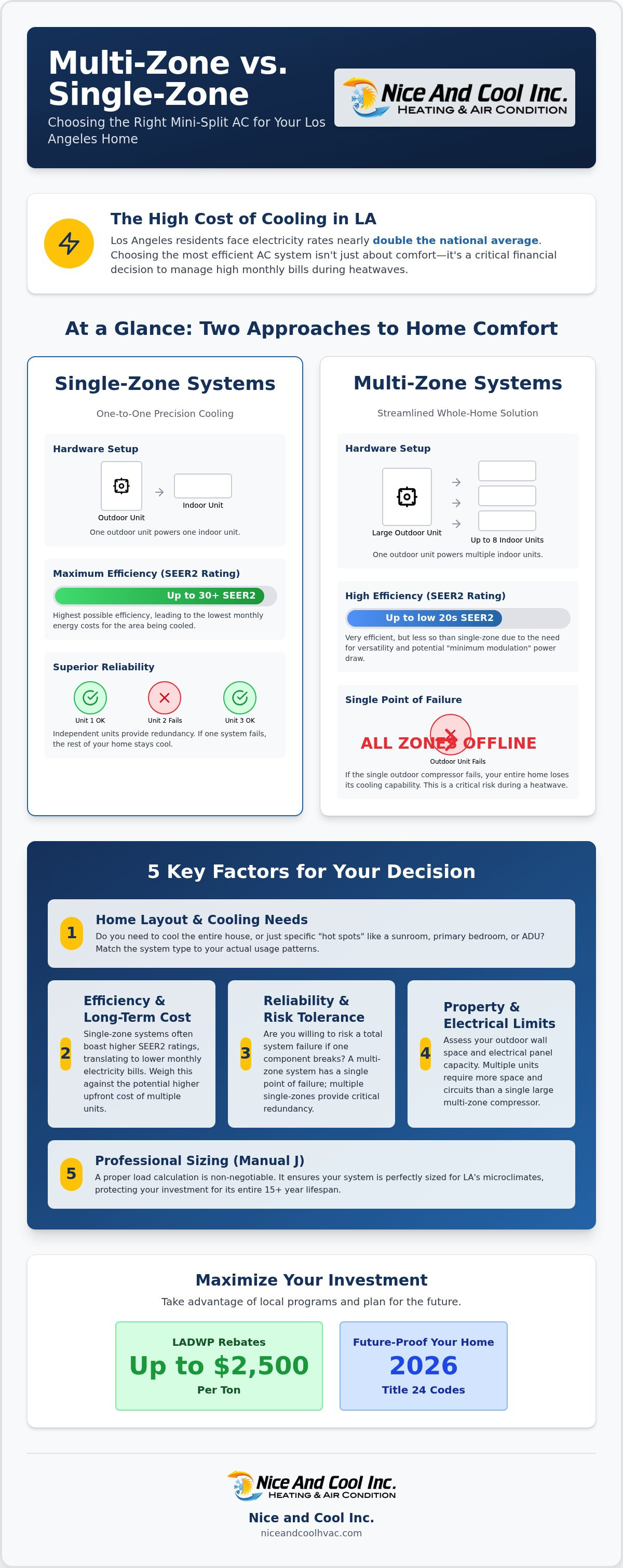
The most streamlined air conditioning setup for your Los Angeles home might actually be the one that leaves you stranded during a record-breaking heatwave. When you're comparing a multi zone vs single zone mini split, it's easy to focus only on how many outdoor units will sit in your side yard. Whether you're cooling a single bedroom or trying to bring comfort to an entire Craftsman in Silver Lake, the right choice depends on your home's unique layout and your tolerance for risk. We understand the frustration of seeing your electricity bill climb when the Santa Ana winds kick up, especially since local rates are nearly double the national average.
This guide breaks down the critical differences in efficiency, reliability, and total cost of ownership to help you make an informed decision. You'll learn why a single outdoor unit powering multiple rooms offers great aesthetics but might lack the redundancy you need when temperatures spike. We also look at how the 2026 Title 24 codes and current LADWP rebates, which can reach $2,500 per ton, influence which system will truly serve your family for the next 15 years or more. By the end, you'll know exactly how to tailor a system that provides consistent, zoned comfort without the fear of a total system failure.
Key Takeaways
- Identify the fundamental hardware differences between a single outdoor unit and a multi-room setup to determine the best fit for your home's layout.
- Compare efficiency ratings to see why single-zone systems often reach higher SEER2 levels, leading to lower monthly energy costs in Southern California.
- Understand the reliability trade-offs of a multi zone vs single zone mini split and why having independent units can prevent a total home cooling failure during a heatwave.
- Assess your property's physical limits, including electrical panel capacity and outdoor wall space, to choose a configuration that won't require expensive upgrades.
- Learn how professional Manual J load calculations ensure your system is right-sized for Los Angeles weather, protecting your investment for 15 years or more.
Understanding the Basics: Multi-Zone vs. Single-Zone Mini Split Systems
Choosing the right cooling system for your home often feels like a puzzle, especially with the unique architecture we have here in Los Angeles. Whether you live in a mid-century bungalow or a modern condo, the debate between a multi zone vs single zone mini split usually starts with how much space you need to cover. Ductless mini-split systems have become the preferred choice for local homeowners because they bypass the energy loss associated with leaky ducts. According to ENERGY STAR, those leaks can account for 20% to 30% of your conditioned air loss. By eliminating the ductwork, you keep that cold air where it belongs.
At Nice and Cool Inc., we don't believe in one-size-fits-all kits found at big-box retailers. We take a tailored approach to every Los Angeles property, looking at your specific layout to determine which configuration provides the best long-term value. A single-zone system pairs one outdoor compressor with exactly one indoor air handler. In contrast, a multi-zone system uses a larger, more powerful outdoor unit that can support up to eight different indoor units throughout your home. Understanding which one fits your lifestyle is the first step toward lower energy bills and better sleep during those July heatwaves.
How Single-Zone Systems Work
If you have a specific "hot spot" like a sunroom or a newly built ADU, a single-zone system is often the most logical solution. These units operate on a dedicated power and refrigerant line, making them incredibly efficient for a single space. Because the system is contained to one room, there are fewer points of failure. If you only need to cool the master bedroom to 68 degrees while the rest of the house stays at 75, this 1:1 ratio provides pinpoint precision. It's a simple, effective way to add comfort without overhauling your entire HVAC setup.
The Mechanics of Multi-Zone Cooling
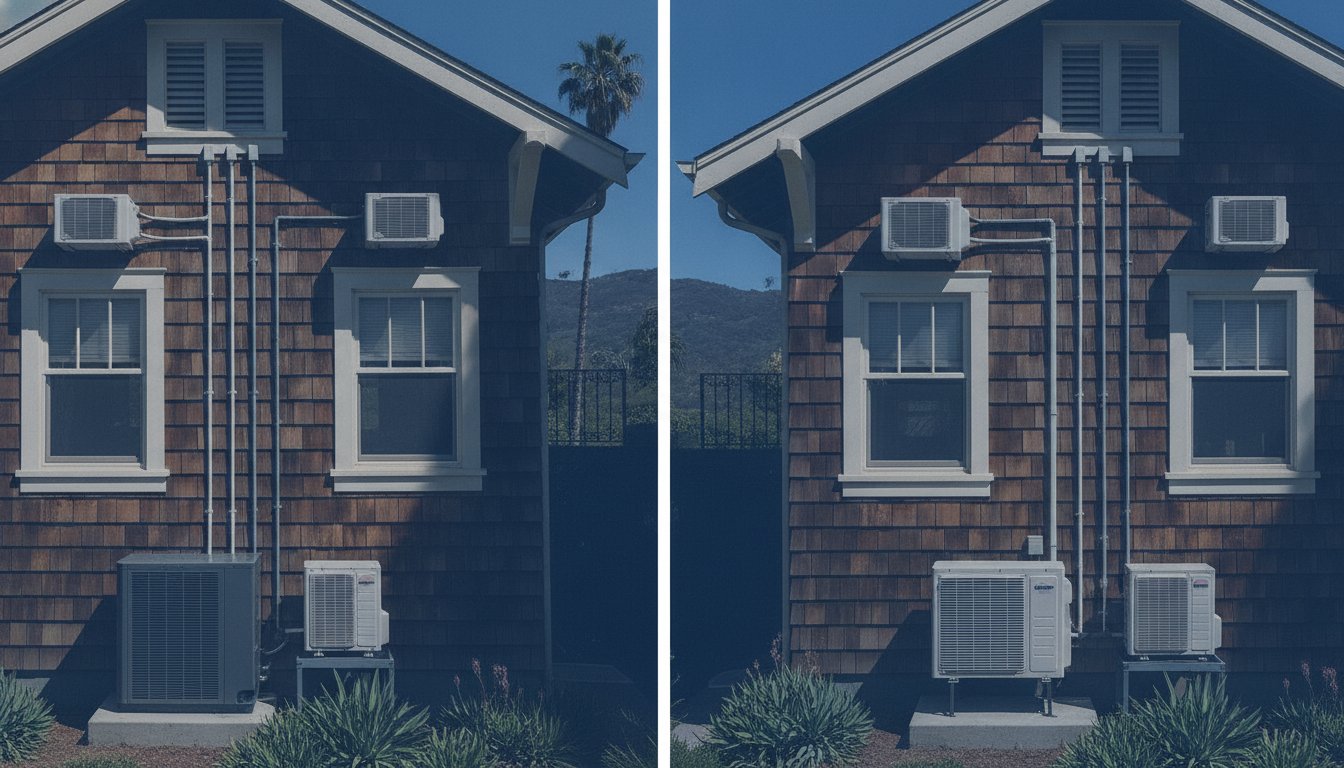
Multi-zone systems are designed for whole-home comfort with a minimal physical footprint. One outdoor unit manages the varying cooling loads of several rooms at once. This allows for true zoning, where every family member can set their own preferred temperature in their own space. From an aesthetic standpoint, this is a major win for LA properties with limited outdoor real estate. Instead of lining up three or four outdoor units along your side yard, you have one streamlined compressor doing the heavy lifting. It keeps your home's exterior looking clean while providing sophisticated climate control for every square foot inside.
Efficiency and Performance: Which System Saves More in Los Angeles?
In Los Angeles, where residential electricity prices hit approximately 31 cents per kilowatt-hour in 2024, efficiency isn't just a buzzword. It's a monthly financial reality. When evaluating a multi zone vs single zone mini split, the efficiency numbers tell a surprising story. While both qualify as high-efficiency major types of HVAC systems, single-zone units typically hold the performance crown. Some premium single-zone models can reach 30+ SEER2, whereas multi-zone systems often top out in the low 20s. This gap exists because a single-zone unit is perfectly tuned to its specific indoor partner, whereas a multi-zone unit must be versatile enough to handle several different air handlers at once.
The strain on your system changes depending on where you live. If you're in the San Fernando Valley, your unit fights triple-digit heat for weeks. If you're in a coastal area like Venice, the humidity and salt air present different challenges. A system that isn't right-sized for these microclimates will work harder and die younger. If you want to ensure your setup is optimized for your specific neighborhood, our team can help you explore customized installation options tailored to your home's exposure.
The Efficiency Tax of Multi-Zone Systems
Large compressors often struggle with what we call "minimum modulation." This refers to the lowest power level the outdoor unit can run at. If you have a 3-ton multi-zone compressor but only turn on one small 9,000 BTU bedroom unit at night, that large compressor might still draw more power than a dedicated, smaller single-zone unit would. It's like using a semi-truck to deliver a single envelope. For specific room additions or primary suites, a single-zone unit is often the efficiency champion because it doesn't carry the energy "tax" of a larger, partially idle system.
SEER2 Standards and Local Energy Costs
California's energy codes have raised the bar for everyone. SEER2 is the gold standard for measuring 2026 cooling efficiency in California, and all new mini-splits under 65,000 BTU must meet a minimum of 15.0 to comply with Title 24. Inverter technology plays a massive role here. Instead of clicking on and off like a traditional furnace, these systems ramp up and down smoothly. This prevents the massive power spikes that occur every time an old-fashioned AC starts up. Given that LA utility rates are nearly double the national average, choosing a unit with a higher SEER2 rating significantly shortens your return on investment timeline.
The Reliability Gap: Why Redundancy Is Critical for Your Comfort
When you're deciding between a multi zone vs single zone mini split, homeowners often overlook the concept of redundancy. Redundancy is your mechanical safety net. If you choose a multi-zone system, you're essentially putting all your cooling eggs in one basket. While this setup saves space, it creates a single point of failure for your entire home. If that one outdoor unit stops working on a Tuesday in August, every single room in your house becomes a sauna. In contrast, having multiple single-zone systems means that if the unit in your living room needs a repair, your bedroom remains a cool sanctuary. This independence is the ultimate peace of mind for Los Angeles residents who know how unforgiving our summer heatwaves can be.
Repair complexity also differs between these two configurations. Multi-zone systems involve more complex electronic expansion valves and sophisticated communication boards to manage the load of several rooms. Because these components are highly specialized, sourcing a specific replacement part can sometimes take longer than it would for a standard single-zone unit. We believe in providing solutions that keep you comfortable without unnecessary downtime, which is why we take the time to evaluate which risk profile fits your family's needs.
The 'All Eggs in One Basket' Scenario
Imagine it's a 100-degree day in the San Fernando Valley. A multi-zone compressor failure doesn't just mean one room is warm; it means the whole house is uninhabitable. Sourcing parts for these larger units can be more difficult during peak season when demand is highest. At Nice and Cool Inc., we often recommend installing two or three separate single-zone systems for larger homes rather than one giant multi-zone unit. This tailored strategy ensures that you are never left completely without cooling. It's a more dependable way to manage the extreme temperatures we see in Southern California.
Maintenance and Long-Term Reliability
Regardless of the configuration you choose, consistent upkeep is the only way to reach a 15-year lifespan. The Nice and Cool Club Maintenance Plan is designed to protect these high-performance systems from the dust and pollutants common in the LA basin. Multi-zone units require a bit more attention during service calls because a technician must verify the communication and refrigerant flow for every indoor head. Single-zone units are more straightforward to maintain but still require regular filter cleanings and coil inspections to stay efficient. When a system is properly sized for its load, it doesn't have to overwork, which significantly reduces wear and tear on the compressor over time.
Decision Framework: Choosing the Right Configuration for Your Layout
Deciding on a multi zone vs single zone mini split requires looking at more than just a spec sheet. You have to look at your electrical panel and your side yard. Many older homes in neighborhoods like Highland Park or Pasadena still operate on 100-amp or 125-amp panels. If you choose three separate single-zone systems, you'll need space for three double-pole breakers. A multi-zone system usually only requires one. Whether you have the physical room for multiple outdoor units is another hurdle. If your home sits close to the property line, one large unit might be your only legal option under local building codes.
Your daily habits also dictate the best setup. If you only use the guest room twice a year, it doesn't make sense to tie it into a complex multi-zone system that might reduce the efficiency of your primary bedroom's cooling. Conversely, if your family occupies every room simultaneously, the zoned comfort of a multi-zone system is hard to beat. We recommend looking at your "usage profile" to see where you can save the most on those high Southern California utility bills. If you're ready to see which layout works for your specific address, schedule a professional site evaluation with our team today.
When to Choose a Single-Zone Mini Split
These units are the gold standard for isolated spaces. If you've recently completed a garage conversion or added an ADU, a single-zone unit provides independent control without interfering with the main house. They are also the best choice when you want the absolute highest efficiency ratings. If your electrical panel is on the opposite side of the house from the indoor unit, running a single set of lines is often much more cost-effective than trying to bridge a multi-zone gap. This configuration keeps the installation simple and minimizes the potential for future refrigerant leaks.
When a Multi-Zone System Makes Sense
Multi-zone systems excel in homes where rooms are clustered together. This layout minimizes the length of refrigerant lines, which keeps installation cleaner and more efficient. If you live in a community with a strict HOA, you might be limited to a single outdoor footprint. A multi-zone system keeps your home's exterior looking professional and uncluttered. It's the ideal choice for whole-home retrofits where you want every room to have its own thermostat without turning your side yard into a crowded mechanical lot. When your indoor air handlers are all within 50 feet of a central outdoor location, the multi-zone approach is often the most practical path forward.
Professional Installation: The Nice and Cool Approach in Los Angeles
Deciding between a multi zone vs single zone mini split is only half the battle; the quality of the installation determines whether that system actually lasts its intended 15 year lifespan. Many homeowners are tempted by DIY kits, but these often fail prematurely. A common culprit is a poorly made flare connection or a system that wasn't properly vacuumed of moisture and non-condensables. Without a professional vacuum pump and a micron gauge, you risk acid buildup in the compressor. This leads to a total failure that most manufacturer warranties won't cover because the installation didn't meet professional standards.
We perform a detailed Manual J load calculation for every property we visit. This isn't just about square footage. It's about how the afternoon sun hits your specific street in Los Angeles and the quality of your insulation. Your home's decor shouldn't be an afterthought either. We offer tailored options like recessed ceiling cassettes or low-profile floor consoles if a traditional wall-mount unit doesn't fit your vision. We also prioritize indoor air quality during the setup, ensuring your new system effectively filters out the urban pollutants common in the LA basin.
Expert Sizing for LA Microclimates
Los Angeles is a city of microclimates, and your HVAC system needs to reflect that. If you live in Santa Monica, your cooling needs are vastly different from someone in Burbank where temperatures regularly soar ten degrees higher. A 12,000 BTU unit that works perfectly near the coast might be woefully undersized for a valley home. We adjust our recommendations based on your specific neighborhood to ensure your system doesn't short-cycle or overwork itself. This level of detail is a standard part of our Heat Pump Installation in Los Angeles process.
The Nice and Cool Inc. Guarantee
At Nice and Cool Inc., we combine professional confidence with neighborly warmth. We treat your property with the same care we'd give our own family's home. Whether we're performing a complex multi zone vs single zone mini split setup or a standard AC installation in Los Angeles, our goal is your long-term peace of mind. We take pride in our local roots and our reputation for honesty and craftsmanship. We don't just install a box on your wall; we partner with you to ensure your home remains a sanctuary of comfort for years to come. Ready to find the perfect fit for your layout? Schedule your mini-split consultation with Nice and Cool Inc. today!
Securing Your Home’s Long-Term Comfort
Choosing between a multi zone vs single zone mini split isn't just a technical decision; it's an investment in your family's daily peace of mind. We've explored how independent units offer superior redundancy and record-breaking efficiency, while multi-zone systems provide a streamlined look for homes with limited outdoor space. Whether you prioritize the highest possible SEER2 ratings or a clean side yard, the right choice always begins with a professional assessment of your home's unique layout and electrical capacity.
Since 2005, our expert technicians have specialized in high-efficiency ductless systems across Los Angeles County. We understand that every neighborhood has its own cooling challenges. By pairing a tailored installation with our Nice and Cool Club Maintenance Plan, you can ensure your system remains dependable for 15 years or more. Don't leave your comfort to chance during the next heatwave. Ready for a custom cooling solution? Get a professional mini-split quote from Nice and Cool Inc.
We look forward to helping you create the perfect climate for your Los Angeles home. Our team is here to guide you every step of the way toward a cooler, more efficient future.
Frequently Asked Questions
Is it cheaper to install two single-zone mini splits or one dual-zone?
Installing a single dual-zone system is often more cost-effective from a hardware and space perspective than purchasing two completely separate systems. While the dual-zone outdoor unit is more expensive than a single-zone compressor, you only have to pay for one outdoor mounting setup and one electrical run. However, if the rooms are on opposite sides of your home, the labor costs for long refrigerant lines might make two single-zone units a more practical choice.
Can I add more indoor units to my multi-zone system later?
You can only add indoor units if your outdoor compressor was specifically sized with extra capacity and available ports during the initial installation. If you install a three-zone outdoor unit but only connect two indoor heads, you can add the third one later. If your outdoor unit is already at its port or BTU limit, you cannot add more rooms without replacing the entire outdoor compressor or installing a new single-zone system.
Do multi-zone mini splits use more electricity than single-zone units?
Multi-zone systems typically use more electricity because the larger outdoor compressor has a higher minimum power draw than a smaller, dedicated single-zone unit. When comparing a multi zone vs single zone mini split, the single-zone models are almost always the efficiency winners. This is because a single-zone system is perfectly matched to its indoor partner, whereas a multi-zone unit must remain versatile enough to power several rooms at once.
What is the maximum distance between indoor and outdoor mini-split units?
Most residential mini-splits allow for a maximum refrigerant line length between 50 and 100 feet, though this varies significantly by the specific model and manufacturer. It is important to remember that longer lines can slightly reduce the system's overall efficiency. Our team always looks for the shortest, most direct path to ensure your system doesn't have to work harder than necessary to move refrigerant through your home.
How long do ductless mini-split systems last in Los Angeles?
A well-maintained ductless mini-split system in Los Angeles typically lasts between 12 and 15 years, though some premium models can reach 20 years with regular service. Our local climate is generally mild, but the dust and pollutants in the air can clog coils if they aren't cleaned. Joining a maintenance plan is the best way to protect your investment and ensure the system reaches its maximum lifespan without major component failures.
If one indoor unit in a multi-zone system breaks, do the others still work?
If a single indoor air handler has a mechanical issue, such as a fan motor failure, the other units in a multi-zone system will usually continue to function normally. However, if the problem is a refrigerant leak or a failure in the shared outdoor compressor, the entire system will stop cooling. This is the primary reason some homeowners prefer the redundancy of multiple independent single-zone systems for their most critical rooms.
Are single-zone mini splits quieter than multi-zone systems?
Indoor noise levels are virtually identical for both types, as they use the same indoor air handler technology. The outdoor experience is slightly different; the larger compressor of a multi-zone system may produce more sound than a small single-zone unit. Because both systems use inverter technology to ramp up and down smoothly, they are significantly quieter than traditional central air conditioners that clatter on and off at full volume.
Does a mini-split system require a dedicated electrical circuit?
Yes, every mini-split system requires a dedicated electrical circuit and a disconnect switch at the outdoor unit to comply with local Los Angeles building codes. You cannot simply "tap into" an existing outlet or lighting circuit. During our site evaluation, we check your electrical panel to ensure it has the available space for the new breakers required to safely power your heating and cooling equipment.
Frequently Asked Questions
Installing a single dual-zone system is often more cost-effective from a hardware and space perspective than purchasing two completely separate systems. While the dual-zone outdoor unit is more expensive than a single-zone compressor, you only have to pay for one outdoor mounting setup and one electrical run. However, if the rooms are on opposite sides of your home, the labor costs for long refrigerant lines might make two single-zone units a more practical choice.