The 2026 Homeowner’s Checklist for Air Conditioner Repair in Los Angeles
June 5, 2026 19 min read
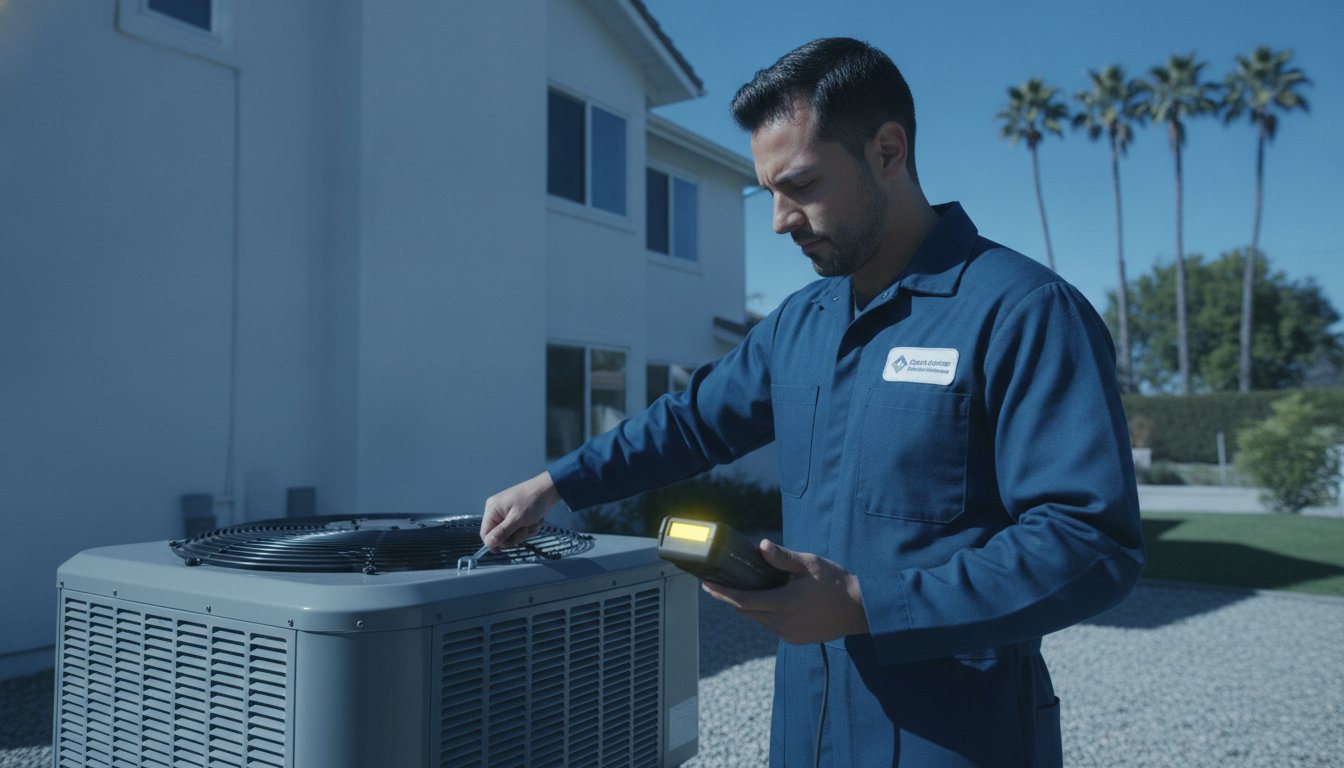
What if the difference between a major service bill and a simple afternoon fix was nothing more than a dirty air filter? In the middle of a Los Angeles heatwave, a failing cooling system feels like a true emergency, and it's easy to let that panic lead to expensive, unnecessary repairs. You want your home to stay cool without feeling like you're being taken advantage of by a contractor. If you're currently staring at a thermostat that won't budge, you aren't alone in wondering if it's time for a professional air conditioner repair in Los Angeles or just a quick DIY adjustment.
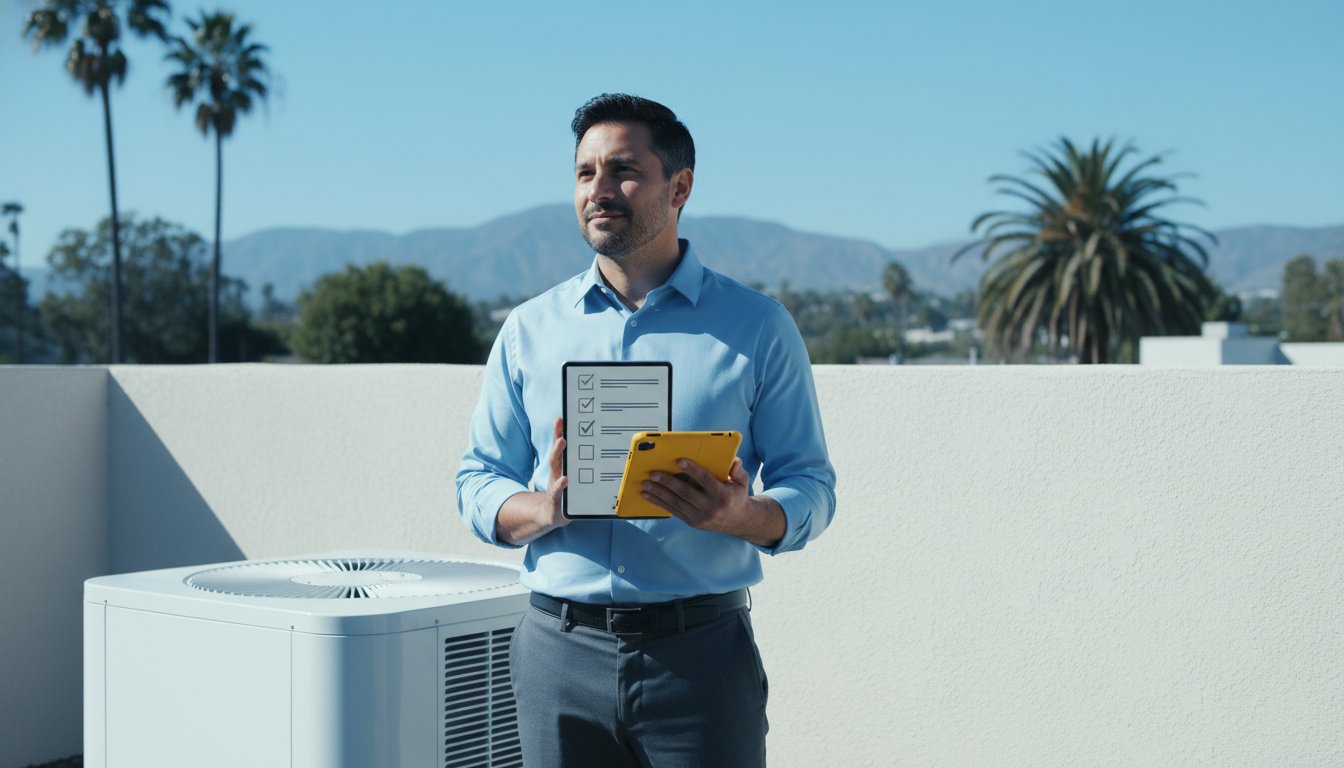
We understand that the uncertainty of repair versus replacement costs can be just as draining as the heat itself. This guide provides a comprehensive 2026 checklist designed to give you total peace of mind. You'll learn how to identify common cooling issues, perform safe troubleshooting steps, and recognize the exact moment you need a local expert to step in. We'll walk through everything from the new SEER2 standards to the latest refrigerant changes, ensuring you have a solution tailored to your home's long term comfort.
Key Takeaways
- Learn how to perform a quick DIY assessment of your thermostat and circuit breakers to potentially save on unnecessary service fees.
- Identify the specific warning signs, such as grinding noises or warm air, that signal it's time for professional air conditioner repair in Los Angeles.
- Understand how unique local factors like coastal salt air and wildfire ash can affect your system’s lifespan and indoor air quality.
- Apply the "50% Rule" and the "Age Rule" to determine if a repair is a sound investment or if a replacement is more cost-effective.
- Discover how to verify licensing and certifications so you can hire a local specialist with complete confidence in their craftsmanship.
The 5-Minute DIY Troubleshooting Checklist (Before You Call)
It's a sweltering afternoon in the Valley, and suddenly, the vents stop blowing. Your first instinct might be to search for professional air conditioner repair in Los Angeles, but don't panic just yet. Many service calls turn out to be minor issues that you can handle yourself in minutes. By performing a quick diagnostic, you can potentially save yourself the cost of a service visit while gaining a better understanding of how your system operates. We believe in empowering our neighbors with the knowledge to handle the small things, so you only have to call us when it truly matters.
The Thermostat and Power Check
If your cooling system won't kick on, start at the control center. A blank thermostat screen is often the result of dead AA or AAA batteries rather than a mechanical failure. Swap those out first. Whether your screen is lit or not, check the settings to ensure it's set to "Cool" and the temperature is at least five degrees below the current room temperature. It sounds simple, but it's a common oversight during the transition between seasons.
Look at the "Fan" switch next. If it's set to "On," the fan will run constantly even when the system isn't cooling. Setting it to "Auto" ensures the fan only runs during a cooling cycle, which helps manage humidity. If the system still won't respond, head to your electrical panel. If the HVAC breaker has moved to the middle position, flip it completely off and then back on once. If it trips again immediately, don't try a third time. That's a clear sign of an electrical fault that requires expert attention.
Airflow and Filter Basics
Proper airflow is the backbone of home comfort. To understand how air conditioning works, you have to realize that your system needs to "breathe" to remove heat from your home effectively. If your ac not blowing cold air los angeles is the primary problem, a clogged filter is the most likely culprit. A dirty filter, especially one with a high MERV rating, can restrict airflow so severely that the evaporator coils freeze into a block of ice.
Check your filter by holding it up to a light. If you can't see light through the fibers, it's time for a change. A "dirty" filter usually looks gray, ashy, or even furry with dust buildup. Ensure the new filter is seated firmly with the arrows pointing toward the unit. Finally, walk through your home to make sure at least 80% of your supply vents are open and unobstructed by furniture or curtains. Performing these basic checks is the first step toward a reliable home environment. If these steps don't restore your comfort, then it's time to reach out for professional air conditioner repair in Los Angeles to diagnose deeper mechanical issues.
5 Signs You Need Professional Air Conditioner Repair in Los Angeles
If your DIY troubleshooting from the previous section didn't restore the cool breeze to your home, your system is likely facing a mechanical or electrical failure. While some issues are merely inconvenient, others can lead to permanent damage if they aren't addressed by a seasoned expert. Recognizing these red flags early allows you to schedule a professional air conditioner repair in Los Angeles before a small part failure turns into a total system replacement. Our goal is to help you catch these problems while they're still manageable and cost-effective to fix.
Audible and Olfactory Warning Signs
Your cooling system usually communicates its distress through sound or smell. If you hear a high-pitched squealing noise, it often points to a slipping fan belt or a bearing that has lost its lubrication. Whether the sound is a constant whine or a rhythmic screech, it's a sign of friction that will eventually lead to a breakdown. A loud banging or clanging sound is even more urgent; it typically indicates that a connecting rod or a balance weight has come loose inside the compressor. Ignoring these sounds can result in catastrophic internal damage.
Odors are equally telling. If a musty, damp smell wafts through your vents, you likely have mold or mildew growth on your evaporator coils or within your ductwork. However, if you detect an electrical burning smell, you must act immediately. This scent suggests that wire insulation is melting or a motor is overheating. If you smell ozone or burning plastic, turn off the system at the thermostat and the breaker right away. It's always better to be safe and have a technician inspect the wiring than to risk an electrical fire.
Performance and Efficiency Issues
Performance problems often manifest as "short-cycling," which is when your unit turns on and off every few minutes without ever completing a full cooling cycle. This behavior puts immense strain on the compressor and significantly shortens the lifespan of your equipment. If your home feels humid or the temperature fluctuates wildly, your system is struggling to meet the demands of the local climate. Monitoring your energy usage is one of the best ways to spot these hidden inefficiencies before they become obvious.
Most Los Angeles residents can track their daily usage through the Southern California Edison (SCE) app. If you notice a sudden jump in consumption that doesn't align with a local heatwave, your system is likely working twice as hard to produce half the cooling. Modern California energy efficiency standards are designed to keep your utility costs predictable, so any deviation is a cause for concern.
"In Los Angeles, a 20% spike in your summer electric bill without a heatwave change is a primary indicator of a failing AC compressor."
If you're seeing these spikes or hearing strange noises, it's a good idea to have a trusted local specialist take a look at your unit to ensure everything is running at peak dependability.
Whether the fix is a simple capacitor replacement or a more complex refrigerant recharge, catching it early is the key to long-term peace of mind. Relying on a specialist for air conditioner repair in Los Angeles ensures that your system is tailored to handle the unique demands of our Southern California summers without breaking your budget.
The Los Angeles Environmental Impact Checklist
Los Angeles isn't a single climate zone; it's a collection of microclimates that each place unique demands on your cooling system. Whether you're dealing with the salty mist of Santa Monica or the dust-laden Santa Ana winds in the San Fernando Valley, your specific environment dictates your maintenance schedule. Understanding these local factors is essential when considering air conditioner repair in Los Angeles, as a one-size-fits-all approach often leads to premature system failure. If you live in Downtown LA, the urban heat island effect means your system may run 15% longer than a unit in the cooler suburbs, requiring more frequent inspections of the motor and capacitors.
Coastal vs. Inland Repair Needs
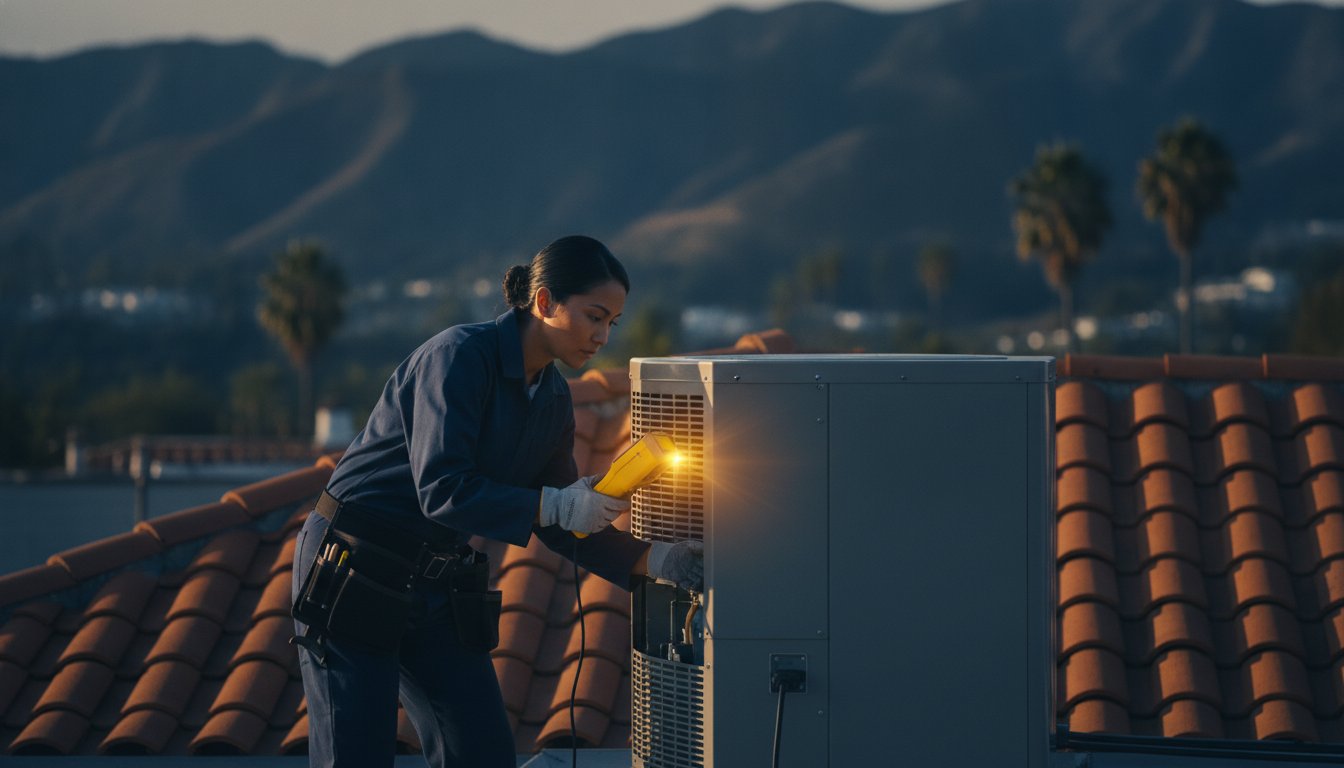
For homes located within five miles of the Pacific Ocean, salt air is a silent but persistent threat. We frequently see "coil rot" in neighborhoods like Malibu and Venice, where salt spray corrodes the delicate aluminum fins on the outdoor condenser unit. This corrosion leads to microscopic pinhole leaks in the refrigerant lines, which eventually causes the system to stop cooling entirely. To mitigate this, we recommend a gentle freshwater rinse of the outdoor unit once a month to remove salt deposits. If you notice a white, chalky residue on your coils, it's time to call a specialist before the damage becomes irreversible.
Inland residents face the opposite problem: heat and dust. During the Santa Ana wind season, fine particulate matter blankets the condenser coils, acting as an insulator that traps heat inside the system. This forces the compressor to work harder, driving up your utility bills and increasing the risk of a mechanical breakdown. When environmental damage occurs, hiring a licensed contractor ensures that your repairs meet state-mandated safety and performance codes while protecting your home's value.
Air Quality and Your HVAC System
The 2026 wildfire season has introduced new challenges for local HVAC systems. Ash and smoke are highly abrasive and can quickly bypass standard filters, settling on the internal components of your furnace or air handler. Following any major wind or fire event, it's vital to replace your air filters immediately, even if they aren't due for a change. Smog and urban particulate matter also contribute to a "sticky" buildup on the blower wheel, which reduces airflow and places unnecessary strain on the motor.
Investing in indoor air quality solutions protects your equipment from the abrasive effects of local smog and wildfire ash. If you live in a high-traffic area, upgrading to a MERV 13 filter provides a higher level of protection, though you should verify that your system's fan motor can handle the increased resistance. Tailoring your air conditioner repair in Los Angeles to these environmental realities is the best way to ensure your home remains a dependable sanctuary against the elements.
Repair or Replace? The Homeowner’s Decision Framework
Deciding whether to invest in another fix or start fresh with a new system is one of the most challenging choices a homeowner faces. If your system is currently struggling, you need a logical way to weigh the immediate costs against long-term dependability. While a professional air conditioner repair in Los Angeles can often extend the life of a unit by several years, there comes a point where the law of diminishing returns takes over. We aim to provide you with a clear, honest framework so you can make this decision with total confidence in your home's future comfort.
Calculating the Real Cost of Repair
The age of your equipment is the first factor to consider. Most modern systems are designed to last between 12 and 15 years. If your unit is approaching this window, internal components like the fan motor and compressor are likely nearing the end of their functional life. Whether you fix a single part today or not, the likelihood of another failure within the next 12 months increases significantly as the system ages. If an air conditioner repair in Los Angeles costs more than 50% of the price of a new unit, industry standards suggest replacement is the more financially sound path.
You should also factor in the 2026 SEER2 efficiency standards. Older units typically operate at much lower efficiency levels, meaning you pay more every month just to keep the lights on. Modern ac installation los angeles ca allows you to take advantage of the Inflation Reduction Act tax credits, which can significantly offset the initial cost of a high-efficiency upgrade. These incentives are specifically designed to help Californians transition to greener, more reliable technology.
| Factor | Favor Repair | Favor Replacement |
|---|---|---|
| System Age | Under 10 years | Over 12-15 years |
| Repair Cost | Less than 30% of new unit | More than 50% of new unit |
| Refrigerant | Modern R-410A or R-454B | Obsolete R-22 (Freon) |
| Efficiency | High SEER rating | Low SEER / Pre-SEER2 |
When Replacement is the Only Logical Choice
Some mechanical failures are simply too severe to justify a patch. If your technician discovers a cracked heat exchanger or a grounded compressor, the cost of labor and parts often rivals the price of a new, warrantied system. Additionally, if your unit still uses R-22 refrigerant, the cost of a simple recharge has become prohibitively expensive due to federal phase-outs. In these cases, a bespoke solution tailored to your home’s specific square footage will provide better performance and lower utility bills for the next decade.
If you're unsure where your system stands, you can consult with a local specialist to get an honest assessment of your unit’s remaining lifespan and efficiency.
Selecting a Trusted Specialist for Air Conditioner Repair in Los Angeles
Once you decide to proceed with a fix, finding a technician who values your home as much as you do is the final step. In a crowded market, the quality of craftsmanship varies wildly. Choosing a partner for air conditioner repair in Los Angeles requires more than just a quick online search; it requires verifying credentials that ensure safety and long-term performance. We believe that every homeowner deserves a service experience built on honesty, technical precision, and a strong work ethic.
Whether the job is a minor part replacement or a complex electrical fix, always verify that the contractor holds an active license with the California Contractors State License Board (CSLB). This protects you from liability and ensures the work meets state safety codes. Additionally, look for NATE-certified technicians. These professionals have passed rigorous national exams that prove their technical precision in handling modern, high-efficiency systems. When a specialist carries these credentials, it signals a commitment to high standards that protects your cooling investment.
The Importance of Local Roots
Family-owned businesses like Nice and Cool Inc. operate with a level of personalized accountability that "big box" franchises often lack. If a business has deep community roots, its reputation is its most valuable asset. Unlike large corporations often driven by high-pressure sales quotas, a local specialist focuses on building long-term relationships. We take immense pride in tailoring our services to the specific needs of our neighbors. This approach ensures every repair is a reflection of our commitment to quality rather than just a one-time transaction.
This dedication to ongoing care is why we offer the Nice and Cool Club Maintenance Plan. Regular preventative care is the best way to avoid the emergency failures discussed earlier in this guide. By having a familiar face inspect your system twice a year, you ensure your equipment remains dependable through every heatwave. If you prioritize reliability, a maintenance plan is a proactive way to keep your system in peak condition for years to come.
Questions to Ask Your Repairman
Before you authorize any work, ask your technician specific questions to gauge their honesty. Start by asking, "Is this a permanent fix or a temporary patch?" A trustworthy expert will be upfront about the condition of your components. You should also ask if they offer a warranty on both parts and labor. Transparent, upfront pricing models are always preferable to vague "estimates" that might change once the work begins. If a contractor is hesitant to provide a clear price for an air conditioner repair in Los Angeles, it may be a sign to look elsewhere.
A reliable specialist will take the time to explain the problem and the proposed solution without using alienating jargon. They should act as a helpful guide, helping you understand how the repair fits into your long-term comfort goals. Ready to restore your home's comfort with a team that treats you like a neighbor? Book your professional AC diagnostic with Nice and Cool Inc. today!
Secure Your Home’s Comfort for the Season Ahead
Whether you've resolved a minor airflow issue with a new filter or determined that your system requires a technical diagnostic, having a clear plan is the best way to handle the Southern California heat. You now have the tools to distinguish between a simple DIY fix and a complex mechanical failure. By understanding how local factors like Santa Ana winds and coastal salt air impact your equipment, you can make informed decisions that protect your home's long term value. If your troubleshooting steps didn't restore the cool air you need, it's time to rely on a professional air conditioner repair in Los Angeles.
Nice and Cool Inc. has been family owned and operated since 2005. We specialize exclusively in Los Angeles residential HVAC needs, and our NATE-certified technicians bring a level of craftsmanship and accountability you won't find at a national franchise. We treat every project with the steady, methodical care your home deserves. Schedule Your Expert AC Repair in Los Angeles today to ensure your family stays comfortable regardless of the temperature outside. You deserve the peace of mind that comes from working with a reliable local specialist who truly understands our community.
Frequently Asked Questions
How much does air conditioner repair in Los Angeles typically cost?
The cost of a repair depends on the specific failure and the age of your equipment. While industry data shows a wide range of potential costs for Southern California residents, your final investment is determined by the parts required and the complexity of the labor. If you are facing a minor electrical issue, it will be significantly different than a major compressor failure. It is best to have a technician perform a diagnostic to provide a clear, upfront price for your situation.
Why is my AC running but not cooling the house?
This problem is usually the result of restricted airflow or a refrigerant issue. If your air filter is heavily clogged with dust or pet dander, the system cannot pull enough air over the coils to cool your home effectively. This often leads to the evaporator coils freezing into a block of ice. If your filter is clean and the vents are open, you may have a refrigerant leak that requires a professional for air conditioner repair in Los Angeles.
Is it worth repairing a 10-year-old air conditioner?
Deciding to fix a decade-old system depends on the cost of the repair and the unit's overall health. If the fix is minor and the system has been well-maintained, a repair is often a sound choice. However, if the repair cost is approaching 50% of the value of a new unit, it is usually more dependable to upgrade. Newer systems offer much higher efficiency and better performance under the 2026 SEER2 standards.
How long do AC units usually last in the Los Angeles climate?
Most residential systems in our region last between 12 and 15 years. Your unit’s actual lifespan depends on its microclimate and how often it is serviced. Systems in high-heat areas like the San Fernando Valley or dusty inland valleys often face more wear than those in milder coastal zones. Regular maintenance through a plan like our Nice and Cool Club is the most effective way to ensure your equipment reaches its full potential.
Can I still get parts for an air conditioner that uses R-22 refrigerant?
You can still find many mechanical parts for these older units, but the R-22 refrigerant itself is becoming extremely difficult and expensive to source. Since the federal phase-out, technicians must rely on reclaimed or recycled stock, which has driven up the price of a simple recharge. If your older system has a significant leak, the high cost of the refrigerant often makes a full system replacement the more logical financial decision.
What is the most common cause of AC failure in Southern California?
Dust buildup on the outdoor condenser coils is the primary cause of mechanical failure in Los Angeles. Our dry climate and Santa Ana winds blanket the coils in fine grit, which acts as an insulator and prevents the system from shedding heat. This forces the compressor to run much hotter than intended, eventually leading to electrical shorts or seized components. This is why we emphasize regular coil cleaning for every air conditioner repair in Los Angeles.
Should I turn off my AC if it starts making a loud screeching noise?
Yes, you should turn the system off at the thermostat and the breaker immediately. A loud screeching or squealing sound usually points to a failing fan motor bearing or a damaged blower belt. If you continue to run the unit, the part could seize or shatter, causing much more extensive damage to the surrounding internal components. Shutting it down early can often turn a major catastrophe into a relatively simple part replacement.
How quickly can I get an AC repair technician in LA during a heatwave?
Response times can vary significantly during a heatwave as demand for service across the city reaches its peak. Many local specialists prioritize their maintenance club members when the schedule fills up quickly. It is always helpful to check with a provider directly to see their current availability in your specific neighborhood. We recommend scheduling a preventative tune-up in the spring so you don't have to worry about long wait times when the temperature spikes.
Frequently Asked Questions
If your cooling system won't kick on, start at the control center. A blank thermostat screen is often the result of dead AA or AAA batteries rather than a mechanical failure. Swap those out first. Whether your screen is lit or not, check the settings to ensure it's set to "Cool" and the temperature is at least five degrees below the current room temperature. It sounds simple, but it's a common oversight during the transition between seasons. Look at the "Fan" switch next. If it's set to "On," the fan will run constantly even when the system isn't cooling. Setting it to "Auto" ensures the fan only runs during a cooling cycle, which helps manage humidity. If the system still won't respond, head to your electrical panel. If the HVAC breaker has moved to the middle position, flip it completely off and then back on once. If it trips again immediately, don't try a third time. That's a clear sign of an electrical fault that requires expert attention.