7 Crucial Signs You Need a New Air Conditioner in Los Angeles (2026 Guide)
August 22, 2026 17 min read
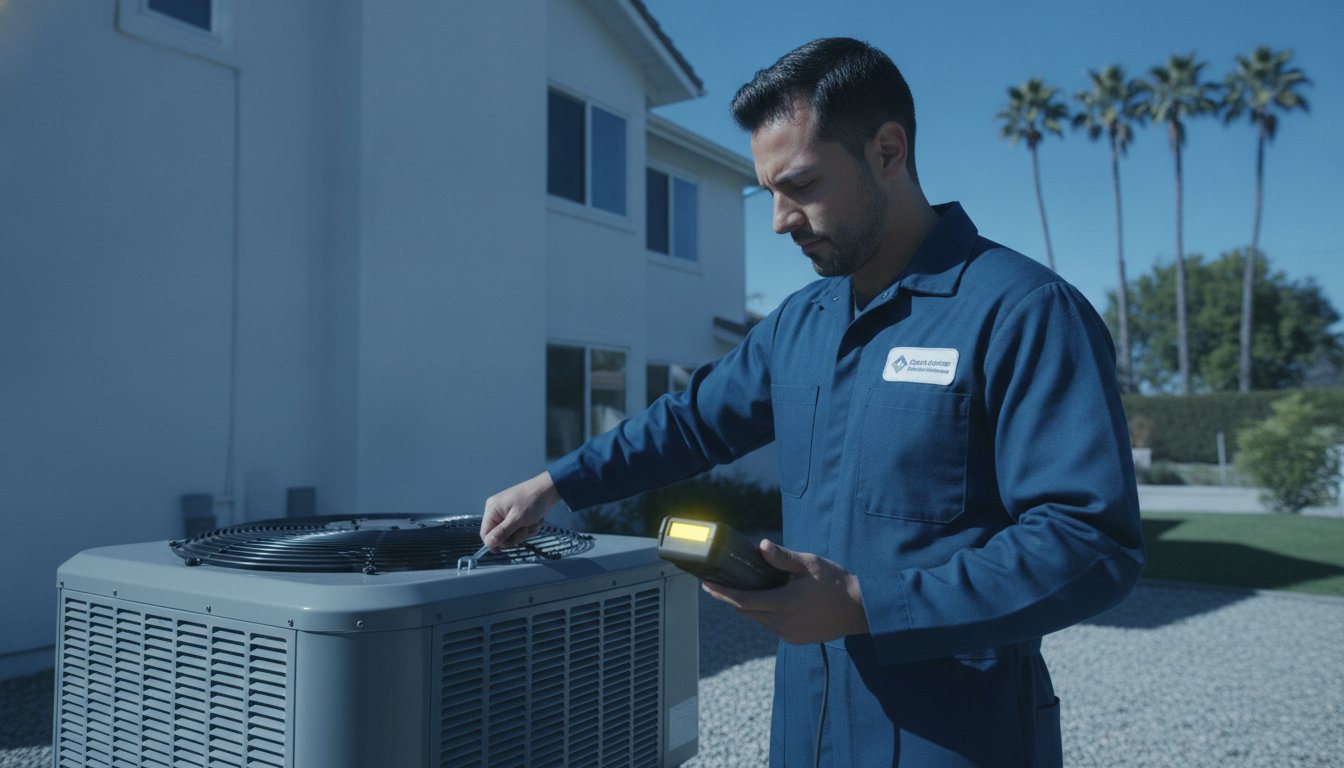
Is the constant hum of your cooling system starting to sound like a countdown to an expensive breakdown? We know the feeling of crossing your fingers every time you lower the thermostat during a Los Angeles heatwave. It's stressful to wonder if your unit will survive another July or if this is the month your utility bill hits a record high. If you're constantly calling for repairs, then you're likely already seeing the clear signs you need a new air conditioner.
You deserve a home that feels like a sanctuary, not a humid storage locker. In this 2026 guide, we'll help you identify the definitive warning signs that your cooling system is failing. We'll show you exactly when to stop repairing and start replacing for optimal comfort and peace of mind. Whether you're dealing with noisy cycles or dusty indoor air, we'll walk through seven critical indicators and explain how modern SEER2 standards can turn your cooling costs around. It's time to trade that mid-summer anxiety for the reliable, efficient performance of a system tailored to your home's needs.
Key Takeaways
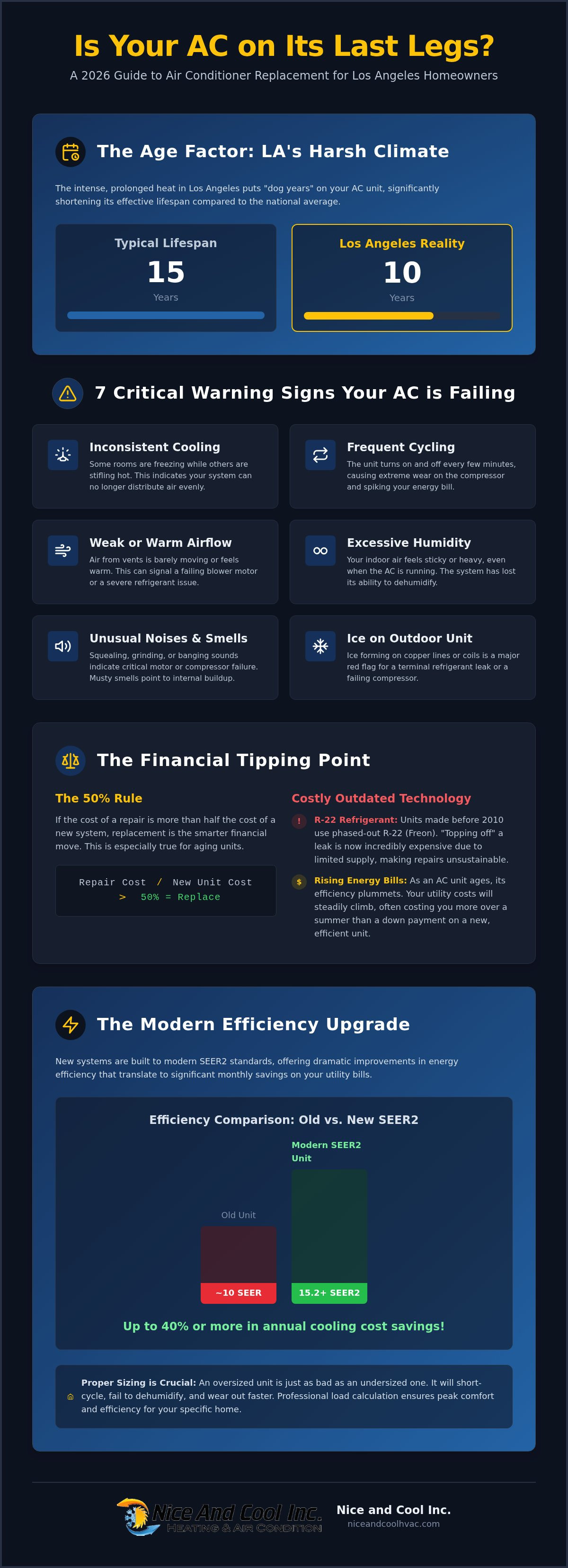
- Learn why the intense Los Angeles climate often shortens the standard 15-year lifespan of an AC unit to just a decade of reliable service.
- Identify the specific performance red flags and signs you need a new air conditioner, including inconsistent cooling and strange mechanical noises.
- Apply the "50% Rule" to determine if your repair costs and rising energy bills make a replacement the more strategic financial move.
- Discover how 2026 SEER2 efficiency standards and heat pump technology can significantly lower your monthly utility expenses.
- Understand why professional sizing is critical to ensure your new system provides peak comfort without the pitfalls of an oversized unit.
The Age Factor: Is Your AC Past Its Prime for the LA Climate?
Most manufacturers suggest a residential cooling unit lasts between 10 and 15 years. However, living in Los Angeles changes the math. Our intense, prolonged heatwaves put what we call "dog years" on your equipment. When your system runs around the clock during a July scorcher, it's enduring significantly more thermal stress than a unit in a milder climate. This accelerated wear and tear is one of the primary signs you need a new air conditioner before the next record-breaking summer arrives.
Your specific neighborhood also plays a role in how quickly your system ages. If you live in the San Fernando Valley, your unit faces extreme temperature swings that can cause metal components to expand and contract rapidly. If you're closer to the coast in areas like Santa Monica, salt air can lead to coil corrosion. Both environments shorten the effective lifespan of your system compared to the national average, making age a critical factor in your replacement strategy.
The 10-Year Tipping Point
A decade marks the point where HVAC technology typically shifts from peak efficiency to mechanical decline. After ten years of Southern California summers, internal components like the compressor begin to lose their sealing capability and struggle to move refrigerant effectively. You'll also find that finding replacement parts for older models becomes increasingly difficult and expensive. Manufacturers eventually stop producing components for legacy systems. This often leaves homeowners with no choice but to replace the entire unit when a minor part fails because the specific motor or board is no longer in stock.
Refrigerant Obsolescence and Your Wallet
Units manufactured before 2010 likely use R-22 refrigerant, commonly known as Freon. Since the EPA has phased out its production, the cost of "topping off" an old system has become a massive financial burden. By 2026, the supply of recycled Freon is even more limited, making it one of the most expensive signs you need a new air conditioner. Continuing to patch a leak in an R-22 system is often throwing good money after bad. Modern systems use sustainable refrigerants that are better for the environment. They're also significantly cheaper to maintain, ensuring you aren't held hostage by the skyrocketing costs of obsolete chemicals.
Performance Red Flags: When Repairs Aren't Enough
Your air conditioner should be a silent partner in your home comfort. When it starts demanding your attention through odd behaviors, it's usually trying to tell you that its mechanical limits have been reached. One of the most frustrating signs you need a new air conditioner is the "hot spot" phenomenon. If your living room feels like an icebox while your bedroom remains stifling, your system is no longer capable of distributing air evenly. This lack of balance often stems from a failing blower motor or an undersized unit that can't keep up with the Los Angeles sun.
Frequent cycling is another subtle warning. If your AC turns on and off every few minutes, it's likely struggling to complete a full cooling cycle. This "short cycling" puts immense strain on the compressor and sends your electricity bill soaring. It also prevents the system from performing its secondary job: dehumidification. If your indoor air feels "heavy" or sticky even when the temperature seems low, your system has lost its ability to manage moisture effectively.
Airflow and Temperature Inconsistencies
If your vents are blowing warm air, the issue might go deeper than a clogged filter. You can perform a quick check by holding a single tissue up to your supply vents. If the paper barely flutters, your system is struggling to move air through the heat exchanger. Before you book a professional hvac service los angeles families rely on, take a look at your outdoor unit. If you see ice forming on the copper lines or the evaporator coil, it's a major red flag. Frozen coils in an aging system often indicate a terminal refrigerant leak or a compressor that can't maintain proper pressure.
Strange Smells and Unusual Sounds
Listen to the language of your machinery. Different sounds point to specific internal failures that often signal the end of a unit's life:
- Squealing: This usually points to a slipped belt or a failing bearing in the fan motor.
- Grinding: This metal-on-metal sound often means the motor bearings are completely shot.
- Banging: This suggests a loose connecting rod or crankshaft inside the compressor itself.
Smells are equally revealing. "Dirty sock syndrome" is a common term for the musty odor caused by bacterial buildup on the coils. While a deep clean can sometimes fix this, recurring odors in a unit older than a decade often suggest that the internal components are deteriorating beyond repair. If these performance issues are disrupting your sleep or your peace of mind, it's a good idea to have an expert evaluate your system's health. Our team can help you determine if your unit is a candidate for the Nice and Cool Club Maintenance Plan or if a new installation is the safer, more cost-effective choice.
The Financial Tipping Point: Energy Bills vs. Repair Costs
Deciding whether to keep an aging unit running often feels like a high-stakes gamble. In Los Angeles, where utility rates are among the highest in the country, this gamble carries a heavy price tag. If you notice your LADWP or SCE bills creeping up despite similar weather patterns, your system is likely experiencing efficiency creep. This is one of the most undeniable signs you need a new air conditioner. An old system might still blow cool air, but it's working twice as hard and consuming far more kilowatt-hours to reach your desired temperature.
Professional technicians often use the "50% Rule" to guide homeowners through this transition. If a single repair costs more than half the value of the entire system, replacement is almost always the smarter financial move. You also have to consider the hidden costs of keeping a failing unit. Emergency service fees during a heatwave or lost productivity from a sleepless, sweltering night add up quickly. A high-efficiency SEER2 system can often pay for itself in energy savings over several years, especially when you factor in current local rebates and reduced maintenance needs.
The 'Repair vs. Replace' Decision Matrix
Consider the long-term math of a $1,000 repair. If you spend that money on a 12-year-old unit, you still have an old machine with other aging components ready to fail. Whether you choose to fix a specific issue or invest in a new installation, it helps to understand the baseline costs. You can check our guide on ac not blowing cold air los angeles to see how troubleshooting costs compare to a fresh start. A new installation also provides a manufacturer's warranty. This protection ensures you won't face unexpected out-of-pocket expenses for the next decade.
Rising Utility Rates in Los Angeles
By 2026, Southern California energy prices have made inefficient HVAC systems a major liability. Our local tiered billing systems mean that once you cross a certain usage threshold, every extra minute your old AC runs costs you significantly more. If your system is short-cycling or running constantly, it's likely pushing you into those expensive upper tiers. Modern smart thermostats can help you track this usage in real time. They often reveal that an old unit is responsible for over 50% of your total monthly energy expenditure, making it clear that the "cheaper" option is actually costing you more every day.
Modern Efficiency: Upgrading for 2026 Standards
Transitioning from an old, failing unit isn't just about restoring comfort; it's about stepping into modern efficiency standards that were unavailable a decade ago. In the Southwest region, including Los Angeles, SEER2 (Seasonal Energy Efficiency Ratio 2) requirements ensure that any new system installed today is built for high-performance cooling under actual Southern California conditions. If your current unit was installed before 2023, it likely operates on outdated efficiency metrics. Upgrading allows you to benefit from inverter technology, which modulates power usage rather than simply switching on and off at full blast. This shift is one of the most rewarding signs you need a new air conditioner, as you'll feel the difference in both air quality and monthly savings immediately.
Modern systems also feature deep smart home integration. These units can talk to your phone and even the local grid to optimize cooling during off-peak hours. You can adjust your climate from your car before you even pull into the driveway, ensuring a cool home awaits you without wasting energy while you're at work. This level of control represents a massive leap forward from the "set it and forget it" thermostats of the past.
Heat Pumps: The Dual Solution for LA
Our Mediterranean climate makes a heat pump installation an incredibly logical choice for local homeowners. These systems don't create heat; they move it. During a scorching Santa Ana wind event, they pump heat out of your home with remarkable efficiency. When our brief winter chills arrive, the cycle reverses to provide gentle, consistent warmth. This eliminates the need for a separate gas furnace, reducing your home's carbon footprint and simplifying your maintenance needs. Many Los Angeles residents are also eligible for local rebates when they switch to these all-electric systems, making the initial investment even more attractive.
Zoned Cooling with Ductless Systems
Many of the beautiful, historic homes across Los Angeles weren't designed with central ductwork in mind. If you're tired of noisy window units but don't want to tear into your lath and plaster walls, ductless mini-splits offer a sophisticated alternative. These systems allow for zoned cooling, meaning you only pay to chill the rooms you're actually using. This is a perfect fit for guest houses, home offices, or primary suites that never seem to stay cool enough. Modern indoor units are sleek and low-profile, blending into your decor while providing whisper-quiet operation. If you are ready to see how these technologies fit your home, our experts can provide a professional Air Conditioning Installation assessment to find your ideal cooling solution.
Making the Switch: How Nice and Cool Simplifies Your Replacement
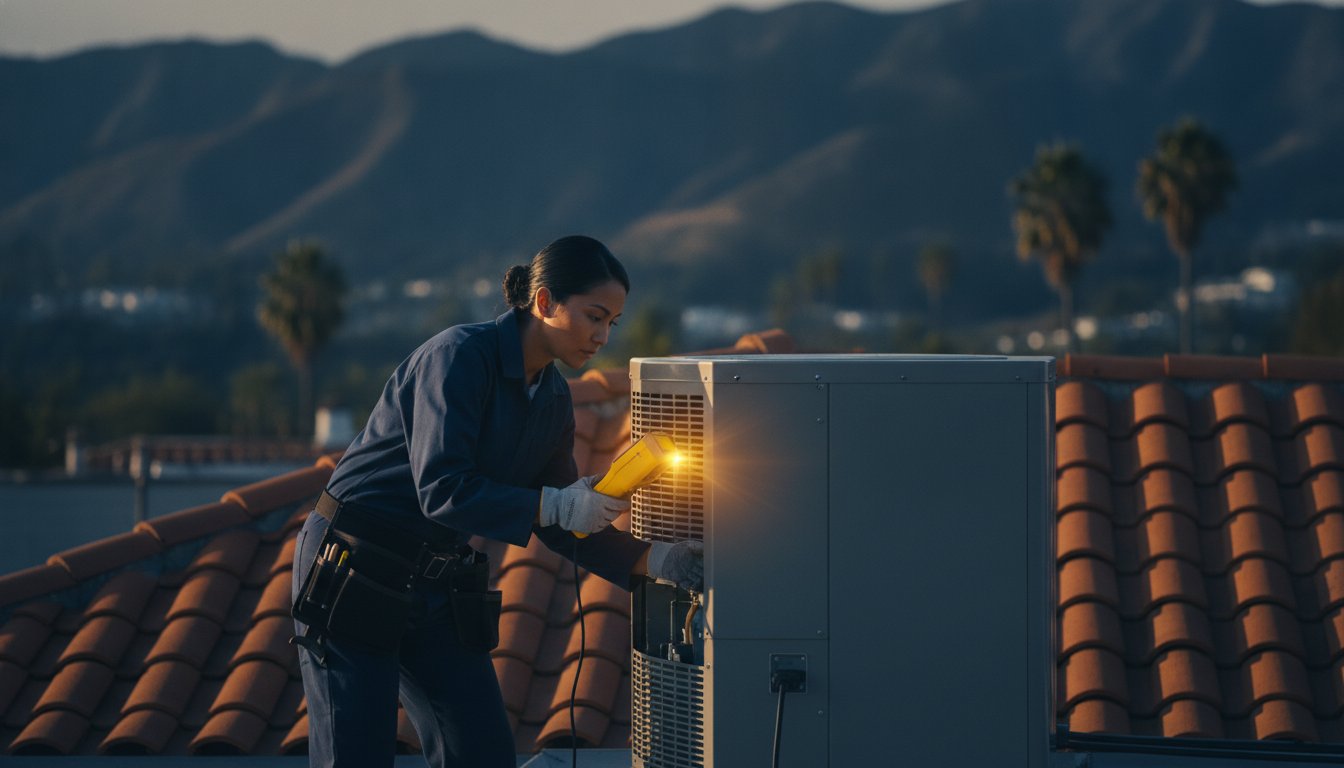
Deciding to move forward after spotting the signs you need a new air conditioner is a major step toward long-term home comfort. At Nice and Cool Inc., we treat this process as a partnership rather than just a transaction. Since 2005, our family-owned team has helped Los Angeles homeowners trade their cooling anxieties for reliable, efficient performance. We understand that a new system is a significant investment. That's why we follow a methodical, calm approach to ensure your installation is handled with precision and care from start to finish.
A typical installation day is organized and respectful of your property. Our technicians arrive on time, use floor protection to keep your home clean, and handle the responsible disposal of your old equipment. We don't just "drop in" a new unit. We calibrate the entire system to ensure it meets the rigorous 2026 efficiency standards and integrates naturally with your existing home setup. By the time we leave, you'll have a system that's tailored to handle whatever the LA weather throws its way.
Expert Sizing and Configuration
One of the most common mistakes in our industry is "oversizing." Many people believe a bigger unit will cool their home faster, but the opposite is often true. An oversized system will short-cycle, meaning it turns on and off so frequently that it never has a chance to remove humidity from the air. This leads to a "cold and clammy" feeling and puts unnecessary stress on the components. Our technicians perform a detailed heat load calculation, taking into account your home's square footage, window placement, and insulation levels. We also include a thorough ductwork inspection to ensure your new system isn't wasting energy pushing cold air into your attic or crawlspace.
The Nice and Cool Club Advantage
Protecting your investment starts the day your new system is installed. If you want to maximize the lifespan of your equipment, regular maintenance is essential. We designed the Nice and Cool Club Maintenance Plan to provide peace of mind and long-term reliability. Club members receive priority service during peak summer months, which is invaluable when a heatwave hits the Valley. Regular tune-ups can help your new air conditioner last twice as long as a neglected unit. It's our way of staying connected with our community and ensuring your home remains a sanctuary for years to come. Having a reliable local specialist just a phone call away means you won't have to worry about the signs you need a new air conditioner for a very long time.
Step Into a Cooler, More Efficient Future
Recognizing the signs you need a new air conditioner is the first step toward regaining control over your home's comfort and your monthly budget. Whether you're facing frequent repairs or simply trying to escape the rising utility rates of 2026, a strategic upgrade offers more than just cold air. It provides the peace of mind that comes with a reliable, SEER2-compliant system tailored specifically for the unique demands of the Los Angeles climate.
Since 2005, our family-owned team of specialists has focused on precision sizing and dependable craftsmanship. We're here to help you navigate the choice between a high-efficiency central unit, a dual-purpose heat pump, or a flexible ductless system. Once your new installation is complete, our Nice and Cool Club maintenance plan ensures your investment stays protected for the long haul. Schedule your free AC replacement consultation with Nice and Cool Inc. today! You don't have to face another sweltering summer with an unreliable system; we're ready to help you build a more comfortable home.
Frequently Asked Questions
How many years should a central AC unit last in Los Angeles?
Most central units are designed to last 10 to 15 years. However, the intense Southern California climate often accelerates this timeline significantly. Systems in the San Fernando Valley work much harder during peak summer months, while coastal units face corrosive salt air that degrades coils. If your equipment is approaching the decade mark and showing performance issues, it is one of the common signs you need a new air conditioner before a total breakdown occurs.
Is it better to repair or replace a 12-year-old air conditioner?
Choosing to replace a 12-year-old system is often the most strategic move. While a single repair might seem cheaper today, you're investing in aging technology that will likely fail again soon. Most units this age use outdated refrigerants and operate at much lower efficiency levels than modern SEER2 equipment. If your repair costs are climbing or parts are becoming hard to find, a new installation provides better long-term value and the protection of a fresh manufacturer's warranty.
What is the average cost of a new AC unit in Los Angeles for 2026?
The total investment for a new system depends on several factors, including your home's square footage, ductwork condition, and chosen efficiency rating. In 2026, local requirements for SEER2 compliance and refrigerant changes have influenced the market landscape. We recommend requesting a personalized assessment to understand the specific requirements for your property. This allows us to provide an accurate breakdown based on your home's unique layout and cooling needs without any guesswork or generic estimates.
Can I replace just the outdoor AC unit and keep the old indoor coil?
No, we strongly advise against mixing new outdoor units with old indoor coils. Modern systems are designed as matched sets to achieve their rated efficiency and performance under SEER2 standards. An old coil likely uses a different refrigerant and cannot handle the pressure levels of a new compressor. This mismatch often leads to premature system failure and will almost certainly void your manufacturer's warranty. Replacing both components ensures your system operates at peak reliability from day one.
How do I know if my AC uses R-22 Freon or R-410A?
You can identify your refrigerant type by checking the manufacturer's nameplate on your outdoor condenser unit. Look for a label that lists "Refrigerant" or "Type" clearly. If your system was manufactured before 2010, it likely uses R-22, which is now obsolete and very expensive to service. Systems built after 2010 typically use R-410A. Knowing your refrigerant type is helpful when evaluating the signs you need a new air conditioner and calculating future maintenance expenses.
What are the most energy-efficient AC options for Southern California homes?
Heat pumps and high-SEER2 central systems are currently the most efficient choices for our local climate. Heat pumps are particularly effective because they provide both heating and cooling in a single electric unit. For homes with specific "hot spots" or no existing ductwork, ductless mini-split systems offer incredible efficiency by allowing you to cool individual zones. These modern options significantly outperform older technology and are better suited for the tiered utility rates we face throughout Los Angeles County.
Will a new air conditioner actually lower my monthly LADWP bill?
Yes, a new high-efficiency system typically reduces your monthly energy consumption by a noticeable margin. Modern units use inverter technology to modulate power rather than running at 100% capacity constantly. This transition helps you stay in the lower, more affordable tiers of LADWP or SCE billing structures. While your exact savings depend on your usage habits and home insulation, most homeowners notice a substantial decrease in their cooling costs after moving away from a decade-old system.
How long does a typical AC installation take from start to finish?
Most residential air conditioning installations are completed within a single day. Our team typically arrives in the morning to remove your old equipment and begins the methodical process of setting up your new indoor and outdoor components. If your project involves extensive ductwork modifications or a complex multi-zone mini-split setup, it might extend into a second day. We always provide a clear timeline during your initial consultation so you can plan your schedule with confidence and minimal disruption.
Frequently Asked Questions
Most central units are designed to last 10 to 15 years. However, the intense Southern California climate often accelerates this timeline significantly. Systems in the San Fernando Valley work much harder during peak summer months, while coastal units face corrosive salt air that degrades coils. If your equipment is approaching the decade mark and showing performance issues, it is one of the common signs you need a new air conditioner before a total breakdown occurs.