AC Not Blowing Cold Air in Los Angeles? 2026 Homeowner’s Troubleshooting Guide
May 28, 2026 20 min read
What if the reason your home feels like a sauna isn't a mechanical disaster, but just the unique way Los Angeles dust and heat are affecting your system? When you're dealing with an ac not blowing cold air los angeles residents often assume the worst, fearing a total breakdown right in the middle of a triple-digit heatwave. It's a stressful situation, especially when you're caught between the physical discomfort of a rising thermostat and the anxiety of potential repair costs.
We understand that you want your home's comfort restored without the guesswork or high-pressure sales tactics. Whether you're facing a simple clogged filter or a more complex issue related to the 2026 refrigerant transition, this guide will help you identify the culprit. You'll learn which DIY steps actually work for local homeowners and how to recognize when it's time to call in a specialist for an air conditioning repair. We'll walk through the common environmental factors in Southern California and the latest energy standards, giving you a clear, calm path back to a cool home.
Key Takeaways
- Perform a quick 5-step diagnostic to see if simple fixes like a thermostat reset or a fresh air filter can restore your comfort immediately.
- Identify if your system has a mechanical failure or is simply struggling with the local heat load when you notice your ac not blowing cold air los angeles.
- Learn why "topping off" refrigerant is a temporary fix and how the 2026 phase-out affects the long-term serviceability of your existing unit.
- Discover how regular maintenance through the Nice and Cool Club can improve efficiency and potentially reduce your monthly energy costs by up to 30%.
- Use the "5,000 Rule" to make a confident decision on whether to invest in an air conditioning repair or transition to a high-efficiency 2026 SEER2 system.
Why Your AC Is Blowing Warm Air During a Los Angeles Heatwave
It's a frustrating feeling. You set the thermostat to 72 degrees, but the air coming from the vents feels lukewarm at best. If you've noticed your ac not blowing cold air los angeles summer temperatures can quickly turn your home into an oven. Before you worry about a total mechanical breakdown, it's helpful to understand the difference between a cooling failure and a capacity issue.
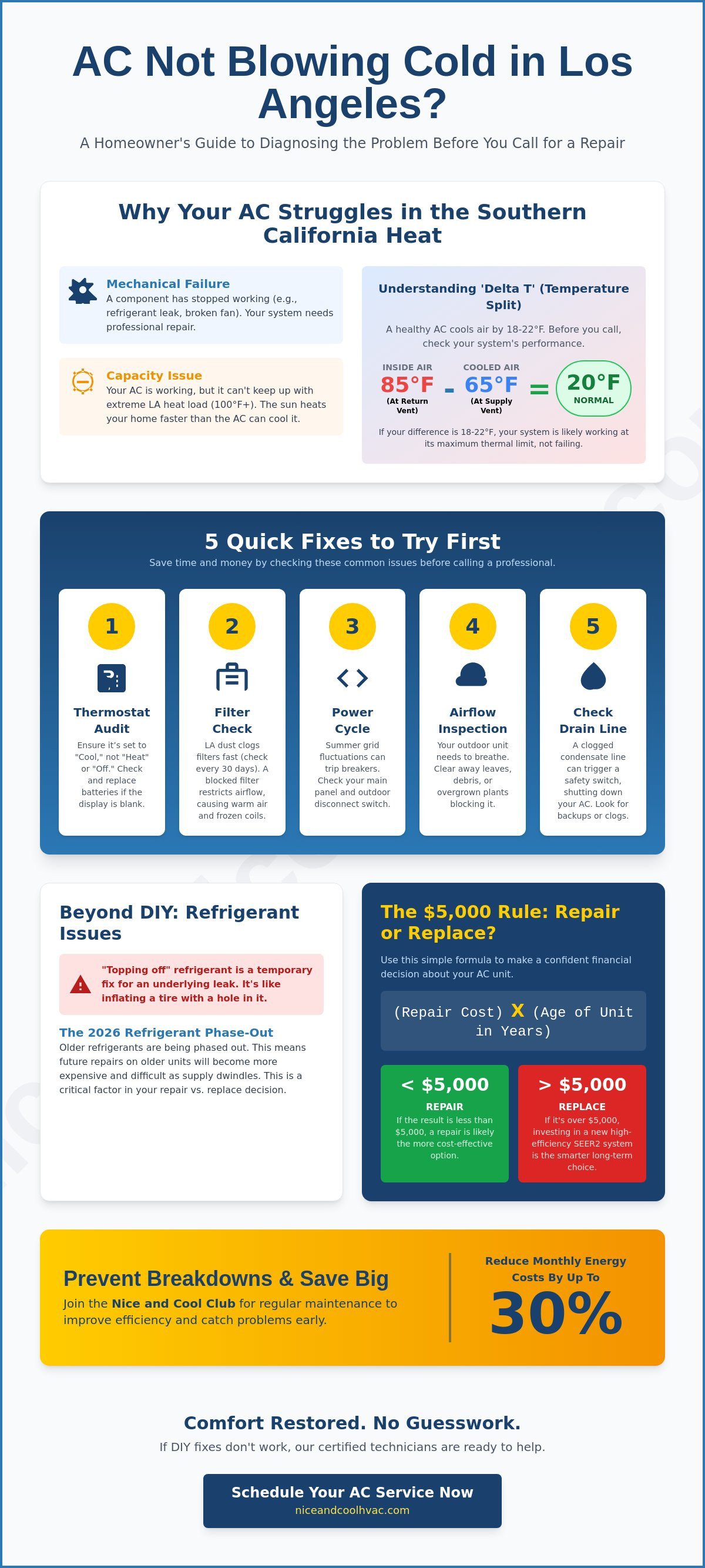
A cooling failure means a specific component in your Heating, ventilation, and air conditioning (HVAC) system has stopped working entirely. A capacity issue, however, happens when your system is running correctly but simply cannot keep up with the extreme 'heat load' of your home. This is common during 100°F days in the Valley or Inland Empire, where the sun beats down on your roof and walls faster than the AC can remove that heat. Your home effectively absorbs more thermal energy than the system was designed to displace.
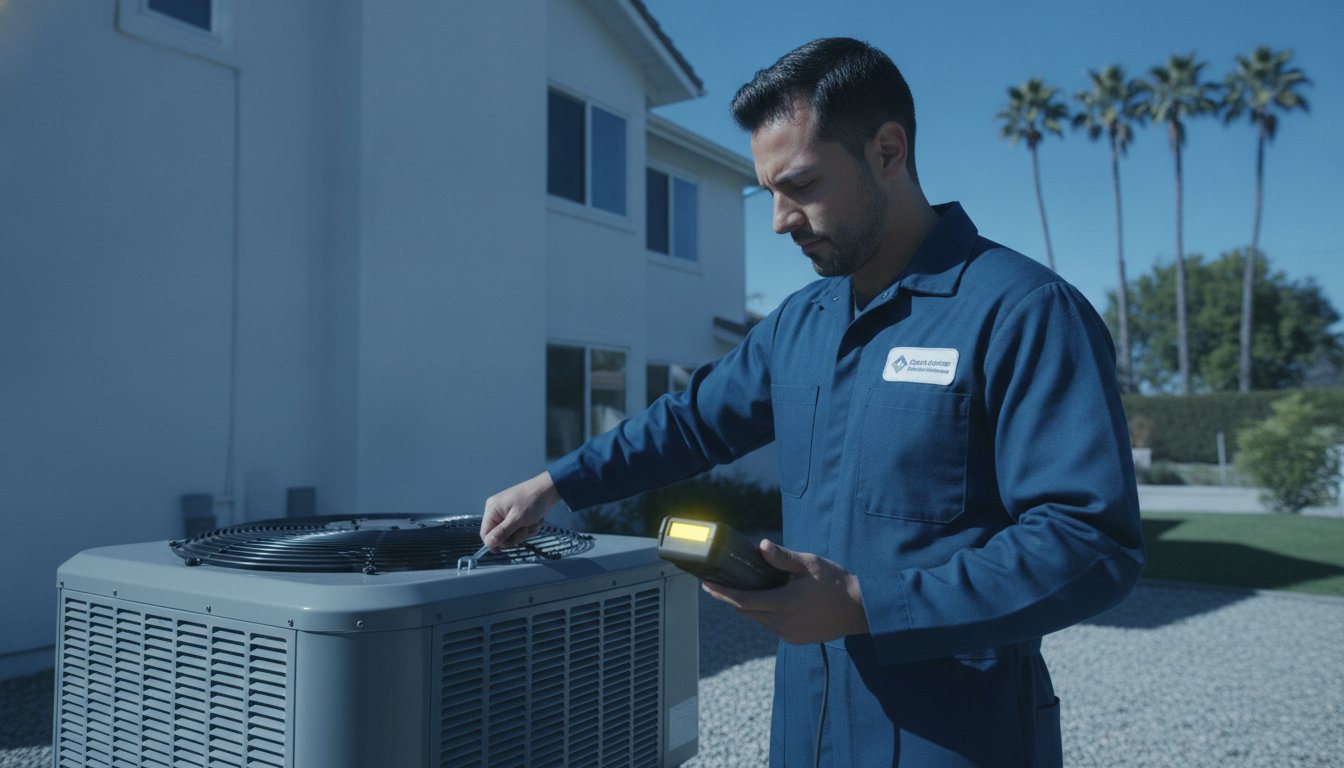
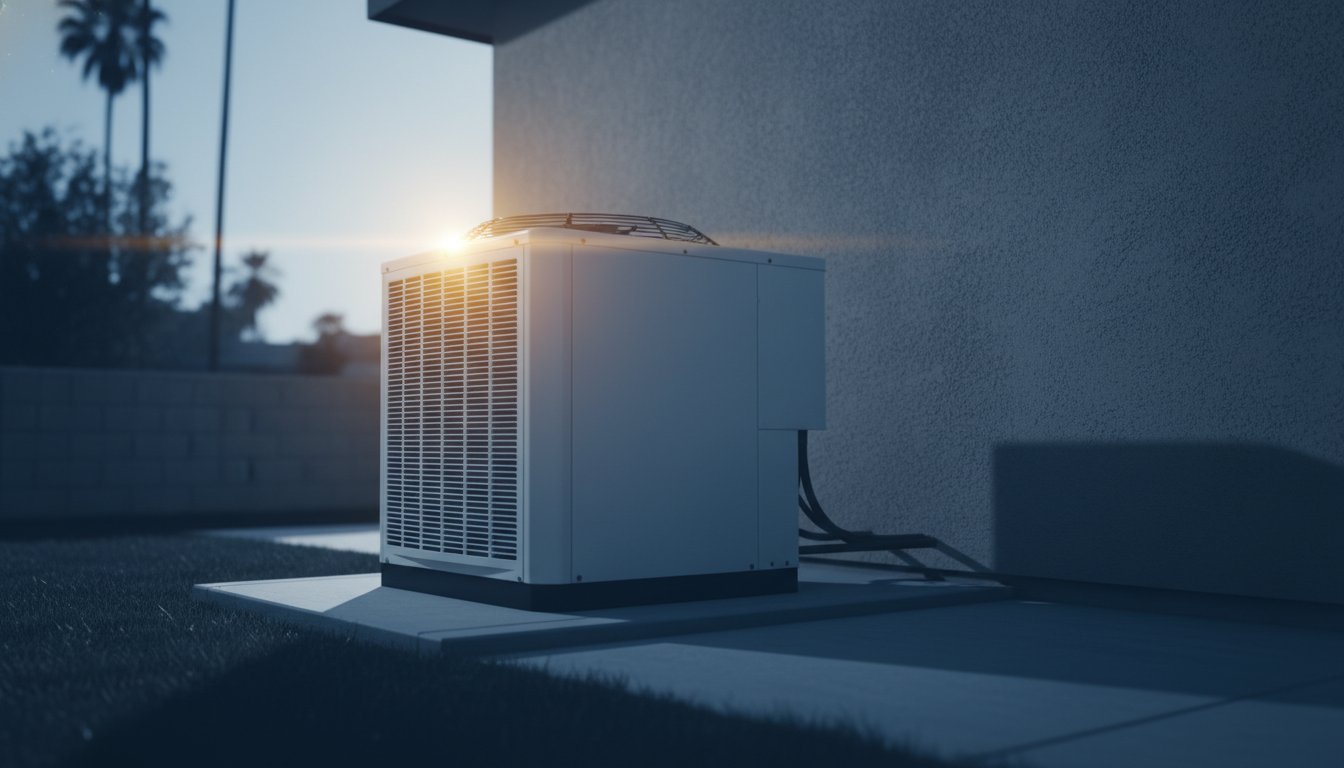
Your outdoor condenser unit is the hero of this process. It's responsible for releasing the heat collected from inside your home into the outside air. If the airflow around this unit is restricted, the heat has nowhere to go. You'll often see signs of struggling airflow, like the unit running constantly without a break or making a louder humming sound than usual, before you ever deal with a mechanical issue like a refrigerant leak.
Maintaining a clear perimeter around your mechanical systems is easier when your yard is intentionally laid out. To create a space that balances beauty with functional efficiency, you can explore Custom Landscape Design Plans from Nu Scape Designs, which specializes in low-maintenance landscapes for the Southern California climate.
The Impact of Los Angeles Dust and Santa Ana Winds
Our local environment presents unique challenges for your air conditioner. Fine dust from the San Fernando Valley and the seasonal Santa Ana winds carry debris that coats your outdoor coils. This creates an invisible blockage. Even if the unit looks clean from a distance, a layer of grime can insulate the coils, essentially suffocating the system. Because of these pollutants, many homeowners are switching to MERV 13 filters. These high-efficiency filters capture smaller particles, protecting your indoor air quality and your system’s internal components from the grit that defines Southern California living.
Understanding the 'Delta T' in Southern California
Homeowners often ask why their vents feel 'warm' when it's blistering outside. It usually comes down to the 'Delta T' or the temperature split. Most standard air conditioners are designed to drop the air temperature by about 20 degrees as it passes over the cooling coils. If it's 105°F outside and your home has heat-soaked to 85°F, your AC might only be able to push out 65°F air. While 65°F sounds cool, it can feel lukewarm when you're standing directly under a vent.
When you're dealing with an ac not blowing cold air los angeles residents should check this split before assuming an air conditioning repair is needed. You can measure this yourself by checking the temperature at the return vent (where air goes in) and the supply vent (where air comes out). If the difference is roughly 18 to 22 degrees, your system is likely working at its maximum thermal limit rather than failing.
When a system is operating at its limit, reducing the thermal demand on your home is essential; you can explore Roller Shades from Luxe Drapery and Shades to find high-end solutions that block solar heat.
5 Steps to Fix Your AC Before Calling a Repairman
Before you commit to a service call, take a few minutes to walk through these basic checks. Many times, an ac not blowing cold air los angeles homeowners experience is caused by a simple setting or a minor blockage. These steps are the foundation of maintaining your air conditioner and can save you both time and money. If your system is running but the house isn't getting cooler, these DIY steps are your first line of defense.
- Step 1: The Thermostat Audit. Ensure your thermostat is set to "Cool" rather than "Heat" or "Off." If the display is blank, try replacing the batteries before assuming the unit is broken.
- Step 2: The Filter Check. In Los Angeles, a filter can clog in as little as 30 days due to high dust levels and urban pollutants. A choked filter blocks airflow, which can lead to frozen coils and warm air.
- Step 3: Power Cycle. Los Angeles grid fluctuations during peak summer days can trip your breakers. Check your main electrical panel and the outdoor disconnect box to ensure everything is in the "On" position.
- Step 4: Airflow Inspection. Walk outside and look at your condenser unit. If it's buried under dry leaves or overgrown landscaping, it can't release heat effectively.
- Step 5: The Drain Line. If your AC shuts down suddenly, the condensate drain line might be clogged with algae or debris. Most modern systems have a safety float switch that cuts power to prevent water damage to your home. To ensure your property's plumbing remains equally clear, you can explore Drain Cleaning Services from Anton Plumbing Heating & Cooling as part of a comprehensive maintenance strategy.
Thermostat and Electrical Quick-Fixes
If your thermostat says "Cool On" but the air is warm, check for a blinking light on the display. This often indicates a delay mode designed to protect the system. We recommend the "Wait 5 Minutes" rule. If you've just adjusted the settings, give the compressor time to reset to prevent short-cycling. If the system still won't kick in, look for a tripped breaker. During peak SCE or LADWP usage, voltage drops can cause your AC to pull too much current, tripping the safety switch. Simply flipping the breaker back to "On" might solve your problem without a professional visit. To understand the broader health of your home's power supply, you can refer to the safety guidelines from Electrical Repair 4U to see if your wiring might need a professional inspection.
Clearing the Outdoor Obstructions
Your outdoor unit needs plenty of space to breathe. We follow a strict 2-foot clearance rule. If your landscaping has grown too close to the unit, it's essentially recycling its own hot air, which kills efficiency. You can gently rinse the condenser fins with a garden hose to remove dust, but never use a pressure washer as it can flatten the delicate metal. If you see actual ice forming on the copper pipes in the middle of a July afternoon, turn the system off immediately. This is usually a sign of restricted airflow or a deeper mechanical issue. For a more thorough check-up, you might consider joining our Nice and Cool Club Maintenance Plan to keep these components in top shape.
Beyond the Filter: Serious Mechanical Issues That Stop the Cold Air
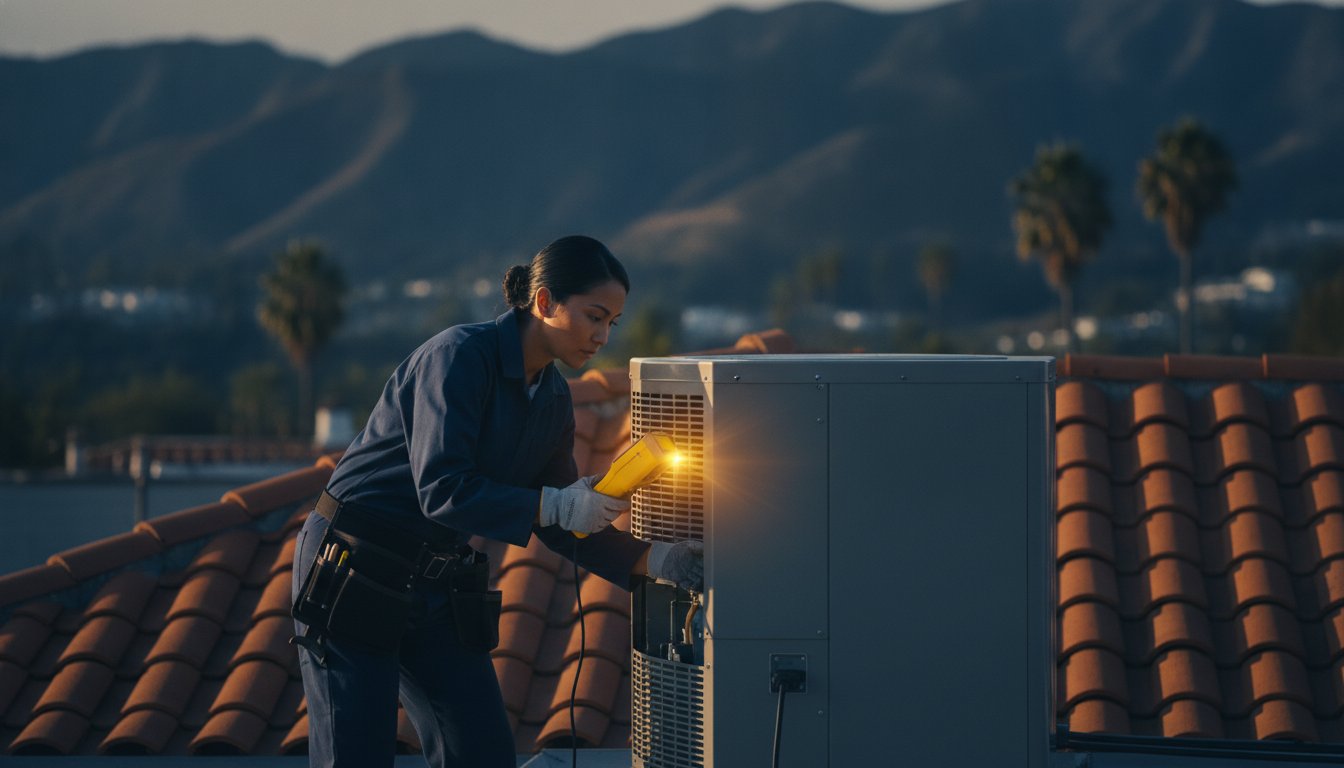
If your DIY troubleshooting didn't restore the chill, you're likely dealing with an ac not blowing cold air los angeles homeowners can't fix on their own. While a dirty filter is a common culprit, internal mechanical failures are often the reason a system runs without actually cooling. These issues require specialized tools and diagnostic expertise to resolve safely and permanently.
One of the most frequent "small" failures we see is a blown capacitor. This component acts like a high-powered battery that gives your motors the necessary "kick" to start up. If the capacitor fails, your fans or compressor won't spin, even if the thermostat is calling for cooling. Another common sight in Southern California is frozen evaporator coils. When airflow is restricted or refrigerant is low, the indoor coil drops below freezing, encased in a block of ice that prevents heat exchange. If you see frost on your indoor unit, turn the system off immediately to allow it to thaw.
Refrigerant leaks are another serious concern. Your AC is a closed system; it should never "run out" of refrigerant. If the levels are low, there's a hole in the line set or the coils. Simply "topping off" the system is a temporary bandage that ignores the underlying damage. By following local energy-saving tips, you can reduce the strain on these mechanical parts, but sometimes age and the environment simply take their toll.
Refrigerant Realities in 2026
As of January 1, 2025, manufacturers stopped producing new residential units using R-410A. In 2026, the industry has fully transitioned to lower Global Warming Potential (GWP) refrigerants like R-454B and R-32. If you have an older system using R-22 or even R-410A, the cost of repair is rising as these supplies dwindle. Identifying a leak early through oily residue or hissing sounds is the only way to save an older system from an expensive, premature retirement.
When the Compressor Quits
The compressor is the heart of your system, pumping refrigerant between the indoor and outdoor units. Los Angeles heatwaves, combined with high-demand "on-peak" energy hours, put immense stress on this component. You might hear a "hard start" where the unit hums loudly but fails to kick on. If the compressor has suffered a total mechanical failure, the repair is often the most expensive part of the system. In many cases, a failed compressor on a unit older than 10 years often signals it's time for a new AC installation to ensure long-term reliability and modern efficiency.
Maximizing Efficiency and Preventing Breakdowns in Southern California
When you're dealing with an ac not blowing cold air los angeles residents often realize that the best repair is the one that never has to happen. While the troubleshooting steps we've covered can help in a pinch, the extreme climate of the Southland demands a more proactive approach. This focus on peak performance is shared by experts globally; for example, you can learn more about Peninsula Air Conditioning (PenAir) and their work in the demanding Australian climate. Our local grid faces immense pressure during heatwaves, and keeping your unit running efficiently ensures it survives the season without succumbing to the heat load.
This principle of mechanical optimization extends beyond your home’s cooling system. Just as a well-tuned AC unit handles the Southern California heat more effectively, high-performance vehicles require precise calibration to maintain efficiency and power in demanding conditions. For those interested in maximizing their vehicle's potential, you can learn more about N2 Speed and their specialized tuning services for American-made cars and trucks.
Beyond the simple filter changes we discussed earlier, several high-impact factors influence your monthly cooling costs and system reliability:
- Duct Sealing: In older Los Angeles homes, leaky ducts can lose up to 30% of processed air to attics or crawlspaces. If your ducts pull in 120-degree attic air through gaps, your vents will never feel truly cold.
- Smart Thermostats: These are essential for managing Time-of-Use (TOU) rates from LADWP or SCE. By pre-cooling your home before 4:00 PM, you reduce the strain on your compressor during the hottest, most expensive part of the day.
- Coil Cleanliness: Even a thin layer of grime on your outdoor condenser fins forces the system to run longer cycles, which can spike your electric bill and lead to premature motor failure.
This focus on protection shouldn't stop at your AC unit. Many homeowners find that maintaining other outdoor assets, such as spas, with custom-fit solutions from Northern Hot Tub Covers helps prevent the same environmental wear and tear seen in HVAC systems.
The Nice and Cool Club Inc. Advantage
We believe that consistency is the key to longevity. The Nice and Cool Club Inc. Maintenance Plan is designed to catch the small electrical or pressure issues that lead to major failures. During our twice-yearly visits, our specialists perform deep inspections that go far beyond a surface-level check. We measure refrigerant levels and monitor electrical draw to ensure your system meets the 2026 efficiency standards. Membership also grants you priority service, which is a lifesaver when heatwaves cause wait times for non-members to skyrocket. Join the Nice and Cool Club Inc. today to secure your home’s comfort.
Indoor Air Quality and Cooling Performance
There's a direct link between the air you breathe and the health of your HVAC system. High-performance filtration and indoor air quality solutions do more than just remove allergens; they protect your evaporator coils from the "mud" that forms when dust meets condensation. When these coils stay clean, heat exchange happens faster and more efficiently. By integrating advanced IAQ solutions into your existing setup, you reduce the risk of the airflow restrictions that cause frozen coils. This holistic approach ensures your system stays reliable while providing a healthier environment for your family.
To extend this level of care to the rest of your home's essential machinery, you can visit PrimeTech Appliance Repair for expert service on refrigerators, ovens, and washing machines.
A truly comfortable home combines mechanical reliability with beautiful, functional interiors. To explore how custom storage can enhance your living space, you can read more about the high-quality cabinetry options from NY Cabinets.
A healthy home environment also depends on the quality of your water. For those seeking reliable purification solutions, A Clear Alternative has been providing expert water treatment services since 1991.
Just as comfort and health are priorities in the home, business owners can enhance their professional environments with thoughtful amenities; Pura Vida Air offers resources on high-quality vending solutions that improve the workplace at no cost.
Maintaining a cool atmosphere is also a top priority for event hosts; Casita Hollywood provides an exclusive and versatile venue in Los Angeles where guests can enjoy a private, climate-controlled setting for any occasion.
When to Repair vs. Replace Your AC Unit in Los Angeles
If you've followed the troubleshooting steps and identified mechanical failures like those mentioned in the previous sections, you're likely at a crossroads. When dealing with an ac not blowing cold air los angeles homeowners must decide if another repair is a wise investment or just a temporary fix for a failing system. We recommend using the "5,000 Rule" as a clear financial guide. You multiply the age of your air conditioner by the quoted repair cost; if the result is over 5,000, the math usually favors a full replacement over a patch-up job.
This decision is particularly critical in 2026 because of the massive shift in technology and regulations. While we previously discussed the phase-out of R-410A refrigerant, the long-term cost of maintaining those older systems will only continue to rise. Transitioning to a modern system isn't just about avoiding repairs; it's about future-proofing your home against rising energy costs and ensuring your cooling capacity can actually handle the increasing frequency of Southern California heatwaves.
To ensure you are making a sound investment, a professional heating and cooling evaluation from HVAC Inspections Los Angeles provides the diagnostic clarity needed to assess your system's long-term viability.
Ensuring your property's systems are in top shape is essential for maintaining your real estate investment. To get a professional assessment of your home's condition, you can discover Lin Inspects and their expert inspection services.
The 2026 Efficiency Standards
As of 2026, all new residential air conditioners installed in California must meet a minimum SEER rating of 15. If your current unit was installed around 2015, it likely operates at a much lower efficiency. Upgrading to a SEER2-compliant system can significantly lower your monthly utility bills, especially in a typical 2,000 sq ft LA home where the AC runs almost constantly during the summer. These new units are specifically engineered to maintain performance during extreme heat spikes, meaning they won't struggle with the "heat load" issues that often plague older, less efficient models.
This global shift toward high-efficiency cooling is reflected in the work of experts like Nature Carer Environmental Solutions, who specialize in installing advanced air conditioning systems that meet modern environmental and performance standards.
While these SEER2 standards are specific to California, the benefits of professional installation are universal. If you are looking for high-quality HVAC services in the Edmonton area, check out Zee Jay Mechanical to learn more about their residential cooling solutions.
Making the Final Decision
When you evaluate your system's reliability, look at the big picture. If you've required frequent heating repair in the winter alongside these cooling failures, your entire HVAC setup is likely reaching its limit. Many local families are now choosing a heat pump installation to solve both problems at once. This move is supported by significant 2026 incentives, such as the LADWP rebate of up to $2,500 per ton for qualifying systems. At Nice and Cool Inc., we provide honest, transparent assessments to help you weigh these rebates against repair costs, ensuring you make the most informed choice for your family’s long-term comfort.
Restore Your Home’s Comfort Today
Navigating a summer day with an ac not blowing cold air los angeles heatwaves can make unbearable is a challenge every local homeowner faces eventually. Whether you found a simple fix through our troubleshooting steps or realized your system needs a professional air conditioning repair, you now have the knowledge to move forward with confidence. Understanding the 2026 standards and the benefits of modern efficiency ensures you aren't just reacting to a crisis, but planning for your home's long-term reliability.
At Nice and Cool Inc., we've been family-owned and operated since 2005, specializing specifically in Los Angeles residential HVAC needs. We understand that peace of mind is built through dependable craftsmanship and neighborly service. If your DIY efforts didn't restore the cold air, our seasoned experts are ready to provide a clear, honest assessment of your system. Remember that our Nice and Cool Club Inc. members always receive priority service during peak heatwaves to ensure your family stays cool when it matters most. Schedule your professional AC diagnostic with Nice and Cool Inc. today! We look forward to being your partner in home comfort.
Frequently Asked Questions
Why is my AC running but the air isn't cold?
If your system is running but not cooling, it often indicates a restricted airflow or a "heat load" issue where the home absorbs heat faster than the unit can remove it. Check for a dirty air filter or debris around the outdoor condenser first. If these are clear, you may be facing a mechanical failure that requires a professional air conditioning repair to restore proper cooling.
How much does it cost to fix an AC not blowing cold air in Los Angeles?
Repair costs in Southern California vary based on the complexity of the issue and the specific parts required. While minor fixes like a capacitor replacement are relatively straightforward, major repairs such as a compressor replacement or leak repair involve more labor and materials. We recommend a professional diagnostic to get an accurate assessment tailored to your system's age and condition.
Can I recharge my own AC refrigerant at home?
You cannot recharge your own refrigerant because handling these chemicals requires a specific technician certification from the EPA. Since your AC is a closed system, needing a "recharge" means there's a leak that must be found and sealed. Attempting a DIY fix is unsafe and often leads to permanent damage to your compressor or other internal components.
How often should I change my AC filter in the Los Angeles area?
We recommend changing your filter every 30 to 60 days to combat the unique dust and smog levels in the Los Angeles basin. If you live in an area prone to Santa Ana winds or high pollen, you might need to check it every month. A clean filter is the easiest way to prevent your ac not blowing cold air los angeles from becoming a recurring problem during the summer.
What is the most common cause of AC failure in Southern California?
Extreme heat combined with dirt accumulation is the leading cause of system failure in our region. When outdoor coils get coated in grit, the system works harder to release heat, which eventually burns out electrical components like capacitors or contactors. Regular maintenance helps mitigate these environmental stressors before they lead to a total breakdown during a heatwave.
Why is my indoor AC unit leaking water when it stops blowing cold air?
Water leaking from your indoor unit usually points to a clogged condensate drain or melting ice from a frozen evaporator coil. If the coil freezes due to low airflow or low refrigerant, it will eventually thaw and overwhelm the drain pan. If you see water, turn the system off immediately to prevent moisture damage to your home's flooring or drywall.
Is it worth repairing a 10-year-old AC unit in 2026?
Deciding to repair a 10-year-old unit in 2026 depends on the repair cost and the unit's efficiency rating. Because of the R-410A refrigerant phase-out and new SEER2 standards, older units are becoming more expensive to maintain. If the repair cost multiplied by the unit's age exceeds 5,000, we typically suggest looking into a modern, energy-efficient replacement to save on long-term utility costs.
How do I know if my AC compressor is bad?
A failing compressor often makes a loud, metallic clunking sound or a persistent humming noise without actually starting. You might notice the outdoor fan spinning while the "heart" of the unit remains silent. If your circuit breaker trips every time the AC tries to kick on, it's a strong indicator that the compressor is drawing too much power and may have failed.
Frequently Asked Questions
Our local environment presents unique challenges for your air conditioner. Fine dust from the San Fernando Valley and the seasonal Santa Ana winds carry debris that coats your outdoor coils. This creates an invisible blockage. Even if the unit looks clean from a distance, a layer of grime can insulate the coils, essentially suffocating the system. Because of these pollutants, many homeowners are switching to MERV 13 filters. These high-efficiency filters capture smaller particles, protecting your indoor air quality and your system’s internal components from the grit that defines Southern California living.