AC Leaking Water? A Los Angeles Homeowner’s Guide to Troubleshooting in 2026
August 9, 2026 16 min read
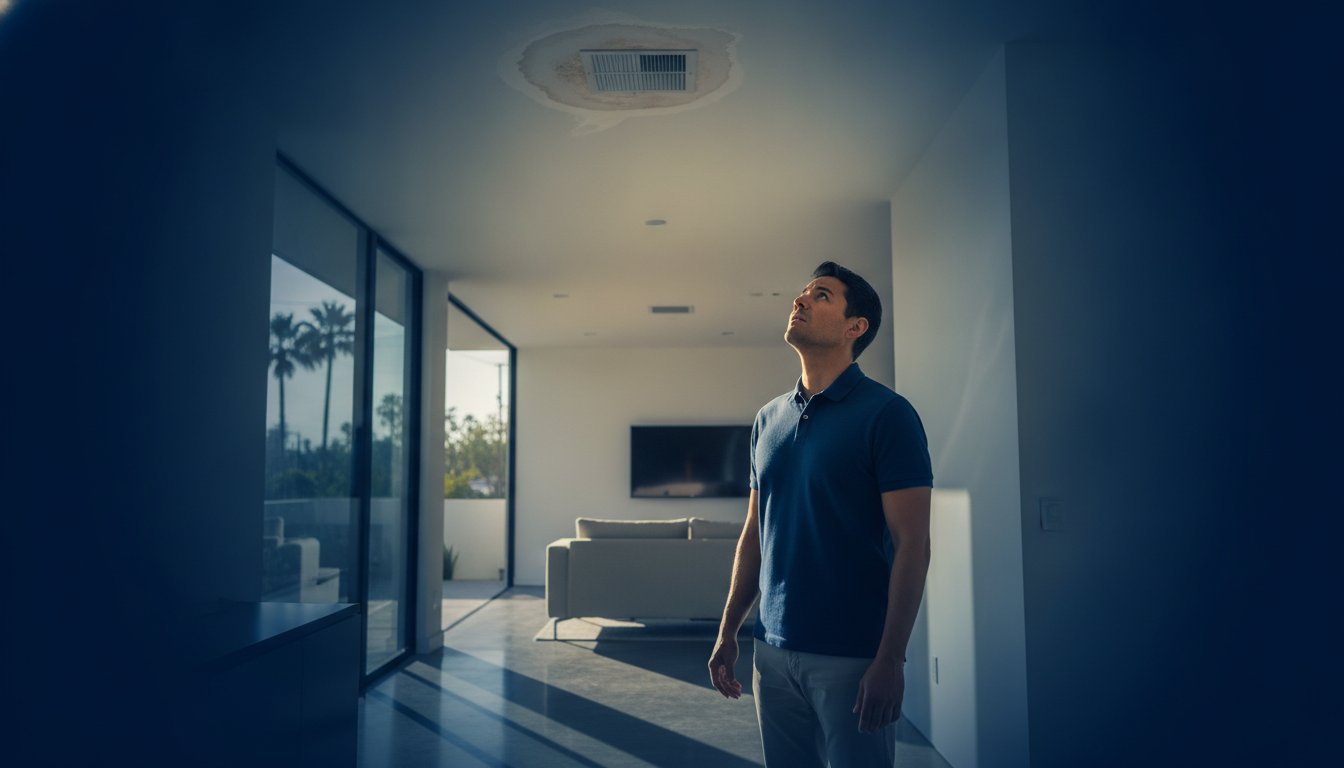
Imagine walking into your hallway on a blistering August afternoon only to find a damp, dark circle spreading across your ceiling right beneath the air vents. It's a moment of pure panic for any homeowner, especially when the forecast shows another week of triple-digit temperatures. You aren't alone in this frustration. With approximately 78.8% of housing units in the Los Angeles area built before 1990, many of us are operating older systems that weren't designed for the relentless heat cycles we see today.
If you've discovered your ac leaking water los angeles, it's critical to act quickly to prevent permanent drywall damage or hidden mold growth inside your walls. Whether the issue is a simple clogged drain line or a more complex refrigerant problem related to 2026 Title 24 compliance standards, understanding the source of the moisture is the first step toward peace of mind. This guide will show you how to stop the leak immediately, identify which fixes you can handle safely on your own, and explain when it's time to bring in a reliable local professional to protect your home's long-term comfort.
Key Takeaways
- Stop immediate damage by shutting down your HVAC system and clearing the area as soon as you notice moisture.
- Identify the most common causes for an ac leaking water los angeles, from frozen evaporator coils to drain lines clogged by unique Southern California dust.
- Differentiate between safe DIY troubleshooting steps, such as inspecting filters, and situations that require a professional repair expert.
- Learn how proactive care through the Nice and Cool Club prevents emergency failures and protects your home from mold and structural damage.
Emergency Response: What to Do When You Spot an AC Leak
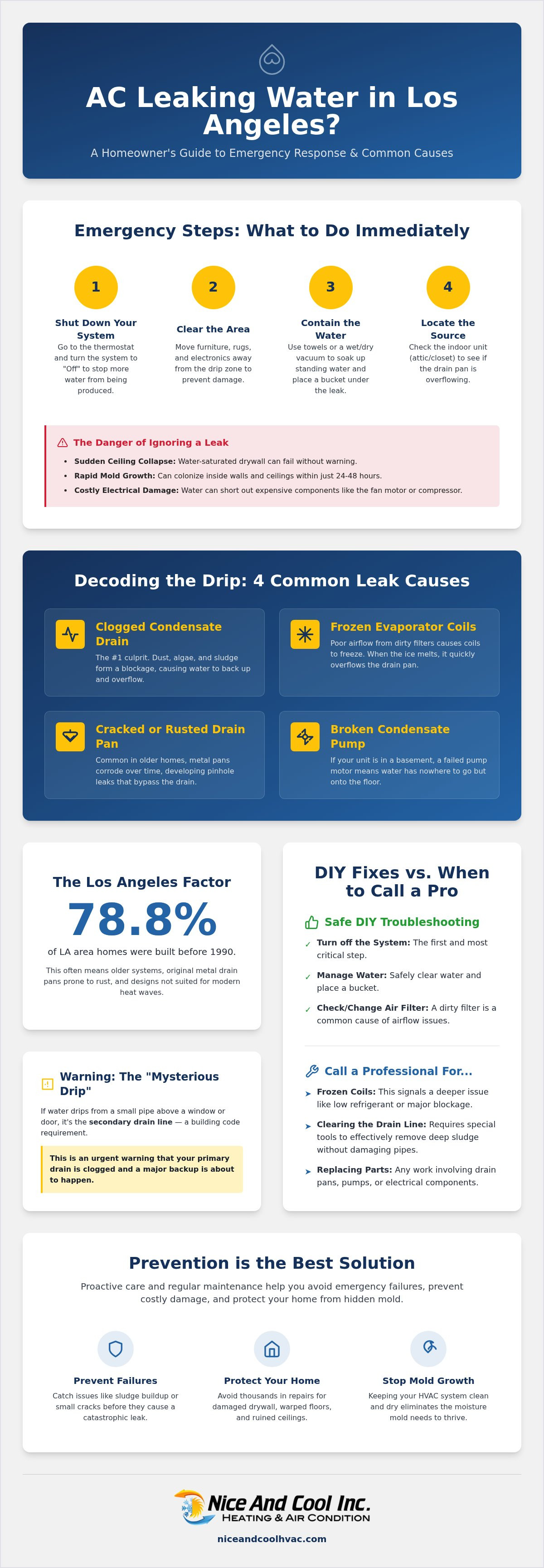
When you see a puddle forming under your vents or a damp spot on the drywall, your first instinct might be to ignore it until the house cools down. Don't wait. If you have an ac leaking water los angeles, every minute the system stays active adds more liquid to the problem. Go to your thermostat and switch the system to "Off" immediately. This stops the cooling cycle and prevents the evaporator coil from generating more condensation. Once the air stops blowing, move any furniture, rugs, or electronics away from the drip zone. Water travels quickly through flooring and can cause permanent warping or staining. Use a wet/dry vacuum or heavy-duty towels to clear standing water. Finally, find your indoor unit, which is typically tucked away in a hallway closet or up in the attic, to see exactly where the moisture is escaping.
The Risk of "Powering Through"
Some homeowners try to "power through" a leak because LA summers are unforgiving. This is a dangerous gamble. A small, steady drip can saturate drywall in hours; eventually, the weight of the water causes a sudden ceiling collapse. Beyond structural issues, the localized humidity in Southern California provides the perfect environment for mold to colonize your walls within 24 to 48 hours. If the water backs up into the internal electronics, it can also short out your fan motor or destroy the compressor. This turns a simple maintenance issue into a costly emergency repair.
Identifying the Leak Location
Understanding How Air Conditioners Work explains why your system produces water in the first place. As the unit cools your home, it pulls humidity out of the air. While you might see water near your outdoor condenser, roughly 90% of AC leaks actually originate inside the indoor evaporator coil housing. Dealing with an ac leaking water los angeles requires checking the secondary drain pan located underneath that indoor unit. If you see standing water or rusted metal in that pan, your primary drainage system has failed. Identifying whether the water is overflowing from the pan or spraying from the coils helps you describe the issue accurately when you contact a specialist for help.
Decoding the Drip: 4 Common Reasons Your AC is Leaking
Identifying the root cause of an ac leaking water los angeles is the only way to ensure a permanent fix. While every home is different, most moisture issues stem from these four mechanical or maintenance failures:
- Clogged Condensate Drain Line: This is the most frequent culprit. Over time, dust, algae, and mold create a thick sludge that blocks the narrow PVC pipe meant to carry water outside.
- Frozen Evaporator Coils: If your system struggles to breathe, the coils can drop below freezing and turn into a block of ice. Once the system cycles off, that ice melts rapidly, often overflowing the internal reservoir.
- Cracked or Rusted Drain Pan: Since nearly 79% of Los Angeles housing units were built before 1990, many homes still use original metal drain pans. These eventually corrode and develop pinhole leaks that bypass the drain line entirely.
- Broken Condensate Pump: Whether your unit is located in a basement or a tight crawlspace, it may rely on a mechanical pump to move water uphill. If the motor burns out, the water has nowhere to go but onto your floor.
The "Mysterious Drip" Over Your Window
If you notice water dripping from a small pipe located high above a window or door, don't ignore it. This is your secondary drain line. Los Angeles building codes require these to be placed in highly visible locations as an early warning system. When the primary line clogs, the water diverts here to tell you that a major backup is imminent. This often happens simultaneously with your AC not blowing cold air in Los Angeles, signaling that the entire system is under extreme stress.
Frozen Coils and Restricted Airflow
A frozen coil is rarely a cooling problem; it's usually an airflow problem. When a dirty filter or blocked return vent prevents warm air from reaching the coils, the refrigerant gets too cold and freezes the humidity it collects. This process is often exacerbated by poor indoor air quality. According to a California Environmental Protection Agency report, indoor pollutants and dust contribute significantly to HVAC component fouling. Simply thawing the unit won't solve the underlying issue of low refrigerant or restricted air. If you suspect your system is struggling, our team can provide a professional Air Conditioning Repair to get your home back to a comfortable temperature.
The Los Angeles Factor: Environmental Causes of HVAC Leaks
Los Angeles isn't just a city of sunshine; it's a city of dust, salt air, and intense heat cycles. These local conditions place a heavy burden on your cooling system. If you're dealing with an ac leaking water los angeles, the cause might be right outside your front door. Our region's unique climate creates specific challenges that standard troubleshooting guides often overlook. From the valley heat to the coastal breeze, your environment dictates how your system handles moisture.
Several environmental factors contribute to drainage failures in Southern California:
- Santa Ana Winds: These seasonal events carry fine particulate matter that bypasses standard filters and settles in your drain pan.
- Heat Stress: When temperatures in the San Fernando Valley or the Basin hit triple digits, your unit works overtime to dehumidify the air.
- Coastal Corrosion: For homes in Santa Monica or Malibu, salt air accelerates the oxidation of metal components, leading to premature rusting in drain pans.
- Urban Pests: During dry spells, local insects like ants and roaches seek out the moisture in your condensate lines, often creating physical blockages.
Dust: The Silent Clog Maker
When fine LA dust meets the moisture on your evaporator coil, it creates a thick, jelly-like substance often called "bio-sludge." This material is incredibly stubborn. It doesn't just wash away; it clings to the walls of your PVC drain lines until the pipe is completely sealed. Using high-MERV filters is a great first step to trap these particles before they enter the system. However, once that sludge has taken hold, a professional line flush is usually the only way to clear the path and prevent a recurring backup.
Extreme Heat and System Capacity
During a July heatwave, a standard residential AC can produce several gallons of water every single day. This happens because of latent heat removal. Latent heat removal is the process of reducing the temperature of the air by stripping away its moisture, which then collects as condensation. If your drain line is undersized or slightly pitched in the wrong direction, it simply can't keep up with this volume. This is why an ac leaking water los angeles often happens on the hottest days of the year when the system's capacity is pushed to its absolute limit.
DIY Troubleshooting vs. When to Call a Los Angeles HVAC Pro
Whether you're a hands-on homeowner or prefer leaving it to the experts, knowing the difference between a simple maintenance task and a complex repair is vital. If you've discovered an ac leaking water los angeles, you don't always need to wait for a technician to arrive before taking action. Some issues are caused by basic neglect that you can rectify in minutes. However, misdiagnosing a mechanical failure as a simple clog can lead to much larger expenses down the road. It's about finding that balance between home craftsmanship and professional precision.
Start with the basics. Check your air filter. If it looks like a heavy wool blanket covered in grey dust, it's restricting airflow and causing your system to sweat or freeze. Simply replacing it might stop the leak. Next, head outside and locate the white PVC pipe that exits your home. If you see leaves, dirt, or a visible "plug" of algae at the end of that pipe, clearing it with a gloved hand can often restore proper drainage. Avoid using harsh "drain-clearing chemicals" or bleach in your HVAC system. These substances are designed for heavy-duty plumbing and can eat through the glue in your PVC joints or corrode your metal drain pan, leading to even more leaks inside your walls.
The Shop-Vac Trick
If you have a wet/dry vacuum, you can attempt to clear a minor clog from the outside. By creating a tight seal between the vacuum hose and the condensate exit pipe, you can often pull out the "sludge" that is causing the backup. While this is a helpful temporary solution, it doesn't address the root cause of the buildup. If your system is old and prone to frequent clogs, it might be time to consider a modern air conditioning installation in Los Angeles to ensure your drainage is built to 2026 standards.
Professional Diagnostic Tools
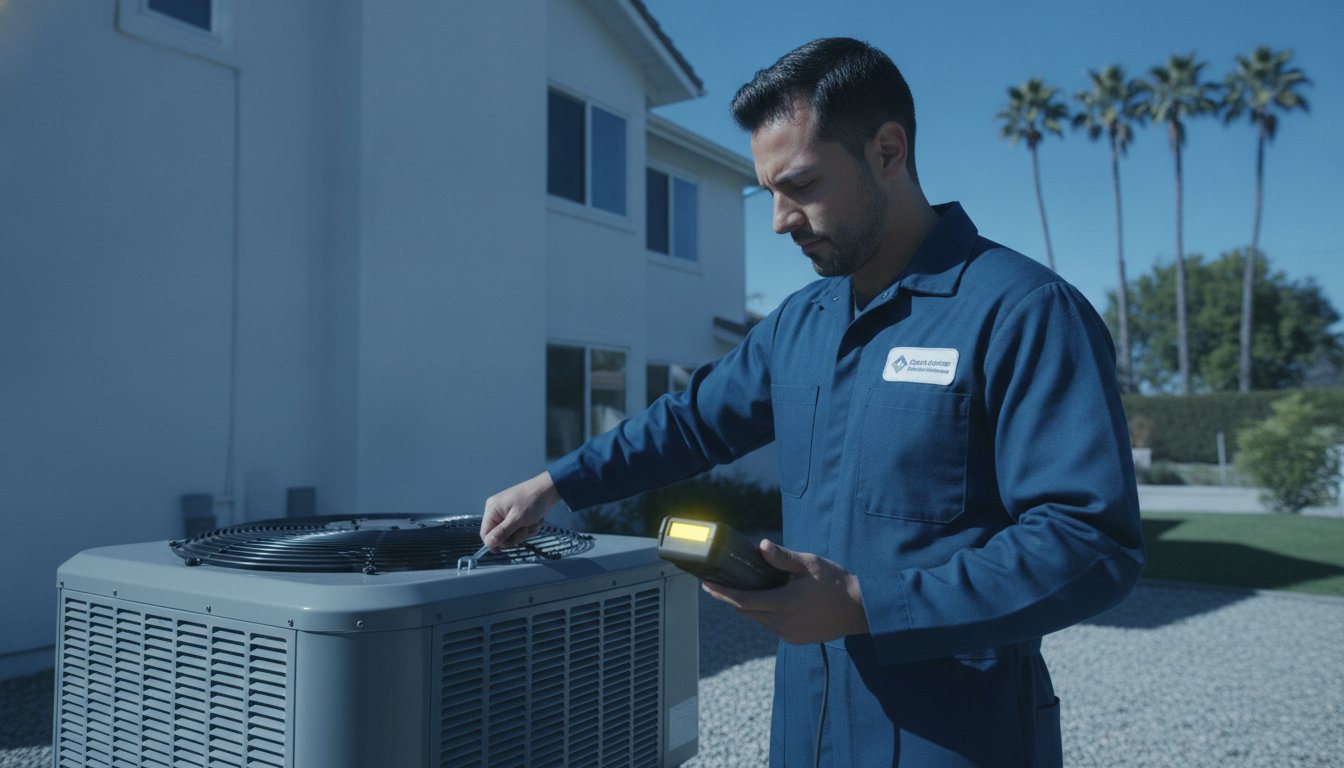
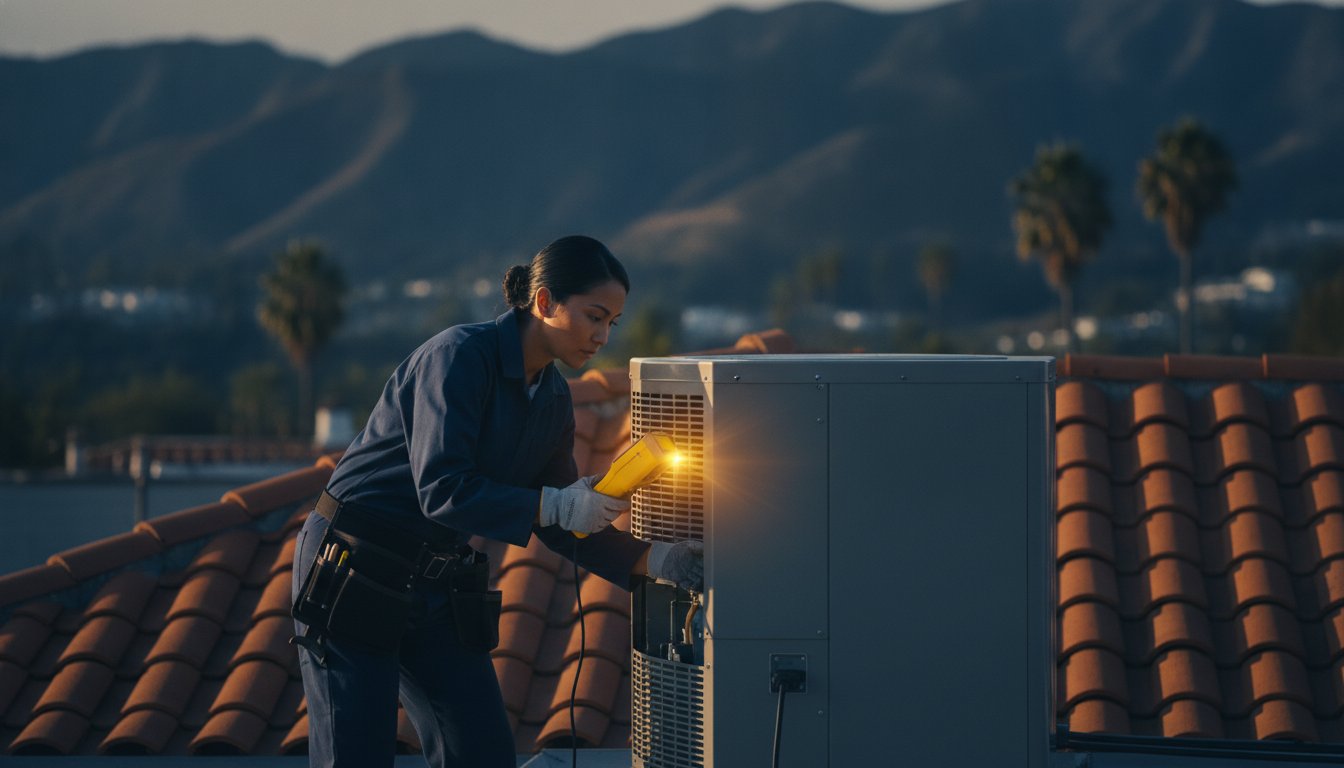
When DIY efforts fail, it's usually because the problem is deep within the internal components. If you hear hissing sounds or see ice forming on the copper lines, you're likely dealing with a refrigerant leak. This requires a professional touch. Technicians use high-pressure nitrogen purges to clear lines safely without damaging the pipes. We also utilize specialized moisture sensors to detect hidden leaks behind drywall before they turn into mold colonies. A professional Air Conditioning Repair provides the dependability of a warranty, something a DIY vacuum trick simply cannot offer. If the water continues to pool despite your best efforts, it's time to let a local specialist handle the heavy lifting.
Preventing Water Damage with the Nice and Cool Club
Stopping a leak once it starts is a relief, but preventing it from ever happening is true peace of mind. Our Nice and Cool Club Maintenance Plan is designed specifically for the environmental stressors of Southern California. Since 2005, we've seen how the combination of Santa Ana dust and high-capacity cooling can overwhelm even the best systems. Whether you have a brand-new high-efficiency unit or an older system common in LA’s pre-1990 housing, proactive care is your best defense against an ac leaking water los angeles.
Our bi-annual tune-ups are timed to prepare your system for the extreme heat of summer and the cooling needs of our mild winters. During these visits, our technicians look for micro-leaks. These are small amounts of moisture or rust that indicate a future failure. We don't just glance at the unit; we perform professional drain line flushing to remove the bio-sludge mentioned earlier. Members also enjoy priority scheduling. If your system does struggle during a record-breaking heatwave in the Valley, you won't be stuck at the bottom of a long waiting list.
The "Leak-Proof" Maintenance Checklist
A reliable maintenance visit involves more than just changing a filter. If the pitch of your drain line has shifted due to house settling, then water will inevitably back up. Our checklist ensures the drainage system remains stable and correctly angled. We also check the refrigerant charge. If the levels are off, then the evaporator coil is at risk of freezing and melting into your home. To keep things flowing clearly between visits, we apply specialized anti-algae tablets to the primary pan, neutralizing the organic growth that creates clogs.
Join the Family-Owned Experts
As a family-owned and operated business, we take immense pride in protecting our neighbors’ homes. We know that only 30% of homeowners schedule regular maintenance, yet the cost of a full HVAC replacement in Los Angeles can reach over $14,000. Investing in prevention is a logical, methodical choice for any homeowner. Our local experience allows us to tailor our services to the specific needs of your neighborhood, whether you're dealing with coastal salt air or canyon dust. Protect your home from water damage—Join the Nice and Cool Club today!
Protect Your Home and Restore Your Comfort
Dealing with an ac leaking water los angeles is more than just a minor inconvenience; it's a direct threat to your home's ceilings, floors, and air quality. By taking immediate action to shut down your system and identifying whether the cause is a simple filter clog or a more complex environmental factor like Santa Ana dust, you've already taken the most important steps toward a solution. Remember that while DIY checks are helpful for minor issues, professional diagnostics ensure that hidden moisture doesn't lead to long-term mold growth or structural damage.
Nice and Cool Inc. has been a family-owned and operated specialist in Los Angeles residential HVAC since 2005. We understand the specific stressors our local climate puts on your equipment. Whether you need an urgent fix or you're ready to prevent future emergencies through our Nice and Cool Club Maintenance Plan, our team is committed to your long-term comfort and peace of mind. Don't let a small drip turn into a major restoration project.
Stop the leak and save your ceiling—Schedule your LA AC repair with Nice and Cool Inc. now!
Stay cool, stay dry, and know that expert help is always just a neighborhood call away.
Frequently Asked Questions
Is it normal for my AC to leak a little bit of water outside?
Yes, seeing water exit the primary drain line outside is a normal part of the dehumidification process. Your system pulls moisture from the air as it cools. However, if you see an ac leaking water los angeles from a secondary pipe located high on a wall or above a window, that's a warning sign. It means your main line is blocked and the system is using the backup drainage to prevent an indoor flood.
Can I still run my AC if it is leaking water inside the house?
No, you should shut the system off at the thermostat immediately. Running a leaking unit only produces more condensation, which will worsen the water damage to your floors or ceiling. It also increases the risk of mold growth within your walls. It's better to deal with a few hours of heat than a multi-thousand dollar restoration project caused by a collapsed ceiling.
How much water should an AC unit typically drain in Los Angeles?
The amount of water depends on the humidity levels and the temperature outside. On a typical 100-degree day in the San Fernando Valley, a standard residential system can pull anywhere from 5 to 20 gallons of water from the air. Because our LA summers are often dry, you might see less than a homeowner in a humid climate, but the volume is still significant enough to cause major damage if a clog occurs.
Why is my AC leaking water from the ceiling?
This usually happens when the primary drain line is completely blocked and the secondary safety pan has failed. In many older Los Angeles homes, these pans are made of metal and can rust through over time. If the pan develops a hole or the backup line is also clogged, the water has nowhere to go but through your drywall. It's a sign that the system's safety features have been overwhelmed.
Will a dirty air filter really cause a water leak?
It absolutely can. A dirty filter restricts the warm air that needs to flow over your evaporator coils. Without that warmth, the coils get too cold and the condensation on them turns into ice. When that block of ice eventually melts, it produces a sudden rush of water that the drain pan isn't designed to handle. Keeping your filters clean is the easiest way to prevent this specific type of leak.
How do I know if my condensate drain line is clogged?
You can identify a clog by checking the secondary drain pan located under your indoor unit. if you see standing water in that pan, the primary line isn't doing its job. You might also notice water dripping from the emergency "warning" pipe outside your home. Some modern systems also have a float switch that will automatically shut the AC off if it detects a backup in the line.
What is the average cost to fix an AC water leak in LA?
Repair costs for an ac leaking water los angeles vary based on the root cause of the moisture. A simple professional line flush is generally the most affordable fix, while replacing a corroded drain pan or repairing a refrigerant leak involves more labor and parts. Homeowners should look for a technician who provides a clear estimate after a diagnostic visit to understand the specific requirements for their system.
Can a water leak lead to an electrical fire in my HVAC system?
Yes, it's a serious safety concern. If water from a leak or an overflowing pan drips onto the electrical components, such as the control board or wiring, it can cause a short circuit. This can damage expensive parts or, in rare cases, lead to an electrical fire. This is why we always recommend turning the power off to the unit as soon as you notice moisture where it shouldn't be.
Frequently Asked Questions
Yes, seeing water exit the primary drain line outside is a normal part of the dehumidification process. Your system pulls moisture from the air as it cools. However, if you see an ac leaking water los angeles from a secondary pipe located high on a wall or above a window, that's a warning sign. It means your main line is blocked and the system is using the backup drainage to prevent an indoor flood.