Cool Air 101: The Homeowner’s Guide to How Your AC Actually Works
July 18, 2026 17 min read
What if you found out your air conditioner doesn't actually "create" cold? It might sound like a riddle, but the truth is your system is a specialized heat-moving machine that works by subtraction rather than addition. Understanding this distinction is the first step toward mastering the cool air in your Los Angeles home. When summer heatwaves push LADWP tiered rates toward that 41.0¢/kWh peak, knowing how your AC removes heat and humidity makes all the difference between a high-performance home and a high energy bill.
We know how frustrating it is to deal with uneven temperatures or confusing technical jargon. It's perfectly normal to feel overwhelmed when your system starts losing its edge or your rooms don't cool evenly. This guide promises to pull back the curtain on the science of thermodynamics in your living room, showing you exactly how to identify efficiency gaps before they become costly repairs. We will walk through the mechanics of modern systems, explain the latest 2026 refrigerant standards, and share practical ways to keep your home refreshing without breaking the bank.
Key Takeaways
- Understand the science of heat extraction and why your AC acts as a heat sponge to keep your home comfortable.
- Learn the four main components of the refrigeration cycle that work together to circulate cool air throughout your residence.
- Identify common barriers to efficiency, from simple airflow blockages to the signs of a hidden refrigerant leak.
- Navigate Los Angeles-specific challenges like dust and wildfire smoke that can hinder your system's performance.
- Discover how modern SEER2 ratings and specialized maintenance plans help you maintain high efficiency and lower monthly utility costs.
What is "Cool Air"? Understanding the Science of Indoor Comfort
Many homeowners think of their air conditioner like an oversized refrigerator that blows "cold" into the house. In reality, science tells a different story. Cool air isn't something your HVAC system creates from scratch; it's what remains after your unit removes the existing heat from your indoor environment. To understand How Air Conditioning Works, you have to look at the laws of thermodynamics. Heat naturally seeks out cooler areas. Your system exploits this rule by providing a refrigerant that is much colder than your indoor air, allowing the heat to jump from your living room into the coils of your machine.
By definition, cool air is air that has been dehumidified and stripped of thermal energy through a refrigeration cycle. It's a two-part process that involves both temperature and moisture control. If your system only lowered the temperature without touching the moisture levels, you'd end up with a damp, clammy house that feels like a basement rather than a sanctuary. This extraction process is what allows us to maintain a stable, refreshing environment even when the Los Angeles sun is at its peak.
The Role of Humidity in Home Comfort
High humidity is the enemy of comfort in Southern California. When the air is saturated with water, your body's natural cooling mechanism, sweat, can't evaporate. This leaves you feeling sticky and much warmer than the thermostat suggests. A standard air conditioner acts as a powerful dehumidifier by pulling moisture out of the air as it passes over the cold evaporator coils. This is the primary difference between a true AC unit and a "swamp cooler." While swamp coolers add moisture to the air to achieve a slight chill, a professional HVAC system creates cool air by removing it, which is far more effective during those humid coastal afternoons.
Why a Fan Doesn’t Actually Cool the Room
You've likely noticed that sitting in front of a fan feels great, but the room temperature doesn't actually change. This is the wind-chill effect. A fan moves air across your skin to speed up evaporation, but it doesn't remove a single British Thermal Unit (BTU) of heat from the structure. If you leave a fan running in an empty room, you're just wasting electricity. Fans are designed for people, while your HVAC system is designed to cool the building itself. Whether you're running a central system or a ductless mini-split, using a fan can help circulate the treated air more effectively, but it can never replace the mechanical work of heat extraction.
How Your HVAC System Generates Cool Air: The Refrigeration Cycle
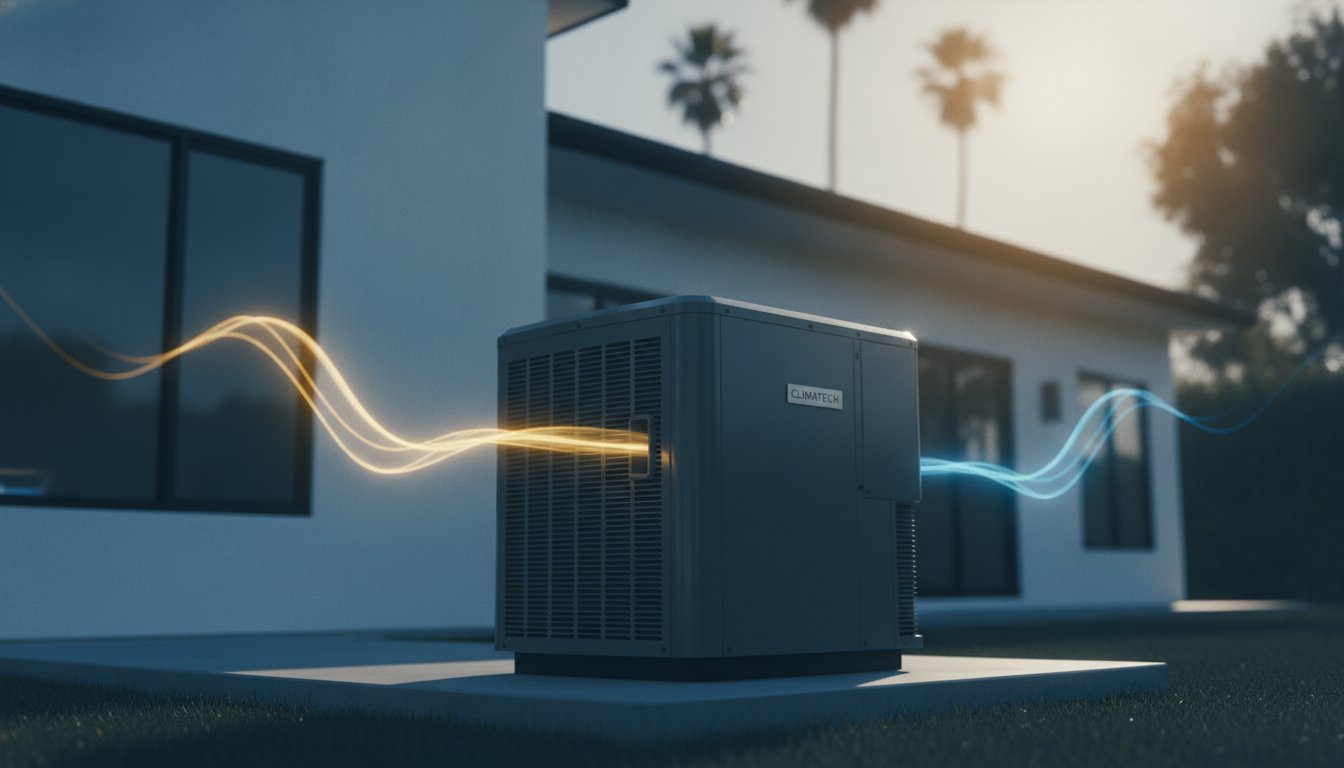
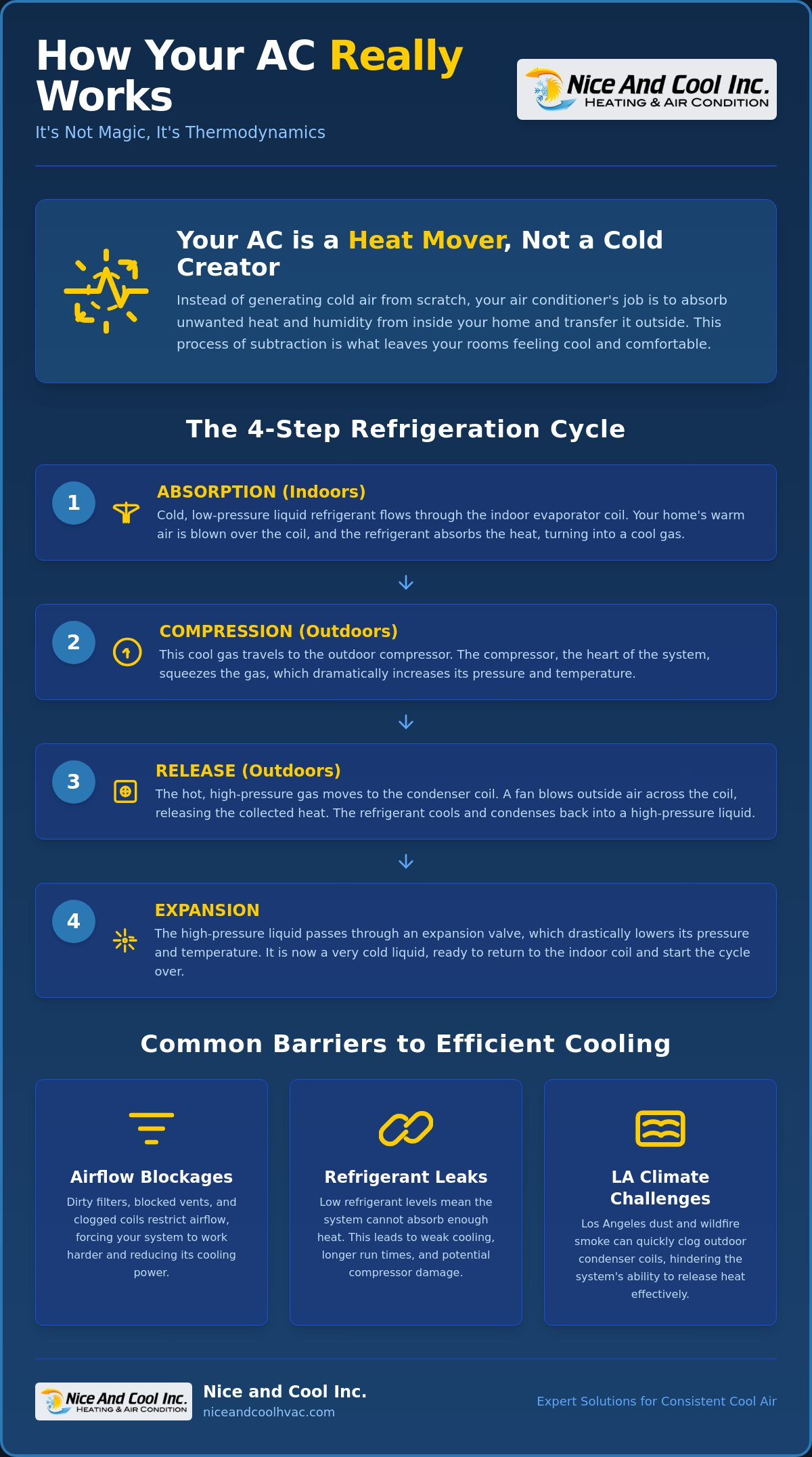
Think of your air conditioning system as a thermal sponge. It doesn't create coldness out of thin air. Instead, it soaks up the unwanted warmth from your living room and squeezes it out into the Los Angeles sky. This continuous exchange relies on a specialized chemical medium called refrigerant. This substance has a unique ability to change from a liquid to a gas at very low temperatures, acting as the primary vehicle for heat transport. The refrigeration cycle was perfected for home use in the early 20th century to revolutionize modern living standards.
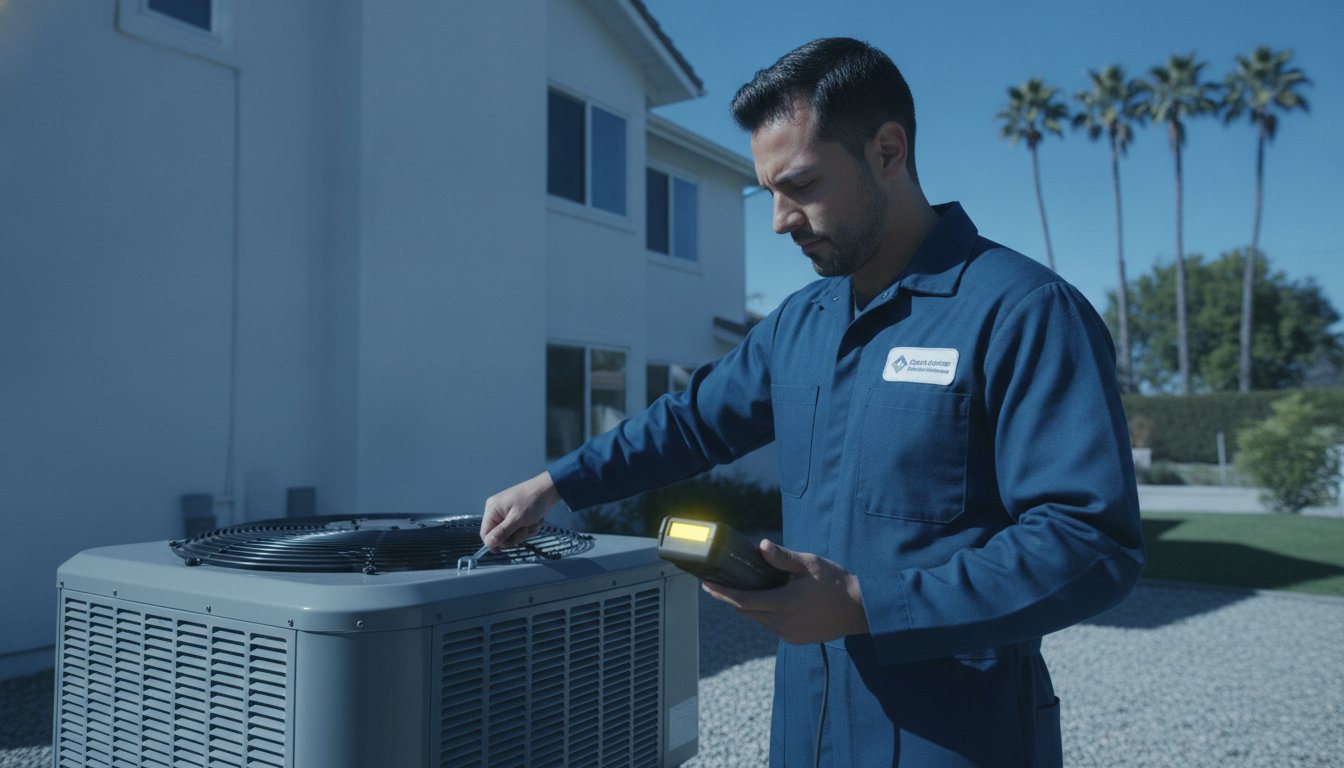
To provide reliable cool air, your system moves this refrigerant through a closed loop of copper coils. If you've ever felt the blast of hot air coming from an outdoor unit, you've witnessed the final stage of this process. The system isn't just "running"; it's physically moving energy from one place to another. Whether you're using a traditional central unit or a modern system, the mechanics require four specific components to work in perfect harmony. If you're noticing your system is running longer than usual to achieve the same result, it might be time for professional air conditioning repair to check your component health.
The 4-Step Process of Cooling Your Home
- Step 1: Absorption. The indoor evaporator coil uses cold, liquid refrigerant to absorb heat from your indoor air. As the air passes over these coils, the refrigerant "soaks up" the thermal energy and evaporates into a gas.
- Step 2: Compression. The compressor, located in your outdoor unit, squeezes this gas. This massive increase in pressure raises the temperature of the refrigerant even further, preparing it to dump that heat outside.
- Step 3: Release. In the outdoor condenser coil, a fan blows over the hot refrigerant. Because the refrigerant is now hotter than the outside air, the heat naturally escapes. In 2026, new systems use environmentally friendly refrigerants like R-454B or R-32 to make this transfer more efficient.
- Step 4: Expansion. The refrigerant passes through an expansion valve, which drops the pressure instantly. This causes the temperature to plummet, turning it back into a cold liquid ready to provide more cool air inside.
Heat Pumps: The Modern Way to Cool
In Southern California, heat pumps are quickly becoming the preferred standard for home comfort. A heat pump is essentially an air conditioner equipped with a reversing valve. This allows the system to run in reverse during our cooler winter months, pulling heat from the outdoor air to warm your home. It's a highly efficient approach that aligns with California's push for home electrification. Whether you're focused on summer cooling or year-round climate control, having one high-efficiency system simplifies your home's mechanical needs while significantly lowering your carbon footprint.
Why Isn’t My Air Cool? Common Barriers to Home Comfort
If you've ever stood directly in front of a vent expecting a refreshing breeze only to feel a tepid puff of humidity, you know how quickly frustration can set in. If your air feels lukewarm, then it is likely a sign that the heat exchange process is being interrupted. Maintaining consistent cool air requires every part of the refrigeration cycle to function without resistance. When one component falters, the entire system struggles, often leading to higher utility bills and unnecessary wear on your equipment.
The most common culprit is often the simplest: restricted airflow. A standard air filter is designed to protect your system's internal components from Los Angeles dust and debris. If that filter becomes clogged, it starves the evaporator coil of the air it needs to absorb heat. Similarly, mechanical wear on parts like capacitors or blower motors can slow down the cooling process. Capacitors act like a battery boost to start your system's motors; if they weaken, your compressor may fail to kick on entirely, leaving you with nothing but circulating room-temperature air.
Refrigerant levels are another critical factor. It's a common misconception that refrigerant is "used up" like gasoline in a car. In reality, your HVAC system is a closed loop. If your levels are low, it almost certainly indicates a leak that needs to be sealed. For homeowners with older units, the cost to recharge a system with phased-out R-22 refrigerant is estimated at $150 to $300 per pound in 2026. At those rates, identifying and fixing a leak isn't just about comfort; it's a financial necessity.
The "Frozen Coil" Paradox
It seems impossible for ice to form inside a machine when it's 100 degrees outside, but the "frozen coil" is a very real phenomenon. When airflow is restricted by a dirty filter or blocked vents, the refrigerant in the evaporator coil stays too cold because it isn't absorbing enough heat from your home. This causes moisture in the air to freeze onto the coils, eventually creating a block of ice that stops all cooling. If you suspect your system is icing over, check out our AC Not Blowing Cold Air in Los Angeles? 2026 Homeowner’s Troubleshooting Guide for immediate steps to take.
Thermostat Miscommunications
Sometimes the barrier to cool air isn't mechanical at all, but digital. A thermostat placed in a drafty hallway or directly under a sunny window will give false readings, causing your AC to shut off before the rest of the house is comfortable. You should also check your fan settings. Setting the fan to "On" keeps it running constantly, which can actually blow humid air back into the house once the cooling cycle ends. Keeping it on "Auto" ensures the fan only runs when the air is actually being chilled, helping maintain that crisp, dry feeling we all crave during a heatwave.
Maintaining Reliable Cool Air in the Los Angeles Climate
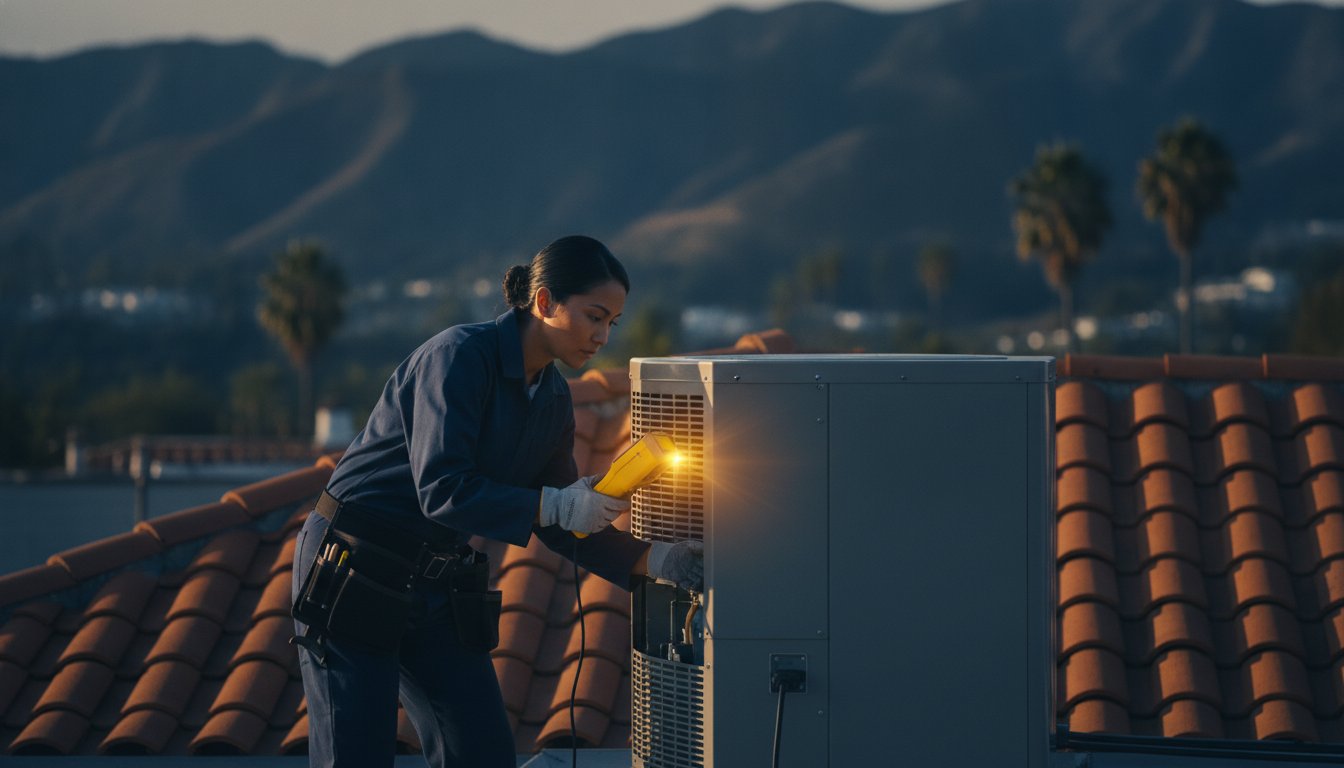
Los Angeles isn't just hot; it's often dusty and prone to seasonal wildfire smoke. If you live near a construction site or in a canyon prone to high winds, then your system is working twice as hard to breathe. Particulate matter coats your outdoor condenser coils, acting like a thermal blanket that traps heat inside the unit. This prevents the refrigeration cycle from releasing warmth effectively, forcing your compressor to run longer and hotter to maintain cool air indoors. Regular cleaning of these outdoor components is essential for surviving an August heatwave without a total system failure.
Efficiency standards have also evolved to help homeowners manage high utility costs. In 2026, the statewide minimum for new residential systems is 14.3 SEER2. However, if you want to qualify for LADWP rebates, your equipment must meet a higher standard of at least 15.2 SEER2. These rebates can be as much as $2,500 per ton for high-efficiency heat pumps, making the upgrade a smart financial move. When you consider that LADWP Tier 3 rates reach 41.0¢/kWh, every point of efficiency directly protects your monthly budget from the "summer spike."
You can also assist your system by strategically shading the outdoor unit. If your condenser is baking in the direct afternoon sun, it has to work much harder to dump heat into the air. Planting tall shrubs or installing a lattice can provide much-needed shade, provided you maintain at least two to three feet of clearance for proper airflow. Restricting the air around the unit will cause it to overheat, which defeats the purpose of the shade. Schedule your maintenance check today to ensure your outdoor unit is positioned for peak performance.
The Nice and Cool Club: Proactive Protection
Routine maintenance is the only way to ensure your system survives the relentless LA summer. Our Nice and Cool Club Maintenance Plan is designed to catch small issues before they become "no-cool" emergencies on a 100-degree Sunday. Neglected systems can lose up to 15% of their efficiency due to dirty coils and loose electrical connections. Proactive tuning keeps your system running at its rated SEER2 level, ensuring you get the comfort you paid for without the high-pressure stress of a mid-season breakdown.
Zoned Cooling and Mini-Splits
If you have rooms that are always warmer than others, then a ductless mini-split system might be the perfect solution. These systems allow you to deliver cool air directly to specific zones, like a home office or a master bedroom, without wasting energy on empty guest rooms. This is particularly effective for larger Los Angeles homes where traditional ductwork might lose 20% to 30% of its conditioned air through leaks. If you are considering an upgrade, our guide on Air Conditioning Installation in Los Angeles: The Full 2026 Homeowner’s Guide provides a deeper look at your options.
Expert Solutions for Consistent Cool Air with Nice and Cool Inc.
Understanding the mechanics of your HVAC system is the first step toward a more comfortable home. However, the science of heat extraction only works when your equipment is sized, installed, and maintained with precision. At Nice and Cool Inc., we believe that technical expertise should always be paired with a neighborly approach. We treat every Los Angeles residence as if it were our own, prioritizing craftsmanship and long-term reliability over a quick, temporary fix. Whether you need a minor repair or a high-efficiency upgrade, we provide the expertise to keep you cool throughout the most demanding California summers.
Why LA Homeowners Trust Nice and Cool
Since 2005, we've established ourselves as a family-owned staple in the Los Angeles community. Our 20 plus years of local experience mean we understand the specific challenges of our climate, from the coastal moisture of Santa Monica to the intense heat of the Valley. We take immense pride in our reputation for honesty and transparency. If your system has years of life left, we'll tell you. If a repair is no longer financially sound due to the high cost of reclaimed R-22 refrigerant, we'll provide a clear, upfront assessment of your replacement options. Our technicians maintain clean, professional work environments, ensuring your home is respected from the moment we arrive until the job is finished.
Ready for a Cooler Home?
If you're tired of rising energy bills or uneven cooling between rooms, it's time to take a proactive step toward better indoor comfort. We invite you to schedule a "Cool Air Assessment" with our team of specialists. We can evaluate your current system's efficiency, check for duct leaks, and determine if you qualify for the latest LADWP rebates of up to $2,500 per ton for high-efficiency heat pump installations. Investing in your home's climate control today leads to significant long-term savings and peace of mind. Visit our homepage to schedule your consultation and discover how the right partner can make all the difference in your home's cool air and overall comfort.
Secure Your Home Comfort for the Seasons Ahead
You now have the foundational knowledge to understand how your system transforms your living space. By focusing on the mechanics of heat extraction and maintaining proper airflow, you can ensure your cool air remains consistent even during the most intense summer months. Whether you're managing an older unit or considering an upgrade to a high-efficiency heat pump, staying ahead of maintenance is the most effective way to avoid high utility bills and unexpected breakdowns.
Since 2005, Nice and Cool Inc. has served all of Los Angeles County as a family-owned business dedicated to craftsmanship and honest service. If you're ready to maximize your system's performance, then our Nice and Cool Club Maintenance Plan offers the year-round reliability you deserve. We take pride in being your local specialists and helping you navigate the latest 2026 efficiency standards with ease. Schedule your Cool Air Assessment with Nice and Cool Inc. today! We look forward to helping you keep your home a refreshing sanctuary for your family.
Frequently Asked Questions
Why is my AC running but the air isn’t cool?
If your unit is humming but the temperature isn't dropping, you likely have a restricted evaporator coil or a refrigerant leak. A dirty filter can block air from passing over the coils, preventing the system from absorbing heat effectively. Alternatively, if your refrigerant is low, the system cannot transport heat out of your home, resulting in lukewarm air coming from your vents despite the fan running.
How can I make my AC blow colder air?
You can improve your system's performance by ensuring all supply and return vents are completely unobstructed by furniture or curtains. Keeping your outdoor condenser unit clear of debris and providing it with afternoon shade can also help the refrigeration cycle work more efficiently. Regular professional tuning is the best way to ensure your system is operating at its maximum cooling capacity without overworking the compressor.
What is the best temperature to set my AC for cool air and low bills?
Setting your thermostat to 78 degrees while you are home provides the ideal balance between comfort and energy savings for most Los Angeles residences. Every degree you lower the temperature can increase your cooling costs by roughly 3% to 5%. With LADWP Tier 3 rates reaching 41.0¢/kWh in 2026, using a programmable thermostat to raise the temperature when you are away is a smart way to manage your budget.
Is "cool air" from a heat pump different than a traditional AC?
The cool air produced by a heat pump is identical to the air from a traditional air conditioner. Both systems use the same refrigeration cycle to remove heat and humidity from your living space. The primary difference is that a heat pump includes a reversing valve, which allows it to provide efficient heating during the winter, making it an excellent all-in-one solution for the Southern California climate.
How often should I change my filters to keep the air cool?
You should check your air filters every 30 days and replace them at least every three months to maintain peak efficiency. In Los Angeles, local factors like wildfire smoke, construction dust, or high pollen counts can clog filters much faster than in other regions. A clean filter ensures maximum airflow, which is essential for the heat exchange process that keeps your indoor environment refreshing and healthy.
Why does the air feel humid even when the AC is on?
If your home feels sticky despite the AC running, your system might be "short-cycling" or your fan might be set to "On" instead of "Auto." An oversized unit cools the air too quickly to remove moisture effectively, leaving the air damp. Keeping your fan on "Auto" ensures the blower only runs while the cooling coils are active, preventing collected moisture from being blown back into your rooms.
Can a dirty outdoor unit stop my air from being cool?
Yes, a dirty outdoor condenser acts like a thermal blanket that prevents your system from releasing the heat it collected inside. When the aluminum fins are coated in dust or grime, the refrigerant cannot cool down enough to repeat the cycle. This forces the compressor to work harder, which increases your energy consumption and can eventually lead to a total system shutdown during a heatwave.
What should I do if my AC starts blowing hot air suddenly?
If your system begins blowing hot air, turn it off immediately at the thermostat to prevent further mechanical damage. Check your circuit breaker to see if the outdoor unit has tripped a switch while the indoor fan continues to run. If the power is on and the air remains warm, you likely have a failed capacitor or a significant refrigerant leak that requires professional Air Conditioning Repair to restore cool air to your home.
Frequently Asked Questions
If you're tired of rising energy bills or uneven cooling between rooms, it's time to take a proactive step toward better indoor comfort. We invite you to schedule a "Cool Air Assessment" with our team of specialists. We can evaluate your current system's efficiency, check for duct leaks, and determine if you qualify for the latest LADWP rebates of up to $2,500 per ton for high-efficiency heat pump installations. Investing in your home's climate control today leads to significant long-term savings and peace of mind. Visit our homepage to schedule your consultation and discover how the right partner can make all the difference in your home's cool air and overall comfort. You now have the foundational knowledge to understand how your system transforms your living space. By focusing on the mechanics of heat extraction and maintaining proper airflow, you can ensure your cool air remains consistent even during the most intense summer months. Whether you're managing an older unit or considering an upgrade to a high-efficiency heat pump, staying ahead of maintenance is the most effective way to avoid high utility bills and unexpected breakdowns. Since 2005, Nice and Cool Inc. has served all of Los Angeles County as a family-owned business dedicated to craftsmanship and honest service. If you're ready to maximize your system's performance, then our Nice and Cool Club Maintenance Plan offers the year-round reliability you deserve. We take pride in being your local specialists and helping you navigate the latest 2026 efficiency standards with ease. Schedule your Cool Air Assessment with Nice and Cool Inc. today! We look forward to helping you keep your home a refreshing sanctuary for your family.