Ductless Mini-Split Repair in Los Angeles: The 2026 Homeowner’s Troubleshooting Guide
September 2, 2026 17 min read
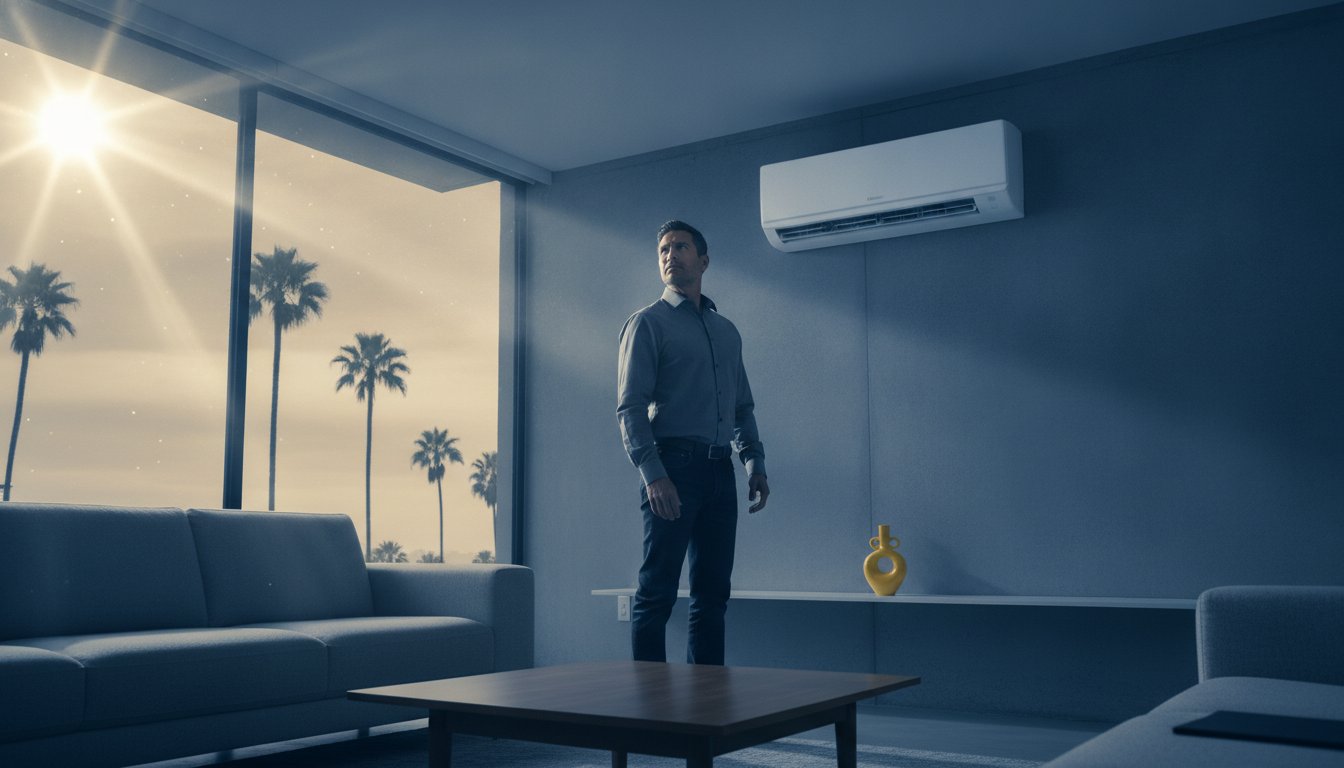
Imagine it's a 95-degree afternoon in Silver Lake and your bedroom unit starts blowing lukewarm air while emitting a faint, vinegar-like smell. You invested in a high-efficiency system to avoid exactly this situation, yet here you are, wondering why your zones are failing you. It's a common frustration for many homeowners who find that even the most advanced inverter technology can run into trouble under the heavy demands of a Southern California summer.
If you're noticing uneven cooling or hearing strange rattling sounds, you aren't alone. Whether you're dealing with a simple filter clog or a more complex refrigerant issue, this 2026 guide is designed to help you regain control. We'll show you how to identify common failures and explain when it's time to call for professional ductless mini-split repair los angeles to protect your system's long-term health. We'll also preview the latest efficiency standards and maintenance strategies that keep your home comfortable while helping you avoid future breakdowns and unexpected service needs.
Key Takeaways
- Identify specific warning signs like lukewarm air or failing fan motor noises to address problems before they lead to a complete system failure.
- Use the "50% Rule" and 2026 SEER2 efficiency standards to evaluate whether a ductless mini-split repair los angeles or a full replacement is your best path forward.
- Understand how specialized inverter technology differs from traditional AC systems and why it requires a technician with specific diagnostic training.
- Learn how to protect your investment from Los Angeles smog and dust through targeted maintenance, including professional deep-cleaning of the indoor blower wheel.
Recognizing the Signs of Mini-Split Failure in Southern California
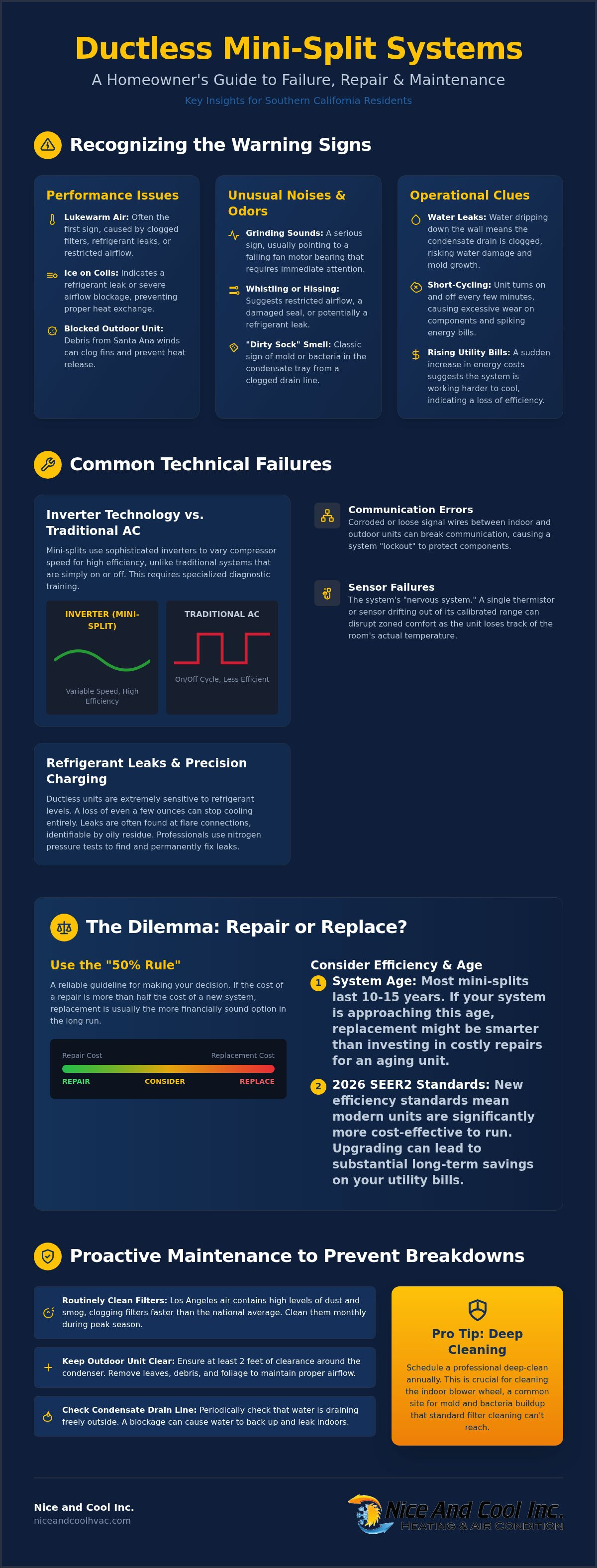
Living in Los Angeles means your HVAC system works overtime during our prolonged heat waves. When a system fails, it's rarely a total surprise; it usually sends out subtle warnings first. Understanding how mini-split systems work helps you spot these red flags before they turn into a complete breakdown during a July scorcher.
When the System Stops Cooling Effectively
If you find your ac not blowing cold air in Los Angeles, the cause often sits at two extremes. It's either a simple maintenance oversight or a technical failure requiring professional ductless mini-split repair los angeles. Start by checking your filters. Our local air carries significant dust and soot which clogs filters much faster than the national average.
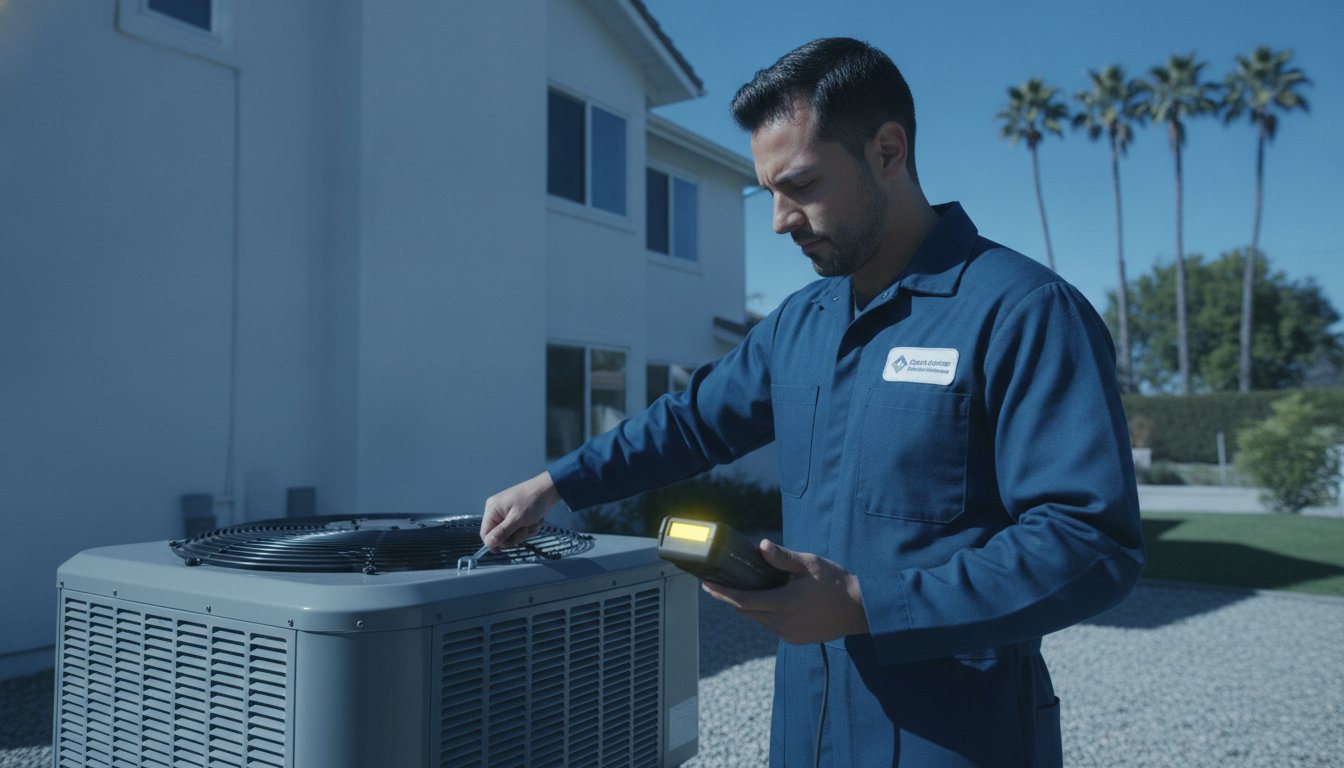
If filters are clean but the air stays warm, look for ice on the indoor evaporator coils. This usually indicates a refrigerant leak or severely restricted airflow. Also, take a walk outside to check your condenser. Santa Ana winds often blow debris, trash, or foliage into the unit's fins, preventing it from releasing heat effectively. Whether it's a blockage or a leak, a system that can't cool is working twice as hard for half the result.
Unusual Noises and Odors from the Indoor Unit
Your indoor air handler should be nearly silent. You can typically distinguish between normal operation and a mechanical failure by listening for these specific sounds:
- Clicking: Often just the sound of plastic parts expanding, but frequent clicking can signal a failing relay.
- Grinding: This usually points to a failing fan motor bearing that needs immediate attention.
- Whistling: Indicates a restricted air path or a damaged seal forcing air through a narrow gap.
Odors are equally telling. A "dirty sock" smell is a classic sign of mold or bacteria buildup in the condensate tray. Because mini-splits remove moisture from the air, that water must drain away properly. If the line is clogged, the standing water becomes a breeding ground for microbes. Addressing these smells early protects your indoor air quality and prevents water from leaking down your walls.
Finally, keep an eye on your utility bill. If the unit turns on and off every few minutes, it's "short-cycling." This behavior wears out specialized inverter components and spikes your energy costs. Spotting these signs early ensures you get the right ductless mini-split repair los angeles before the next heat wave arrives.
Common Ductless Mini-Split Issues: From Refrigerant Leaks to Sensor Errors
Modern ductless systems operate differently than the central air conditioners of the past. Traditional units use a simple on-and-off cycle, but mini-splits rely on sophisticated inverter technology. This allows the compressor to vary its speed, matching the exact cooling needs of your room. While this makes them incredibly efficient, it also means that a professional ductless mini-split repair los angeles requires a technician who understands DC voltage and complex communication protocols.
When these systems encounter a problem, they often enter a "lockout" mode to protect expensive components. This is frequently caused by a break in communication between the indoor and outdoor units. If the signal wires are loose, corroded, or damaged, the system cannot sync the fan speeds and refrigerant flow, leading to an immediate shutdown. Similarly, a network of thermistors and sensors acts as the system's nervous system. If a single sensor drifts out of its calibrated range, your zoned comfort disappears because the unit no longer knows the actual temperature of the space.
Refrigerant Leaks and Line Set Integrity
Mini-splits are famously sensitive to refrigerant charge levels. Unlike a large central AC that might continue to limp along with a slight leak, a ductless unit will often stop cooling entirely if the charge is off by even a few ounces. This precision is why we look for oil spots near flare connections. Since refrigerant carries oil to lubricate the compressor, a visible oily residue usually signals a slow leak.
If we suspect a leak, the standard procedure involves a nitrogen pressure test. We clear the lines and introduce high-pressure nitrogen to see if the system can hold it over time. This methodical approach ensures that once we perform a ductless mini-split repair los angeles, the fix is permanent. It's much better to find the leak now than to simply "top it off" and face the same problem next month.
Electronic Failures and Inverter Board Troubleshooting
The control board is the brain of your mini-split. It manages everything from the expansion valve to the fan speed. Unfortunately, the Los Angeles power grid can be unpredictable. Frequent brownouts or power surges during peak summer demand can fry these sensitive electronics. This is why we emphasize the importance of using OEM (Original Equipment Manufacturer) parts. Generic components rarely communicate correctly with the manufacturer's proprietary software.
If your system is displaying a cryptic error code or refusing to respond to the remote, it might be an electronic glitch rather than a mechanical failure. In these cases, you can check our guide on AC troubleshooting to see if a simple reset helps, or if it's time for a professional diagnostic to protect your inverter board.
The Repair vs. Replace Dilemma: Evaluating Costs and Efficiency
Deciding whether to invest in a ductless mini-split repair los angeles or start fresh with a new unit is one of the most common challenges our neighbors face. We typically apply the "50% Rule" to simplify this choice. If the estimated repair cost exceeds half the price of a new system, or if the unit is over ten years old, the investment in a repair often yields diminishing returns. When you factor in the age of the system and its maintenance history, a new ac installation los angeles ca often becomes the more responsible financial move.
A major component failure, such as a seized compressor, is frequently the tipping point. While we can certainly replace a compressor, the labor and parts costs for an out-of-warranty unit are substantial. If your system has a history of reliable service, a repair might make sense. However, if you've already called for service multiple times in the last two years, you're likely throwing good money after a system that's destined for the scrap yard.
Calculating the Long-Term Cost of Ownership
Whether you choose to repair or replace, you must consider the rising cost of electricity in Southern California. Older systems operate under lower efficiency standards, while new units installed in 2026 must meet strict SEER2 requirements. California now mandates a minimum SEER2 of 14.3, but many modern systems reach much higher. If you upgrade to a unit with a SEER2 of 20.5 or higher, you may even qualify for LADWP rebates ranging from $1,500 to $2,500 per ton. A new heat pump installation also comes with a fresh manufacturer warranty, protecting you from the "repair of the month" cycle that plagues aging equipment.
When Replacement Is the Smarter Investment
If your current unit relies on R-410A refrigerant, repairs are becoming increasingly expensive. As of January 1, 2025, manufacturers stopped producing new equipment using this refrigerant. In 2026, the supply of R-410A is dwindling, which drives up the cost of fixing leaks. We also find that parts for older, non-inverter systems are becoming obsolete. If your technician struggles to find a replacement control board or compressor, it's a clear sign your system has reached the end of its functional life. Upgrading allows you to integrate better indoor air quality solutions, such as advanced filtration that handles Los Angeles dust and smog more effectively than older models ever could. Investing in a modern system isn't just about cooling; it's about the long-term health of your home and your wallet.
Proactive Maintenance: Prevent Costly LA Heat Breakdowns
Living in the Los Angeles basin means your mini-split faces environmental challenges that systems in other cities simply don't encounter. Santa Ana winds and local smog create a fine layer of particulate matter that settles deep inside your indoor unit. If you skip regular cleaning, you're essentially forcing your system to breathe through a heavy shroud. This added strain is a leading cause for needing ductless mini-split repair los angeles right when the first heat wave of the season hits.
A professional "deep clean" is far more involved than simply rinsing the plastic dust screens. We use a specialized bib system to surround the indoor unit, which allows us to pressure wash the evaporator coils and the cylindrical blower wheel with biodegradable cleaners. This process removes the "fuzzy" buildup that causes your unit to vibrate or lose its airflow "throw." If the blower wheel is heavy with dust, it forces the motor to draw more amperage. This eventually leads to a motor burnout and an avoidable emergency service call.
We also pay close attention to the condensate drain lines. In the warm, humid pockets of our local climate, algae and microbial slime can quickly take root in these narrow pipes. If the line becomes obstructed, the backup has nowhere to go but into your drywall and flooring. Clearing these lines during every visit is a non-negotiable part of our process to ensure your home stays dry and your system stays functional throughout the year.
The Role of Filtration and Air Quality
Clean filters do more than just improve the air you breathe; they are vital for the mechanical health of your system. When airflow is restricted by Los Angeles dust, the evaporator coil temperature can drop too low. This leads to the "frozen coil" phenomenon, where a block of ice physically prevents the unit from cooling your room. Specialized mini-split filters often require a professional chemical wash once a year to remove microscopic pollutants that standard household vacuuming simply misses. Keeping these pathways clear reduces the workload on your compressor and significantly lowers your monthly energy costs.
Seasonal Tune-Ups and the Nice and Cool Club
The Nice and Cool Club Maintenance Plan acts as your system's insurance policy against the stresses of a Southern California summer. During a pre-summer tune-up, our technicians perform a comprehensive 20-point inspection. We check electrical connections for signs of heat stress, verify refrigerant pressures, and test the accuracy of your system's thermistors. This methodical approach identifies minor glitches before they escalate into major failures.
Club members enjoy the peace of mind that comes with priority service and significant repair discounts. Routine care can extend the life of your ductless system by up to 5 years, making it a smart long-term investment for any homeowner. To protect your comfort and prevent expensive emergency calls, you can learn more about our maintenance options and join the community of homeowners who prioritize system longevity.
Professional Ductless Repair Services: Why Experience Matters
Ductless inverter systems are sophisticated pieces of equipment that require a different skillset than traditional central air units. While a standard AC uses simple electrical relays, a mini-split relies on complex circuit boards and variable-speed communication. Choosing a technician without specialized training often leads to "parts swapping," where components are replaced blindly until the system works again. A true ductless mini-split repair los angeles should be handled by experts who understand the logic behind the error codes and the physics of the refrigerant cycle.
By focusing exclusively on residential systems, we ensure our technicians aren't distracted by large-scale commercial refrigeration or plumbing tasks. This specialization allows us to master the nuances of zoned cooling. We treat every home with the same care we'd give our own family, standing behind our craftsmanship with the accountability that only a local, family-oriented business can provide. Our goal isn't just a quick fix; it's a long-term solution that restores your peace of mind.
The Nice and Cool Diagnostic Process
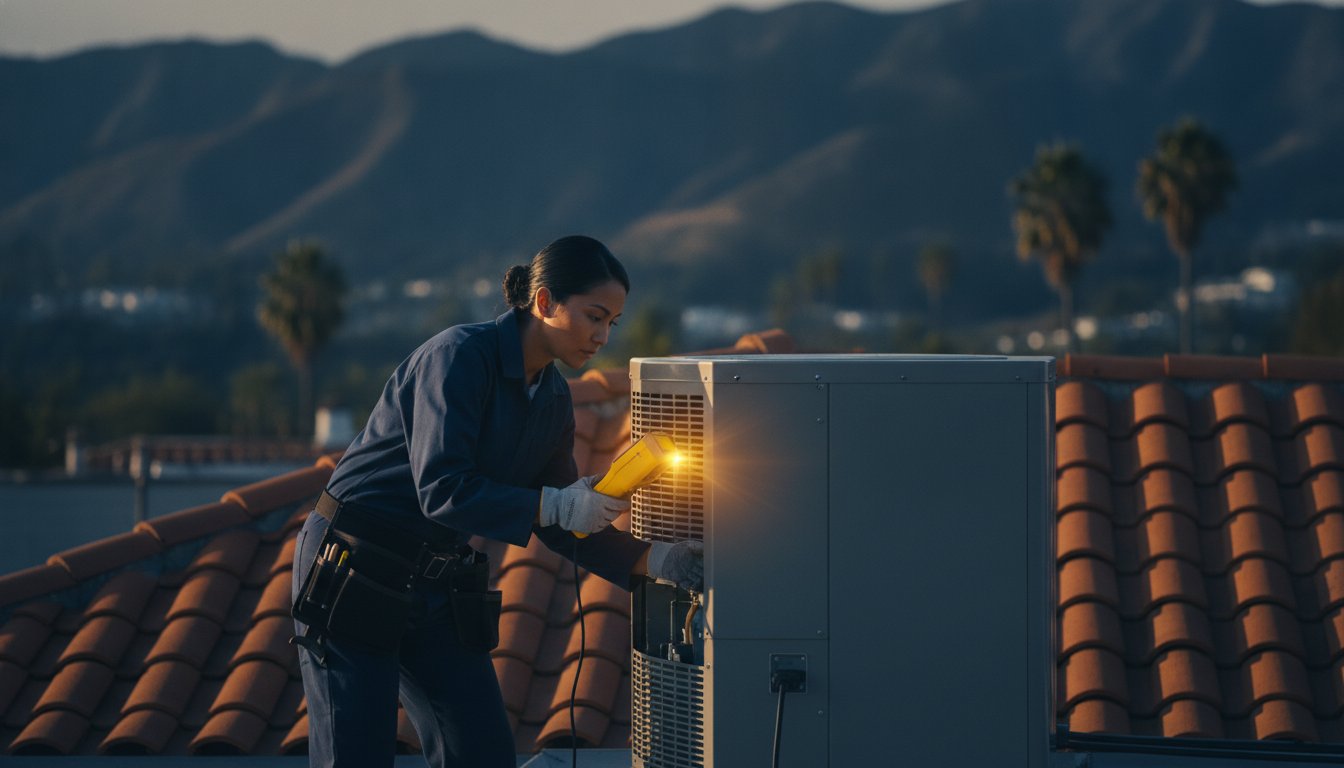
We believe that an accurate repair begins with high-precision tools. Instead of relying on analog dials that can be misread, we use digital gauges to monitor refrigerant pressures down to the decimal point. If we suspect a leak, our technicians employ electronic leak detectors that can sniff out trace amounts of gas that soapy water would miss. This methodical approach allows us to find the "hidden" causes of failure, such as a micro-leak in a flare fitting or a drifting thermistor.
Transparency is the cornerstone of our service. Once we identify the problem, we provide a clear explanation and a "no-pressure" repair recommendation. You'll understand exactly what's wrong and what it will cost to fix before any work begins. We also respect your property. Our team uses floor protection and boot covers to ensure your home stays as clean as we found it. Whether the repair is simple or complex, we maintain a tidy workspace from start to finish.
Your Local Los Angeles Repair Partners
Nice and Cool Inc. has been a part of the Los Angeles community since 2005. Over the decades, we've learned that every home in neighborhoods like Eagle Rock or Pasadena has unique requirements. We don't believe in one-size-fits-all fixes. Instead, we offer tailored solutions that fit your specific comfort needs and budget. If your system is struggling, don't wait for a total breakdown. Contact Nice and Cool Inc. today for expert repair! and experience the difference that a dedicated ductless mini-split repair los angeles specialist can make for your home.
Restore Your Home's Zoned Comfort Today
Mastering the nuances of your home's cooling system doesn't have to be overwhelming. You now know how to spot the early warning signs of mechanical stress and when the high efficiency of a modern system outweighs the cost of fixing an aging unit. Protecting your investment starts with proactive care, particularly in our unique local environment where dust and smog can quickly compromise your indoor air quality and system performance.
If you're currently facing a system lockout or uneven cooling, it's time to partner with a specialist for your ductless mini-split repair los angeles. Serving the community since 2005, our family-owned business provides the precise diagnostics and neighborly care your home deserves. Our specialized technicians are ready to troubleshoot complex inverter issues or help you join the Nice and Cool Club Maintenance Plan for long-term reliability. Schedule Your Expert Ductless Repair in Los Angeles with Nice and Cool Inc. and get back to the reliable, quiet comfort you expect from your home. We look forward to being your partner in year-round comfort.
Frequently Asked Questions
Is it worth repairing a 10-year-old ductless mini-split?
Deciding whether to repair a decade-old system depends on its service history and the specific failure. If the unit has been well-maintained, a minor fix might buy you a few more years. However, many systems from 2016 use R-410A refrigerant, which is increasingly costly to service in 2026. If the repair cost exceeds half the value of a new unit, investing in a modern, high-efficiency replacement is usually the more financially sound choice for Los Angeles homeowners.
Why is my mini-split indoor unit leaking water down the wall?
Water leaking from your indoor air handler almost always points to a blockage in the condensate drain line. Dust, algae, or microbial slime can build up in these narrow pipes, forcing water to back up and overflow the internal drain pan. In some cases, a cracked pan or a tilted unit might also be the culprit. If you notice moisture, turn the system off immediately to prevent drywall damage and call for a professional inspection to clear the obstruction.
How much does the average mini-split repair cost in Los Angeles?
Repair costs vary significantly based on the complexity of the electronic components and whether the system requires specialized refrigerant work. While basic maintenance or sensor adjustments are relatively affordable, replacing an inverter control board or fixing a major leak involves more labor and high-quality parts. Because mini-splits use sophisticated "smart" technology, a precise diagnostic is necessary to determine the exact scope of work. We provide transparent, no-pressure recommendations once we identify the specific cause of your system's failure.
Can I use a regular HVAC company for my ductless system repair?
It is best to choose a company with specific training in inverter technology and DC voltage. Traditional central air systems operate on a simple on-and-off cycle, but mini-splits use complex communication protocols between the indoor and outdoor units. A general HVAC technician might lack the specialized diagnostic tools or manufacturer-specific knowledge required for a successful ductless mini-split repair los angeles. Working with a dedicated residential specialist ensures your high-efficiency system is handled with the precision it requires.
What does a "P5" or similar error code mean on my mini-split?
Error codes like "P5" are the system's way of protecting itself from permanent damage. While specific meanings vary by manufacturer, these codes often indicate issues like high-pressure protection, inverter module glitches, or communication failures. If your unit displays a code and enters lockout mode, you can try a hard reset by turning off the breaker for five minutes. If the code persists after power is restored, a technician must use digital diagnostic tools to find the underlying electronic fault.
How often should I have my ductless mini-split professionally serviced in LA?
We recommend a professional tune-up at least once a year, though twice is ideal given the Los Angeles climate. Our local air carries heavy levels of dust and soot that can quickly clog the specialized filters and blower wheels of a ductless system. Routine service through the Nice and Cool Club Maintenance Plan helps identify minor issues before they lead to a mid-summer breakdown. This proactive care ensures your system maintains its high-efficiency rating and can extend its lifespan by several years.
Why is my mini-split making a loud vibrating noise outside?
A loud vibrating noise from your outdoor condenser usually indicates a mechanical obstruction or a loose component. Santa Ana winds frequently blow local debris or foliage into the unit, which can interfere with the fan blades. If the unit is clear of trash, the noise might stem from a failing fan motor bearing or loose mounting hardware. Addressing these vibrations early prevents the movement from damaging the sensitive refrigerant lines or the high-performance inverter compressor housed inside the unit.
Frequently Asked Questions
Deciding whether to repair a decade-old system depends on its service history and the specific failure. If the unit has been well-maintained, a minor fix might buy you a few more years. However, many systems from 2016 use R-410A refrigerant, which is increasingly costly to service in 2026. If the repair cost exceeds half the value of a new unit, investing in a modern, high-efficiency replacement is usually the more financially sound choice for Los Angeles homeowners.