Heat Pumps: The Complete 2026 Homeowner’s Buying Guide for Los Angeles
July 16, 2026 18 min read
What if your air conditioner could actually pay for itself through lower monthly bills while keeping your home perfectly comfortable during a Santa Ana heatwave? For many Los Angeles homeowners, heat pumps are no longer just an alternative; they are the most climate-optimized solution for our unique Southern California weather. Whether you're dealing with skyrocketing summer electricity costs or frustratingly uneven cooling in your home, it's clear that the old way of managing indoor comfort needs an upgrade.
We understand the frustration of trying to decode new SEER2 efficiency standards while your old HVAC unit struggles to keep up. This guide promises to clear up that confusion by showing you how a single, high-efficiency system provides year-round comfort. We'll compare these modern units to traditional furnaces, explain how you can secure LADWP rebates of up to $2,500 per ton in 2026, and help you find a local specialist who prioritizes craftsmanship over high-pressure sales. By the end of this article, you'll have the confidence to choose a system tailored perfectly to your home's needs.
Key Takeaways
- Learn why the Los Angeles climate is the ideal "Goldilocks" zone for heat pumps to provide maximum energy efficiency year-round.
- Understand how the cooling and heating cycles work to lower your monthly costs by moving heat instead of generating it.
- Navigate the 2026 SEER2 and HSPF2 efficiency standards with confidence to ensure you're choosing a high-performance system.
- Compare the benefits of ducted versus ductless mini-split systems to find the best fit for your home's unique layout.
- Discover why a tailored installation and a dedicated maintenance plan are essential for the long-term reliability of your new unit.
Beyond Traditional AC: Why Heat Pumps are the Modern Standard for Los Angeles
If you've lived in Southern California for any length of time, you know our weather is unique. We don't face the sub-zero winters of the Midwest, but we do deal with intense summer heat and chilly December nights. This is exactly why heat pumps have become the preferred choice for local homeowners. Unlike a traditional furnace that burns natural gas to create warmth, a heat pump is a high-efficiency system that simply moves heat from one place to another. It's an elegant solution for a city that demands high performance and lower energy consumption.
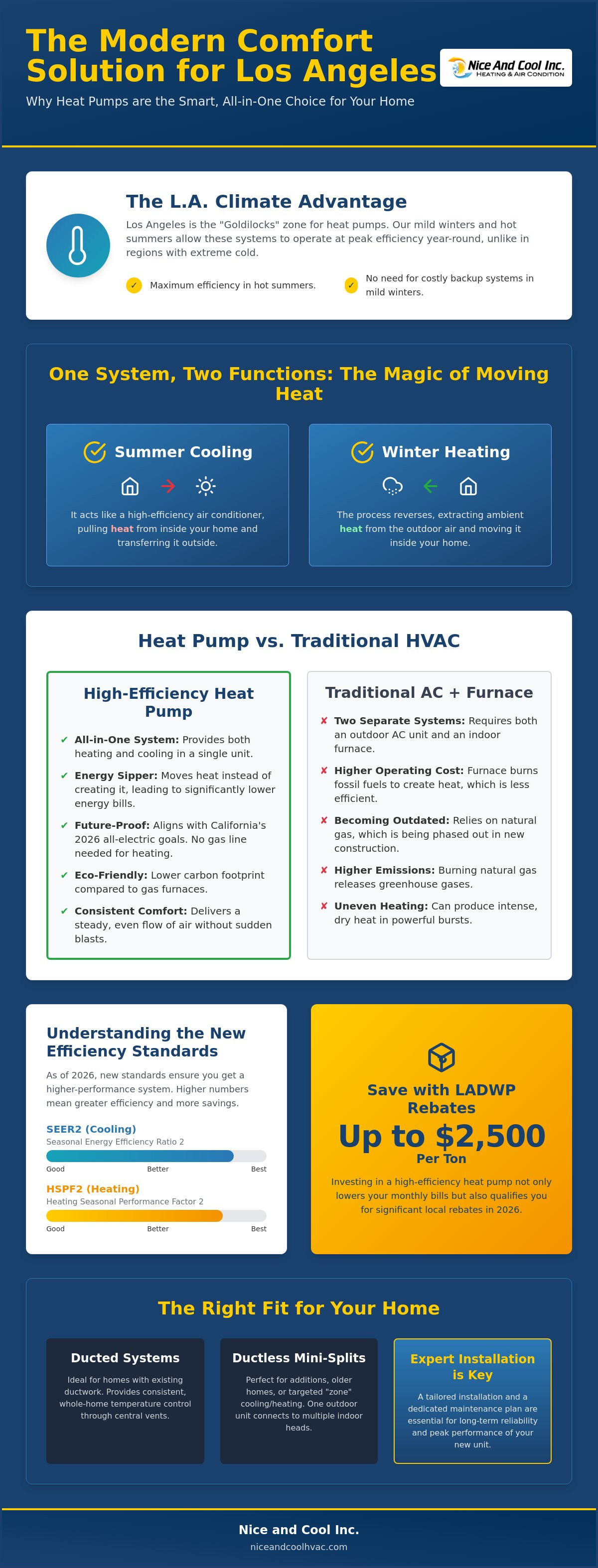
Whether you're trying to cool your home in July or take the edge off a January morning, this technology offers a dual-purpose solution. To understand the science behind it, it helps to look at how heat pumps work by utilizing a refrigerant cycle to transfer thermal energy. In the summer, it acts as a high-end air conditioner by pulling heat out of your house and dumping it outside. In the winter, it reverses that process to extract ambient warmth from the outdoor air and bring it inside. It's efficient, quiet, and perfectly suited for our Mediterranean climate.
The Los Angeles Climate Advantage
Los Angeles is often called the "Goldilocks" zone for this technology. Because our temperatures rarely drop below freezing, the system doesn't have to work nearly as hard as it would in a snowy climate. If you live in a coastal neighborhood like Santa Monica, you might prioritize the system's ability to handle humidity and mild temperature swings. If you're located in the San Fernando Valley, you need a unit that can stand up to triple-digit heat while remaining efficient. Heat pumps excel in both environments.
Many of our neighbors are moving away from traditional gas-powered furnaces. With California's push toward all-electric residential solutions in 2026, switching to a heat pump is a future-proof investment. It eliminates the need for a gas line for heating, which simplifies your utility bills. It also provides a more consistent, even flow of air compared to the "all-or-nothing" blast of an old gas furnace.
Heat Pumps vs. Standard Air Conditioners
At first glance, a heat pump looks identical to a standard central air conditioner. They both have an outdoor condenser and an indoor evaporator coil. However, the fundamental difference lies in a small but mighty component called the reversing valve. This part allows the system to change the direction of the refrigerant flow. This effectively turns your cooling system into a heater with the flip of a switch.
This single-unit approach offers significant space-saving benefits. Instead of maintaining a separate AC unit and a bulky furnace in the attic or closet, you have one streamlined system. When you schedule a professional heat pump installation, you're essentially simplifying your home's infrastructure. It's a cleaner and more dependable way to manage your indoor environment while saving valuable square footage.
The Mechanics of Comfort: How Heat Pumps Provide Year-Round Efficiency
While we've established that these systems move heat rather than creating it, the actual efficiency gains are worth a closer look. If you compare a traditional electric space heater to modern heat pumps, the difference in power consumption is substantial. An electric heater has a one-to-one ratio of energy in to heat out, but a heat pump can move several times more heat energy than the electricity it consumes. This is why ENERGY STAR certified heat pumps are the gold standard for homeowners looking to slash their carbon footprint without sacrificing comfort.
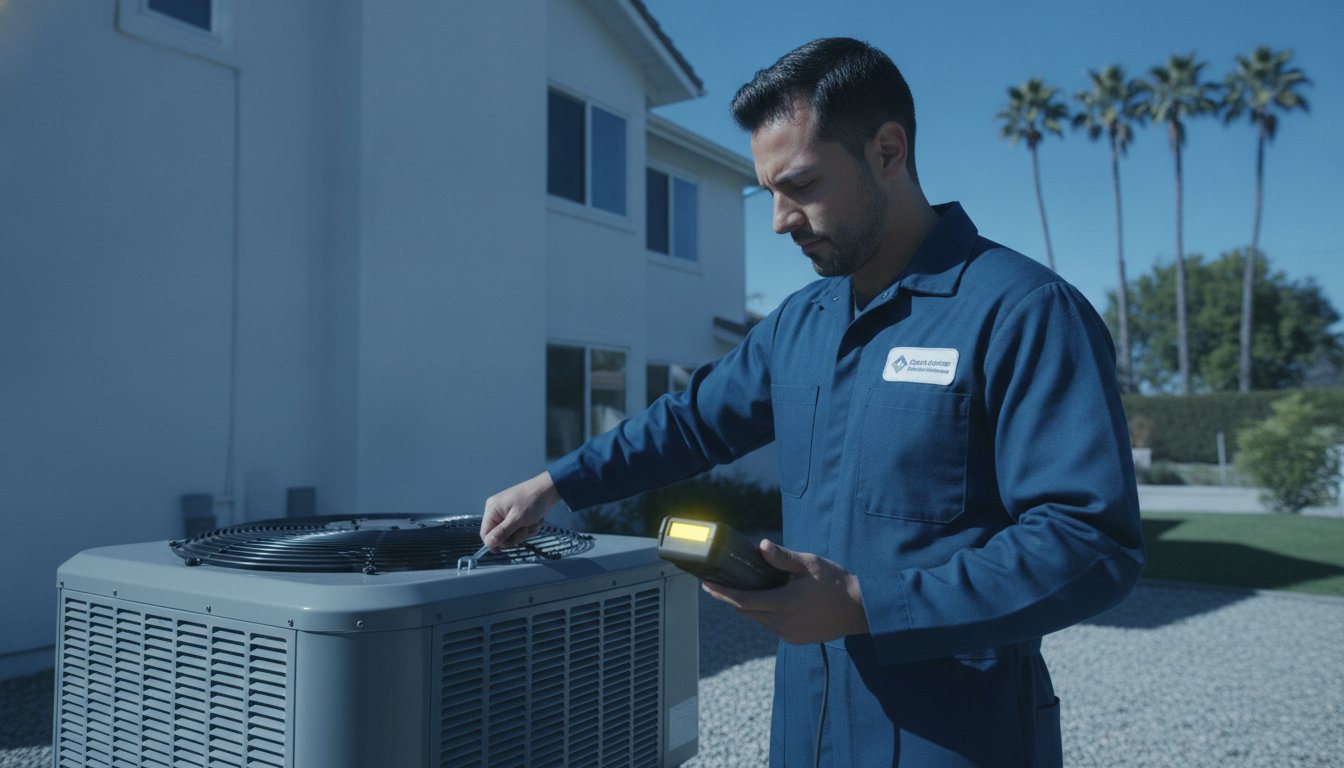
During a typical Los Angeles summer, the cooling cycle operates with the same precision as a dedicated air conditioner. The system uses a powerful compressor to circulate refrigerant through a series of coils. As warm air from your living room passes over the indoor evaporator coil, the refrigerant absorbs the heat and carries it to the outdoor unit. Once there, the heat is released into the atmosphere, leaving your indoor air crisp and refreshing. It's a reliable cycle that handles our local heatwaves with ease while maintaining a quiet, steady presence in your backyard.
When the sun sets and the air turns chilly, the system doesn't need to fire up a burner or ignite gas. Instead, it simply reverses the flow. Even when it feels cold outside, there is still a significant amount of thermal energy present in the air. The outdoor unit extracts this ambient warmth and transfers it into your home. Because the process is so efficient, the air coming out of your vents feels more natural and less parched than the scorched air produced by a traditional gas furnace.
The Science of Heat Transfer
The magic happens through the state change of the refrigerant. By shifting from a liquid to a gas and back again, the refrigerant can absorb and release massive amounts of energy. While we mentioned the reversing valve earlier, it's truly the brain of the operation, instantly switching the direction of the refrigerant based on your thermostat's demand. If you're looking for a way to simplify your home's mechanical systems, our team at Nice and Cool Inc. can help you determine if this technology is the right fit for your property's specific layout.
Key Components of a Modern System
A standard setup consists of two primary parts: the outdoor condenser and the indoor air handler. The outdoor unit is the workhorse of heat exchange with the environment, while the indoor air handler contains the high-efficiency blower that moves conditioned air through your home. This setup also provides excellent air filtration, which is a major benefit for local families concerned about dust and allergens. If your home already has a ductwork system, these units are often a direct and efficient replacement for an older ac installation los angeles ca project.
Evaluating the Efficiency: Heat Pumps vs. Central AC and Furnaces
Choosing between a natural gas furnace and an all-electric system is one of the most significant decisions you will make for your home infrastructure. While gas was the standard for decades, the landscape has changed. Modern heat pumps now offer efficiency levels that traditional furnaces simply cannot match. If you are looking to lower your carbon footprint while staying comfortable, it's time to look at how these systems stack up against the old guard.
The biggest difference homeowners notice is the "comfort factor." A gas furnace typically operates in a series of intense blasts, heating your home quickly and then shutting off, which leads to noticeable temperature swings. In contrast, a heat pump provides a steady, consistent flow of conditioned air. This results in a more even temperature across different rooms and eliminates that "stale" feeling often associated with gas heat. Because the system runs more frequently at lower speeds, it also does a better job of filtering your air and managing humidity levels.
SEER2 and HSPF2: What Homeowners Need to Know
If you have looked at HVAC equipment recently, you have likely seen the terms SEER2 and HSPF2. These are the updated efficiency standards that went into effect to ensure systems perform better under real-world conditions. SEER2 measures cooling efficiency, while HSPF2 measures heating efficiency. For a Los Angeles home, the "sweet spot" is often a mid-to-high tier rating that balances the upfront cost with long-term savings on your LADWP or SCE bills. Higher ratings mean the system uses less electricity to move the same amount of heat, which is essential as local utility rates continue to evolve.
Decarbonization and Local Incentives
California is leading the charge in the shift toward all-electric living. To support this, local utilities are offering substantial financial help. For example, LADWP offers rebates of up to $2,500 per ton for qualifying systems purchased and installed on or after November 1, 2025. This means a standard 3-ton installation could be eligible for $7,500 in rebates. While some statewide programs like TECH Clean California currently have waitlists for single-family homes, these local utility rebates remain a powerful way to offset your investment.
It is also important to consider the long-term perspective. If your current unit is failing, a furnace repair los angeles might seem like the cheaper path today. However, spending money on an aging, inefficient gas system may be a temporary fix. When you factor in the available rebates and the lower operational costs of heat pumps, upgrading to a dual-purpose electric system often provides a much better return on your investment while future-proofing your home against rising gas prices.
Homeowner’s Buying Guide: Choosing the Right Heat Pump for Your Property
Selecting the right equipment for your home is about more than just picking a brand name you recognize. For independent research and product comparisons, Air Conditioner Lab provides educational resources to help you evaluate different residential HVAC equipment. It's about finding a system that matches the specific layout of your property and the way your family lives. In Los Angeles, where homes range from historic bungalows to modern hillside estates, a one size fits all approach simply doesn't work. You need a system that is as unique as your floor plan.
There are several key features you should look for when comparing different heat pumps. First, prioritize variable speed compressors. Unlike older units that are either "all on" or "all off," these systems can adjust their output to match the exact cooling or heating needs of the moment. This results in quieter operation and much lower energy use. You should also pay close attention to noise ratings, especially if your outdoor unit will be located near a bedroom window or a neighbor's patio. Finally, ensure your system is compatible with a smart thermostat to maximize your savings while you're away at work or enjoying a weekend in Malibu.
Ducted Systems vs. Mini-Splits
If your home already has a well maintained network of ducts, a central heat pump is often the most straightforward choice. It replaces your existing AC and furnace while using the same vents to distribute air. However, if you're retrofitting an older home that never had central air, or if you've added a new ADU to your property, ductless mini-split systems are an excellent alternative. These allow for zoned comfort, meaning you can keep the living room cool while saving energy in the guest room. Whether you choose a central or ductless setup, the goal is consistent, reliable comfort in every corner of the house.
The Importance of Professional Sizing
It's a common mistake to assume that a bigger unit will provide better cooling. In reality, an oversized system will "short cycle," turning on and off too frequently. This prevents the system from properly dehumidifying your air and leads to premature mechanical failure. A professional technician should always perform a Manual J load calculation. This process factors in your home's square footage, the quality of your insulation, and even the direction your windows face. Tailored sizing ensures your system runs at peak efficiency for years to come without unnecessary wear and tear. If you're ready to see which system fits your home best, the team at Nice and Cool Inc. is here to provide a detailed, neighborly assessment of your needs.
Seamless Installation and Long-Term Reliability with Nice and Cool Inc.
The best equipment in the world won't perform as promised if the installation is rushed or handled by someone unfamiliar with the nuances of modern heat pumps. Since 2005, our family owned business has focused on providing the kind of precision and care that Los Angeles homeowners expect. We know that a new HVAC system is a significant investment in your home's comfort, and we take our role as your local specialist seriously. Our goal is to ensure your transition to a high efficiency system is as smooth and stress free as possible.
At Nice and Cool Inc., we don't believe in high pressure sales or generic solutions. Every project begins with a conversation about your specific needs and a careful look at your property's layout. We prioritize craftsmanship and dependability, making sure that every connection is secure and every setting is optimized for the Southern California climate. Whether we are installing a central system or a series of mini-splits, we treat your home with the respect and attention to detail it deserves.
Our Professional Installation Process
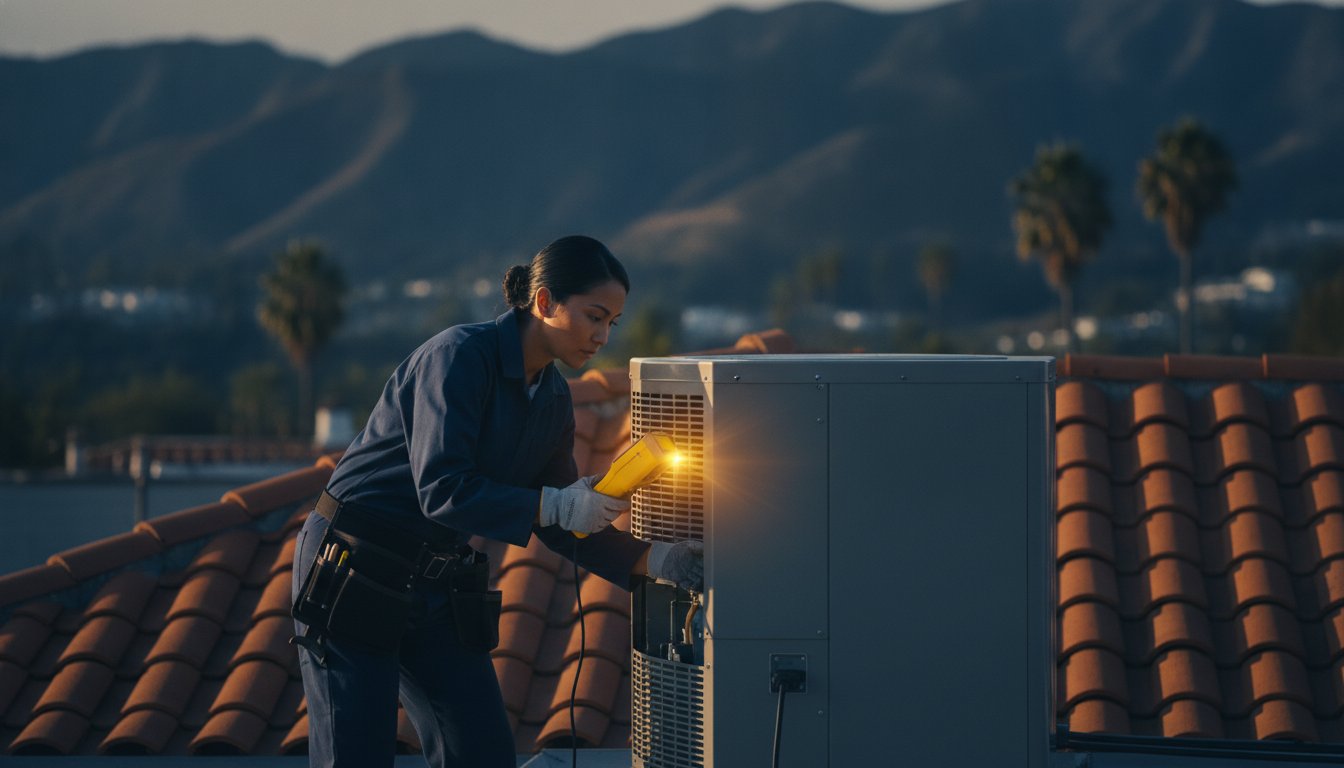
A professional installation involves much more than just swapping out old boxes. We start with a thorough assessment to determine the best location for your outdoor unit, specifically looking for spots that minimize noise for both you and your neighbors. During the process, we take extra steps to protect your indoor air quality by ensuring all ductwork is properly sealed and your new filtration system is ready to go. Once the hardware is in place, we conduct rigorous testing to verify the system is operating at peak performance. We finish every job with a complete walkthrough, showing you exactly how to manage your new controls and smart thermostat settings.
The Nice and Cool Club: Peace of Mind
Because heat pumps act as both your primary heater and your air conditioner, they work twice as hard as a traditional furnace that sits idle all summer. This year round operation makes routine care more critical than ever. To help our neighbors protect their investment, we offer the Nice and Cool Club Maintenance Plan. This program is designed to catch small issues before they turn into expensive repairs, ensuring your system remains reliable through every heatwave and cold snap. Membership provides several key benefits for your peace of mind:
- Priority service during peak summer and winter months.
- Regular multi point inspections to maintain efficiency and safety.
- Discounts on repairs and extended system lifespan.
- The confidence of having a trusted local partner just a phone call away.
Even with the best maintenance, occasional questions may arise. If you ever notice your ac not blowing cold air los angeles, our troubleshooting guides can help you identify simple fixes like a dirty filter or a tripped breaker. For anything more complex, you can count on our team to provide honest, expert service that gets your home back to the perfect temperature quickly.
Take the Next Step Toward Year-Round Efficiency
Deciding to upgrade your home comfort system is about more than just staying cool in August; it's about investing in a reliable, all-electric future. We have explored how heat pumps offer the perfect balance of performance and efficiency for the Los Angeles climate, especially with the substantial rebates available in 2026. By choosing a system tailored to your specific square footage and layout, you can eliminate the frustrating temperature swings of an old furnace and enjoy consistent, quiet airflow in every room.
As a family-owned and operated business since 2005, Nice and Cool Inc. is dedicated to helping our neighbors make these transitions with confidence. We specialize exclusively in residential HVAC, ensuring you receive focused expertise and craftsmanship on every project. Whether you are ready for a new installation or want to protect your current unit with our Nice and Cool Club Maintenance Plan, we are here to provide peace of mind for your family.
Don't wait for the next heatwave to discover your system's limits. Schedule your professional heat pump consultation with Nice and Cool Inc. today! We look forward to helping you create a more comfortable, efficient home for years to come.
Frequently Asked Questions
Do heat pumps work in Los Angeles when it gets cold?
Yes, they work exceptionally well here because Los Angeles rarely experiences the extreme freezing temperatures that can challenge older technology. Modern units are designed to extract warmth from the air even when it drops into the 40s or 30s. Since our local winters are relatively mild, the system operates at peak efficiency without needing a backup heat source.
Is a heat pump more expensive to install than a traditional AC?
The upfront cost for equipment is typically higher than a standalone air conditioner because you are essentially buying a heater and an AC in one unit. However, when you factor in the available 2026 LADWP rebates and the fact that you don't need a separate furnace, the total investment often becomes very competitive. It's a single-system solution that simplifies your home infrastructure.
How long does a heat pump typically last in Southern California?
You can generally expect your system to last about 15 years with proper care. Because these systems provide both heating and cooling, they run throughout the year rather than sitting idle for months at a time. This makes routine maintenance through a plan like our Nice and Cool Club essential for reaching that maximum lifespan and keeping the mechanical components in top shape.
Can I replace my gas furnace with an electric heat pump?
Yes, you can definitely replace your gas furnace with an all-electric system. This transition is a key part of California's push toward home electrification and decarbonization. If your home currently uses a gas furnace and a central AC, we can often utilize the same space and connections to install a modern, high-efficiency unit that handles both jobs without needing a gas line for heat.
What is the difference between SEER2 and HSPF2 ratings?
SEER2 (Seasonal Energy Efficiency Ratio 2) measures how efficiently the system cools your home during the summer. HSPF2 (Heating Seasonal Performance Factor 2) measures its heating efficiency during the winter. Both ratings were updated to reflect real-world operating conditions more accurately. Choosing a unit with higher numbers in both categories will lead to lower monthly utility bills year-round.
Do heat pumps require more maintenance than central air conditioners?
They don't necessarily require more complex work, but they do need more consistent attention because they operate in both summer and winter. While a traditional furnace might only be checked once a year, heat pumps benefit from twice-yearly inspections to ensure the reversing valve and refrigerant levels are correct for the upcoming season. This regular care prevents unexpected breakdowns during peak weather.
Are there specific rebates for LA homeowners who install heat pumps?
Yes, there are substantial local incentives available right now. As of 2026, LADWP offers rebates of up to $2,500 per ton for qualifying heat pumps installed on or after November 1, 2025. This means a typical three-ton system could qualify for $7,500 in direct savings. We always recommend checking the current funding status of these programs before you begin your project.
Can a heat pump use my existing ductwork?
If your existing ducts are properly sized and in good repair, they can usually be used for a new central system. Our technicians will inspect your ductwork during the initial assessment to ensure there are no major leaks or restrictions that would hurt your new unit's efficiency. If your home doesn't have ducts, we can look at ductless mini-split options instead.
Frequently Asked Questions
Yes, they work exceptionally well here because Los Angeles rarely experiences the extreme freezing temperatures that can challenge older technology. Modern units are designed to extract warmth from the air even when it drops into the 40s or 30s. Since our local winters are relatively mild, the system operates at peak efficiency without needing a backup heat source.