HVAC Unit Repair Myths vs. Reality: A Los Angeles Homeowner’s Guide
June 1, 2026 18 min read
What if the DIY "hack" you found online is actually the fastest way to shorten your system's lifespan? In the middle of a Los Angeles heatwave, the last thing you want is a cooling system that quits when the Santa Ana winds start blowing. We know how frustrating it is to face unpredictable costs or the nagging fear that a technician is just trying to upsell you on parts you don't need. If you are looking for reliable hvac repair Los Angeles homeowners can trust, it's essential to separate expensive myths from reality.
Whether you are worried about the 2026 refrigerant phase-out or just want to lower your monthly energy bills, we are here to help. You'll learn how to navigate new California efficiency standards, maximize federal tax credits like the 25C incentive, and keep your home comfortable without a total system replacement. This guide breaks down common misconceptions and explains how the transition to refrigerants like R-454B impacts your maintenance choices. We will show you exactly how to protect your system's longevity while ensuring your home remains a reliable sanctuary during the next heatwave.
Key Takeaways
- Understand why modern HVAC systems in 2026 require specialized diagnostic tools and expertise rather than simple mechanical "quick fixes" due to integrated smart technology.
- Learn the legal and safety risks of DIY refrigerant handling and why "topping off" a system often masks a more serious, costly leak.
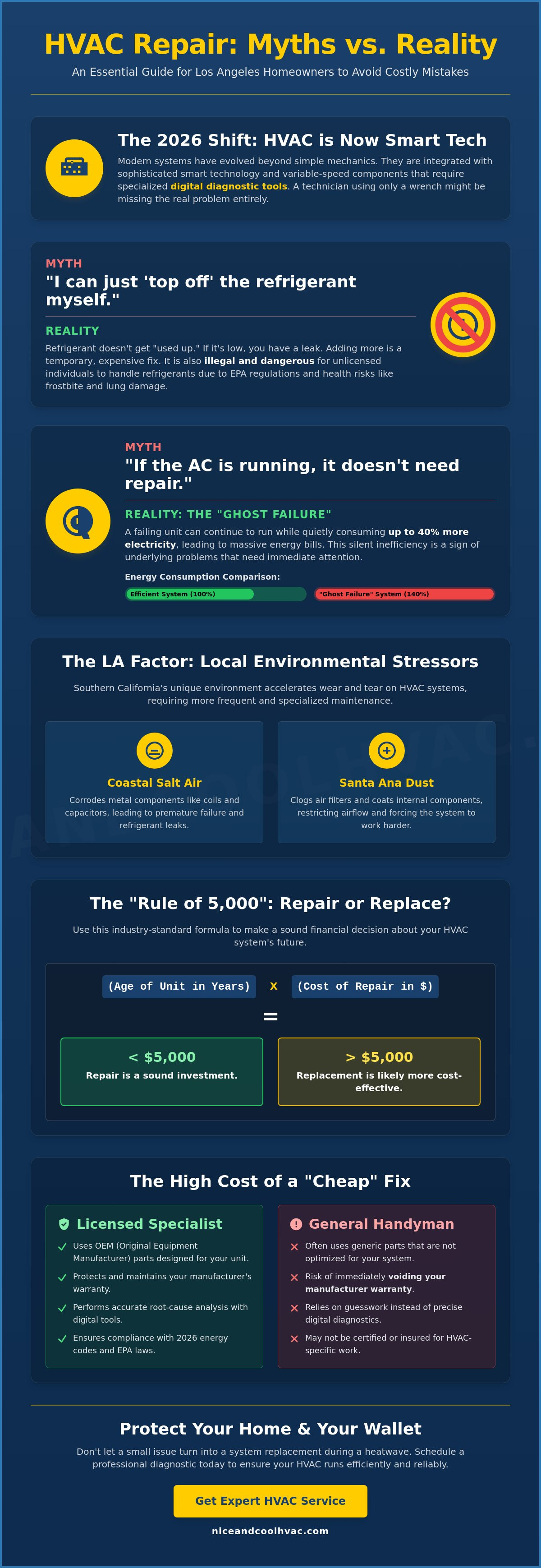
- Identify "ghost failures" where your unit continues to operate while quietly consuming up to 40% more electricity than necessary.
- Discover how local environmental stressors like coastal salt air and Santa Ana dust impact the frequency of hvac repair Los Angeles homes require to stay efficient.
- Master the "Rule of 5,000" to determine if a repair is a sound investment or if current SEER2 standards make a system replacement more cost-effective for your budget.
What Defines Professional HVAC Unit Repair in 2026?
Professional repair is much more than a temporary patch to get your air conditioner running for another afternoon. It is the precise diagnostic, mechanical, and electrical restoration of your home's Heating, ventilation, and air conditioning (HVAC) system. As we move through 2026, the industry has shifted away from simple mechanical adjustments. Modern systems are now integrated with sophisticated smart technology and variable-speed components that require specialized digital tools to calibrate correctly. If your technician isn't using software to communicate with your unit's control board, they might be missing the underlying issue entirely.
Many homeowners in Southern California use the terms "service" and "repair" interchangeably, but the distinction matters for your wallet. A service visit is usually proactive maintenance, similar to an oil change for your car. A repair is a reactive necessity when a specific component has failed or is underperforming. This typically involves critical parts like compressors, evaporator coils, or blower motors. If you ignore a small mechanical noise today, it often leads to a cascade of failures that can turn a simple fix into a total system replacement during a heatwave.
The Anatomy of a Repair Visit
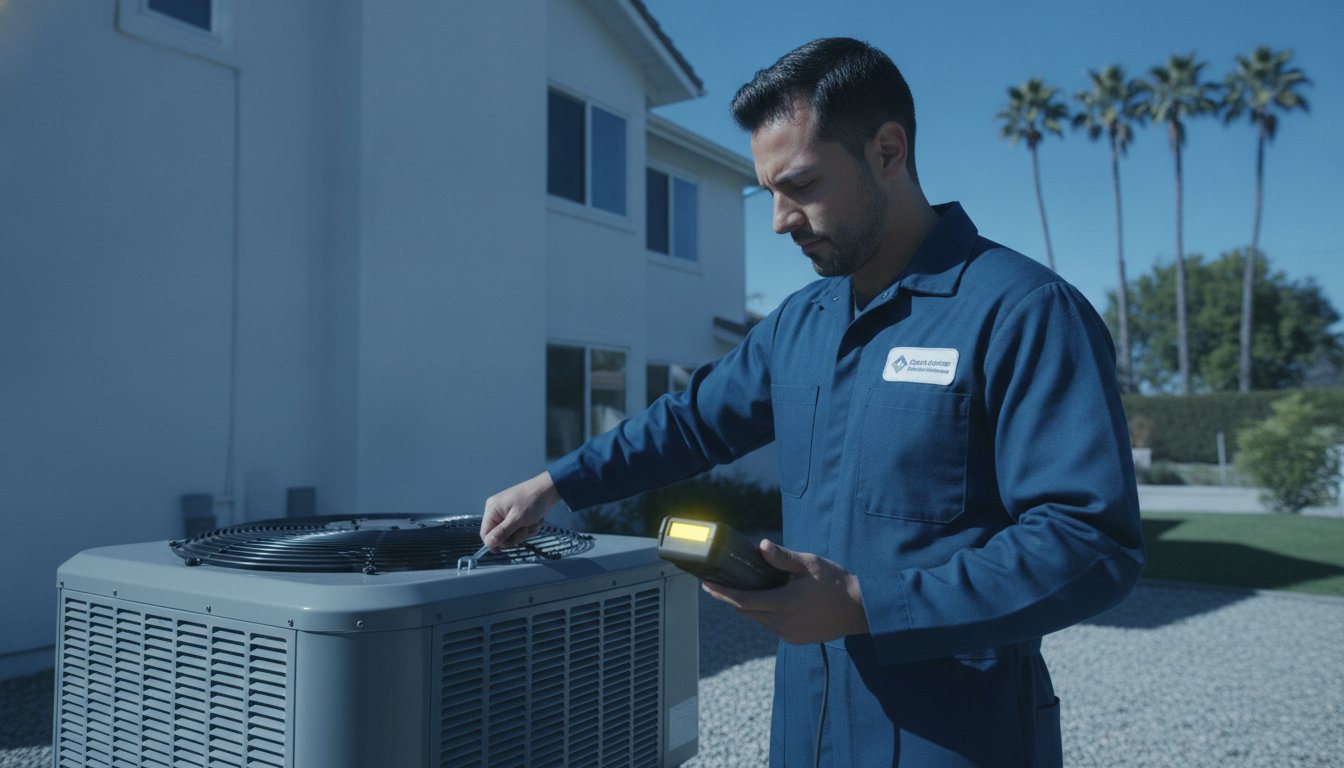
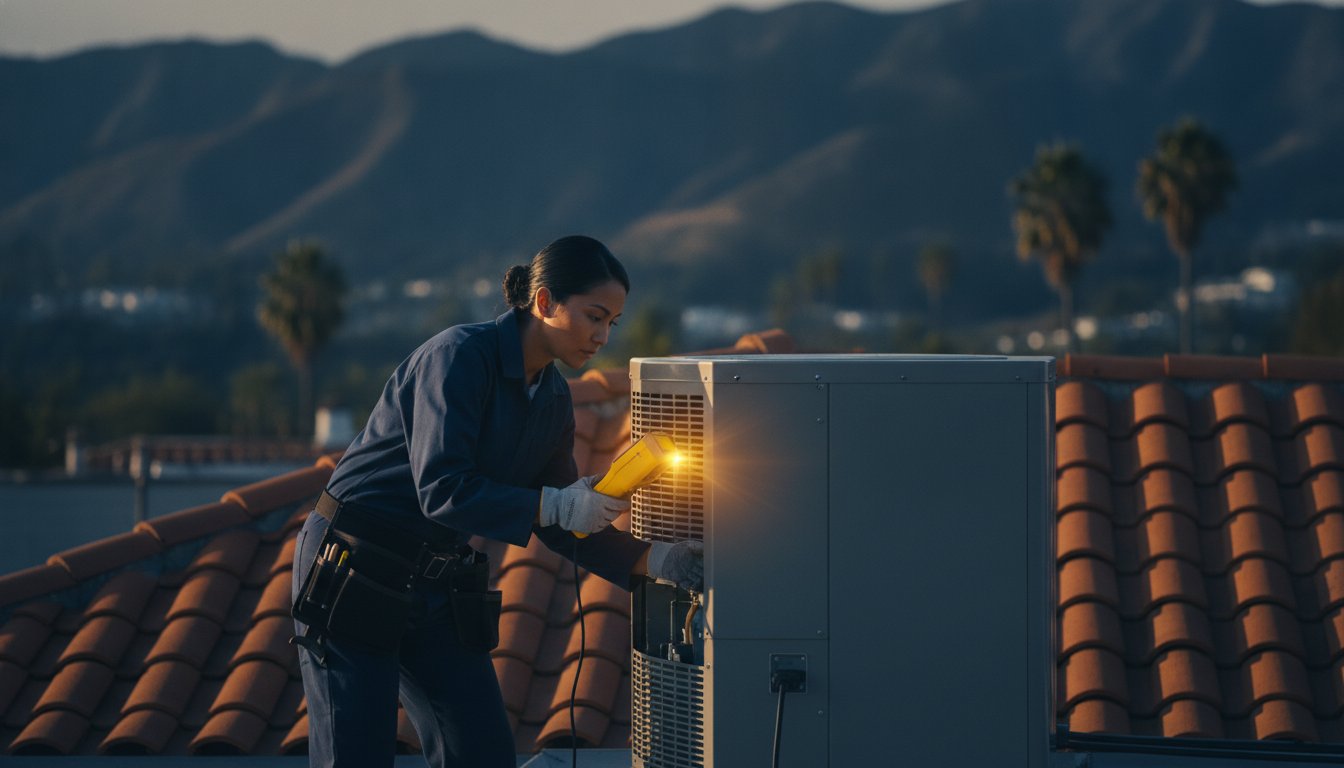
When you schedule hvac repair Los Angeles specialists should perform a multi-point assessment before ever picking up a wrench. This starts with a visual inspection of your ductwork and electrical connections to rule out simple power issues or airflow blockages. Next, the technician uses specialized HVAC software and digital gauges to measure system pressures and electrical draw. The diagnostic fee acts as a safeguard that ensures you are paying for professional expertise and an accurate root-cause analysis rather than a guessed solution.
Why 'Cheap' Fixes Often Fail
Whether you are scrolling through local community boards or asking neighbors for recommendations, the debate between hiring a general handyman or a licensed specialist is a common one. It is tempting to choose a "cheap" fix from a local handyman, but these repairs often use non-OEM (Original Equipment Manufacturer) parts. These generic components are rarely designed for the high-efficiency standards of modern units. If a technician installs non-authorized parts, it will likely void your manufacturer warranty immediately. Choosing a licensed specialist for hvac repair Los Angeles ensures that your system remains compliant with 2026 energy codes and continues to provide reliable cooling when the Santa Ana winds arrive.
Myth 1: 'I Can Recharge the Refrigerant Myself'
The idea that you can simply "top off" your AC with a canister from a big-box store is one of the most persistent myths in Southern California. Many people still refer to this as "adding Freon," but that is a bit of a misnomer. Freon was the brand name for R-22 refrigerant, which has been phased out for years. Modern systems use different chemical blends like R-410A or the newer R-32. Unlike the oil in your car, refrigerant isn't consumed during operation. It stays inside a sealed, pressurized system. If your levels are low, you have a leak. Period. Recharging a system without sealing that leak is like trying to fill a bucket with a hole in the bottom; it is a temporary, expensive waste of money.
In the Los Angeles basin, we are particularly sensitive to environmental pollutants. Handling these substances requires strict adherence to EPA Section 608 regulations. These laws exist because refrigerants are potent greenhouse gases that contribute to atmospheric damage. It is actually illegal for an unlicensed individual to purchase or handle these chemicals. When you seek professional hvac repair Los Angeles homeowners can trust, you are ensuring that these gases are recovered and managed according to federal standards, protecting both our local air quality and your legal liability.
The Hidden Dangers of DIY Refrigerant Handling
Handling these chemicals without proper training is physically dangerous. Refrigerant can cause instant frostbite upon contact with skin and permanent lung damage if the vapors are inhaled in a confined space. Beyond the personal risk, there is the mechanical risk to your unit. If you add too much or too little, the pressure imbalance can lead to a total compressor blowout. Refrigerant is a closed-loop system and should never 'run out' under normal conditions. Following U.S. Department of Energy maintenance guidelines helps identify these issues before they become expensive emergencies.
Detecting the Real Problem: Leak Searches
If you notice your ac not blowing cold air los angeles heat is making things unbearable, a leak is often the primary culprit. Professional technicians use electronic leak detectors that can sense parts-per-million or perform nitrogen isolation tests to pinpoint the exact failure. In Los Angeles, we frequently find leaks in the evaporator coils or along the line sets due to vibration and thermal expansion. Fixing the leak properly ensures your system holds its charge for years rather than just weeks. If you are concerned about your unit's performance, booking an Air Conditioning Repair visit is the best way to get an honest assessment and the precision hvac repair Los Angeles systems require.
Myth 2: 'If the AC is Running, It Doesn't Need Repair'
Just because your vents are blowing air doesn't mean your system is healthy. Many homeowners wait until their unit completely dies before calling for hvac repair Los Angeles service, but this "run it until it breaks" mentality is often the most expensive way to manage a home. We call these "ghost failures." Your system might still be cooling your living room, but it could be consuming 40% more electricity to do so. If you hear grinding, squealing, or rattling sounds coming from your outdoor unit, those are the mechanical screams of a motor or bearing on the verge of total failure.
Short-cycling is another critical sign that you shouldn't ignore. This happens when your unit turns on and off every few minutes without ever completing a full cooling cycle. It places immense strain on the compressor and electrical components. Whether the cause is a faulty thermostat or a restricted airflow issue, short-cycling is a repair emergency. Addressing a small issue like a failing start capacitor today can prevent a catastrophic failure that leads to a $15,000 replacement later. Taking care of these minor adjustments keeps your system reliable and protects your long-term investment.
Efficiency Loss and Your LA Electric Bill
When a capacitor begins to fail or a motor loses its lubrication, the system has to work significantly harder to achieve the same temperature. A system running at 70% capacity still costs 100% of the energy, and often even more because it runs for longer periods to keep up with the heat. If you notice your utility costs spiking without a change in usage, it is time to look into hvac maintenance los angeles experts recommend to keep your system lean. Catching these efficiency drains early is the best way to keep your Southern California cooling costs under control.
The Warning Signs You Shouldn't Ignore
Some symptoms are more obvious than others, but they all deserve your attention. If you see ice forming on the outdoor unit or the copper lines, even when it is 90 degrees in the Valley, you likely have a serious airflow or refrigerant issue. Musty odors coming from your vents often signal biological growth in the drain pan or on the coils, which can impact your indoor air quality. If you experience uneven cooling between rooms in your multi-story home, it is a sign that your system is struggling to distribute air. These are clear indicators that you need the professional hvac repair Los Angeles homeowners rely on for consistent comfort.
The LA Factor: Why HVAC Repair is Different in Southern California
Los Angeles is a patchwork of microclimates, and your neighborhood dictates how your cooling system ages. A unit in the San Fernando Valley faces a completely different set of stressors than one sitting three blocks from the Pacific Ocean. Because of this variety, generic advice often falls short for local homeowners. If you live in the downtown core, you deal with the "heat island" effect, where concrete and asphalt retain heat long after sunset. This prevents your system from resting, leading to faster mechanical wear than systems in the cooler suburbs. Effective hvac repair Los Angeles technicians must understand these local nuances to provide a fix that actually lasts.
State regulations also play a massive role in your repair options. California's Title 24 energy standards are some of the strictest in the country. These codes often require specific testing for duct leakage or airflow verification when certain components are replaced. Whether you are updating an older Hollywood bungalow or a modern loft, your repairs must remain compliant with these evolving efficiency mandates to avoid future legal or performance headaches.
Protecting Systems from Coastal Salt and Sand
If you own a home in Santa Monica, Malibu, or any beach-adjacent community, salt air is your system's primary enemy. This corrosive mist eats through outdoor aluminum coils, causing pinhole leaks that lead to the refrigerant issues we discussed in earlier sections. We often recommend specialized coil coatings to provide a barrier against this salt spray. Beyond professional coatings, homeowners should perform a gentle fresh-water rinse of the outdoor unit periodically to remove salt buildup. Additionally, the high particulate matter from the coast means you must know how often should you change your furnace filter to prevent sand and dust from reaching your blower motor.
Extreme Heat and System Resilience
Inland areas like the San Fernando Valley regularly experience 100°F+ "heat dome" events. During these spikes, the temperature difference between the scorching outdoor air and your cool indoor coils causes significant thermal expansion. This physical stress often leads to cracks in older copper refrigerant lines or weakened electrical solder joints. Local expertise is vital here; the way we size a repair for a drafty 1920s Hollywood home differs significantly from a well-insulated new build. If your system is struggling to keep up with the Valley heat, scheduling a professional Air Conditioning Repair is the most reliable way to ensure your unit is resilient enough for the next heatwave.
The Final Verdict: Navigating the Repair vs. Replace Decision
Deciding whether to invest in another fix or commit to a new system is the most significant choice you'll face as a homeowner. When you're weighing the costs of hvac repair Los Angeles professionals often suggest the "Rule of 5,000" as a helpful baseline. You simply multiply the age of your unit by the estimated repair cost. If the total exceeds 5,000, the math usually points toward a replacement. For example, a 12-year-old unit requiring a $600 repair results in a score of 7,200, making it a prime candidate for an upgrade. Conversely, a 5-year-old unit needing the same fix scores 3,000, which means repairing it is a sound investment.
This decision is further influenced by the SEER2 standards that took full effect by 2026. Modern systems offer efficiency levels that older units simply cannot match. If you continue to repair an inefficient system, you are essentially paying for a new unit anyway through inflated monthly utility bills. By 2026, parts and refrigerant for R-22 (Freon) systems have become nearly impossible to source and are prohibitively expensive when found. At Nice and Cool Inc., we focus on providing the data you need to find that "sweet spot" between extending your current system's life and making a move toward modern, reliable comfort.
When Repairing Makes the Most Sense
There are several scenarios where a repair is clearly the better path. If your system is under 10 years old, it's likely still under a manufacturer warranty that covers the cost of major components. Whether the issue is a simple electrical failure like a capacitor or a contactor, these are minor fixes that don't justify a full system overhaul. Additionally, if the home is a short-term rental or you plan to move in the near future, a professional repair ensures the system is safe and functional without a massive capital layout.
When to Consider a Full Replacement
Sometimes a repair is merely a temporary band-aid on a failing system. If you have experienced multiple major failures, such as a compressor and a coil leak within a two-year window, the system's overall reliability is gone. For those still using obsolete refrigerants, the recurring cost of "topping off" the unit makes a replacement the only logical financial move. You can explore modern, high-efficiency options in our guide to ac installation los angeles ca to see how today's technology can lower your overhead.
Getting Started with a Trusted Professional
When you review an HVAC quote in Los Angeles, look for absolute transparency. A professional estimate should clearly detail the scope of work, licensing information, and insurance coverage. We believe in building long-term relationships through honesty and craftsmanship, which is why we offer the Nice and Cool Club for ongoing peace of mind. If you're ready for an authoritative and neighborly assessment of your home's cooling needs, schedule your professional diagnostic with Nice and Cool Inc. today!
Protect Your Home Comfort and System Longevity
Understanding the difference between a quick fix and professional restoration is the first step toward long-term savings. You now know that ignoring "ghost failures" or attempting a DIY refrigerant recharge can lead to catastrophic damage and legal issues. Whether you are dealing with coastal corrosion in Santa Monica or the intense heat of the San Fernando Valley, your home deserves a solution tailored to our unique Southern California climate. Making the right choice between repair and replacement ensures your system remains efficient and your utility bills stay manageable.
As a family-owned and operated business since 2005, we take pride in helping our neighbors make informed decisions. We specialize in high-efficiency SEER2 systems and serve all of Los Angeles County with transparent pricing. If you are ready for the reliable hvac repair Los Angeles homes need to thrive, our team is here to help. We are dedicated to providing the craftsmanship and dependability you expect from a local specialist. Book Your Expert HVAC Repair in Los Angeles today. Your comfort is our priority, and we look forward to keeping your home a reliable sanctuary for years to come.
Frequently Asked Questions
Is it worth repairing a 15-year-old HVAC unit in Los Angeles?
Repairing a 15-year-old system is rarely a sound financial decision because the unit has likely reached the end of its reliable lifespan. Systems of this age often rely on R-22 refrigerant, which is no longer produced and is extremely expensive to source for older models. Whether you face a minor electrical issue or a major mechanical failure, the lack of modern efficiency means you will likely spend more on utility bills and future repairs than the unit is worth.
How much does the average HVAC unit repair cost in LA?
Repair costs are determined by the complexity of the diagnostic and the specific components that require restoration. If the issue is a simple electrical part like a capacitor, the cost will be significantly lower than a major mechanical overhaul like a compressor replacement. Because Los Angeles has unique labor rates and strict permitting requirements, homeowners should look for transparent quotes that break down the diagnostic fee and part costs separately rather than accepting a vague lump-sum estimate.
Can I run my AC if the evaporator coil is frozen?
You must shut down your air conditioner immediately if you notice ice on the evaporator coil to prevent permanent damage. Running a frozen system puts immense liquid slugging pressure on the compressor, which can lead to a total mechanical failure. If you turn the system to "fan only" mode, it helps thaw the ice while you wait for a professional hvac repair Los Angeles specialist to identify whether the cause is a refrigerant leak or restricted airflow.
Why is my HVAC unit making a loud buzzing noise?
A persistent buzzing sound often signals that an electrical component, such as a contactor or transformer, is struggling to engage. In other cases, it might mean the outdoor fan motor is receiving power but cannot spin due to a failing capacitor or physical obstruction. If you hear this sound, turn the unit off at the thermostat to prevent electrical overheating or a potential short circuit in your home's wiring while you wait for a technician.
What is the most common HVAC repair during an LA heatwave?
Failing start or run capacitors are the most common issues we see when temperatures spike across Southern California. These components act like batteries to help your motors start, and they often overheat when forced to run for several hours without a break during a heat dome. Another frequent problem is a backed-up condensate drain line, which can trigger a safety switch and shut down your entire system to prevent water damage to your home.
How do I know if my HVAC technician is licensed in California?
You can verify a technician's status by searching for their company name or license number on the California Contractors State License Board (CSLB) website. In California, any project valued at over $500 requires a valid contractor's license to ensure consumer protection and code compliance. Whether you are checking for insurance or active status, a reputable hvac repair Los Angeles provider will always have their license number clearly displayed on their service vehicles and official documentation.
Will a simple repair lower my high Southern California Edison bill?
Restoring a failing component, such as a dirty blower motor or a weak capacitor, can significantly improve your system's efficiency and lower your monthly bill. If your unit is currently struggling to reach your set temperature, it is likely running much longer than necessary and consuming excess power. Whether the fix involves cleaning the coils or recalibrating the thermostat, a properly functioning system draws less electricity to maintain your home's comfort level during the summer.
Does homeowners insurance cover HVAC unit repairs?
Homeowners insurance generally does not cover repairs resulting from age, lack of maintenance, or standard mechanical failure. If your unit is damaged by a specific covered peril, such as a fallen tree, fire, or a lightning strike, you may be able to file a claim for the restoration. You should check your individual policy for specific details or consider a separate maintenance plan if you are looking for protection against the costs of standard mechanical breakdowns over time.
Frequently Asked Questions
When you schedule hvac repair Los Angeles specialists should perform a multi-point assessment before ever picking up a wrench. This starts with a visual inspection of your ductwork and electrical connections to rule out simple power issues or airflow blockages. Next, the technician uses specialized HVAC software and digital gauges to measure system pressures and electrical draw. The diagnostic fee acts as a safeguard that ensures you are paying for professional expertise and an accurate root-cause analysis rather than a guessed solution.