How Often Should You Change Your Furnace Filter? A Complete Guide for 2026
May 31, 2026 18 min read
The standard 90-day rule for your HVAC system is a myth that could be quietly draining your bank account. Whether you are dealing with stubborn dust on your coffee table or noticing your electricity bills creep higher each month, generic advice often fails to account for your actual living conditions. Understanding exactly how often should you change your furnace filter is the simplest way to protect your equipment and ensure your family breathes easier. If your home has pets, smokers, or family members with allergies, a one-size-fits-all schedule simply will not cut it.
We know you want a home that feels like a sanctuary, not a source of stress. That is why we have put together this guide to help you find the sweet spot for filter replacements based on your home's unique footprint and local Los Angeles environmental factors like seasonal wildfire smoke. You will learn how to boost your system's efficiency by up to 15 percent and which MERV ratings comply with the latest California energy standards. We will walk you through the specific factors that dictate your maintenance needs, from pet dander levels to the thickness of your pleated filters, so you can enjoy lower bills and cleaner indoor air all year long.
Key Takeaways
- Learn exactly how often should you change your furnace filter by looking beyond the generic 90-day rule to your home's specific requirements.
- Understand how local Los Angeles conditions, including Santa Ana winds and air quality shifts, impact your indoor filtration needs.
- Identify the subtle warning signs of a clogged filter using the "Gray Scale" comparison to prevent unnecessary strain on your HVAC system.
- Master the professional steps for a safe filter replacement, including how to interpret airflow arrows for peak equipment protection.
- Discover how long-term system health is supported by the Nice and Cool Club Maintenance Plan, bridging the gap between DIY care and expert oversight.
Understanding the Basics: How Often Should You Change Your Furnace Filter?
Most homeowners view their furnace filter as a tool for cleaning the air they breathe. While indoor air quality is a significant benefit, the filter's primary job is actually to protect your HVAC equipment. A clean filter ensures that the internal components of your system stay free from dust and debris, which prevents overheating and mechanical failure. According to the U.S. Department of Energy, simply replacing a dirty filter can improve your system's efficiency by 5% to 15%. This small task is the most dependable way to avoid expensive heating repairs and extend the lifespan of your unit.
A standard 90-day baseline exists for high-quality pleated filters, but this is merely a starting point. If you choose a basic fiberglass filter, you are looking at a much shorter window because these thin layers offer minimal surface area and lower filtration efficiency. High-efficiency pleated options are designed with folds that capture more particles without restricting airflow as quickly. Determining exactly how often should you change your furnace filter requires looking at your "bio-load," which is the total amount of hair, skin cells, and dust generated by the people and pets in your living space.
General Replacement Guidelines by Filter Type
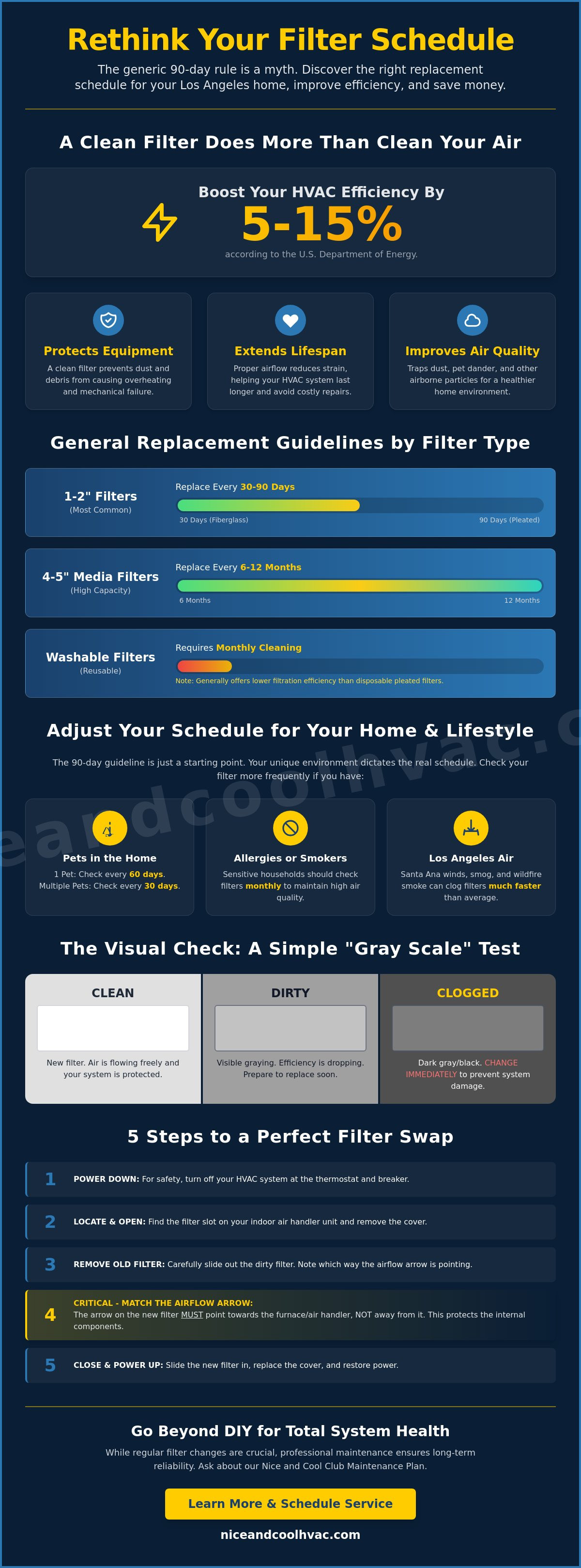
The physical dimensions of your filter dictate its capacity for holding debris. Whether you use a standard size or a specialized media cabinet, these general intervals provide a reliable framework for your maintenance schedule:
- 1-inch to 2-inch filters: These are the most common residential sizes. They typically require replacement every 30 to 90 days. Fiberglass versions are on the 30-day end of the spectrum, while pleated versions can often reach the 90-day mark.
- 4-inch to 5-inch media filters: Because these have a massive amount of surface area, they can often last 6 to 12 months. These are excellent for homeowners who prefer a "set it and forget it" approach.
- Washable filters: These require manual cleaning every month. While they are environmentally friendly, they generally offer lower filtration efficiency compared to modern pleated disposables.
Why the 90-Day Rule Doesn’t Apply to Everyone
Your home is a unique environment, and your filter replacement schedule should reflect that reality. If you have a large family, then your filter traps significantly more fibers and skin cells every hour. If you run your system 24/7 to maintain a precise temperature, then the filter reaches its holding capacity much faster than a system that only runs occasionally. Even the size of your home matters; if you live in a smaller condo, then the air cycles through the filter more frequently, which can lead to faster buildup. Tailoring your schedule to these factors ensures your home remains a sanctuary of comfort and reliability.
Factors That Change Your Replacement Schedule in Los Angeles
Living in Southern California provides beautiful weather, but our unique climate creates specific challenges for your home's ventilation. While national averages suggest a quarterly change, determining how often should you change your furnace filter in Los Angeles requires looking at local environmental stressors. Between the seasonal Santa Ana winds and the persistent urban smog, our filters often reach their capacity long before the 90-day mark. If you ignore these local factors, then you risk higher energy costs and unnecessary wear on your equipment.
Effective hvac maintenance in los angeles starts with recognizing that our air is simply "heavier" with particulate matter than in other regions. In high-occupancy homes where doors are frequently opening and closing, outdoor pollutants find their way inside quickly. Whether you are in a bustling part of the city or a quieter suburb, your filter acts as the first line of defense against these invisible intruders. Taking a proactive approach ensures your system doesn't have to work twice as hard to pull air through a wall of dust.
The Impact of Pets and Allergies on Air Filtration
If your household includes furry family members, your replacement schedule needs to be much more aggressive. For single-pet households, we recommend a 60-day replacement cycle to manage the steady accumulation of dander. If you have multiple pets or breeds that shed heavily, then you should check the filter every 30 days without fail. For those dealing with severe allergies, using a higher MERV rating and changing the filter every 30 to 45 days ensures that pollen and microscopic triggers don't recirculate through your living spaces. This small adjustment makes a massive difference in your daily comfort.
Environmental Factors: Dust, Pollen, and Wildfire Season
Southern California's environment is unpredictable, especially during the dry months. During wildfire season, the EPA recommends using MERV 13 or higher filters to protect against microscopic smoke particles. These fine pollutants can clog even high-efficiency filters almost instantly. If you are currently remodeling your home, then you should change your filter weekly to handle the surge in construction dust. Location also plays a role; inland LA homes often face significantly higher dust loads from dry winds compared to coastal properties. Monitoring these shifts allows you to tailor your care to the actual conditions outside your window, keeping your indoor air breathable and clean.
How to Tell if Your Filter Needs Immediate Replacement
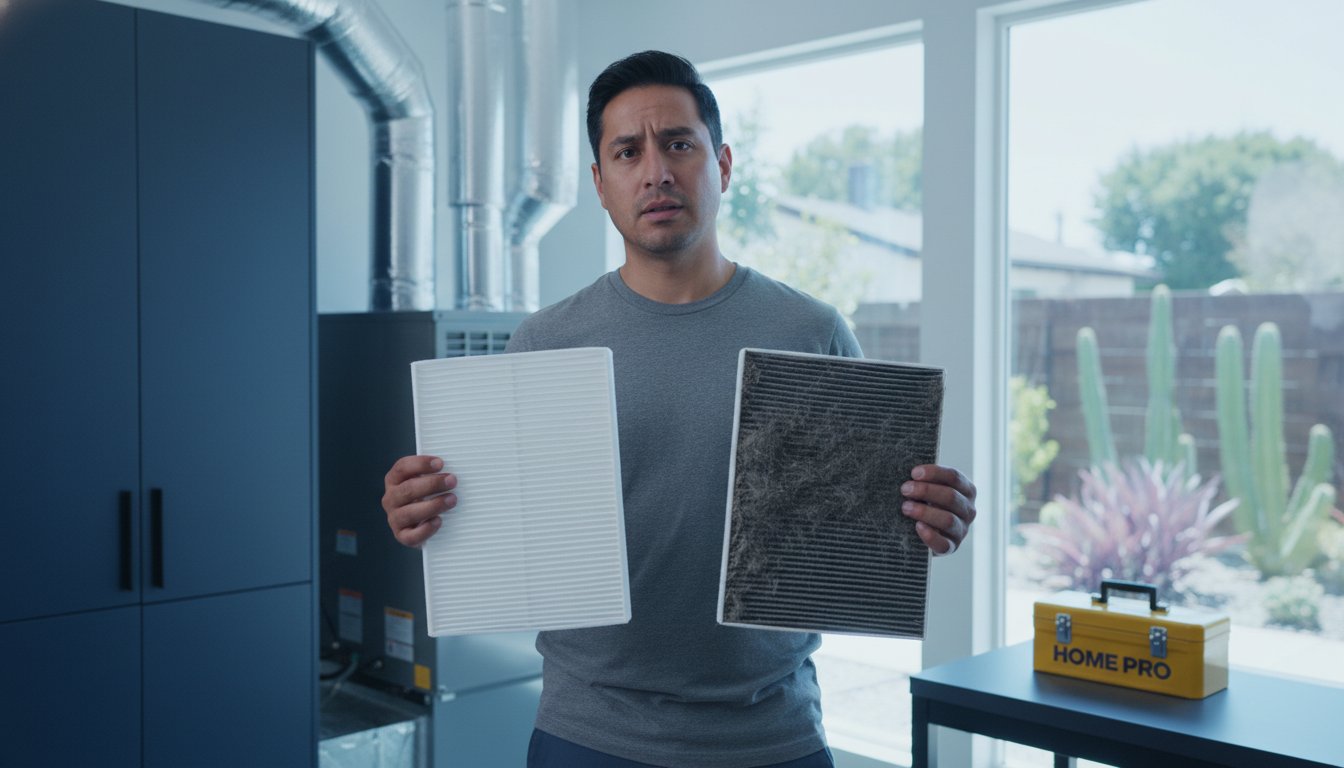
Calendar dates are helpful guides, but they cannot see the actual dust accumulation in your Los Angeles home. Determining how often should you change your furnace filter is often a matter of observation rather than just counting weeks on a calendar. One of the most dependable methods we recommend is the "Gray Scale" test. Simply hold your current filter up against a brand-new one from the package. If the original white or light-yellow material is completely obscured by a solid wall of gray, your system is already under significant stress. A fresh filter should always allow some light to pass through the material when held up to a window.
You can also try the "White Sheet" test if you suspect your filtration is failing. Tape a clean white sheet about six inches away from a supply vent for one hour while the system runs. Whether you see fine gray specks or a general darkening of the fabric, it is a clear sign that your filter is saturated and allowing debris to bypass into your ductwork. This bypass often leads to a need for ac repair los angeles ca, as that same dust eventually coats your sensitive internal components and restricts essential heat transfer. Catching these signs early protects your comfort and your investment.
Visual and Performance Warning Signs
If the pleats are no longer visible under a thick layer of debris, the filter has reached its maximum capacity. You should also check the register grilles throughout your home. Excessive buildup on these vents indicates that the filter is no longer capturing particles effectively and is instead letting them circulate back into your living space. Watch your system's behavior closely. If your furnace or air conditioner turns off and on rapidly, it is likely "short-cycling." This is a safety response to restricted airflow that causes the heat exchanger or blower motor to overheat, forcing the system to shut down to prevent permanent damage.
The Dangers of Waiting Too Long
A dirty filter creates high static pressure, which is like trying to breathe through a pinched straw. This forces the blower motor to work much harder than intended, which can lead to a premature burnout and an expensive replacement. During the warmer months, restricted airflow often causes the evaporator coil to freeze over, even when it is 90 degrees outside. Beyond mechanical damage, a clogged filter hits your wallet directly. The U.S. Department of Energy notes that replacing a dirty filter can improve system efficiency by 5% to 15%, helping you avoid those notorious summer utility bill spikes.
A Step-by-Step Guide to Changing Your Furnace Filter
Performing a filter swap is one of the most effective DIY habits you can adopt for your home's long-term health. While the question of how often should you change your furnace filter depends largely on your lifestyle and local Los Angeles air quality, the process of the change itself should always follow a professional standard. Taking ten minutes to do this correctly prevents "air bypass," which occurs when unfiltered air slips around the edges of a poorly fitted frame and coats your sensitive internal coils in dust. A precise fit ensures every cubic foot of air is cleaned before it reaches your equipment.
If you aren't sure where your filter is located, then start by checking the return air plenum. This is usually the large metal box near the furnace or the intake slot located right next to the blower compartment. In many Southern California homes, you might also find the filter behind a return air grille on a wall or ceiling. You should see the nominal size, such as 20x25x1, printed clearly on the cardboard side of your old filter. If the size is missing or the text has faded, then use a tape measure to get the actual dimensions of the intake slot. When shopping for a replacement in 2026, ensure the filter is certified by the California Energy Commission (CEC) to meet state efficiency standards.
Locating and Measuring Your Filter Correctly
- Check the slot: Look for a narrow door or a simple gap where the return duct meets the main furnace cabinet.
- Verify the dimensions: Always use the nominal size for ordering, as the "actual" size is usually about a half-inch smaller to allow for a smooth fit.
- Confirm the MERV: Ensure the rating matches your system’s capabilities; a MERV 11 to 13 is typically ideal for Los Angeles homes prone to wildfire smoke.
Installing the New Filter and Setting a Reminder
Before you pull the old filter out, turn off your HVAC system at the thermostat. This prevents the blower from kicking on while the slot is open, which could suck unfiltered debris or the filter itself directly into the motor. Slide the new filter in carefully. You will see a printed arrow on the frame; this must point toward the furnace or the blower motor, following the direction of the airflow. The airflow arrow is essential because modern pleated filters have a reinforced wire backing designed to face the furnace to prevent the material from collapsing under pressure.
To take the guesswork out of your maintenance, write the current date on the filter frame with a permanent marker before you slide it into place. A snug fit is vital for performance. If the filter rattles or has visible gaps around the edges, then you are losing efficiency and risking equipment damage. We often see homeowners overlook these small details during a new ac installation los angeles ca, but starting with a properly seated filter is the best way to protect your investment. If you find that your filter slot is bent or difficult to access, you can schedule a professional inspection to ensure your system's "lungs" are working exactly as they should.
Beyond the Filter: Ensuring Long-Term System Health
Mastering the schedule of how often should you change your furnace filter is a fantastic first step toward a more efficient home. However, even the most diligent homeowner cannot replace the need for professional preventative care. Think of your filter as a protective shield; while it stops a significant amount of debris, it is not a substitute for a deep cleaning of your system's internal organs. Over time, microscopic particles bypass even high-quality filters and settle on sensitive components like the blower motor and evaporator coils, which eventually restricts airflow and forces your unit to work harder than necessary.
Professional maintenance bridges the gap between basic DIY tasks and the technical precision required for peak performance. Whether you have a traditional furnace or a modern hybrid system, internal components like the secondary heat exchanger still accumulate a fine layer of debris that a simple filter swap cannot address. If you ignore these hidden build-ups, then you risk a slow decline in efficiency that often ends in a mid-season breakdown. Regular inspections allow a seasoned technician to catch small issues like a failing capacitor or a minor refrigerant leak before they escalate into major repairs. By understanding how often should you change your furnace filter and pairing that habit with professional oversight, you create a complete strategy for home comfort.
Why a Clean Filter Isn’t Enough for Efficiency
A pristine filter is essential, but it cannot fix mechanical wear or electrical degradation. During a professional tune-up, our experts perform tasks that go far beyond the filter slot:
- Internal Component Cleaning: We remove dust from the blower wheel and coils that a filter simply cannot reach.
- Safety and Electrical Checks: Technicians inspect electrical connections and test the integrity of the heat exchanger to ensure your home stays safe.
- System Calibration: We verify refrigerant levels and thermostat accuracy to ensure your system runs at the highest possible efficiency.
If you wait until your system stops blowing air, then you may find yourself facing the high cost of an emergency heat pump installation. Routine care is the most dependable way to avoid these stressful situations and keep your current equipment running for years to come.
Join the Nice and Cool Club for Worry-Free Comfort
We created the Nice and Cool Club Maintenance Plan to take the burden of HVAC management off your shoulders. As a member, you benefit from two precision tune-ups every year, ensuring your system is prepared for both the peak summer heat and the chilly Los Angeles nights. Whether you need priority service during a heatwave or a significant discount on a necessary repair, our club members are always our first priority. Let our experts handle the complex technical checks while you handle the monthly filter inspections. It is the simplest way to enjoy reliable, breathable air without the constant worry regarding your home's long-term comfort.
Take Control of Your Home’s Air Quality and System Longevity
Maintaining a healthy HVAC system is about more than just checking a box on your calendar. By evaluating your home's unique bio-load and the specific environmental challenges of Southern California, you can move beyond generic guesswork. Whether you are managing seasonal dust or protecting your family during wildfire season, understanding how often should you change your furnace filter is your first line of defense against high energy bills and premature equipment failure. A clean filter ensures your system breathes easily, but it is only one part of a complete comfort strategy.
As a family-owned and operated business serving our community since 2005, we specialize in Los Angeles residential IAQ solutions that prioritize your peace of mind. While your monthly checks keep the air moving, our dedicated Nice and Cool Club maintenance program ensures your blower motor, coils, and electrical components stay in peak condition throughout the year. Join the Nice and Cool Club today for expert maintenance and peace of mind! We look forward to helping you keep your home a clean, comfortable sanctuary for your family.
Frequently Asked Questions
Can I run my furnace without a filter for a few days?
No, you should never run your system without a filter. It allows dust to coat the blower motor and coils immediately, which can lead to expensive repairs or a total system shutdown. If you are waiting for a new one, it is better to leave the system off. Understanding how often should you change your furnace filter helps you avoid these risky gaps. It ensures your equipment stays protected from the debris that naturally circulates through your home.
What happens if I put my furnace filter in backward?
Airflow becomes restricted because the filter is designed to capture debris on one specific side. The reinforced wire backing is meant to prevent the material from collapsing into the blower motor. If installed incorrectly, the filter could bend or fail. This reduces efficiency and strains the equipment. You will lose the protection your system needs and could cause the motor to overheat from the added pressure.
Does a higher MERV rating mean I should change the filter more often?
Yes, higher MERV filters catch smaller particles and typically reach capacity faster than lower-rated versions. Because the weave is tighter, even a small amount of dust can impact airflow more significantly. When you are deciding how often should you change your furnace filter, remember that a higher rating provides better air quality but requires more frequent monitoring. It is a trade-off between superior filtration and how often you will need to swap the media.
Why is my furnace filter turning black so quickly?
This usually indicates the presence of soot from candles, gas fireplaces, or a potential issue with your furnace’s combustion. In some cases, it can be caused by outdoor pollution or nearby construction dust. If you notice a sweet or oily smell along with the blackening, you should contact an expert to rule out a cracked heat exchanger. It is a safety concern that requires a professional inspection to ensure your home's air remains safe.
Where is the furnace filter located on a horizontal unit in an attic?
You will typically find the filter in a slot where the large return duct enters the furnace cabinet. On horizontal attic units, this is often a vertical slot with a removable metal cover held by clips or screws. If it is not there, check the large intake grilles in your ceiling. Many attic systems use filter grilles for easier access, which makes the replacement process much safer than climbing into a cramped crawlspace.
How much does a standard furnace filter cost in 2026?
Prices vary significantly based on the filtration level and the thickness of the material. Basic fiberglass options are generally the most affordable, while high-efficiency pleated filters designed for smoke protection require a larger investment. You will find that specialized media filters for custom cabinets often cost more than standard 1-inch versions. It is best to check with local retailers for the most current market pricing on specific MERV ratings and sizes.
Can a dirty filter cause my AC to stop blowing cold air?
Yes, a clogged filter is a common reason why an air conditioner fails to cool effectively. Restricted airflow causes the temperature of the evaporator coil to drop too low, which often leads to ice formation on the unit. Once the coil is frozen, the system cannot remove heat from your home. This results in warm air blowing from your vents and puts your compressor at risk of failure. Regular changes prevent this frustrating loss of comfort.
Is it worth buying a reusable or washable furnace filter?
While they are environmentally friendly, washable filters usually offer lower filtration efficiency than high-quality disposables. They require meticulous cleaning and must be completely dry before reinstallation to prevent mold growth. For most homeowners concerned with indoor air quality and equipment longevity, a high-efficiency pleated disposable filter is the more dependable choice. It provides a better balance of airflow and particle capture without the extra labor and risk of moisture buildup.
Frequently Asked Questions
The physical dimensions of your filter dictate its capacity for holding debris. Whether you use a standard size or a specialized media cabinet, these general intervals provide a reliable framework for your maintenance schedule: