Optimizing Thermostats for Energy Savings in California
August 21, 2026 17 min read
Did you know that California homeowners are currently paying electricity rates that are up to 88% higher than the national average? If you've ever opened a summer utility bill from LADWP or SCE and felt a jolt of genuine shock, you certainly aren't alone. It's frustrating to balance the need for a cool home with the reality of tiered pricing and peak demand hours that seem designed to drain your wallet. Whether you're dealing with uneven cooling in an older Los Angeles home or you're interested in optimizing thermostat settings for energy savings in California, the struggle for affordable comfort is a shared experience in our community.
This guide will show you that mastering your home's climate doesn't have to be a guessing game. You'll learn the exact temperature benchmarks and timing strategies to slash your bills without sacrificing your family's comfort. We'll walk through how to beat the peak hours, leverage the 2026 Title 24 standards, and establish a clear schedule that lowers your monthly costs. We'll also look at how regular maintenance through the Nice and Cool Club keeps your system accurate and efficient. By the end of this article, you'll have a professional's roadmap to a more efficient, cost-effective home.
Key Takeaways
- Navigate the complexities of Time-of-Use (TOU) pricing from LADWP and SCE to avoid expensive peak-hour bill spikes.
- Master the seasonal temperature benchmarks for optimizing thermostat settings for energy savings in California without losing home comfort.
- Implement "pre-cooling" strategies to chill your home during cheaper morning hours and "coast" through expensive afternoon energy tiers.
- Determine if upgrading to a smart thermostat or a ductless mini-split system offers the best long-term ROI for your Los Angeles home.
- Identify why proper thermostat placement and routine professional maintenance are essential for preventing "ghost" energy waste and system strain.
The California Energy Challenge: Why Thermostat Settings Matter
The "Duck Curve" isn't just a technical term for utility grid operators; it's a daily reality for every Los Angeles resident. It describes the gap between high solar production during the day and the massive spike in electricity demand when the sun goes down. As families return home and turn on their air conditioning, the grid feels the strain. This is exactly why optimizing thermostat settings for energy savings in California has become a financial necessity rather than just a suggestion. Thermostat optimization is the intentional practice of balancing your personal comfort with grid-aware timing to ensure your HVAC system runs when energy is cheapest and most abundant.
Many older Los Angeles homes were built long before modern energy standards existed. If your home has original insulation or aging ductwork, then your system likely works twice as hard to maintain a steady temperature. These older units often struggle with standard settings, leading to "short-cycling" where the AC turns on and off rapidly. This behavior doesn't just drive up your bill; it shortens the lifespan of your equipment. By aligning your settings with the state's energy availability, you protect your investment while keeping your home comfortable.
Understanding Time-of-Use (TOU) Rates in Los Angeles
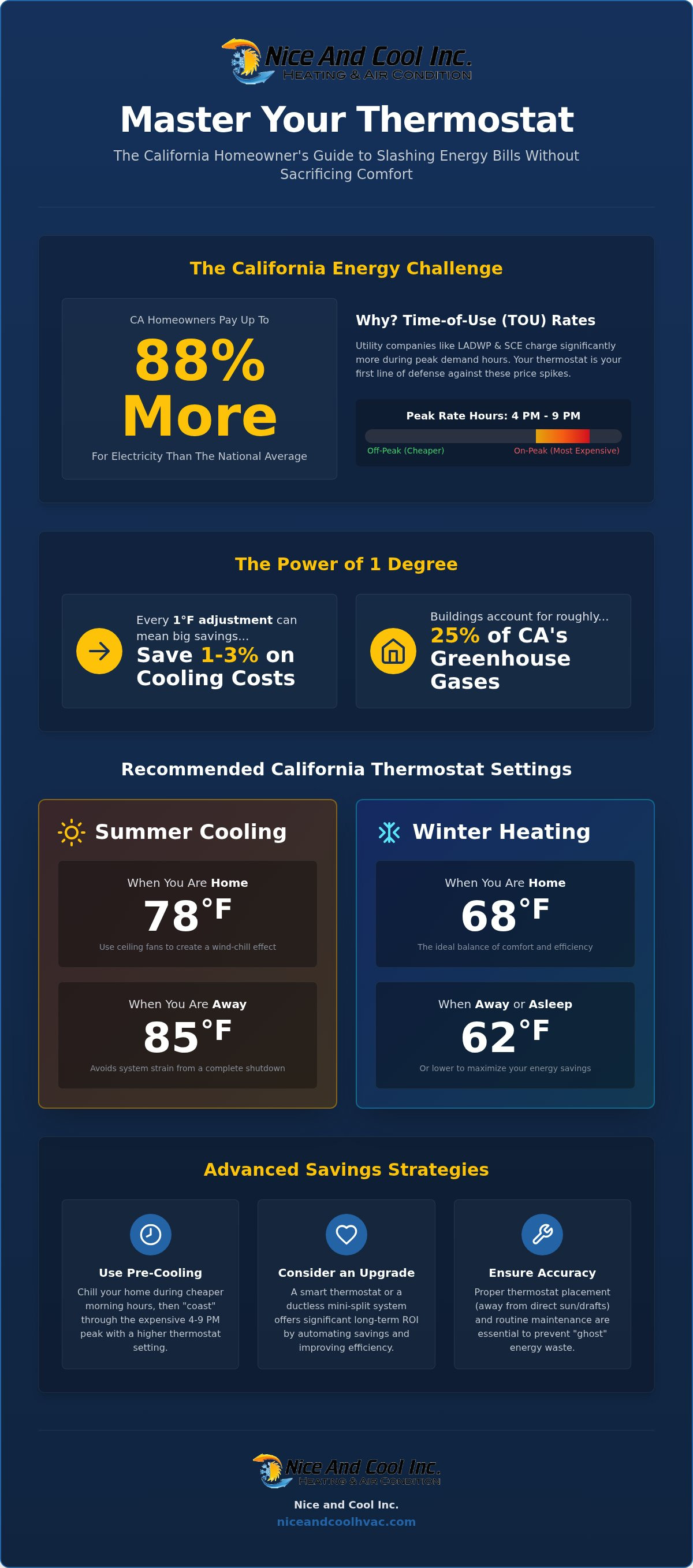
Whether you are an LADWP customer or you receive power from SCE, you are likely on a Time-of-Use (TOU) plan. These plans are designed to discourage heavy energy use during the peak window, which typically runs from 4 PM to 9 PM. If your electricity rates skyrocket during these five hours, then your thermostat must act as your first line of defense. For instance, LADWP’s Power Savers Program rewards residents who allow for minor remote adjustments during high-demand events, offering incentives up to $145. By using a Programmable thermostat to shift your cooling cycles to earlier in the day, you avoid the highest price tiers while helping stabilize our local grid.
The Environmental and Financial Impact of 1 Degree
Small changes lead to significant results in a climate as demanding as Southern California's. Industry data suggests that for every single degree you raise your thermostat during the summer, you can save between 1% and 3% on your cooling costs. Over a long LA summer, these percentages add up to hundreds of dollars in savings. Beyond the financial benefits, optimizing thermostat settings for energy savings in California reduces the overall carbon footprint of your household. This is a critical step for our community, especially since buildings currently account for roughly 25% of California's total greenhouse gas emissions. Strategic programming ensures you are doing your part for the environment while keeping your monthly overhead manageable.
Recommended California Thermostat Settings for Every Season
Finding the perfect balance between a comfortable living room and a manageable electric bill requires a strategic approach. In Los Angeles, a "one size fits all" temperature rarely works because our weather changes so drastically between the coast and the inland valleys. Effectively optimizing thermostat settings for energy savings in California means treating your HVAC system as a flexible tool rather than a static appliance. By following a seasonal framework, you can keep your home pleasant while protecting your budget from peak-rate spikes.
Summer Settings: Beating the Los Angeles Heat
During our long summer months, the Department of Energy recommends a baseline of 78°F when you are at home. While this might sound high, you can make it feel significantly cooler by using ceiling fans to create a wind-chill effect. If you are heading out for the day, set your thermostat to 85°F. It's a common mistake to turn the system off completely; however, doing so forces your refrigerator to work harder in a sweltering house and can stress your indoor plants. Whether you live in the breezy climate of Santa Monica or the intense heat of the San Fernando Valley, your specific location matters. Valley residents often need to set their systems a few degrees higher during the 4 PM to 9 PM peak to avoid massive SCE or LADWP charges, whereas coastal residents might rely on natural ventilation during the morning hours.
Winter Settings: Efficient Heating in a Mild Climate
Our winters are relatively mild, but chilly nights still require a smart plan. The target for daytime comfort is 68°F. If you want to maximize your savings, then dropping the temperature to 62°F while you sleep is ideal for both your health and your wallet. Whether you are running a traditional furnace or a modern heat pump, these benchmarks help prevent your system from over-taxing itself during a cold snap. For households with pets, keeping the home between 68°F and 75°F year-round ensures their safety without wasting excessive energy.
During "shoulder" seasons like spring and autumn, you can often turn the system off entirely. If the outdoor temperature is between 65°F and 75°F, then opening windows for cross-ventilation provides the best energy savings of all. This simple habit gives your HVAC system a much-needed break and extends its overall lifespan. If you find that your home feels drafty or uneven even with these settings, it might be time to have a professional look at your system's calibration. Joining the Nice and Cool Club Maintenance Plan is an excellent way to ensure your thermostat and HVAC system are communicating accurately before the next season hits.
Manual vs. Programmable vs. Smart Thermostats
Thermostat technology has evolved rapidly from the simple mercury dials of the past to the sophisticated AI-driven hubs we see today. If you still have a manual dial on your wall, you might feel like you're in control, but you're likely paying a "forgetfulness tax" every month. Manual units are often perceived as cheaper because they lack a high upfront cost. However, they are actually the most expensive to operate in a state with high energy costs. Human error, such as forgetting to turn the AC up before a long day at work, can lead to massive bill spikes that far outweigh the cost of a device upgrade.
The real Return on Investment (ROI) for modern thermostats in Los Angeles comes from their ability to handle the "thinking" for you. Features like Geofencing use your smartphone's location to detect when you've left the house, automatically shifting the system into an energy-saving mode. Adaptive Recovery is another game-changer; it learns exactly how long your specific HVAC system takes to reach a target temperature. Instead of running the AC for hours to prepare for your arrival, the system calculates the precise moment to start cooling. Ultimately, optimizing thermostat settings for energy savings in California is much easier when the device does the heavy lifting for you.
The Power of Smart Thermostats in 2026
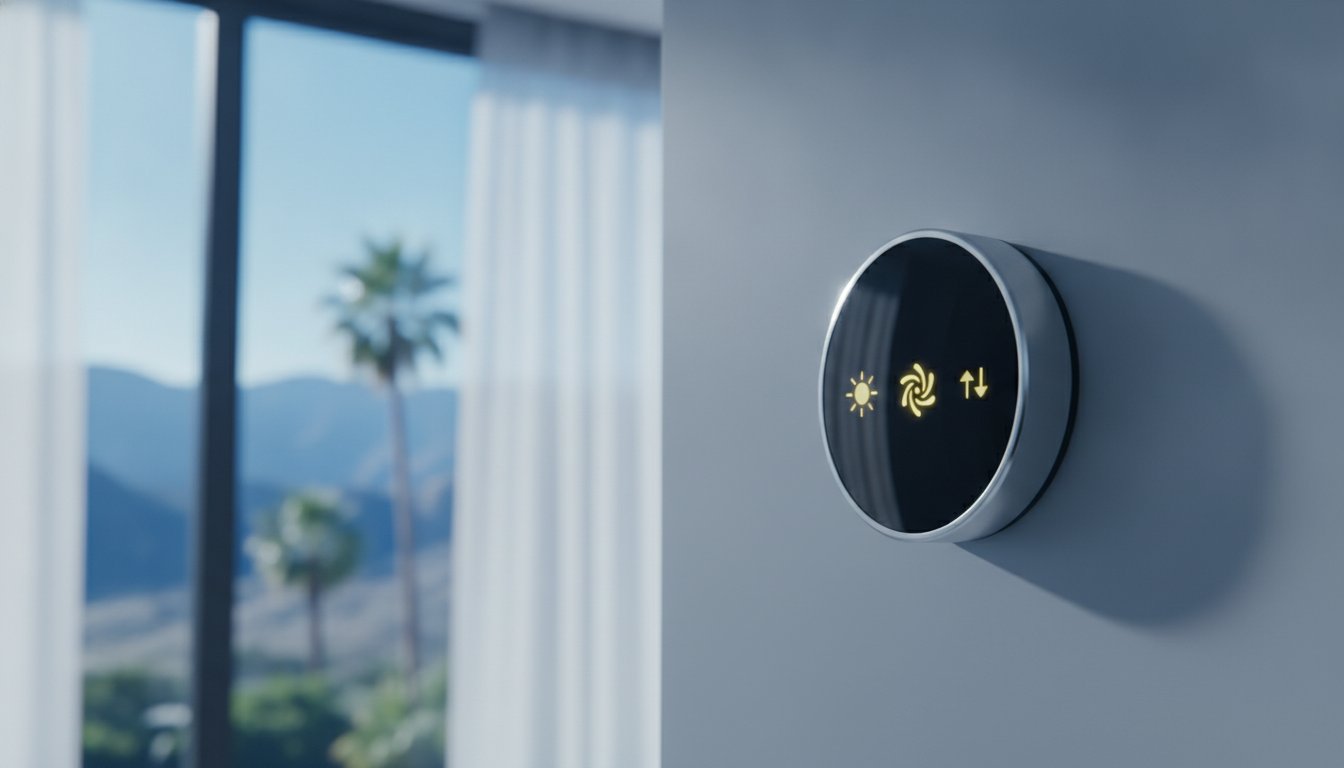
By 2026, smart thermostats have become more than just remote-controlled dials. They are now central to California's "Demand Response" programs, which help residents earn credits by reducing power use during grid emergencies. If you enroll in programs like LADWP’s Power Savers or SCE’s Smart Energy Program, your thermostat can automatically make micro-adjustments during peak events. You also gain the peace of mind that comes with remote access. If an unexpected heatwave hits while you're at the office, you can adjust your home’s temperature from your phone to protect your pets or prevent your system from overworking during the hottest part of the day.
When a Programmable Thermostat is Enough
A smart thermostat isn't always a strict requirement for every household. If you have a very consistent, unchanging daily routine, then a mid-range programmable unit may suffice. These devices allow you to set different schedules for weekdays and weekends, often referred to as "5-2" or "7-day" programming. However, the most common mistake with these units is "setting it and forgetting it" for the entire year. To keep optimizing thermostat settings for energy savings in California, you must manually update these programs as the seasons shift. If your schedule varies even slightly, the lack of flexibility in a basic programmable unit can lead to cooling an empty house, which quickly erases any initial savings on the purchase price.
Advanced Strategies for Los Angeles Homeowners
Standard programming is a great start, but true bill-slashing mastery involves a technique called "Thermal Loading." This strategy turns your home into a thermal battery, allowing you to bank cold air when electricity is cheap and plentiful. By optimizing thermostat settings for energy savings in California through pre-cooling, you can effectively coast through the expensive afternoon price tiers without the AC unit kicking into overdrive. It's a proactive approach that works with the physics of your home rather than fighting against the external heat.
The Art of Pre-Cooling (Thermal Loading)
If you want to "Super-Cool" your home to beat the 4 PM peak, follow this reliable three-step guide. First, drop your thermostat to 72°F during the "off-peak" morning hours, typically between 7 AM and 10 AM. This chills the actual structure of your home, including the walls and furniture. Second, ensure all blinds and curtains are tightly closed by 10 AM to trap that cold air and block solar heat gain. Finally, raise your thermostat to 78°F at exactly 4 PM. Because you've already lowered the core temperature of the house, your system will likely stay off for several hours during the most expensive part of the day.
Ceiling fans play a crucial role in this strategy. It's helpful to remember that fans cool people, not rooms. They don't lower the actual temperature, but the wind-chill effect makes a 78°F room feel like 72°F. If you use fans in the rooms you're currently occupying, you can maintain high levels of comfort while your AC remains in its energy-saving "coast" mode.
Zoning Your Comfort with Mini-Splits
Cooling an entire 2,000-square-foot house is a massive waste of energy if you are only spending time in the home office or the kitchen. This is where ductless mini-split systems completely change the thermostat game. These systems allow for independent control in different "zones" of your home. Whether you want to keep the living room cool during the day or implement a "bedroom-only" night strategy, you only pay for the cooling you actually use. This targeted approach is one of the most effective ways to see an immediate drop in your monthly utility costs. If you are tired of cooling empty hallways and guest rooms, reach out to Nice and Cool Inc. to explore a zoned cooling installation tailored to your home's layout.
Ensuring Accuracy: Maintenance and Professional Calibration
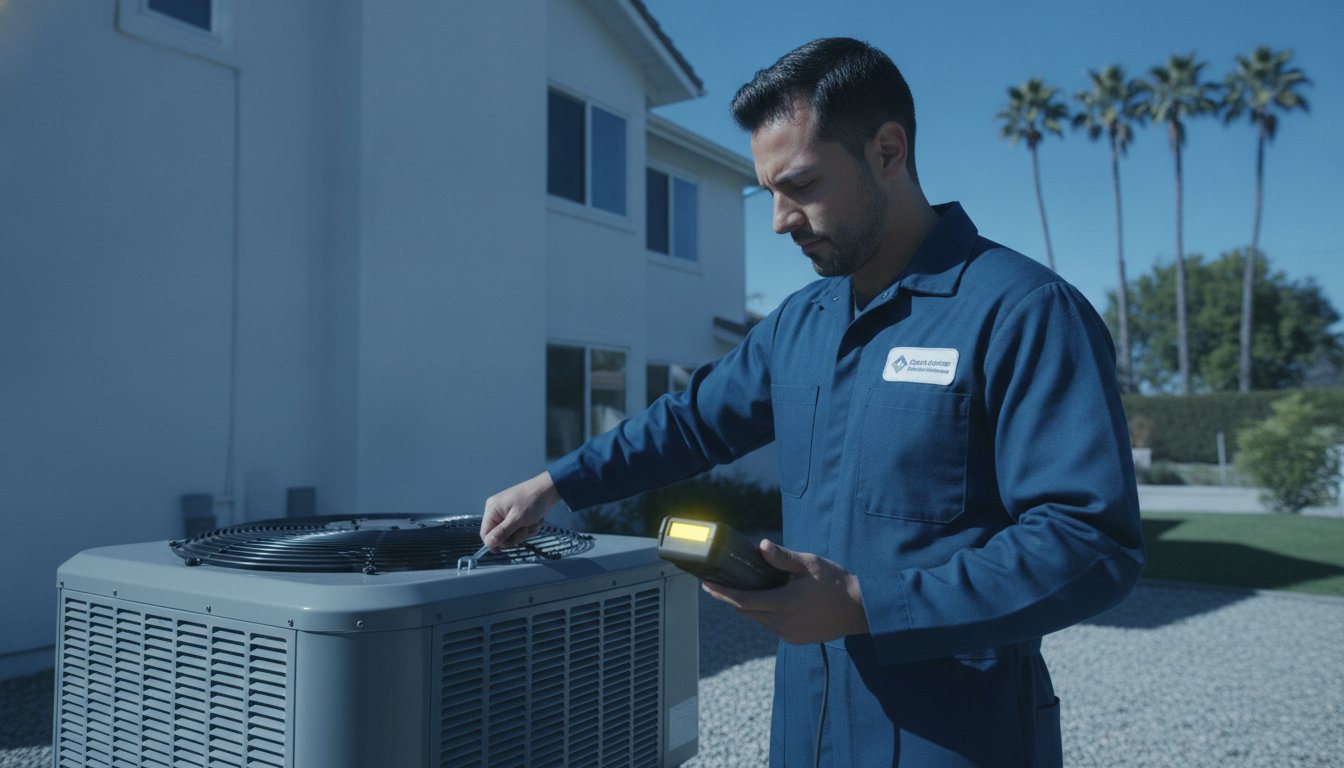
Even the most sophisticated schedule for optimizing thermostat settings for energy savings in California will fail if your physical hardware isn't up to the task. If your air filters are clogged or your condenser coils are caked with Los Angeles dust, then your HVAC system must run longer and hotter to reach your target temperature. This creates a frustrating disconnect between the digital reading on your wall and the actual comfort level in your home. A system that is struggling to breathe will consume excessive power regardless of how perfectly you've programmed your peak-hour offsets.
Sometimes, the problem isn't the system's efficiency but the accuracy of the thermostat itself. If your AC is not blowing cold air despite a low setting, the culprit might be a sensor that has drifted out of calibration. We often see homeowners cranking the AC down to 70 degrees just to get the room to feel like 74. This "calibration gap" forces your equipment to work overtime, leading to premature wear and higher utility bills. Professional oversight ensures that 72 degrees on the screen actually means 72 degrees in the room.
The Nice and Cool Club Advantage
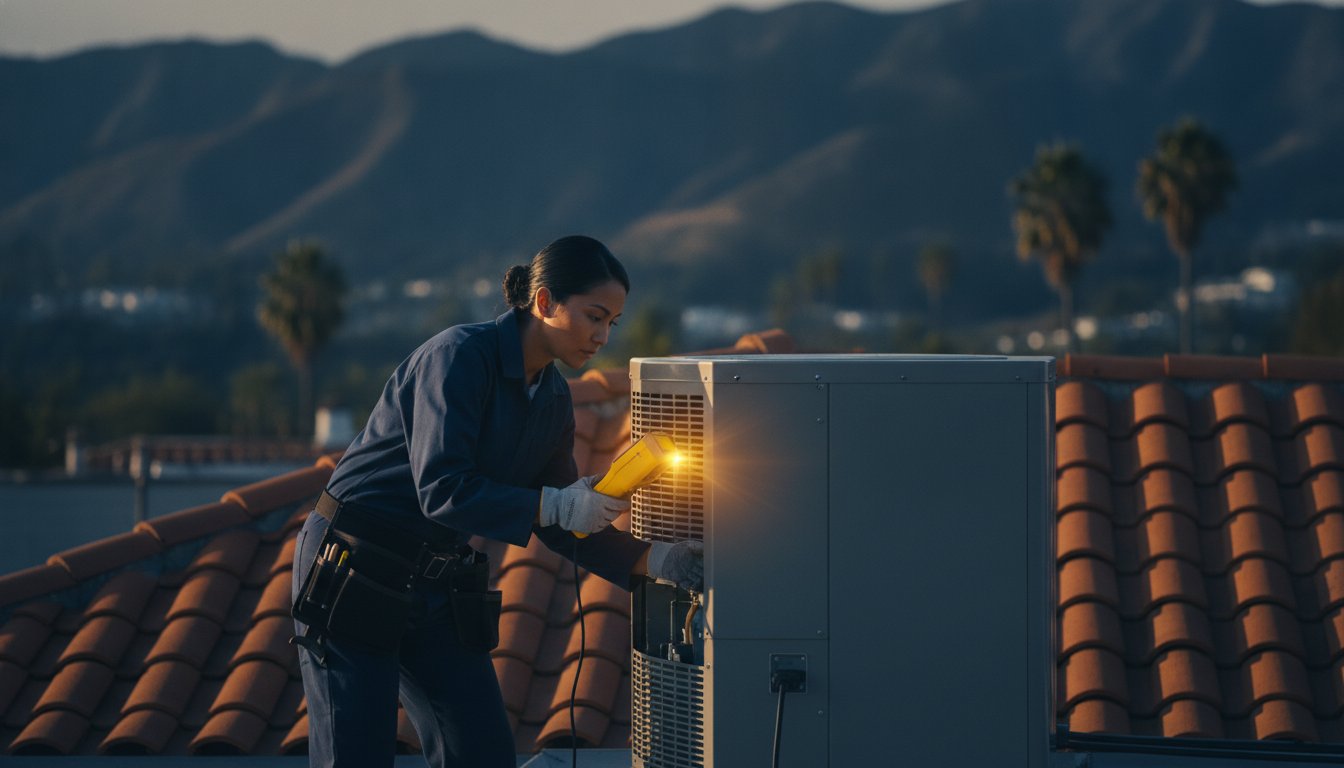
Our Nice and Cool Club Maintenance Plan is specifically designed to bridge the gap between thermostat commands and system performance. During a routine visit, we perform precise sensor calibrations to ensure your thermostat "sees" the real temperature of your living space. We also focus on the deep cleaning of coils and the inspection of electrical connections. Whether you are maintaining an older unit or you've recently invested in a new AC installation, regular professional tuning is the only way to guarantee your efforts in optimizing thermostat settings for energy savings in California actually yield results. Clean systems reach their targets faster, which means they shut off sooner and stay off longer.
Thermostat Troubleshooting and Placement
The physical placement of your thermostat is just as important as its programming. If your device is mounted on a wall that receives direct afternoon sunlight or is located too close to a hot kitchen, it will trigger "ghost" cooling cycles. The thermostat thinks the whole house is sweltering because its immediate environment is hot. Similarly, a thermostat placed near a drafty window might fail to turn the heat on when you actually need it. If you suspect your thermostat and a manual thermometer don't match, you're likely experiencing "drift." When these minor inaccuracies go ignored, they can cost you hundreds of dollars in wasted energy over a single summer. A system-wide efficiency audit can identify these placement errors and help you reclaim control over your home's climate.
Take Control of Your Home’s Comfort and Costs
Mastering your home's climate in Los Angeles doesn't have to be a source of monthly stress. By shifting your cooling cycles to off-peak hours and utilizing advanced strategies like pre-cooling, you can significantly reduce your utility bills without losing sleep over the summer heat. Whether you are upgrading to a smart unit or simply fine-tuning your current schedule, optimizing thermostat settings for energy savings in California is one of the most effective ways to protect your wallet and the local grid. If your system is struggling to keep up with your programmed targets, then professional calibration is the logical next step to ensure your efforts aren't wasted.
Since 2005, our family-owned business has helped Los Angeles County homeowners achieve reliable comfort through craftsmanship and dependability. Our technicians are expertly trained in high-efficiency SEER2 standards, ensuring your HVAC system runs exactly as intended. Ready to slash your energy bills? Join the Nice and Cool Club for a professional system optimization today! We are proud to provide the dedicated local support you need for long-term peace of mind and a much cooler home.
Frequently Asked Questions
Is it cheaper to leave the AC on all day or turn it off when I leave?
It is generally cheaper to raise the temperature by 7 to 10 degrees rather than turning the system off completely. If you turn the AC off, the walls and furniture in your home absorb heat all day. When you return, the system must work at maximum capacity for hours to remove that stored heat. Keeping it at a higher "away" setting maintains a manageable baseline and prevents your refrigerator from overworking.
What is the best thermostat setting for pets in California?
Most veterinarians recommend keeping your home between 68 and 75 degrees for pets while you are away. If you have a long-haired breed or an older pet, you might need to stay on the cooler end of that range. Using a smart device helps with optimizing thermostat settings for energy savings in California because you can check the indoor temperature from your phone to ensure your furry friends stay safe during an unexpected heat spike.
How much can I actually save by using a smart thermostat in Los Angeles?
On average, homeowners can save about 8% on their annual heating and cooling costs by switching to a smart unit. In the Los Angeles area, these savings can be even higher if you participate in utility demand response programs. These programs provide bill credits for allowing minor adjustments during peak grid stress. The investment often pays for itself within two years through reduced monthly utility bills and extended equipment life.
Why does my thermostat say 72 but the house feels like 80?
This usually indicates a calibration issue or poor thermostat placement. If your thermostat is mounted near a drafty window or a cold air return, it will shut off before the rest of the house actually cools down. Alternatively, your HVAC system might be struggling with airflow due to dirty filters or low refrigerant. If your system isn't reaching its target despite the reading, it is time for a professional efficiency audit.
Can I install a smart thermostat myself in an older LA home?
You can often install them yourself, but older homes frequently lack the "C-wire" required for constant power. Whether you need to install a power adapter or run new wiring, the process can become complicated quickly. If you are uncomfortable working with your home's electrical system, having a professional handle the installation ensures the device is correctly integrated with your specific HVAC system and prevents potential short-circuits or hardware damage.
What temperature should I set my AC to at night for the best sleep?
Sleep experts suggest a temperature around 65 to 68 degrees is ideal for the human body's natural cooling cycle. In our local climate, you can often reach this target efficiently by setting your thermostat to drop late at night after the outdoor air has cooled. This approach helps with optimizing thermostat settings for energy savings in California by taking advantage of lower night rates and reduced thermal load on your air conditioning unit.
How do Time-of-Use rates affect my thermostat programming?
Time-of-Use rates mean the price of electricity changes based on the time of day. For LADWP and SCE customers, the most expensive window is typically between 4 PM and 9 PM. Your programming should reflect these tiers by doing the heavy cooling before 4 PM. If you don't adjust your schedule to avoid these peak hours, you will pay significantly more for the exact same amount of cooling you received in the morning.
What happens if I set my thermostat too low (like 65 degrees) during a heatwave?
Setting the temperature extremely low does not cool your home any faster. It simply keeps the compressor running longer, which can lead to the evaporator coils freezing over. If your system freezes, it will stop cooling entirely and may require a professional repair to thaw and reset. During extreme heat, it is better to maintain a steady, moderate temperature to prevent your HVAC system from reaching a breaking point.
Frequently Asked Questions
It is generally cheaper to raise the temperature by 7 to 10 degrees rather than turning the system off completely. If you turn the AC off, the walls and furniture in your home absorb heat all day. When you return, the system must work at maximum capacity for hours to remove that stored heat. Keeping it at a higher "away" setting maintains a manageable baseline and prevents your refrigerator from overworking.