Troubleshooting Common Heat Pump Problems: A 2026 Los Angeles Homeowner’s Guide
July 21, 2026 18 min read
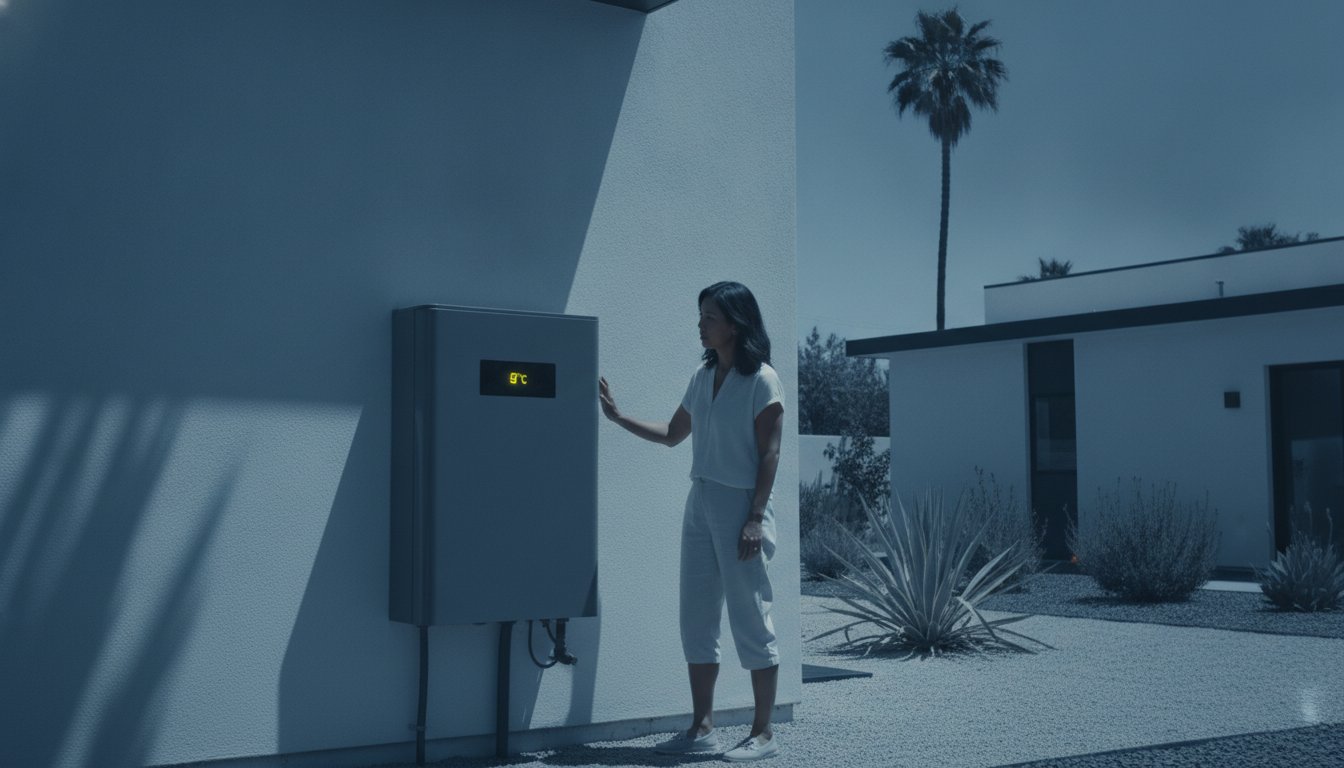
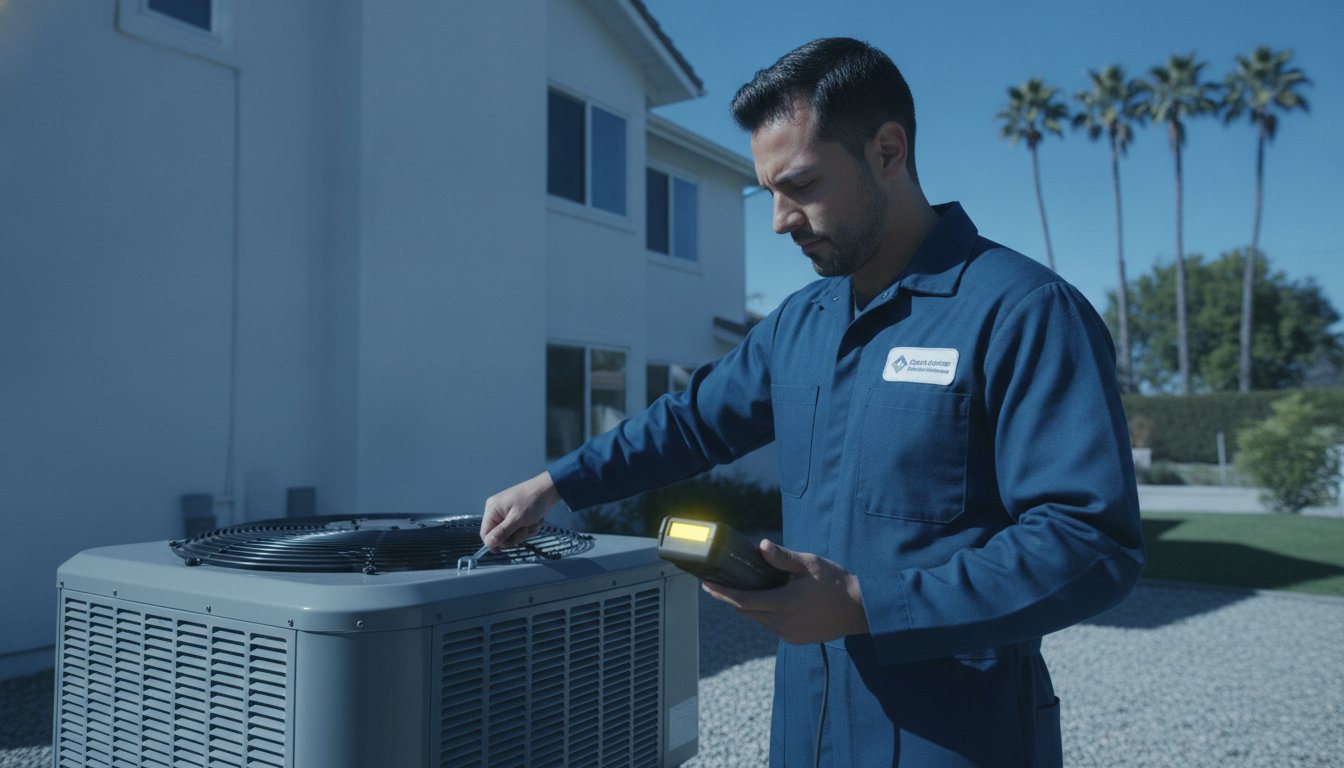
Imagine it is a blistering July afternoon in Los Angeles, the sun is baking the pavement, and you suddenly realize your heat pump is blowing lukewarm air instead of a refreshing chill. It is a stressful moment that every homeowner dreads, particularly when you are trying to keep your family comfortable while managing electricity rates that are projected to rise by over 9 percent this year. If you find yourself in this situation, mastering the basics of troubleshooting common heat pump problems is the fastest way to regain control of your home environment and your budget.
We understand how confusing these dual-purpose systems can feel, especially with the recent shift to newer refrigerants and the 14.3 SEER2 efficiency requirements now in effect. Whether your unit is making an unusual noise or your monthly bill shows a surprising spike, you deserve clear and honest answers. This expert guide provides a logical look at identifying frequent issues, helping you decide if a quick DIY fix will solve the problem or if it is time to bring in a professional. We will walk through everything from simple thermostat resets to the impact of the latest Title 24 standards on your system's health.
Key Takeaways
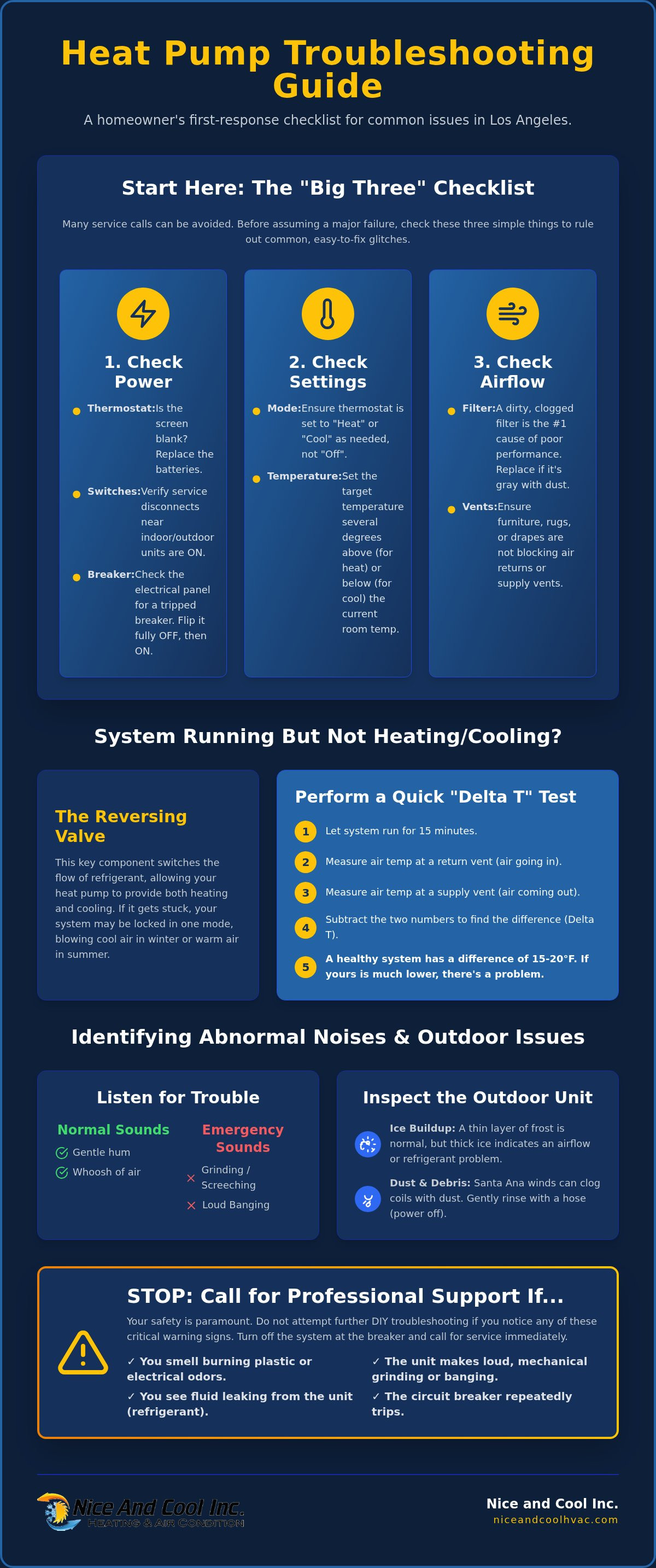
- Start with the "Big Three" checklist to resolve simple power or thermostat issues before assuming your system needs a major repair.
- Gain confidence in troubleshooting common heat pump problems by understanding the role of the reversing valve and how it switches your home from cooling to heating.
- Discover why Santa Ana winds and local dust levels are often the hidden culprits behind a struggling outdoor unit in the Los Angeles area.
- Learn to distinguish between the normal hums of a high-efficiency system and the abnormal sounds that signal a mechanical emergency.
- Identify the specific warning signs, such as electrical smells or refrigerant leaks, that indicate it is time to stop DIY efforts and call for professional support.
The Heat Pump Troubleshooting Checklist: Start Here
Heat Pump Troubleshooting is a systematic process of elimination designed to rule out simple fixes before investing in professional repairs. Unlike a traditional furnace or a standard air conditioner, a heat pump serves a dual role by moving heat into or out of your home depending on the season. To understand How a Heat Pump Works, you have to view it as a heat transporter rather than a heat creator. This year-round operation means the system works harder than a single-season unit, which makes troubleshooting common heat pump problems a vital skill for any Los Angeles homeowner looking to maintain comfort without overspending on service calls.
When your system fails to start, it often feels like a catastrophe. However, a dead thermostat battery or a tripped circuit breaker can mimic a total compressor failure. By following a methodical checklist, you can identify whether you are facing a minor glitch or a mechanical issue that requires our professional expertise. We have found that many service requests could have been resolved in minutes by checking the "Big Three" basics: power, settings, and airflow.
Thermostat and Power Supply Basics
Because Los Angeles often experiences chilly mornings followed by warm afternoons, it is easy to forget which mode your system is in. Verify that the "Heat/Cool" setting matches your current needs. If the screen is blank, the culprit is likely a dead battery rather than a system-wide breakdown. Replacing these batteries annually is a simple way to maintain reliability.
Next, check the physical power switches. Most systems have a service disconnect near the outdoor unit and a power switch on the indoor air handler. If someone bumped these while cleaning or storing items, the system will appear completely dead. Whether you have a ducted system or a ductless mini-split, you should also inspect your electrical panel. Look for a "soft trip," where the breaker looks like it is still on but has actually moved slightly out of place. A quick reset; flipping it fully off and then back on; might be all that is needed to restore power and peace of mind.
The Critical Role of Airflow
Airflow is the lifeblood of your HVAC system. When you begin troubleshooting common heat pump problems, checking the air filter should always be your first step. If the air cannot move freely, the heat pump will struggle to regulate temperature, often leading to short-cycling or blowing lukewarm air. A clogged filter forces the motor to work twice as hard, which can lead to an automatic safety shutdown to prevent overheating.
- Inspect the Filter: If the filter surface is covered in a layer of gray dust, replace it immediately to restore performance.
- Clear the Returns: Ensure that furniture, rugs, or curtains are not blocking the return vents where the system "breathes" in the indoor air.
- Maintain Safety: Never operate your system without a filter during the troubleshooting process. Running it without protection allows dust to settle directly on the sensitive internal coils, which can cause permanent damage and lead to expensive repairs.
Diagnosing Performance Issues: Not Heating or Cooling Properly
It is incredibly frustrating when you hear your system hum but feel no change in your home's climate. If your unit is running without effectively altering the temperature, the problem often lies within the "brain" of the heat pump's directional flow: the reversing valve. While standard air conditioners only move heat in one direction, a heat pump uses this valve to switch between heating and cooling modes. If the valve gets stuck, you might find your AC Not Blowing Cold Air in Los Angeles even when the thermostat is set to cool.
To get a better sense of your system’s health, you can perform a simple temperature "delta" test. This helps determine if the system is actually processing heat or just moving stagnant air. Follow these five steps to assess your system:
- Set your thermostat to a constant temperature and ensure it has been running for at least 15 minutes.
- Use a digital thermometer to measure the air temperature at the return vent, which is where the air enters the system.
- Measure the temperature at the supply vent closest to the indoor unit where the air exits.
- Subtract the supply temperature from the return temperature to find the difference.
- Check the results; a healthy, efficient system should show a "delta" of 16 to 20 degrees.
If your delta is significantly lower than 16 degrees, you are likely facing one of several common heat pump problems that require deeper investigation. Mastering the art of troubleshooting common heat pump problems starts with these objective measurements, as they tell us exactly how much work the unit is actually doing.
Why Your Heat Pump Is Blowing Cold Air in Heat Mode
Don't panic if you feel a brief blast of cold air during a chilly morning. This is often the "Defrost Cycle" in action. The unit temporarily reverses itself to melt ice on the outdoor coils, which is a normal part of operation. However, if the air stays cold, you might have low refrigerant levels. Because 2026 regulations have transitioned the industry to newer refrigerants like R-454B, handling these substances is strictly for licensed professionals. If you suspect a leak, our team can provide expert Heat Pump Services to safely restore your system's pressure and performance.
Inadequate Cooling During Los Angeles Heatwaves
When temperatures spike over 100°F, even high-efficiency systems can be pushed to their limits. If the outdoor condenser is clogged with dust or yard debris, it cannot release heat effectively, leading to a massive drop in efficiency. Check for at least two feet of clearance around your unit to ensure it can breathe. Whether it is a dirty coil or an undersized unit struggling against the intense LA sun, ensuring your system is tailored to your home's specific requirements is the only way to guarantee long-term comfort. If your unit has never quite kept up with the heat, it may be time to discuss a more robust HeatPump Installation that fits your square footage.
Identifying Unusual Noises and Operational Glitches
Your heat pump often communicates its health through the sounds it makes during a cycle. When you are troubleshooting common heat pump problems, listening to the system is often more revealing than looking at it. Because these units operate year-round in Los Angeles, they develop a specific rhythm. A soft hum from the compressor or a metallic click at startup is perfectly normal. You might even hear a sudden "whoosh" followed by a cloud of steam from the outdoor unit; this is simply the defrost cycle we discussed earlier, and it means the system is working exactly as it should.
However, some sounds are clear distress signals. In Los Angeles, our fine particulate dust from the Santa Ana winds can act like sandpaper on moving parts if it gets past the outer casing. If you hear a persistent grinding sound, then dust may have infiltrated the outdoor fan motor bearings. Identifying these noises early can be the difference between a simple part replacement and a complete system failure. If you are hearing a sound that doesn't fit the normal list, our team can help with Air Conditioning Repair to catch small issues before they become major failures.
Deciphering Thumps, Screeches, and Hums
Specific sounds often point to specific mechanical failures. If you hear a metal-on-metal screeching, then you likely have a fan blade obstruction or failing motor bearings that require immediate attention. Rattling or vibrating noises are frequently caused by loose service panels or an outdoor pad that has become un-leveled due to our naturally shifting Southern California soil. If you notice a persistent hissing sound, it is a primary indicator of a refrigerant leak or a stuck internal valve. These issues should never be ignored, as they directly impact your system's efficiency and your home's comfort.
Why Your Heat Pump Won't Turn Off
It is common for homeowners to worry when they notice their system running for hours on end. Whether this is a problem depends entirely on your system's technology. Unlike older single-stage units, modern high-efficiency inverter systems are designed to run for long periods at lower speeds to maintain a steady temperature. This is actually more efficient than the constant on-and-off cycling of the past. If your home stays comfortable and your energy bills are stable, the long run time is likely a sign of a healthy system.
If the system runs indefinitely but the house never reaches the set temperature, you may have a stuck contactor or a failing outdoor temperature sensor. First, check your thermostat to ensure the "Fan" setting is on "Auto" rather than "On," which causes the blower to run even when the system isn't heating or cooling. If the settings are correct but the unit won't quit, a sensor might be tricking the system into thinking it hasn't met the demand yet. Troubleshooting common heat pump problems in these cases usually requires a professional diagnostic tool to test the electrical components safely.
The Outdoor Unit: Ice, Dust, and Local Environmental Factors
If you search for advice on troubleshooting common heat pump problems online, you will likely find articles focused on clearing snow or preventing ice dams. For a Los Angeles homeowner, these tips are rarely applicable. In our Mediterranean climate, seeing a thick layer of ice on your outdoor unit is almost never a weather issue; it is a signal that your system is in distress. Whether you live in the heat of the San Fernando Valley or the breezy hills of Silver Lake, your outdoor unit faces unique local pressures that national guides simply don't cover.
The Santa Ana winds are a primary culprit for system strain in LA County. These high-wind events carry fine dust and debris that act like a blanket over your outdoor coils, preventing the essential exchange of heat. For our neighbors in Santa Monica or Malibu, coastal salt air adds another layer of complexity. Salt air accelerates the corrosion of aluminum fins, which can lead to microscopic refrigerant leaks over time. To keep your system breathing properly, always maintain at least a two-foot clearance of clear space around the entire outdoor cabinet. This simple step ensures that even on the hottest 100-degree days, your unit has the airflow it needs to stay efficient.
When a Frozen Heat Pump is a Red Flag
If you notice ice forming on your coils during a Los Angeles summer, you are likely dealing with restricted airflow or a refrigerant imbalance. This is a critical moment in troubleshooting common heat pump problems. While it might be tempting to pick the ice off with a screwdriver or a sharp object, doing so can easily puncture the sensitive copper tubing. Instead, turn the thermostat to "Fan Only" mode. This allows the blower to move ambient air over the coils, safely thawing the unit before a technician arrives. If the ice returns quickly after thawing, it's a clear sign that a professional diagnostic is required.
Los Angeles Environmental Maintenance
Southern California pollen and urban dust are relentless. When these particles build up on your outdoor unit, the system may begin "short-cycling," which means it turns on and off rapidly without completing a full cycle. This often happens during high-wind events when the air is thick with particulates. You can perform a basic cleaning yourself to restore efficiency. First, turn off the power at the service disconnect. Then, use a low-pressure garden hose to gently rinse the coils from the top down. Avoid using a high-pressure power washer, as the force can bend the delicate fins and permanently restrict airflow. For long-term protection against the unique elements of our region, consider joining the Nice and Cool Club Maintenance Plan to ensure your system is professionally cleaned and calibrated twice a year.
Professional Solutions: When to Call Nice and Cool Inc.
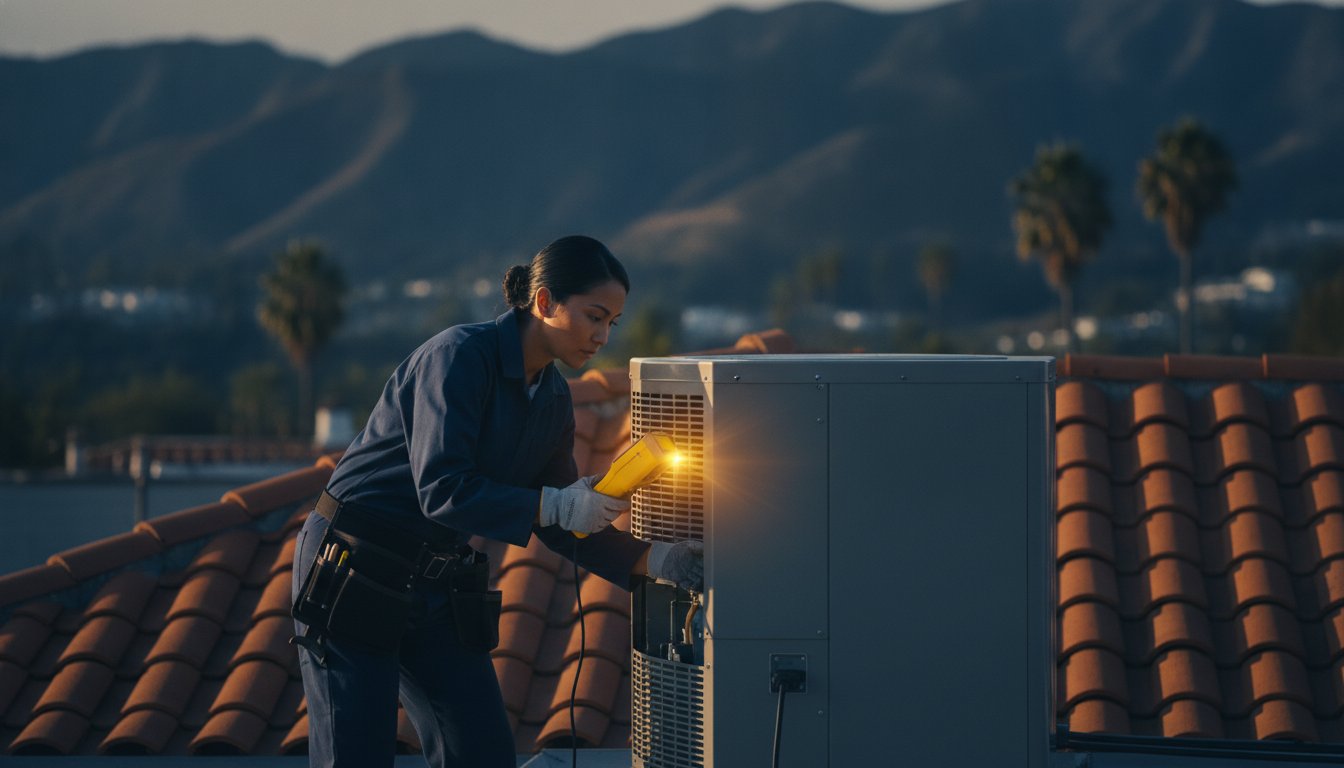
While mastering the basics of troubleshooting common heat pump problems empowers you as a homeowner, some symptoms indicate a situation that has moved beyond a simple filter change. We categorize these as "Danger Zone" issues. If you notice a pungent, electrical burning smell coming from your vents, then you likely have a failing capacitor or damaged wire insulation that poses a fire risk. Whether you find oily residue near the outdoor copper lines or hear the compressor struggling to turn over, these are mechanical emergencies that require immediate professional attention to prevent a total system collapse.
We pride ourselves on being your reliable local specialist, and that means giving you an honest assessment of your system's health. Sometimes, the most helpful advice we can provide is to stop pouring money into an aging unit. If your system is over 15 years old and you find yourself troubleshooting common heat pump problems every few months, a modern heat pump installation may be the most cost-effective path forward. This ensures your home meets the latest 2026 efficiency standards while providing the peace of mind that only a new, warrantied system can offer.
The Limits of DIY Troubleshooting
Testing electrical components with a multi-meter or attempting to bypass safety switches can be incredibly hazardous for those without specialized training. High-voltage capacitors can hold a lethal charge even after you have turned the power off. Additionally, handling high-pressure refrigerants requires specific certification and recovery equipment to meet California's strict environmental laws. A professional diagnostic provides more than just a part replacement; it uncovers the hidden cause of a recurring symptom. This systematic approach ensures the same issue does not return next month, protecting both your comfort and your wallet.
Prevention Through the Nice and Cool Club
The most effective way to stop common issues from starting is through a proactive maintenance strategy. Our approach involves a detailed multi-point inspection that covers everything from electrical tightenings to deep-coil cleaning. This preventative care results in lower monthly energy bills and a significantly longer lifespan for your equipment. By catching small vibrations or minor refrigerant imbalances early, we save you from the stress of a mid-August breakdown. We treat every home like it is our own, ensuring your HVAC system is a dependable partner in your long-term comfort. Join the Nice and Cool Club today for worry-free comfort!
Restore Your Peace of Mind and Home Comfort
Mastering the art of troubleshooting common heat pump problems gives you the power to handle minor glitches before they disrupt your daily life. By checking your "Big Three" settings and keeping your outdoor unit clear of Los Angeles dust, you'll maintain high efficiency even during the peak of our heatwaves. Remember that while many fixes are simple, your safety is always the priority when dealing with complex electrical or refrigerant issues.
Since 2005, our family-owned team's specialized in the unique needs of Los Angeles residential HVAC systems. Whether you need a one-time diagnostic or want the long-term protection of our Nice and Cool Club Maintenance Plan, we're here to support your home's health. Our goal's to ensure you feel cared for and confident in your system's performance every day of the year. Schedule your expert heat pump diagnostic with Nice and Cool Inc. today! We look forward to being your partner in long-term comfort.
Frequently Asked Questions
Why is my heat pump blowing cold air when I have it set to heat?
Your heat pump is likely in its defrost cycle or suffering from a refrigerant leak. During the defrost mode, the unit temporarily reverses its operation to melt ice on the outdoor coils, which can cause a brief chill indoors. If the cold air persists for more than 15 minutes, it is a clear sign that the reversing valve or refrigerant levels need professional attention to restore your comfort.
Is it normal for my heat pump to make a loud whooshing sound?
Yes, a loud whooshing sound is a perfectly normal part of the defrost cycle transition. This sound occurs when the reversing valve shifts the flow of refrigerant to heat the outdoor unit. While it can be startling to hear, it signifies that your system is actively protecting itself from ice buildup. If the sound is accompanied by heavy grinding or metal-on-metal screeching, then you should call for a diagnostic.
How often should I change the filters on my Los Angeles heat pump?
You should inspect your filters every 30 days and replace them at least every three months. Because of the high dust levels in Los Angeles and our frequent Santa Ana winds, your filters often clog much faster than the manufacturer's general recommendations. Regular changes are a critical part of troubleshooting common heat pump problems because they prevent the airflow restrictions that lead to system shutdowns.
Why is there ice on my heat pump during a Los Angeles summer?
Ice on your unit during a Los Angeles summer is a major red flag for low refrigerant or a severe airflow restriction. Since our local temperatures do not drop low enough to freeze coils naturally during the warmer months, this indicates a mechanical fault inside the system. You should turn the unit off and switch to "Fan Only" mode to thaw the ice before a technician arrives to inspect the system.
Can I spray my heat pump with a hose to clean it?
You can safely rinse your outdoor coils with a low-pressure garden hose, provided you turn off the power at the service disconnect first. This simple maintenance task helps remove the urban soot, pollen, and dust that naturally build up in Southern California. You must avoid using a high-pressure power washer, as the intense force can bend the delicate aluminum fins and permanently restrict the air movement your system needs.
What does it mean if my heat pump is 'short-cycling'?
Short-cycling means your heat pump is turning on and off too frequently without ever completing a full cooling or heating cycle. This behavior is often caused by a clogged air filter, a malfunctioning thermostat, or a system that was not sized correctly for your home's square footage. It places immense strain on your compressor and will significantly increase your monthly electricity bills if it is not addressed quickly.
How long do heat pumps typically last in Southern California?
Heat pumps in the Los Angeles area typically last between 15 and 20 years when they receive regular professional maintenance. Because we rely on these systems for both heating and cooling throughout the year, they accumulate more operational hours than units in colder climates. Consistent care through a plan like our Nice and Cool Club is the most effective way to ensure your system reaches its full life expectancy.
Is it cheaper to repair or replace an 10-year-old heat pump?
Deciding whether to repair or replace depends on the age of your unit and the nature of the failure. If your heat pump is 10 years old and the repair is expensive, a new installation is often the smarter financial move. Newer models meet the 2026 Title 24 efficiency standards of at least 14.3 SEER2, which can lead to substantial savings on your monthly energy costs compared to an older, struggling unit.
Frequently Asked Questions
Your heat pump is likely in its defrost cycle or suffering from a refrigerant leak. During the defrost mode, the unit temporarily reverses its operation to melt ice on the outdoor coils, which can cause a brief chill indoors. If the cold air persists for more than 15 minutes, it is a clear sign that the reversing valve or refrigerant levels need professional attention to restore your comfort.