Why Is My Air Conditioner Leaking Water Inside? 2026 Homeowner’s Guide
June 18, 2026 18 min read
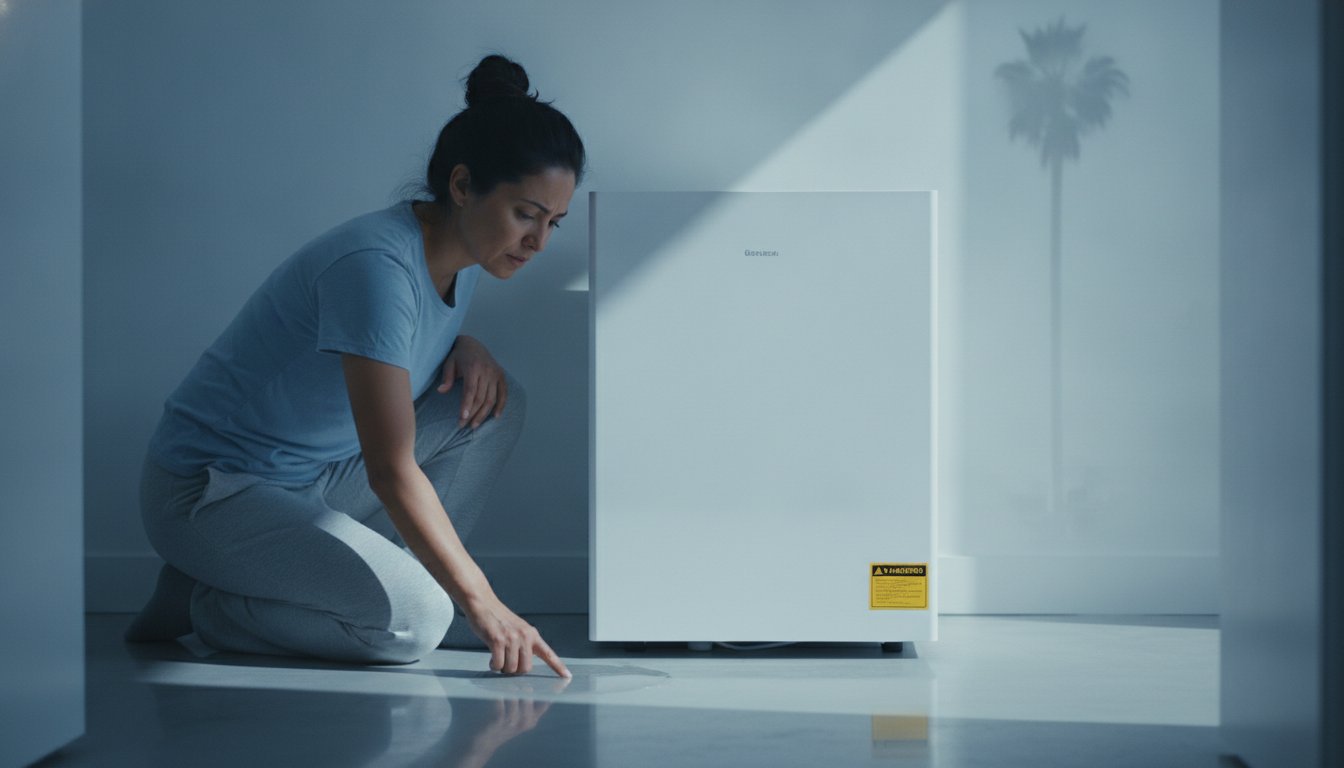
Imagine waking up to a steady drip hitting your hardwood floors or noticing a damp, yellowing circle spreading across your ceiling during a mid-summer heatwave. If you are currently asking, "why is my air conditioner leaking water inside," you are likely feeling a mix of frustration and genuine concern for your property. It is completely normal to feel anxious about potential structural damage or the prospect of an expensive repair bill while you are just trying to keep your family cool in the Los Angeles sun. Finding water where it should not be is stressful, especially when you feel forced to choose between a humid home and a growing puddle.
Whether you are dealing with a small trickle or a persistent flow, we understand that you want your peace of mind restored as quickly as possible. This 2026 guide will help you identify the exact source of the moisture and provide the steps needed to protect your home from long-term water damage. We will explore common issues like clogged condensate lines and frozen evaporator coils, while also explaining how the latest EPA refrigerant regulations might impact your specific system. By the end of this article, you will know if your leak is a simple DIY fix or if it requires the precision of a professional specialist to get your home back to a state of reliable comfort.
Key Takeaways
- Understand how your cooling system naturally manages condensation and why a breakdown in this process leads to indoor puddles.
- Identify the primary culprits behind why is my air conditioner leaking water inside, ranging from simple clogged drain lines to more complex mechanical issues.
- Learn why immediate action is necessary to protect your home’s structural integrity and maintain healthy indoor air quality.
- Follow our professional troubleshooting steps to safely shut down your system and perform a quick check of your air filters.
- Discover how proactive care through the Nice and Cool Club Maintenance Plan can safeguard your comfort and prevent future water damage.
Understanding Why Your AC Produces Water (and Where It’s Supposed to Go)
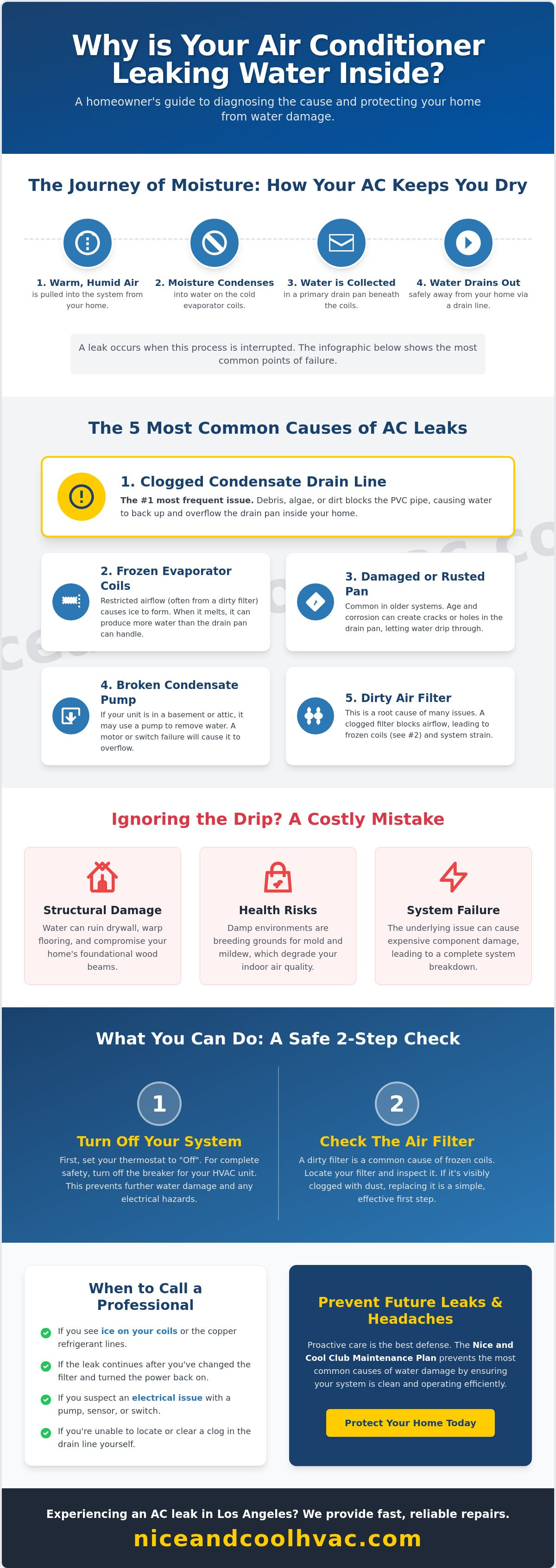
Most homeowners feel a sense of dread when they see a puddle near their HVAC unit, but it is helpful to know that moisture is actually a sign that your system is working. Your air conditioner is designed to act as a giant dehumidifier. As it pulls heat from your home, it also pulls moisture out of the air to lower the humidity levels. This process is essential for your comfort, but it requires a perfectly functioning drainage system to keep that water from ending up on your floor. If any part of this assembly fails, you will likely find yourself asking why is my air conditioner leaking water inside.
The Science of Condensation in Your HVAC System
Think of a cold soda can on a hot July afternoon in Los Angeles. Within minutes, beads of water form on the outside of the aluminum. This happens because the cold surface causes the moisture in the air to reach its dew point and turn into liquid. Your indoor unit contains an evaporator coil that stays very cold during operation. When warm air from your living room is blown across this coil, water collects on the metal fins. To understand the broader mechanics of this process, you can read more about How Air Conditioners Work. Even in our relatively dry climate, a typical residential system can pull several gallons of water from the air every single day. If the airtight seal around your drainage assembly is compromised, this water can escape the system and cause damage.
The Components of an Air-Conditioning Unit’s Drainage System
To keep your home dry, your system relies on a specific sequence of components that must work in harmony. Whether you have a traditional central air system or a modern heat pump, the drainage path generally follows this route:
- The Primary Drain Pan: This pan is tucked directly underneath the evaporator coil to catch every drop of moisture. It is usually made of durable plastic or galvanized steel and is sloped to funnel water toward the exit.
- The Condensate Drain Line: This is typically a white PVC pipe that carries the liquid safely away from the unit. It leads either to a floor drain or to a dedicated exit point outside your home.
- Secondary Pans and Float Switches: These are your home’s last line of defense. A secondary pan sits under the entire unit to catch overflows, while a float switch will automatically shut the system down if it detects standing water.
If you notice water bypassing these safety features, it is a clear signal that the drainage path has been interrupted. Identifying which component has failed is the first step in diagnosing why is my air conditioner leaking water inside before the moisture can compromise your drywall or flooring.
The 5 Most Common Culprits for Indoor Water Leaks
When you discover a puddle, your first instinct is likely to wonder why is my air conditioner leaking water inside. While the system is complex, the majority of leaks stem from five specific mechanical or environmental failures. If you can identify which of these is affecting your unit, you can better decide whether to grab a shop vac or call for a professional Air Conditioning Repair specialist. Identifying the root cause early can save you from the stress of a full system shutdown during a heatwave.
- Clogged Condensate Drain Line: This is the most frequent issue we encounter. Over time, the PVC pipe that carries water away can become blocked by debris, forcing water to back up and overflow the internal pan.
- Frozen Evaporator Coils: If airflow is restricted, the moisture on your coils can actually turn to ice. When that ice eventually melts, it often produces more water than the drain system was ever designed to handle.
- Damaged or Rusted Drain Pan: In many of our beautiful older Los Angeles homes, aging metal drain pans can eventually rust through. If you have an older system, small pinholes in the pan may be the source of your leak.
- Broken Condensate Pump: Whether your unit is in a basement or a tight attic space, it may use a pump to push water uphill. If the motor fails, the water has nowhere to go but out onto your floor.
- Dirty Air Filters: It sounds simple, but a clogged filter is the root cause of many mechanical leaks. It restricts the very air needed to keep the system's temperature regulated, leading to a cascade of drainage failures.
How LA Dust and Santa Ana Winds Clog Your Drains
Los Angeles presents a unique challenge for HVAC drainage. During Santa Ana wind events or our intense wildfire seasons, fine ash and dust are pulled into your system's return air. This debris mixes with the natural condensation on your coils to create a thick, jelly-like sludge. Algae and mold thrive in this warm, damp environment, eventually forming a complete blockage in your PVC line. If your system hasn't been cleared recently, this "slime" is a primary reason why is my air conditioner leaking water inside during the peak of summer. For more detailed help on similar issues, you can check our guide on AC Not Blowing Cold Air in Los Angeles.
The 'Ice-to-Water' Cycle: Frozen Coils and Overflows
A frozen coil is often a symptom of a deeper problem, such as low refrigerant or a severely restricted filter. When ice builds up on the evaporator, it acts as an insulator, making the problem worse until the unit eventually stops cooling. The real mess happens during the "thaw." When you turn the system off, that solid block of ice melts rapidly. This sudden volume of water can easily overwhelm a drain pan that is already slightly tilted or partially restricted. Learning about Troubleshooting AC Water Leaks can help you spot these signs before the ice has a chance to form and cause structural damage.
Why Ignoring an AC Leak is a Costly Mistake for Homeowners
It is tempting to place a bucket under a drip and forget about it until your next day off. However, if you are currently wondering why is my air conditioner leaking water inside, you should know that water is a patient but destructive force. Whether the moisture is pooling on your floor or hiding behind a wall, it is actively compromising your home’s structural integrity. By the time a water stain appears on your ceiling, the wood joists and insulation above it are often already saturated. Ignoring the issue does not just lead to a higher utility bill; it creates a cascade of problems that are far more expensive to fix than a simple drainage repair.
A leaking system is almost always an inefficient one. When your unit struggles with a clog or a frozen coil, it typically works about 20% harder than necessary to maintain your desired temperature. This extra strain puts unnecessary wear on the compressor and blower motor, significantly shortening the lifespan of your equipment. If you address the leak immediately, you protect your investment; if you wait, you risk a total system failure during the hottest part of the year.
The Hidden Threat of Mold and Mildew
The most alarming consequence of a persistent leak is the impact on your family’s health. Mold thrives in dark, damp environments, and it can begin to colonize in as little as 24 to 48 hours after moisture is introduced to organic materials like drywall or wood. This is a major concern for Los Angeles residents with respiratory sensitivities or allergies. Once mold takes root inside your HVAC closet or behind your baseboards, a simple fan is not enough to solve the problem. Understanding the Common Causes of An Air Conditioner Leaking Water is essential for preventing a small drip from turning into a massive, professional mold remediation project that could cost thousands of dollars.
Protecting Your Home's Value and Safety
Beyond structural rot and health risks, there is the very real danger of electrical hazards. Many indoor air handlers contain sensitive control boards and high-voltage wiring. If water drips onto these components, it can cause a short-circuit or even a fire. Whether you are dealing with a minor overflow or a steady stream, the risk to your home's safety is too high to ignore. The cost of refinishing water-damaged hardwood floors is significantly higher than the price of a professional diagnostic visit. Ultimately, taking prompt action is the only way to avoid the premature need for a full AC installation in Los Angeles.
Troubleshooting: What You Can Check Before Calling a Specialist
Discovering a puddle in your home is stressful, but you can take several logical steps to assess the situation before you need professional help. If you are currently asking why is my air conditioner leaking water inside, your first priority is to prevent the problem from getting worse. By following a systematic approach, you might find that the solution is as simple as a routine maintenance task you can handle yourself. If the steps below do not resolve the issue, you will at least have valuable information to share with your technician.
- Step 1: Shut down the system immediately. This is the most important action. Turning off the AC stops the cooling process and prevents the evaporator coil from generating more condensation, which stops the leak at its source.
- Step 2: Inspect the air filter. Remove your filter and hold it up to a light. If it looks grey, "fuzzy," or completely opaque, replace it immediately. A blocked filter is often the primary reason why is my air conditioner leaking water inside because it causes the coils to freeze and then overflow.
- Step 3: Check the primary drain pan. Use a flashlight to look at the pan underneath your indoor coils. If you see standing water or visible cracks in the plastic or metal, you have identified where the drainage process is breaking down.
- Step 4: Inspect the outdoor exit point. Locate where your condensate line exits your home. If the end of the pipe is buried in mud or blocked by debris, clearing that obstruction may allow the backed-up water to finally flow out.
- Step 5: Verify thermostat settings. Ensure your fan is set to "Auto" rather than "On" if you suspect a frozen coil. Letting the fan run constantly without the cooling cycle can sometimes help thaw a lightly frosted unit, though this is only a temporary fix.
The Air Filter Test
In Los Angeles, our air quality fluctuates significantly during high-pollen months or wildfire season. During these times, you should check your filter every 30 days rather than the standard 90. If you use a high MERV-rated filter, ensure your system's blower motor is powerful enough to handle it. A filter that is too restrictive acts just like a dirty one; it chokes the airflow, drops the coil temperature, and leads to the "ice-to-water" cycle that causes most indoor leaks.
When to Put the Tools Down
While DIY troubleshooting is helpful, some tasks are dangerous for both you and your equipment. Whether the issue is a deep clog or a mechanical failure, you should never use chemical "Drano-style" cleaners in your HVAC lines. These caustic liquids can crack PVC pipes and create toxic fumes that circulate through your home. Additionally, as of January 1, 2026, the EPA has significantly tightened regulations regarding refrigerant handling. If you suspect a leak in your pressurized lines, you must contact a licensed professional for Air Conditioning Repair. Attempting to "top off" or repair refrigerant lines without the proper certification is illegal and can lead to a total system short-circuit if water has reached the electrical control boards.
Professional Solutions and Long-Term Prevention in Los Angeles
When basic troubleshooting does not resolve the mystery of why is my air conditioner leaking water inside, it is time to bring in professional tools and specialized expertise. While a homeowner can change a filter, our technicians at Nice and Cool Inc. perform a much deeper level of system recovery. We utilize high-pressure drain flushes to clear stubborn blockages and apply EPA-approved sanitizing treatments to the condensate lines. These treatments prevent the "slime" and algae growth we discussed earlier from returning, ensuring your drainage system remains clear through the peak of the summer heat.
Prevention is always more cost-effective than emergency repair. Beyond clearing clogs, we focus on the mechanical integrity of your entire drainage assembly. If your indoor unit is not perfectly level, water will pool in the corners of the primary pan rather than flowing toward the drain line. We ensure your system is properly pitched and leveled. We also recommend upgrading to smart float switches; these secondary safety devices detect moisture before it overflows and automatically shut down your AC, protecting your home from water damage while you are away.
The Nice and Cool Club Maintenance Plan
The most reliable way to avoid the stress of an indoor flood is through consistent, professional oversight. Our Nice and Cool Club Maintenance Plan is designed to catch small issues before they become household emergencies. During our semi-annual visits, we inspect the primary and secondary drain pans for signs of rust or pinhole leaks. We also perform a comprehensive professional coil cleaning, which ensures that condensation forms and drains exactly as intended. Whether it is a slow-moving drain or a failing condensate pump, our members benefit from early detection and priority service during those intense Los Angeles heatwaves when everyone else is waiting days for a technician.
Expert Repair vs. System Replacement
If your air conditioner is more than 12 years old, then a recurring leak might be a sign that the evaporator coil or the drain pan is reaching the end of its functional life. In these cases, we provide an honest assessment of whether a repair or a full system upgrade is the most responsible choice for your budget. As your Reliable Local Specialist, we take pride in tailoring our recommendations to the specific needs of your home. We understand the unique demands that our local climate puts on your equipment, and we are committed to being your partner in long-term comfort. Don't let a leak dampen your comfort; schedule your AC repair with Nice and Cool Inc. today and get your home back to the cool, dry sanctuary it should be.
Restore Your Home's Comfort and Safety
Dealing with an indoor water leak is never convenient, but identifying the root cause is the first step toward a dry home. We have explored the most common reasons why is my air conditioner leaking water inside, ranging from the impact of Los Angeles dust on your drain lines to the simple necessity of a clean air filter. Taking swift action today protects your property from expensive structural damage and keeps your family safe from the risks of mold growth.
Since 2005, our family-owned and operated team has specialized in the unique residential HVAC needs of our local community. Whether you need a precise repair or want the year-round reliability provided by our Nice and Cool Club Maintenance Plan, you can count on us for honest guidance and dependable craftsmanship. You don't have to manage these technical challenges alone. Stop the leak and protect your home—Book your Los Angeles AC repair now. We look forward to helping you stay cool and dry.
Frequently Asked Questions
Is it dangerous if my AC is leaking water inside?
It is potentially dangerous because water dripping near high-voltage electrical components can cause short circuits or fire hazards. Beyond immediate safety risks, persistent moisture leads to rapid mold growth and structural rot in your drywall or flooring. If you see water pooling near your air handler, it is best to treat it as an urgent issue to protect both your home's integrity and your family's health.
Can I still run my AC if it is leaking water?
You should shut your system off immediately to prevent further water production. Running the unit while it is leaking only adds more moisture to the puddle, which can quickly overwhelm your secondary drain pan and cause extensive ceiling or floor damage. Once the system is off, you can safely investigate the cause or wait for a specialist to arrive without the risk of making the leak worse.
How much water is normal for an AC to drain?
It is normal for a residential air conditioner to produce anywhere from 5 to 20 gallons of water per day during a typical Los Angeles summer. This volume depends heavily on the humidity levels inside your home and how hard the system is working. While the amount of water is high, all of it should be contained within the PVC drain line and sent safely outside your property.
How do I unclog my AC drain line myself?
You can often clear a minor blockage by using a wet/dry shop vacuum on the outdoor exit of the condensate line. Seal the connection with a wet rag to create a strong vacuum and run it for about 30 seconds to pull out any "slime" or debris. If this doesn't resolve the issue, the clog might be deeper in the system and require professional tools to flush the line safely without damaging the pipes.
What happens if water gets on my AC's electrical parts?
Water contacting electrical parts usually results in a short circuit that can blow fuses or destroy the main control board. This often leads to a total system failure and a much more expensive repair bill than a simple drain cleaning. If you suspect water has reached the wiring or sensitive electronics, do not attempt to turn the power back on until a technician has inspected the unit for safety.
Will a dirty air filter really cause a water leak?
Yes, a dirty air filter is a leading reason why is my air conditioner leaking water inside. When airflow is restricted, the evaporator coil gets too cold and the moisture on it freezes into a block of ice. Once that ice begins to melt during a cycle change, it produces a sudden surge of water that can easily overflow the drain pan and spill into your living space.
Why is my AC leaking water but still cooling?
This happens when the refrigeration cycle is functioning correctly, but the moisture it removes from the air cannot escape through the proper channels. A clog in the drain line or a cracked pan won't stop the system from blowing cold air initially, but it will cause the water to back up. It is a sign that while your system is cooling, a mechanical failure in the drainage assembly needs immediate attention.
How often should I have my AC drain lines cleaned in Los Angeles?
We recommend having your drain lines professionally cleaned at least once a year as part of your spring maintenance. In Los Angeles, the combination of Santa Ana wind dust and wildfire ash can cause clogs to form more quickly than in other climates. If you are a member of our Nice and Cool Club Maintenance Plan, we check and clear these lines twice a year to ensure your system remains reliable.
Frequently Asked Questions
Think of a cold soda can on a hot July afternoon in Los Angeles. Within minutes, beads of water form on the outside of the aluminum. This happens because the cold surface causes the moisture in the air to reach its dew point and turn into liquid. Your indoor unit contains an evaporator coil that stays very cold during operation. When warm air from your living room is blown across this coil, water collects on the metal fins. To understand the broader mechanics of this process, you can read more about How Air Conditioners Work. Even in our relatively dry climate, a typical residential system can pull several gallons of water from the air every single day. If the airtight seal around your drainage assembly is compromised, this water can escape the system and cause damage.