Why Is My Electric Bill So High? 2026 Guide for Los Angeles Homeowners
June 2, 2026 17 min read
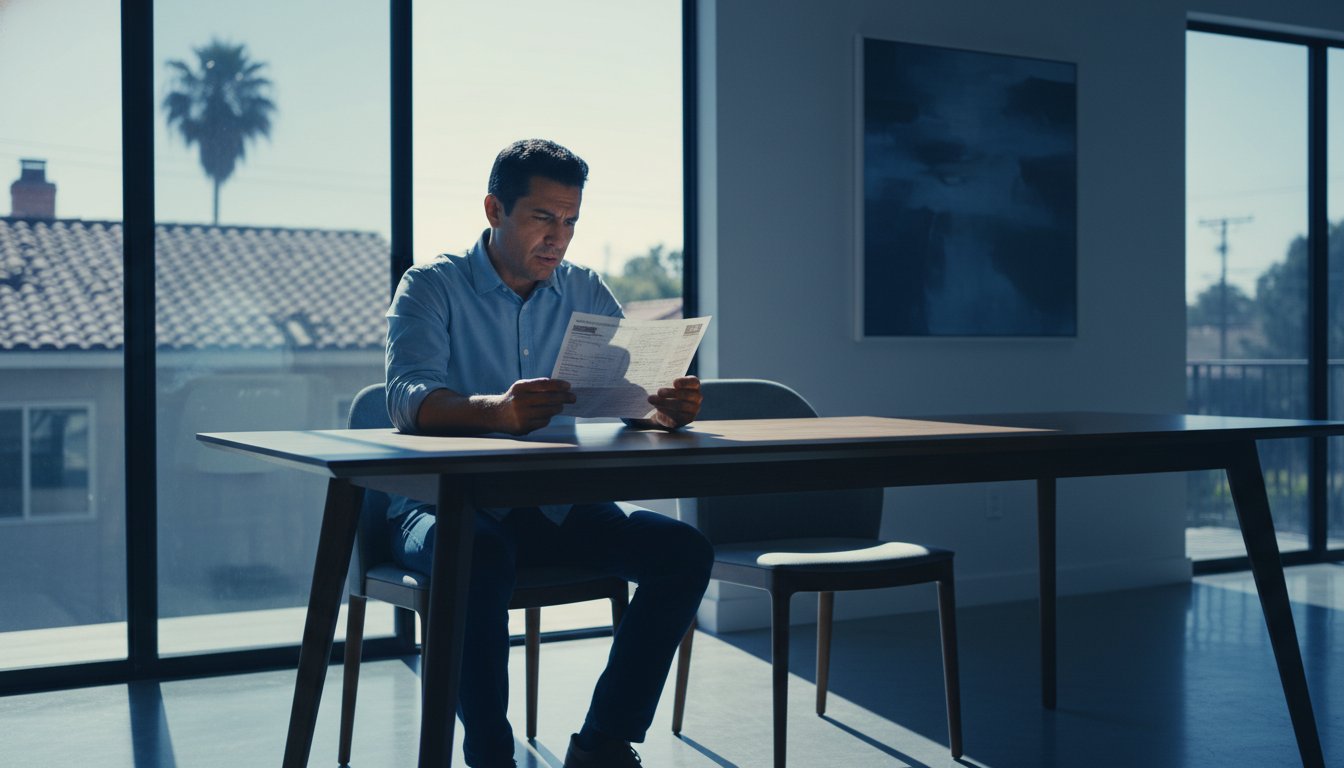
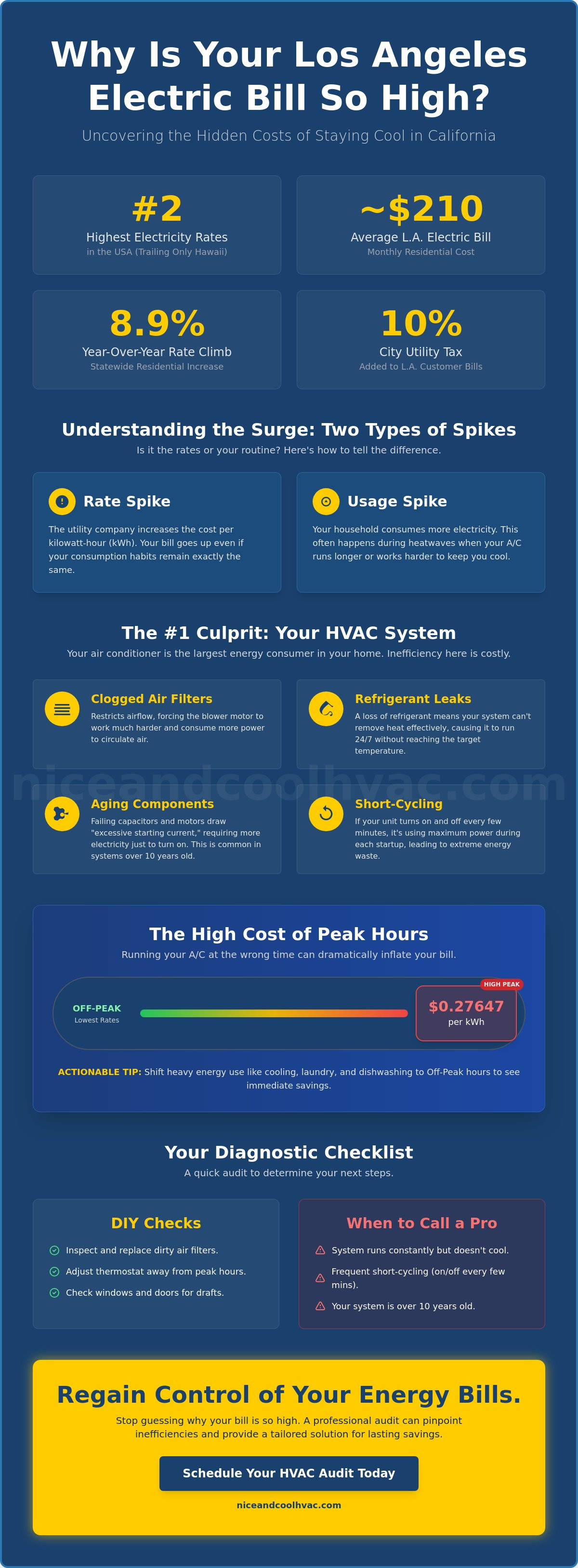
Did you know that as of June 2026, California homeowners are paying the second-highest electricity rates in the entire country? If you are staring at your latest statement and asking why is my electric bill so high, you are definitely not alone. Between the 10% city utility tax and recent rate increases that have pushed the average Los Angeles bill to approximately $210, the cost of staying cool has become a major source of stress. Whether you are dealing with an aging unit or confusing Time-of-Use tiers, that sense of frustration is a signal that your home efficiency needs a closer look.
We believe you deserve a home that is both comfortable and affordable. This guide identifies the hidden culprits behind your skyrocketing costs and provides actionable steps to regain control. If you follow our diagnostic checklist, then you will be able to tell if you need a professional air conditioning repair or if your system simply needs better calibration. You will learn how to navigate the new Title 24 standards and which local rebates can help you lower your monthly expenses for good. We are here to help you find a tailored solution that brings peace of mind back to your household budget.
Key Takeaways
- Master the 2026 LADWP and SCE rate structures so you can shift your heaviest energy use away from high-cost peak hours.
- Pinpoint exactly why is my electric bill so high by diagnosing common HVAC inefficiencies like clogged filters or aging components.
- Uncover the "phantom loads" and insulation failures that allow cooled air to escape your home, forcing your system to work overtime.
- Follow a clear diagnostic checklist to determine whether your current system needs a professional repair or if a simple schedule adjustment will suffice.
- Explore how the latest SEER2 efficiency standards and regular maintenance can provide lasting relief from unpredictable monthly utility costs.
Understanding the Surge: Why Los Angeles Electric Bills Spike in 2026
California's residential electricity rates climbed 8.9% year-over-year as of June 2026. This increase positions our state as having the second-highest rates in the nation, trailing only Hawaii. If you are an LADWP customer, your residential charges increased by approximately 2.475 cents per kWh in early 2026 compared to the previous year. For those served by Southern California Edison (SCE), the average rate reached 34.4 cents per kWh on June 1, 2026. These numbers explain why is my electric bill so high even if you haven't changed your daily routine. It is often a combination of these rising base rates and the 10% Electricity Users Tax imposed by the City of Los Angeles.
Distinguishing between a usage-based spike and a rate-based spike is the first step toward clarity. A usage spike happens when your household consumes more power, perhaps during a July heatwave. A rate spike occurs when the utility company charges more for the same amount of energy. If you notice your bill jumping while your habits stay the same, then you are likely feeling the weight of these new 2026 adjustments. Understanding these external factors helps you realize that the problem isn't always your behavior; it is often the environment your home operates in.
Deciphering Your Local Utility Statement
Your statement holds the key to understanding energy conservation within your own four walls. Look for your "Baseline Allowance," which is the amount of energy provided at the lowest possible rate. Once you cross this threshold, you enter higher tiers where the cost per kWh increases exponentially. LADWP customers should pay close attention to Time-of-Use (TOU) charges. In early 2026, High Peak rates reached $0.27647 per kWh. If you run your air conditioner during these peak hours, your bill will reflect those premium prices immediately. Compare your current "cost per kWh" to last year's statement to see exactly how much the rates themselves have shifted.
The Southern California Climate Factor
Geography plays a massive role in your monthly expenses. Inland homes in the San Fernando Valley often face temperatures 10 to 15 degrees higher than coastal properties in Santa Monica. This creates a "Heat Dome" effect where attics retain scorching air long after the sun goes down. When Santa Ana winds arrive, they bring dry, hot air that forces your cooling system to run longer cycles to maintain comfort. Humidity shifts also impact how hard your system works to dehumidify your living space. Whether you live in a breezy coastal neighborhood or a sun-drenched inland valley, these local climate patterns dictate your system's workload and, ultimately, your final bill.
The HVAC Connection: How Cooling Systems Impact Your Monthly Costs
Your air conditioning system is the single largest consumer of electricity in your Los Angeles home. To understand its impact on your budget, you must look at its energy efficiency ratio. This is essentially the amount of cooling output your system provides compared to the electrical input it consumes. When your system is running at peak performance, that ratio stays balanced. However, if mechanical issues arise, you will quickly start wondering why is my electric bill so high. One of the most common culprits is a dirty air filter. A clogged filter acts like a "choke" on your system, restricting airflow and forcing the blower motor to work significantly harder to circulate air. This increased resistance leads to a measurable spike in power consumption.
Refrigerant leaks are another silent budget killer. When your system's refrigerant levels drop, it loses the ability to remove heat effectively from your indoor air. This often results in the unit running 24/7 without ever reaching your desired temperature. Additionally, aging electrical components like capacitors and motors can draw what we call "excessive starting current." As these parts begin to fail, they require more electricity just to kick the system into gear. If your system is over ten years old, these hidden electrical drains can add hundreds of dollars to your annual cooling costs without you even realizing it.
Signs Your AC is Working Too Hard
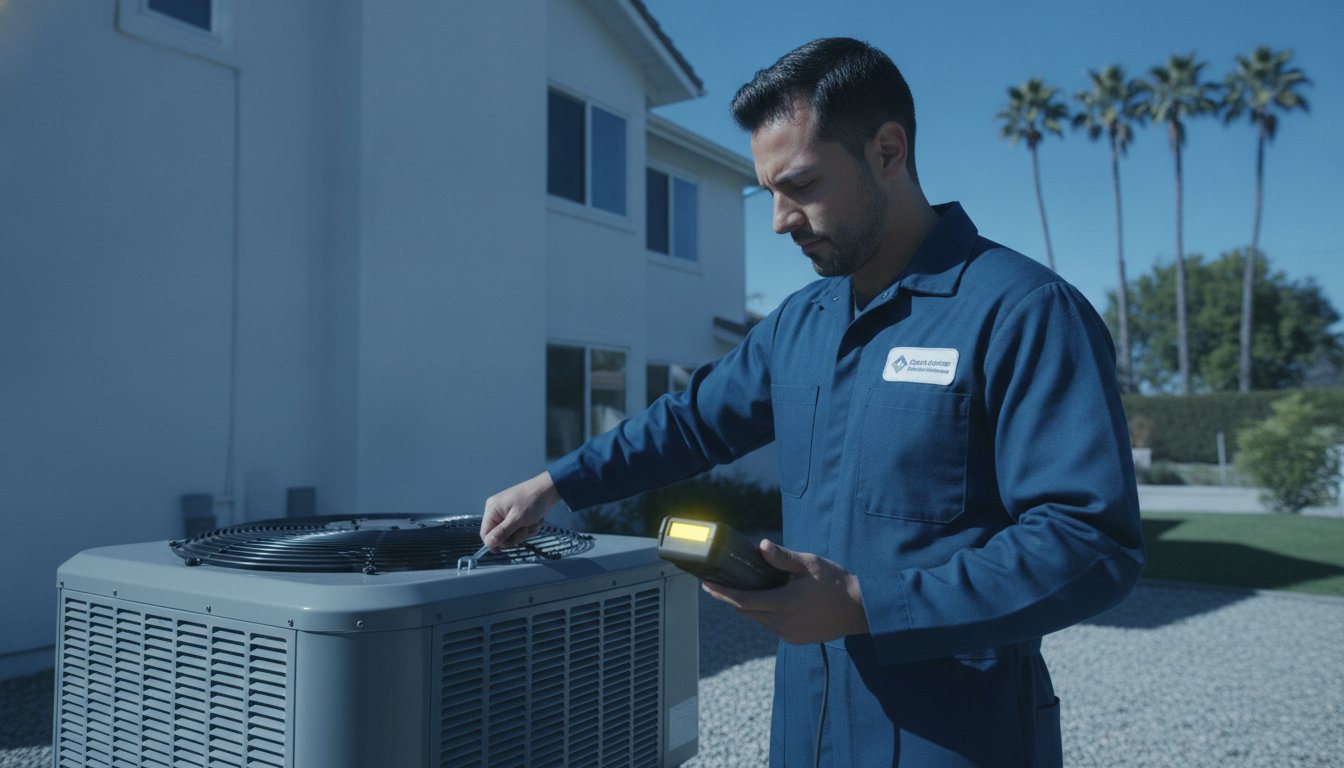
Short-cycling is a primary red flag for energy waste. If your unit turns on and off every few minutes, it is consuming maximum power during those frequent startup phases. Conversely, if your system runs continuously without a break, it might be that your ac not blowing cold air los angeles is the core issue. This constant operation keeps your electric meter spinning at high speeds. You should also listen for strange buzzing or grinding noises. These sounds often correlate to high electrical resistance, meaning your system is burning through power just to overcome mechanical friction. If you notice these symptoms, then a professional air conditioning repair may be necessary to restore efficiency.
The Role of Ductwork in Energy Waste
In many classic Los Angeles bungalows, up to 30% of cooled air is lost through leaky attic ducts before it ever reaches your rooms. This creates a "Pressure Imbalance" effect. As cooled air escapes into your attic, it creates a vacuum that pulls hot, unconditioned air from the outside into your living space through small gaps in windows and doors. Conducting a thorough home energy audit can help identify these invisible leaks. Sealing and cleaning your ductwork is a high-ROI move that directly reduces the workload on your HVAC unit. To keep these components in top shape year-round, consider joining our Nice and Cool Club Maintenance Plan for consistent, professional oversight.
Beyond the Thermostat: Hidden Energy Drains and Poor Insulation
While your cooling system is a major factor, the structure of your home and the devices within it often contribute to the mystery of why is my electric bill so high. Many Los Angeles residences, particularly those built before the 1970s, were not designed with modern energy efficiency in mind. If your home feels like it loses its "cool" the moment the AC stops running, then you likely have an insulation problem. Beyond the walls, your house is filled with "Phantom Loads." These are devices that draw power 24 hours a day, even when they are technically turned off. In a modern, connected LA home, these silent drains can account for a significant portion of your monthly statement.
Your appliances also play a hidden role in your energy consumption. An old refrigerator humming away in a hot garage or an outdated water heater can consume twice the energy of modern, Energy Star-rated versions. Furthermore, the orientation of your windows matters. In Southern California, west-facing windows without proper shading can increase your "Solar Heat Gain," essentially turning your living room into a greenhouse during the peak of the afternoon. Identifying these factors through a professional home energy audit is often the most effective way to see exactly where your money is disappearing each month.
The Insulation Gap in Older Homes
Whether you live in a 1920s Spanish-style bungalow or a mid-century ranch, your attic insulation is likely settled or insufficient. You can test for air leaks yourself by holding a lit incense stick near window frames and door seals on a breezy day; if the smoke wafts horizontally, you've found a leak. For Los Angeles homeowners, achieving the correct R-value in the attic is essential for blocking the intense radiation from the sun. Through June 30, 2026, LADWP offers a bonus rebate for attic insulation, providing up to $0.75 per square foot for high-rated materials. Adding a radiant barrier can also help reflect heat away from your home, keeping your air conditioning installation from working overtime.
Phantom Loads and Smart Home Tech
Modern convenience comes with a cost. Devices like DVRs, gaming consoles, and smart speakers are always in "standby" mode, waiting for a command. Individually, they use very little, but the cumulative effect of a dozen such devices can be substantial. If you want to stop this waste, then using smart power strips is a simple, effective solution. These strips can be programmed to cut power completely to non-essential electronics during the night or while you are at work. Taking these small steps helps ensure you aren't paying for electricity that nobody is actually using.
Strategic Solutions: How to Audit and Lower Your Energy Consumption
If you are tired of wondering why is my electric bill so high, it is time to take a methodical approach to your home efficiency. Moving from frustration to action requires a clear plan that addresses both your habits and your hardware. You don't need a massive budget to see a difference; often, the most significant savings come from small, strategic adjustments. By following a structured hierarchy of fixes, you can identify which issues are simple DIY tasks and which require professional expertise. This logical progression ensures you aren't wasting money on "solutions" that don't actually move the needle on your monthly statement.
- Step 1: Perform a Digital Audit. Log into your LADWP or SCE online portal to view your hourly usage. If you see massive spikes between 4:00 PM and 9:00 PM, then your billing issue is likely related to Time-of-Use rates.
- Step 2: Optimize Your Schedule. Align your heavy appliance use with off-peak hours. Running your dishwasher or laundry early in the morning can lead to immediate savings.
- Step 3: Tackle Low-Cost Fixes. Replace your air filters every 30 to 90 days and apply fresh weatherstripping to leaky doors. These small barriers prevent your cooled air from escaping.
- Step 4: Get a Professional Diagnostic. If your usage remains high despite your best efforts, then a professional air conditioning repair technician can check for mechanical drag or refrigerant issues.
- Step 5: Plan for Modernization. For long-term relief, evaluate high-efficiency heat pump services or ductless mini-split systems that comply with the 2026 Title 24 energy standards.
Thermostat Mastery for LA Residents
Mastering your thermostat is about more than just picking a number. In Los Angeles, "pre-cooling" is your best financial strategy. If you lower your home's temperature to 72 degrees before the 4:00 PM peak rate kicks in, your home will stay comfortable longer without drawing expensive peak-hour power. Many homeowners believe it is cheaper to turn the AC off when they leave for work. However, it's actually more efficient to set the temperature back by 7 to 10 degrees. This prevents your walls and furniture from absorbing too much heat, which would otherwise force your system into a high-power "recovery" mode later in the evening. Smart thermostats can automate this process, often trimming 10% to 15% off your annual cooling costs by learning your specific routine.
Low-Cost Energy Wins
Simple household changes can reduce the "internal heat gain" that forces your AC to run. Switching to LED lighting is a prime example; traditional bulbs act like tiny heaters, whereas LEDs stay cool. During those bright Los Angeles afternoons, closing the blinds on west-facing windows is essential for blocking solar radiation. You should also check your ceiling fans. If they are rotating counter-clockwise, they create a "wind chill" effect that makes a room feel 4 degrees cooler without actually lowering the thermostat. If your DIY efforts don't lower the numbers, it might be time for a professional air conditioning repair to find the root cause.
Long-Term Efficiency: Professional HVAC Care for Sustainable Savings
If you've addressed the air leaks and thermostat settings but still find yourself asking why is my electric bill so high, then it is time to look at the long-term health of your equipment. HVAC systems naturally lose efficiency as they age. Dust buildup on coils and drifting sensor calibrations force your system to run longer cycles to achieve the same cooling effect. Our Nice and Cool Club Maintenance Plan is designed to stop this gradual decline. By providing consistent, professional oversight, we ensure your system operates as close to its original factory specifications as possible. This proactive approach prevents the energy-wasting breakdowns that often lead to a sudden spike in your utility statement.
The technology landscape changed significantly on January 1, 2026, when the new Title 24 Building Energy Efficiency Standards took effect. These regulations emphasize the shift toward SEER2 ratings and electrification. For Los Angeles homeowners, heat pump installation has become the gold standard for efficiency. Because our local climate is temperate, a heat pump can move heat far more efficiently than a traditional AC can create cold air. However, efficiency isn't just about the technology; it's also about "right-sizing." An oversized unit will "short-cycle," turning on and off so frequently that it never reaches its peak efficiency. This constant restarting draws maximum current and is a primary reason for high bills in newer homes.
The ROI of Regular Maintenance
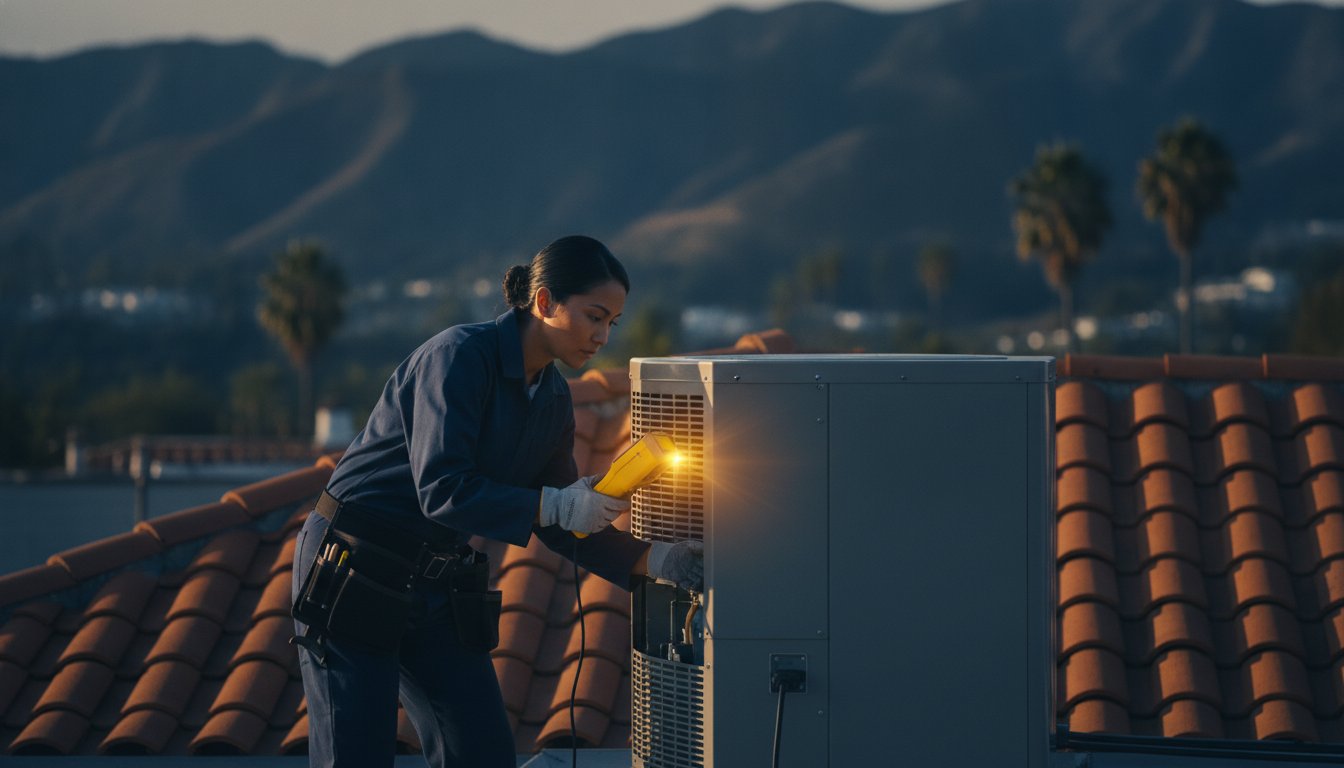
Professional care pays for itself through reduced energy consumption. When we perform a deep coil cleaning, we restore the heat transfer efficiency that allows your system to breathe. We also calibrate your sensors to ensure the unit doesn't run a minute longer than necessary. These pre-season checks are vital for preventing expensive emergency heating repair costs during the winter months. If your system is clean and calibrated, then it will use the minimum amount of power required to keep your family comfortable.
Modern Upgrades and Incentives
Investing in a high-efficiency ac installation los angeles ca is more accessible in 2026 thanks to local support. The LADWP Consumer Rebate Program currently offers up to $2,500 per ton for qualifying heat pump HVAC systems. Modern units featuring variable-speed compressors are particularly effective because they can adjust their output to match your home's exact needs. Instead of running at 100% power or 0%, they can sip electricity at a 20% or 30% rate during milder afternoons. While utility rates in Los Angeles continue to rise, investing in high-efficiency hardware is the most reliable way to stabilize your monthly expenses and ensure long-term peace of mind.
Take Control of Your Home Comfort
Managing the rising costs of living in Los Angeles requires a proactive approach to home maintenance. By understanding how utility rate structures and HVAC efficiency intersect, you can finally stop asking why is my electric bill so high and start seeing real results. From pre-cooling your home to sealing leaky ducts, the small changes we discussed today provide a solid foundation for sustainable savings. If you follow these steps, then you are well on your way to a more predictable and affordable utility statement.
Since 2005, our expert technicians have helped local homeowners master their energy usage through specialized knowledge of SEER2 standards and heat pump systems. Whether you need a precision repair or want the long-term peace of mind offered by our Nice and Cool Club Maintenance Plan, we are here to support you. Stop overpaying for energy; schedule your Nice and Cool HVAC diagnostic today! Let's work together to make your home as efficient and comfortable as possible.
Frequently Asked Questions
Why is my electric bill so high all of a sudden?
Sudden spikes usually stem from the 8.9% year-over-year rate increase seen in June 2026 or crossing into a higher usage tier. If your habits haven't changed, then your statement likely reflects the new Southern California Edison average of 34.4 cents per kWh. Mechanical issues like a failing capacitor or a refrigerant leak can also cause an immediate, unexpected surge in power draw.
Can a dirty AC filter really increase my electric bill?
Yes, a dirty filter acts as a physical barrier that restricts airflow. This forces your blower motor to work significantly harder and run longer cycles to reach your thermostat setting. Regularly changing your filter every 30 to 90 days is the simplest way to address why is my electric bill so high without needing a professional service call.
Is it cheaper to leave the AC on all day or turn it off?
It is generally more cost-effective to "set back" your thermostat by 7 to 10 degrees rather than turning it off completely. If you turn the system off, your home's walls and furniture absorb heat throughout the day. This requires a massive amount of energy for the system to "recover" and cool the space back down when you return in the evening.
What appliances use the most electricity in a home?
The HVAC system is the primary consumer, often accounting for half of a typical Los Angeles home's energy use. Electric water heaters and older refrigerators are the next biggest culprits. In a modern home, the cumulative effect of pool pumps and EV chargers can also push your usage into the most expensive utility tiers very quickly.
How do I know if my AC unit is failing and causing high bills?
Look for signs like "short-cycling," where the unit turns on and off every few minutes, or a system that runs continuously without actually cooling the home. If you hear grinding, buzzing, or clicking noises, then your system is likely experiencing high electrical resistance. These are clear indicators that your unit is failing and dragging down your household budget.
Does LADWP or SCE offer programs to help with high bills?
Both utilities provide significant incentives for efficiency upgrades. LADWP offers rebates up to $2,500 per ton for qualifying heat pumps and bonus rebates for attic insulation through June 30, 2026. SCE customers benefit from the California Climate Credit, which helps offset the high cost per kWh, especially during the demanding summer months.
What is a 'Phantom Load' and how do I stop it?
A phantom load is the electricity consumed by electronics like DVRs, computers, and game consoles while they are in standby mode. You can stop this waste by using smart power strips that cut power to non-essential devices when they aren't in use. This simple step helps reduce the baseline usage that contributes to why is my electric bill so high.
Are heat pumps more efficient than central AC for Los Angeles homes?
Heat pumps are exceptionally efficient for our local climate because they move heat rather than generating it. Under the 2026 Title 24 standards, these systems are highly encouraged for Los Angeles homes due to their low energy consumption. They provide both heating and cooling in one unit and typically offer much lower operating costs than traditional central air systems.
Frequently Asked Questions
Your statement holds the key to understanding energy conservation within your own four walls. Look for your "Baseline Allowance," which is the amount of energy provided at the lowest possible rate. Once you cross this threshold, you enter higher tiers where the cost per kWh increases exponentially. LADWP customers should pay close attention to Time-of-Use (TOU) charges. In early 2026, High Peak rates reached $0.27647 per kWh. If you run your air conditioner during these peak hours, your bill will reflect those premium prices immediately. Compare your current "cost per kWh" to last year's statement to see exactly how much the rates themselves have shifted.