Why Your Two-Story Los Angeles Home Has Uneven Cooling (and How to Fix It)
June 20, 2026 18 min read
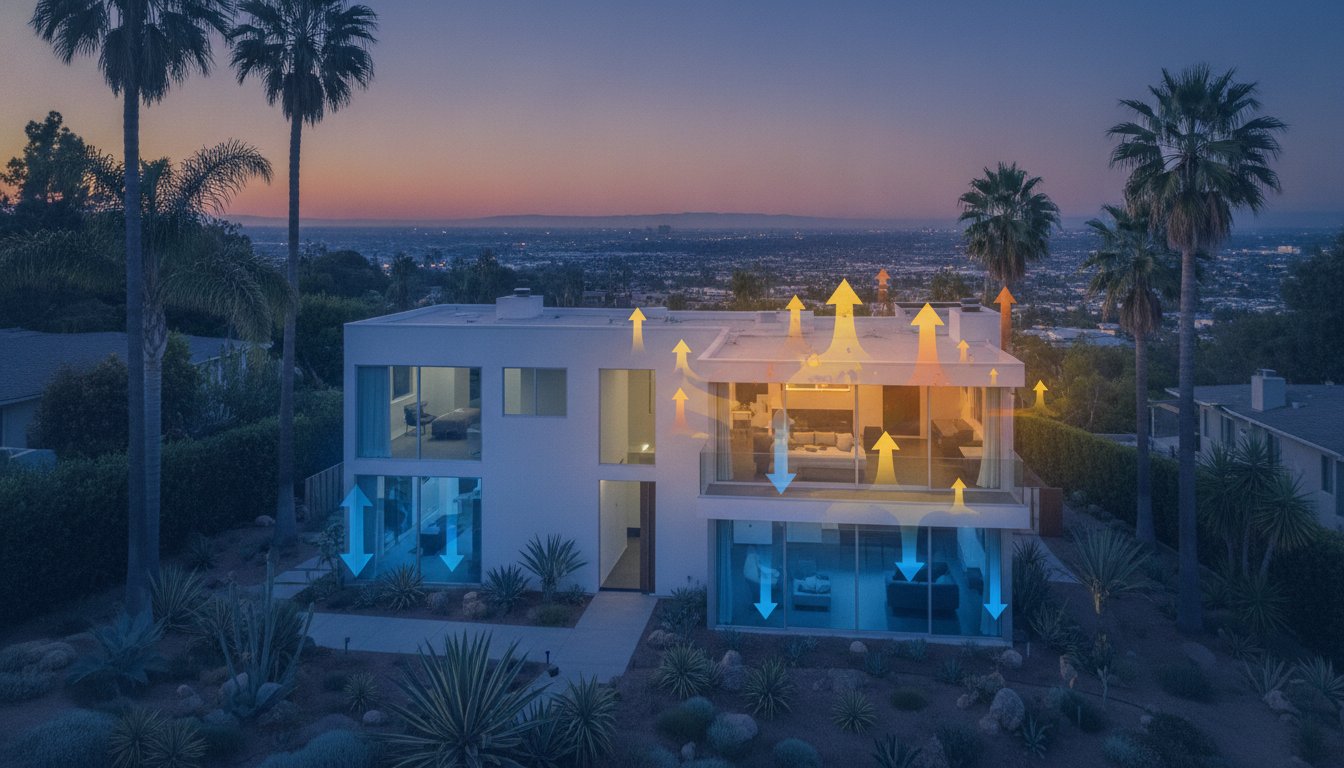
Imagine it's a typical July evening in Silver Lake. You've set the thermostat to a crisp 72 degrees, but while your living room feels like a walk-in cooler, your upstairs master bedroom is still sweltering at 82. If you're tired of thermostat wars or dreading the next electricity bill, you're likely struggling with the uneven cooling in two-story house Los Angeles neighborhoods frequently experience during summer heatwaves. It often feels like you're paying for comfort you only get to enjoy on the ground floor.
We understand how exhausting it is to lose sleep because your second floor won't cool down. Whether you're worried about rising energy costs or simply want every room in your home to be livable, uneven cooling in two-story house Los Angeles is a solvable engineering puzzle rather than an inevitable part of living in a multi-level home. In this guide, we'll break down the specific solutions used to balance indoor climates and explain why uneven cooling in two-story house Los Angeles happens in everything from vintage bungalows to modern builds. You'll discover why heat stays trapped upstairs and learn how to finally bring whole-home comfort back to your household.
What You Will Learn
- Understand how the Southern California sun and the natural tendency of heat to rise create a "sauna" effect on your second floor.
- Learn how the "Stack Effect" and ductwork pressure issues contribute to uneven cooling in two-story house Los Angeles.
- Identify simple maintenance steps, like checking air filters and adjusting dampers, to improve airflow throughout your home.
- Explore professional upgrades like HVAC zoning or ductless mini-split systems for precise, room by room temperature control.
- Discover why a professional diagnostic is the most reliable way to end thermostat wars and ensure your system is tailored to your specific needs.
Why Your Two-Story Los Angeles Home Feels Like Two Different Climates
Living in a multi-level home in Southern California often feels like managing two separate ecosystems. You might find yourself shivering in the kitchen while your kids are sweating in their bedrooms upstairs. This "Upstairs Sauna" versus "Downstairs Icebox" dynamic is more than just an annoyance; it’s a sign that your home’s cooling strategy is out of sync with the local environment. Many homeowners experience uneven cooling in two-story house Los Angeles settings because their second-story ceilings are essentially functioning as radiant heaters. During a 100-degree Valley summer, the sun beats down on your roof for twelve hours. This creates a "heat soak" effect that your air conditioner has to fight from the inside out, often unsuccessfully.
The architecture of your neighborhood plays a significant role here too. If you live in a classic 1920s Spanish Colonial in Hancock Park, your home likely has thick walls but may lack the modern attic insulation found in newer builds in Playa Vista. These older structures weren't originally designed for central air. This often leads to a "system mismatch" where a single HVAC unit struggles to handle two completely different thermal loads. Modern homes aren't immune either; even with better insulation, large windows and open floor plans can create massive temperature swings that a standard setup can't manage.
The Impact of the Los Angeles Climate
Our local weather patterns create unique challenges for indoor comfort. When the Santa Ana winds blow, the air becomes incredibly dry. This can make the heat feel more intense as moisture is stripped from your home. High-noon sun exposure is another major culprit. Without significant shading, second-story windows act like greenhouses, trapping heat where you sleep. If you have a "set it and forget it" thermostat habit, your system won't keep up during a peak heatwave. It's only measuring the air on the ground floor while the upstairs bakes in the afternoon sun.
The Problem with Single-Zone Systems
Most older LA residences rely on a single-zone HVAC system. This means one unit, one blower fan, and one thermostat are responsible for the entire house. The core issue is simple. One thermostat cannot accurately read two separate floors. Warm air naturally rises while cool air settles. This is explained by The Science of Airflow. Your blower fan must push air vertically against gravity to reach upstairs vents. If the fan lacks power or the ductwork is restrictive, the cool air "falls" back down the stairs. It never stays in the bedrooms long enough to make a difference. This physical limitation is a primary driver of uneven cooling in two-story house Los Angeles properties.
The Science of Airflow: Why Heat Wins the Second Floor Battle
Understanding how air moves is the first step in solving comfort issues. Thermal stratification is the layering of air by temperature within a home, where the least dense, warmest air remains at the ceiling while the heaviest, coolest air settles on the floor. This natural phenomenon is often exacerbated by the "Stack Effect." In a two-story home, your house acts like a chimney. Cool air is denser and heavier, so it naturally wants to sink to the ground floor. Meanwhile, the warmer air is pushed upward. If your system isn't designed to overcome this, you'll always struggle with uneven cooling in two-story house Los Angeles.
Static pressure also plays a huge role in this battle. Think of static pressure as the resistance your AC fan has to push against to move air through the ducts. If the resistance is too high, the air simply won't reach the furthest vents upstairs. Some homeowners try to fix this by closing downstairs vents to "force" air up, but we don't recommend this. Closing too many vents can actually damage your blower motor by creating too much back-pressure. It's much better to have a professional perform an air conditioning repair diagnostic to see if your fan is actually set to the correct speed for your home's layout.
The Gravity Problem in Ductwork
Air is lazy; it always takes the path of least resistance. In most LA homes, that path leads directly to the downstairs vents because they are closer to the unit. By the time air travels through long duct runs to reach a second-story bedroom, it has lost much of its velocity. It also absorbs heat from the attic space along the way. By the time it finally exits the vent, it might not be cold enough or moving fast enough to circulate properly. Understanding Energy Efficiency Measures helps clarify why system sizing and duct integrity are so critical to maintaining this "lift" against gravity.
Return Air Deficiencies
Cooling a room isn't just about blowing cold air in; it's about removing the hot air that is already there. This is where "Return Air" comes in. Most two-story homes in Southern California were built with plenty of supply vents but very few return vents upstairs. If you have the "Closed Door" problem, where bedroom doors are shut for privacy, the air becomes trapped. With nowhere for the hot air to go, the cool air from the vent cannot enter the room. You can tell your returns are undersized or blocked if you feel a massive "whoosh" of air or hear the door whistle when you try to close it while the AC is running. This lack of circulation is a primary driver of uneven cooling in two-story house Los Angeles.
Troubleshooting Inconsistent Temperatures: DIY vs. Professional Care
Solving comfort issues usually starts with a walk through your home to identify the low-hanging fruit. One of the most overlooked factors in uneven cooling in two-story house Los Angeles is the air filter. If your filter is coated in dust, it creates a bottleneck. This restricts the "lift" your system needs to push air up that second flight of stairs. Think of it like trying to breathe through a thick cloth while running; your system works harder but delivers less. Replacing a dirty filter can sometimes provide the immediate pressure boost needed to get air into those far-off bedrooms.
Beyond the filter, your attic is often the primary battlefield. Research shows that leaky ducts can lose 20% to 30% of their airflow. In a hot LA attic, that's air you've already paid to cool escaping into a space where nobody lives. This phenomenon is closely tied to The Science of Airflow, as pressure imbalances can pull heat in through every crack. If your attic insulation has settled or is below modern R-value standards, your second-story ceiling becomes a radiant heater that your AC simply cannot outrun. Ensuring your insulation is thick and your ducts are sealed is a professional task that pays for itself in lower bills.
If your system includes manual dampers, you can attempt to "balance" the air by slightly closing the downstairs ducts during the summer. This forces more air toward the second floor. Be careful, though. If you restrict too much airflow, you risk freezing your evaporator coils. This leads to a total system shutdown and a potentially expensive repair. It's a delicate balance that often requires a professional's touch to get right without causing mechanical stress.
Simple Fixes for Every Homeowner
Small adjustments can make a surprising difference in your daily comfort. Whether you're in a modern condo or a vintage bungalow, try these steps:
- Direct your register vanes toward the ceiling rather than the floor. Since cool air is heavier, this helps it mix with the warm air trapped at the top of the room.
- Keep your blinds or heavy curtains closed during peak afternoon sun to block solar gain.
- Switch your thermostat fan setting from "Auto" to "On" during heatwaves. This keeps air circulating constantly, preventing the air from separating into distinct hot and cold layers.
Maintenance Tasks That Make a Difference
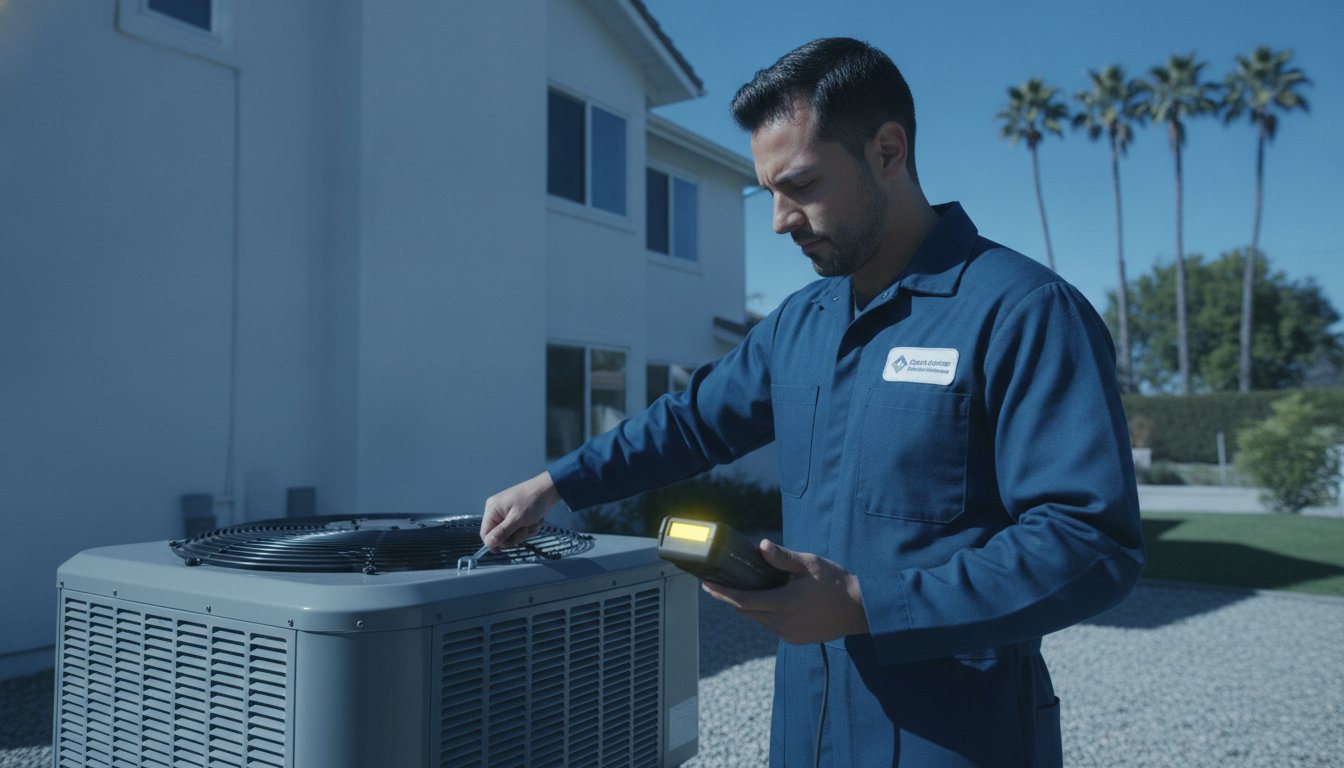
Regular upkeep is essential for maintaining system balance. If your outdoor condenser unit is clogged with dirt or dry leaves, it can't release heat efficiently. This forces the entire system to run longer, which usually results in a freezing downstairs and a still-warm upstairs. You should also check for "hot spots" on your second floor, like a high-end gaming PC or a large TV, which can add significant heat to a small bedroom. If these steps don't help, you may be dealing with AC not blowing cold air los angeles issues that require a deeper look into your refrigerant levels or mechanical components.

Professional Solutions for Balanced Comfort in Southern California
When simple maintenance and DIY adjustments don't solve the issue, it’s time to look at the engineering of your system. Many homeowners struggling with uneven cooling in two-story house Los Angeles discover their equipment was never properly sized for the home's specific layout. A professional load calculation is the first step we take to address this. It ensures your unit has the capacity to handle both floors during a peak heatwave. If your system is reaching the end of its lifespan, you might consider an Air Conditioning Installation that features a variable-speed blower. These blowers are superior for multi-story homes because they don't just cycle on and off at full blast. They run at lower, steadier speeds to maintain a constant "lift" of cool air to the second floor without the noisy turbulence of older models.
HVAC Zoning Systems Explained
Think of an HVAC zoning system as a series of traffic cops for your air. Motorized dampers are installed inside your ductwork, opening and closing based on the needs of specific areas. If your downstairs is already cool, the dampers will shift more airflow to the upstairs bedrooms. This setup requires multiple thermostats, allowing you to set a different temperature for your sleeping quarters than for your kitchen. It is arguably the most effective way to lower energy bills in large LA homes because you aren't wasting power cooling empty rooms just to make one bedroom comfortable. By directing the air only where it's needed, you stop the thermostat wars and ensure everyone stays comfortable.
The Ductless Mini-Split Alternative
Sometimes, modifying existing ductwork in a vintage Los Angeles home is either too invasive or too expensive. In these cases, ductless mini-split systems are the ideal alternative. These units are installed directly in the room that needs the most help, like an upstairs master suite. They provide localized control, meaning you can keep your bedroom at 68 degrees while the rest of the house stays at a more energy-efficient 78. With 2026 Title 24 standards pushing for higher efficiency, these systems are becoming a favorite for Southern California homeowners looking for precision comfort without the need for a total ductwork overhaul.
If you are considering a full replacement, keep in mind that California's 2026 Title 24 updates emphasize heat pumps as the standard for new installations. While equipment costs have risen slightly due to the transition to R-454B refrigerant, the LADWP currently offers substantial rebates for heat pump HVAC systems, providing up to $2,500 per ton for qualifying equipment. This makes upgrading to a zoned heat pump system a smart financial move as well as a comfort one. Our team is here to help you navigate these options and find the perfect fit for your home's unique needs.
Restoring Whole-Home Comfort with Nice and Cool Inc.
At Nice and Cool Inc., we treat every home like it belongs to a neighbor. Solving uneven cooling in two-story house Los Angeles properties requires more than just a quick fix or a generic recommendation. It's about understanding the specific way air moves through your unique floor plan. While DIY hacks might provide temporary relief, they often mask deeper issues like duct leaks or improper equipment sizing. We believe in getting it right the first time, providing you with the peace of mind that comes from a system tailored specifically to your family's needs. Whether you're in a historic home in Pasadena or a modern build in Santa Monica, our approach is always grounded in reliability and personal accountability.
If you're tired of guessing why your upstairs won't cool down, a professional diagnostic is the only way to find a permanent solution. Guessing with "hacks" can lead to higher electricity bills or even mechanical failure if you accidentally restrict too much airflow. Our team acts as a helpful guide, walking you through the technical details of your HVAC system without the high-pressure sales tactics. We take pride in our craftsmanship and our long-standing community roots, ensuring that every recommendation we make is in your best interest for long-term comfort.
Our Diagnostic Process
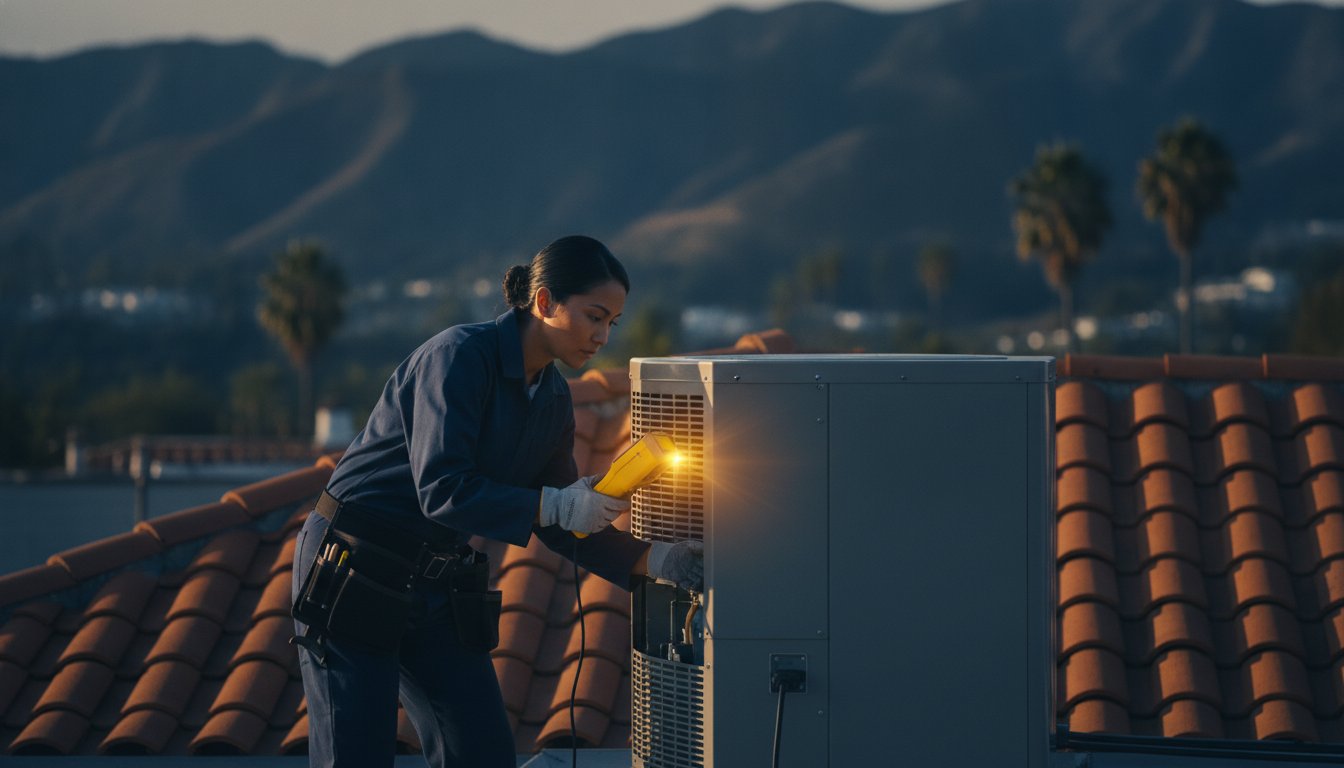
Our diagnostic process is methodical and data-driven. If you're experiencing significant temperature swings, we don't rely on guesswork. We use precision tools like airflow meters and thermal imaging cameras to see exactly where your cool air is escaping. Whether it's a hidden leak in the attic or a return vent that's simply too small for the room's square footage, we find the root cause. We evaluate the integrity of your ductwork and check your insulation levels to ensure your second story isn't fighting a losing battle against the Southern California sun. Once we have the facts, we provide a clear, no-pressure roadmap for your home comfort.
Ready for a Balanced Home?
You shouldn't have to choose between a freezing downstairs and a sweltering bedroom. If you're ready to end the struggle with uneven cooling in two-story house Los Angeles, our team is here to help. We bring years of local expertise to every residential system in Los Angeles County. Whether you need a precision repair or are looking into a full ac installation los angeles ca, we are committed to your comfort. Schedule a consultation today and let's get your home back into balance. We also offer our Nice and Cool Club Maintenance Plan to keep your system running at peak efficiency through every heatwave, ensuring your home stays comfortable for years to come.
Take Back Control of Your Home's Climate
You don't have to accept a sweltering second floor as a trade-off for living in a beautiful multi-level home. We've explored how physical laws like the "Stack Effect" and the intense Southern California sun combine to create uneven cooling in two-story house Los Angeles. Whether the root cause is leaky ductwork, poor insulation, or an undersized unit, these issues are solvable engineering puzzles that our team handles every day. A balanced home isn't just about comfort; it's about making your entire living space usable again.
As a family-owned team of local LA specialists, we pride ourselves on tailoring solutions to your specific architecture. We have extensive expertise in both traditional central air systems and modern ductless mini-splits to ensure every room stays exactly how you like it. Beyond the initial fix, our Nice and Cool Club Maintenance Plan provides the long-term reliability you need to face every future heatwave with total peace of mind. End the upstairs heat today; schedule your expert LA airflow diagnostic with Nice and Cool Inc. and start enjoying every square foot of your home.
Frequently Asked Questions
Is it normal for the upstairs to be 10 degrees hotter than the downstairs?
While a slight temperature difference is common because heat rises, a 10-degree gap indicates your system is struggling. A well-balanced home should typically have no more than a 2 to 3-degree difference between floors. If the gap is wider, it usually points to issues like poor insulation, ductwork leaks, or an HVAC system that isn't properly sized for the home's layout.
Should I close my downstairs vents to force air upstairs?
You should avoid closing your downstairs vents completely. While it seems like a quick way to redirect air, it significantly increases static pressure within your ductwork. This extra resistance can cause your blower motor to burn out prematurely or lead to a frozen evaporator coil. If you must adjust them, only close the downstairs vents halfway to maintain safe airflow levels.
How much does it cost to zone an existing HVAC system in LA?
The cost of zoning depends on several factors, including the accessibility of your ductwork and the number of zones you wish to create. Since Los Angeles features a wide variety of home ages and styles, there isn't a one-size-fits-all price. We recommend a professional evaluation to determine if your current ductwork can support motorized dampers or if a different solution would be more cost-effective.
Can a dirty air filter cause uneven cooling in a two-story house?
A clogged air filter is a major contributor to uneven cooling in two-story house Los Angeles. When the filter is dirty, it restricts the volume of air the blower fan can move. This lack of pressure means the cool air often loses its momentum before it can reach the second-floor vents, leaving the upstairs rooms much warmer than the ground floor.
Will a more powerful AC unit fix my upstairs heat problem?
Buying a larger AC unit is rarely the right fix for upstairs heat. If the unit is too powerful for your existing ducts, it will "short-cycle," which means it turns off before it has a chance to properly dehumidify or circulate air. This often results in a downstairs that feels damp and cold while the upstairs remains uncomfortably warm and stagnant.
What is the best thermostat setting for a two-story home in the summer?
If you have two thermostats, try setting the upstairs unit two degrees lower than the downstairs one. This helps counteract the natural tendency of heat to rise. For single-thermostat homes, the Department of Energy recommends 78 degrees when you're home. Running the fan in the "On" position rather than "Auto" can also help keep air moving between floors more consistently.
Do attic fans actually help with uneven cooling?
Attic fans can be very helpful because they exhaust the superheated air trapped directly above your second-story ceiling. By lowering the attic temperature, you reduce the radiant heat that normally soaks into your bedrooms. However, they are most effective when your attic is also properly sealed so they don't accidentally pull conditioned air out of your living space.
How do I know if my ductwork is leaking air into my attic?
Common signs of leaky ducts include weak airflow from upstairs vents and unusually high dust levels in your bedrooms. If you hear whistling sounds when the AC is running, it often indicates a tear or a loose connection. Since uneven cooling in two-story house Los Angeles is often caused by lost air, a professional duct inspection is the best way to ensure your cool air actually reaches its destination.
Frequently Asked Questions
Our local weather patterns create unique challenges for indoor comfort. When the Santa Ana winds blow, the air becomes incredibly dry. This can make the heat feel more intense as moisture is stripped from your home. High-noon sun exposure is another major culprit. Without significant shading, second-story windows act like greenhouses, trapping heat where you sleep. If you have a "set it and forget it" thermostat habit, your system won't keep up during a peak heatwave. It's only measuring the air on the ground floor while the upstairs bakes in the afternoon sun.