AC Leaking Water? A Los Angeles Homeowner’s Guide to Troubleshooting in 2026
July 10, 2026 17 min read
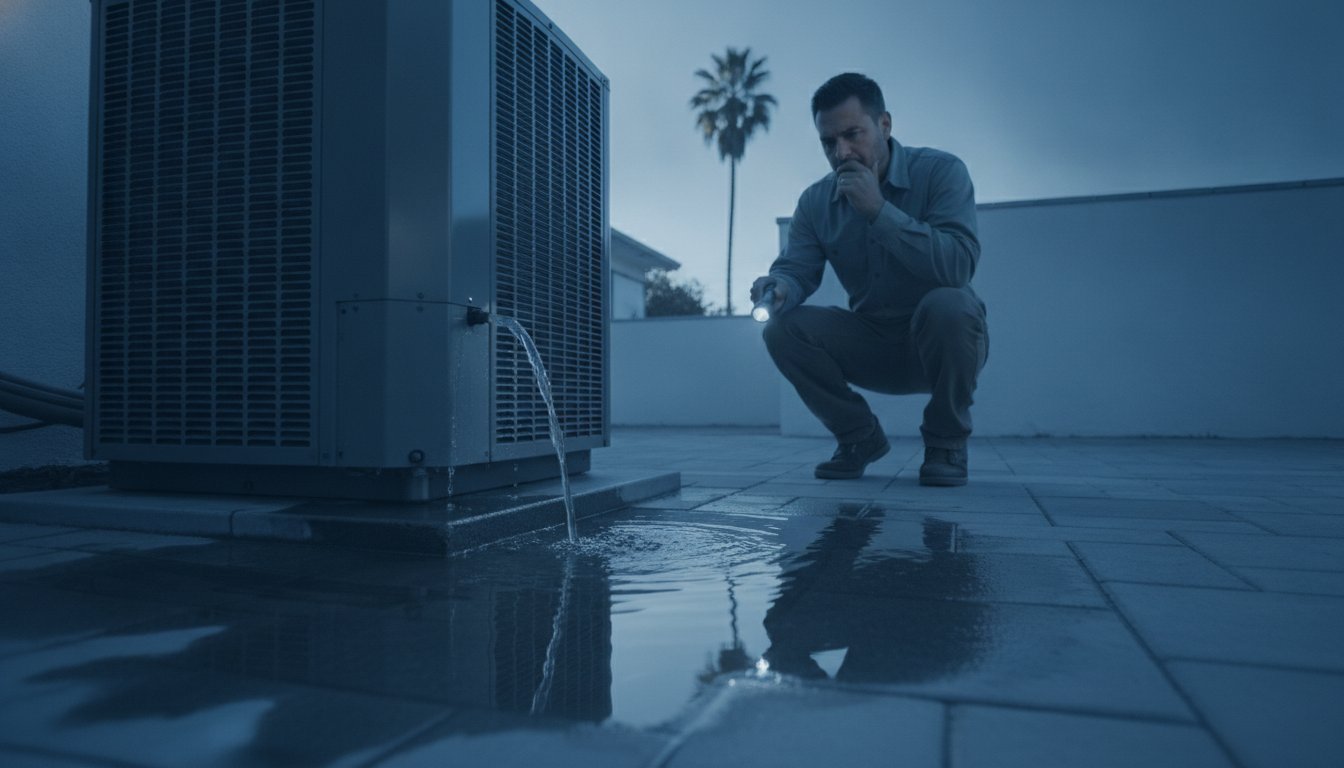
Imagine it's a sweltering July afternoon in the Valley, and you suddenly notice a dark, damp spot spreading across your hallway ceiling. If you've discovered your ac leaking water los angeles weather can make a minor drip feel like a major disaster, you aren't alone. Whether you're dealing with a clogged condensate line or a frozen evaporator coil, the persistent dust and heat of a Southern California summer can push even the most reliable systems to their breaking point.
It's completely normal to feel a sense of dread when you see water pooling where it doesn't belong. You've worked hard to make your home a sanctuary, and the last thing you want is a system failure or mold growth during a record-breaking heatwave. This guide will help you identify exactly why your unit is leaking and provide clear, immediate steps to protect your property. We'll help you determine if you're looking at a simple DIY fix or if it's time to consult a local expert to ensure your system complies with the updated 2026 Title 24 efficiency standards.
Key Takeaways
- Shut off your HVAC system immediately at the thermostat to stop the production of condensation and protect your home from ceiling damage.
- Identify the unique local causes for an ac leaking water los angeles residents often encounter, including "sludge" buildup from Santa Ana winds and dust.
- Learn how to perform safe DIY checks on your air filters and drain lines before deciding if you need a professional repair.
- Discover how the Nice and Cool Club maintenance plan provides the proactive care needed to prevent micro-leaks from becoming major disasters.
- Stay informed on how the 2026 Title 24 energy standards and LADWP rebates might impact your repair or system upgrade decisions.
Emergency Response: What to Do When You Spot an AC Leak
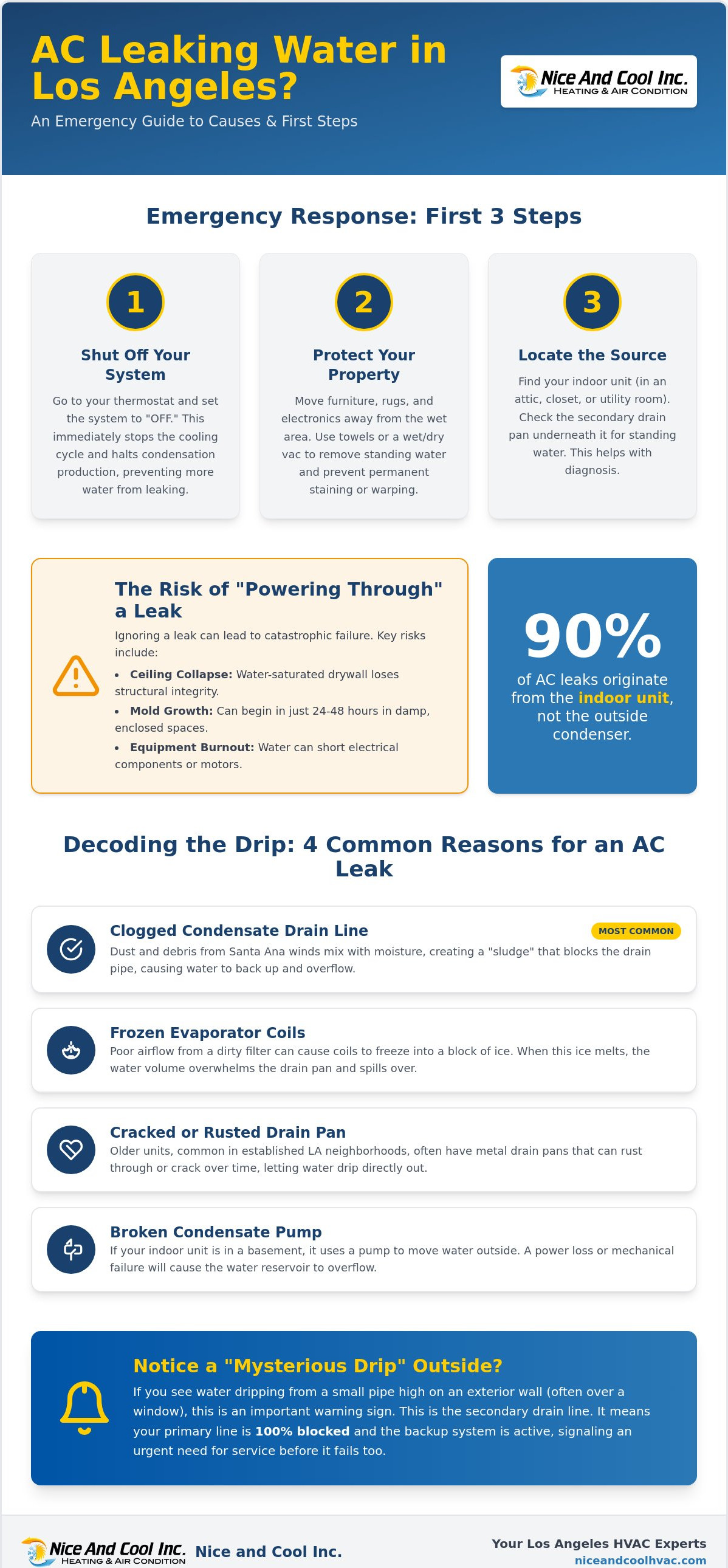
Discovering your ac leaking water los angeles heat can be overwhelming, but your response in the first few minutes determines whether you're facing a quick fix or a major renovation. The moment you see moisture, go to your thermostat and switch the system to "Off." This stops the cooling cycle and prevents the unit from generating more condensation. If you leave it running, you're simply adding fuel to the fire.
Next, protect your belongings. Move any furniture, electronics, or area rugs away from the drip zone. Water travels quickly through drywall and flooring, and even a small amount can cause permanent warping or staining. Use a wet/dry vacuum or heavy-duty towels to soak up standing water immediately. Once the area is dry, find your indoor unit. It's typically tucked away in a closet, attic, or utility room. Identifying the source early helps prevent the liquid from migrating into your home's structural framing.
The Risk of "Powering Through"
It's tempting to keep the air running when it's 100 degrees in the Valley, but "powering through" a leak is a recipe for disaster. Drywall loses its structural integrity quickly when saturated. We've seen small drips turn into sudden ceiling collapses in LA homes because the weight of the water became too much for the plaster to hold. Humidity in Southern California can also trigger rapid mold growth within 24 to 48 hours of a leak. If moisture seeps into your wall cavities, it creates a breeding ground that is difficult and expensive to remediate. Beyond the structural risks, running a leaking unit puts immense strain on your equipment. Water can short out electrical components or cause the fan motor to burn out.
Identifying the Leak Location
To solve the problem, you need to know where the water starts. While you might see water outside near your condenser, the vast majority of issues happen inside. In fact, roughly 90% of AC leaks originate within the indoor evaporator coil housing. Open the access panel on your indoor unit and check the secondary drain pan. If this pan is full of standing water or shows signs of rust, your primary drainage system has failed. Some systems use a condensate pump to move water out of the home. If this pump loses power or the motor fails, the water has nowhere to go but onto your floor. Identifying whether the water is overflowing from the pan or spraying from the coils helps our team diagnose the issue much faster when we arrive.
Decoding the Drip: 4 Common Reasons Your AC is Leaking
Understanding why your system is failing is the first step toward a permanent solution. While your air conditioner naturally creates water through dehumidification, that moisture should stay contained within a dedicated drainage system. When you encounter an ac leaking water los angeles weather usually plays a role, as high heat and local dust levels put extra stress on these components. Identifying which part of the system has failed helps you determine whether you can handle the fix yourself or if you need professional intervention.
- Clogged Condensate Drain Line: This is the most frequent cause of water backups in Southern California. Dust, pet dander, and microscopic debris mix with moisture to create a thick "sludge" that blocks the narrow PVC exit pipe.
- Frozen Evaporator Coils: If your system isn't breathing correctly, the coils can drop below freezing and turn into a block of ice. When that ice eventually melts, the sheer volume of water often overwhelms the drain pan and spills into your home.
- Cracked or Rusted Drain Pan: In many of the established, older neighborhoods across Los Angeles, aging HVAC units still use metal drain pans. Over a decade of use, these pans can rust through, allowing water to drip directly through the bottom of the unit.
- Broken Condensate Pump: If your air handler is located in a basement or a tight crawlspace, it likely uses a pump to move water up and out of the house. A mechanical failure in this pump is one of the common AC problems that leads to immediate flooding.
The "Mysterious Drip" Over Your Window
Have you noticed water dripping from a small pipe located high up on an exterior wall, perhaps directly over a window? This is your secondary drain line. Los Angeles building codes often require this "warning" line to be placed in a highly visible spot. If water is coming out of this pipe, it means your primary drain line is 100% blocked and the backup system is now active. This is a clear signal that your unit is at risk of failing completely. If you also notice your AC not blowing cold air in Los Angeles, the blockage might be part of a larger airflow issue that requires immediate attention.
Frozen Coils and Restricted Airflow
A block of ice inside your air handler is almost always a symptom of restricted airflow or a refrigerant leak. When a dirty air filter blocks the wind, the evaporator coil can't absorb enough heat to keep the moisture on its surface from freezing. Whether it's a clogged filter or a slow leak in an older R-410A system, simply "thawing out" the unit by turning it off is only a temporary fix. The ice will return as soon as you restart the system unless the underlying mechanical issue is resolved. If you're tired of dealing with these recurring cooling hiccups, reaching out to a reliable local repair expert can help you find a long-term solution that fits your home's specific needs.
The Los Angeles Factor: Environmental Causes of HVAC Leaks
Living in Southern California provides a beautiful backdrop, but our unique climate presents specific challenges for home cooling systems. When you find your ac leaking water los angeles environmental factors are often the hidden culprit. Our region deals with everything from fine desert dust to intense coastal salt air, all of which can interfere with how your system manages moisture. Understanding these local stressors helps you move beyond a quick fix and toward a solution tailored to your specific neighborhood.
- Santa Ana Winds and Dust: These seasonal winds carry fine particulate matter that bypasses standard filters. When this dust hits the wet surfaces inside your unit, it creates a thick, jelly-like "sludge" that is the primary cause of drain line blockages.
- Valley Heat Stress: On 100-degree days in places like Chatsworth or Northridge, your unit works at maximum capacity. This leads to a massive increase in condensation that can overwhelm a system with even a minor restriction.
- Coastal Corrosion: If you live in Santa Monica or Malibu, the salt-heavy air can accelerate corrosion on metal drain pans. This leads to pinhole leaks that often go unnoticed until they've caused significant damage to your flooring.
- Urban Pests: During our dry spells, small insects often crawl into condensate exit pipes seeking a water source. These pests can become lodged in the line, creating a stubborn physical obstruction.
Dust: The Silent Clog Maker
In the dusty Los Angeles basin, your air filter is your first line of defense against water damage. When fine silt mixes with the constant drip of condensation, it forms a "bio-sludge" that standard DIY methods can't always clear. We recommend using high-MERV filters to trap these smaller particles before they reach the evaporator coil. If your system has already developed a thick blockage, professional line flushing is often required to fully clear the pipe and prevent a repeat overflow. It's a simple step that provides immense peace of mind during our windiest months.
Extreme Heat and System Capacity
During a July heatwave, it's not uncommon for a central air system to produce several gallons of water per day. This is due to latent heat removal, which is the process of pulling moisture out of the air to lower the humidity inside your home. If your drain line is undersized or has even a slight "belly" in the pipe, it won't be able to handle this peak volume. This is why many homeowners only experience an ac leaking water los angeles summer peak. Ensuring your drainage system is properly pitched and sized for Southern California's extreme temperature swings is essential for long-term reliability.
DIY Troubleshooting vs. When to Call a Los Angeles HVAC Pro
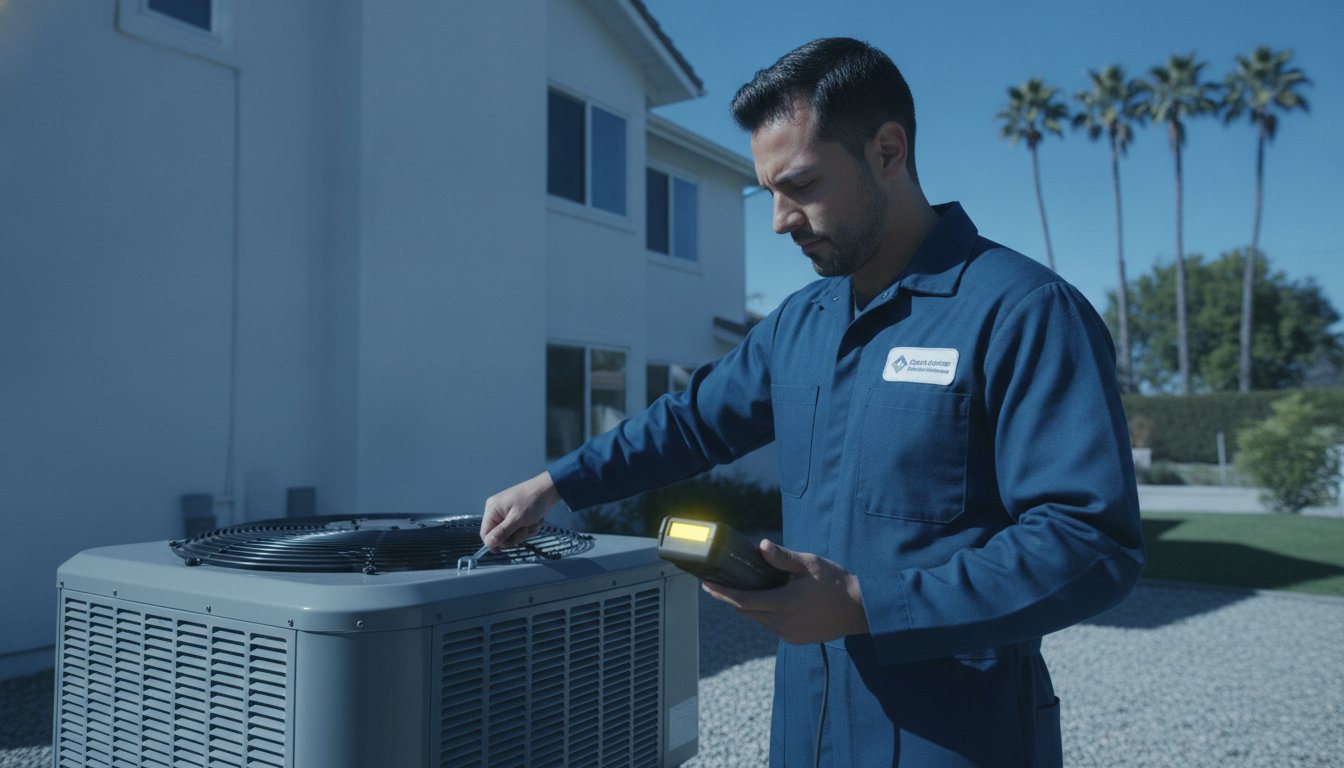
Many homeowners want to know if they can handle an ac leaking water los angeles situation without a professional service call. While we always appreciate a proactive neighbor, it's vital to distinguish between a simple maintenance task and a complex mechanical failure. Attempting the wrong fix can lead to expensive component damage or safety hazards. If you're comfortable with basic home maintenance, there are two safe steps you should try before picking up the phone.
- Inspect your air filter: If your filter looks like a thick wool blanket, it's restricting airflow and causing the coils to freeze. Replacing a soiled filter is the easiest way to stop a leak caused by ice melt.
- Clear the exterior exit pipe: Locate where your drain line exits the house. If you see visible grass clippings, dirt, or spider webs blocking the opening, clearing them away can sometimes restore proper flow.
The Shop-Vac Trick
If you have a wet/dry vacuum, you can try to clear a minor clog by creating a tight seal around the exterior drain line with a wet rag. Suctioning the pipe for about 30 seconds often pulls out the "sludge" mentioned earlier. While this might stop the immediate drip, it's a temporary solution. It doesn't address the buildup inside the internal pan or the root cause of why your system is producing excess debris. If your system is over 15 years old and constantly clogging, it might be time to consider air conditioning installation in Los Angeles to avoid recurring water damage and high utility bills.
You should always call a professional if you hear unusual buzzing, see ice on the copper lines, or suspect a refrigerant leak. Handling modern refrigerants requires specialized licensing and equipment, especially as older types like R-410A become more expensive to source. Additionally, never use liquid drain cleaners in your HVAC lines. These harsh chemicals can eat through the glue in your PVC joints or corrode the metal evaporator coil. This turns a simple clog into a massive equipment failure.
Professional Diagnostic Tools
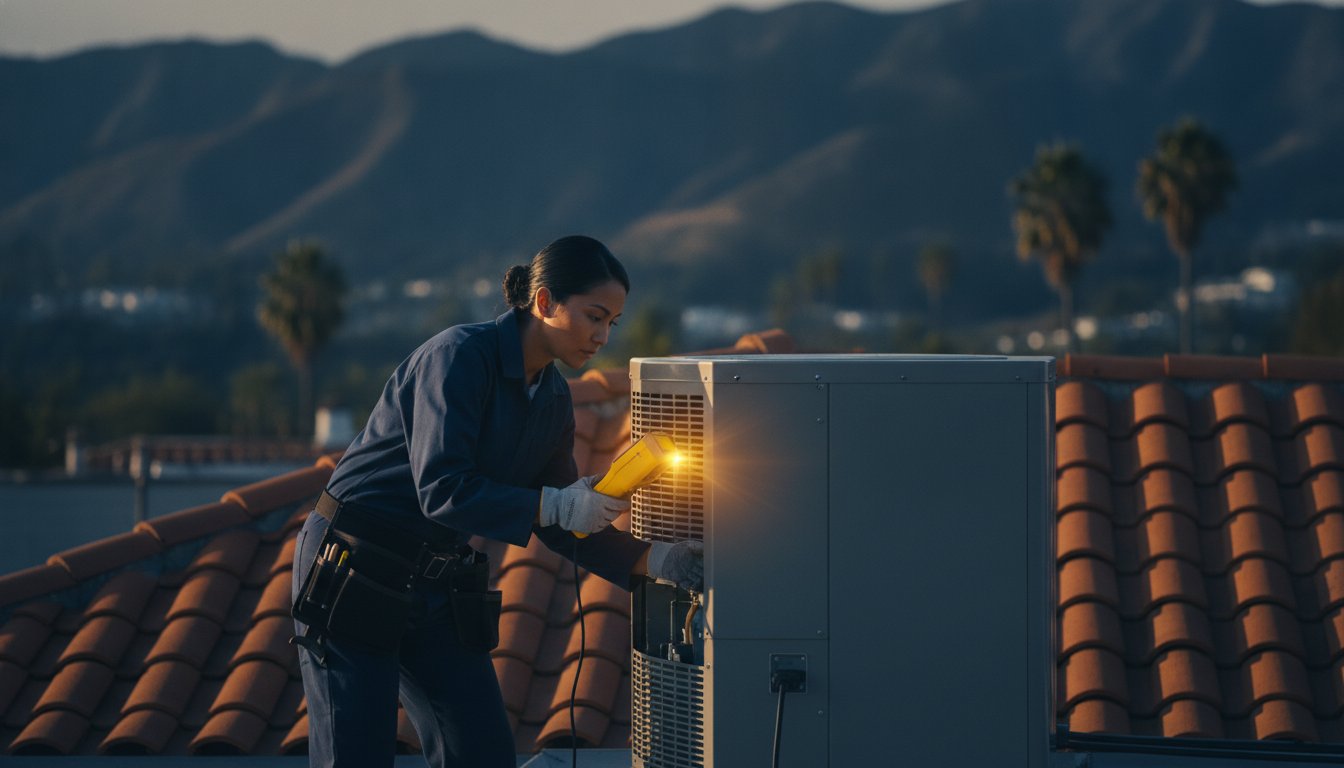
When our team arrives, we go beyond simple suction. We use high-pressure nitrogen purges to clear the entire length of the line safely without damaging the pipes. We also utilize advanced moisture sensors to ensure water hasn't migrated into hidden areas behind your walls or under your flooring. A professional air conditioning repair includes a warranty on the labor and parts, giving you the peace of mind that a DIY fix simply can't provide. We take the time to ensure the root cause is addressed so you don't wake up to another puddle tomorrow.
Preventing Water Damage with the Nice and Cool Club
While reacting to a current drip is necessary, the ultimate goal for any homeowner is to prevent the next one before it starts. The intense ac leaking water los angeles residents often face during a heatwave is usually the result of months of gradual buildup. This is why we developed the Nice and Cool Club Maintenance Plan. It is a proactive service model designed to identify "micro-leaks" and drainage weaknesses during the off-season, ensuring your home stays dry when the temperature climbs.
Membership in the club provides more than just a basic inspection; it offers a comprehensive safeguard for your property. Our technicians perform deep-clearing flushes of your condensate lines and apply professional-grade pan treatments that prevent the growth of algae and sludge. By catching these issues early, you avoid the high costs of emergency restoration and the health risks associated with hidden mold growth in your walls. Plus, our members receive priority scheduling, which is vital when every HVAC company in the city is booked out during a July scorcher.
The "Leak-Proof" Maintenance Checklist
Our maintenance process is methodical and tailored to the specific needs of Southern California systems. We don't just glance at your unit; we verify the mechanical integrity of the entire drainage path. Whether your system is in a tight attic or a hallway closet, we ensure it meets our high standards for safety and performance.
- Drain Line Stability: We verify the pitch and support of your PVC lines to ensure water never has a chance to pool or back up.
- Refrigerant Charge Verification: We check for proper levels to prevent the evaporator coil from freezing, which is a primary cause of major indoor flooding.
- Anti-Algae Treatments: We place specialized tablets in your primary pan to keep the water flowing clear and prevent the "jelly" clogs common in the LA basin.
- Safety Switch Testing: We inspect and test your float switches to ensure the system will automatically shut down if a backup ever occurs.
Join the Family-Owned Experts
Nice and Cool Inc. has been a family-owned and operated specialist in Los Angeles County since 2005. We take immense pride in our reputation for honesty and craftsmanship. We understand the unique dust and heat challenges of our local neighborhoods, and we treat every home with the same care we would our own. If you want to move from stressful emergency repairs to predictable, reliable comfort, we are here to help. Protect your home from water damage-Join the Nice and Cool Club today!
Protect Your Home and Restore Your Peace of Mind
Dealing with an ac leaking water los angeles homeowners encounter doesn't have to be a source of constant stress. By acting quickly to shut down your system and identifying whether the cause is a simple filter change or a complex mechanical blockage, you've already taken the most important steps toward protecting your property. Remember that our unique local environment, from the fine dust of the Santa Ana winds to the extreme heat of the Valley, requires a specialized approach to maintenance and repair.
Whether you need an immediate fix or want to join the Nice and Cool Club Maintenance Plan to prevent future drips, our family-owned team is ready to help. We have been serving Los Angeles County since 2005, and we take pride in providing the reliable, neighborly service you deserve. Don't let a small leak turn into an expensive renovation project. Stop the leak and save your ceiling; Schedule your LA AC repair with Nice and Cool Inc. now!
Your home should be a place of comfort and safety. With the right care and a bit of local expertise, you can keep your cooling system running smoothly through even the hottest Southern California summers.
Frequently Asked Questions
Is it normal for my AC to leak a little bit of water outside?
Yes, it's completely normal to see water dripping from the primary condensate drain line outside your home. This moisture is a byproduct of the dehumidification process as your system pulls humidity out of your indoor air. If you notice water coming from a secondary line located higher up on a wall or over a window, that's a warning that your main line is blocked.
Can I still run my AC if it is leaking water inside the house?
No, you should shut down your system at the thermostat immediately. Continuing to run a unit that's leaking inside can lead to warped flooring, ruined drywall, and rapid mold growth. It also risks permanent damage to the internal electrical components or the blower motor if they become submerged in standing water.
How much water should an AC unit typically drain in Los Angeles?
During a typical triple-digit day in the San Fernando Valley, a central air conditioner can produce between 5 and 20 gallons of water per day. The exact volume depends on the humidity levels and your home's insulation. If your system is running constantly but you don't see any water exiting the drain line outside, you likely have a hidden blockage starting to form.
Why is my AC leaking water from the ceiling?
Ceiling leaks usually happen when an attic-mounted unit's primary drain line clogs and the secondary safety pan overflows. If your system isn't equipped with a functional float switch, the unit won't turn off when the pan fills up. This causes water to spill over the edges and soak through your ceiling's insulation and drywall.
Will a dirty air filter really cause a water leak?
Yes, a heavily soiled filter is a frequent cause of an ac leaking water los angeles residents face. Restricted airflow causes the temperature of the evaporator coil to drop too low, which leads to ice formation. When that ice eventually melts, the volume of water is often too much for the drain pan to handle, resulting in an overflow.
How do I know if my condensate drain line is clogged?
The most obvious sign is standing water in the secondary drain pan located under your indoor unit. You might also notice that the system has shut itself off completely if you have a safety float switch installed. If the outdoor exit for your drain line is dry while the AC is running, it's a clear indicator that the "sludge" mentioned earlier has formed a blockage.
What is the average cost to fix an AC water leak in LA?
The cost varies significantly depending on whether you need a simple nitrogen line flush or a more complex repair like a drain pan replacement. Factors such as the location of your unit and whether a refrigerant leak caused the coils to freeze also play a role. A professional diagnostic is the only way to get an accurate estimate tailored to your system's specific needs.
Can a water leak lead to an electrical fire in my HVAC system?
While a fire is less common than water damage, moisture and electricity are a dangerous combination. Water dripping onto the control board or into the blower motor housing can cause short circuits and permanent electrical failure. If you see water near any electrical connections, keep the power off and contact a licensed technician to ensure the system is safe to operate.
Frequently Asked Questions
It's tempting to keep the air running when it's 100 degrees in the Valley, but "powering through" a leak is a recipe for disaster. Drywall loses its structural integrity quickly when saturated. We've seen small drips turn into sudden ceiling collapses in LA homes because the weight of the water became too much for the plaster to hold. Humidity in Southern California can also trigger rapid mold growth within 24 to 48 hours of a leak. If moisture seeps into your wall cavities, it creates a breeding ground that is difficult and expensive to remediate. Beyond the structural risks, running a leaking unit puts immense strain on your equipment. Water can short out electrical components or cause the fan motor to burn out.